

More news on this day
MSC Cruises has cancelled MSC Euribia’s much‑anticipated first European sailing of the 2026 summer season, after ongoing instability in the Middle East delayed the ship’s repositioning from the Arabian Gulf to Northern Europe and forced a last‑minute rewrite of many travellers’ cruise plans.
Get the latest news straight to your inbox!
What Has Happened to MSC Euribia’s Europe Season
The LNG powered MSC Euribia was scheduled to begin her Northern Europe summer programme with a seven night Norwegian fjords cruise from Kiel, Germany, on 2 May 2026. According to multiple cruise industry reports, this voyage has now been cancelled outright, becoming one of the most prominent European casualties of the current Gulf region disruption.
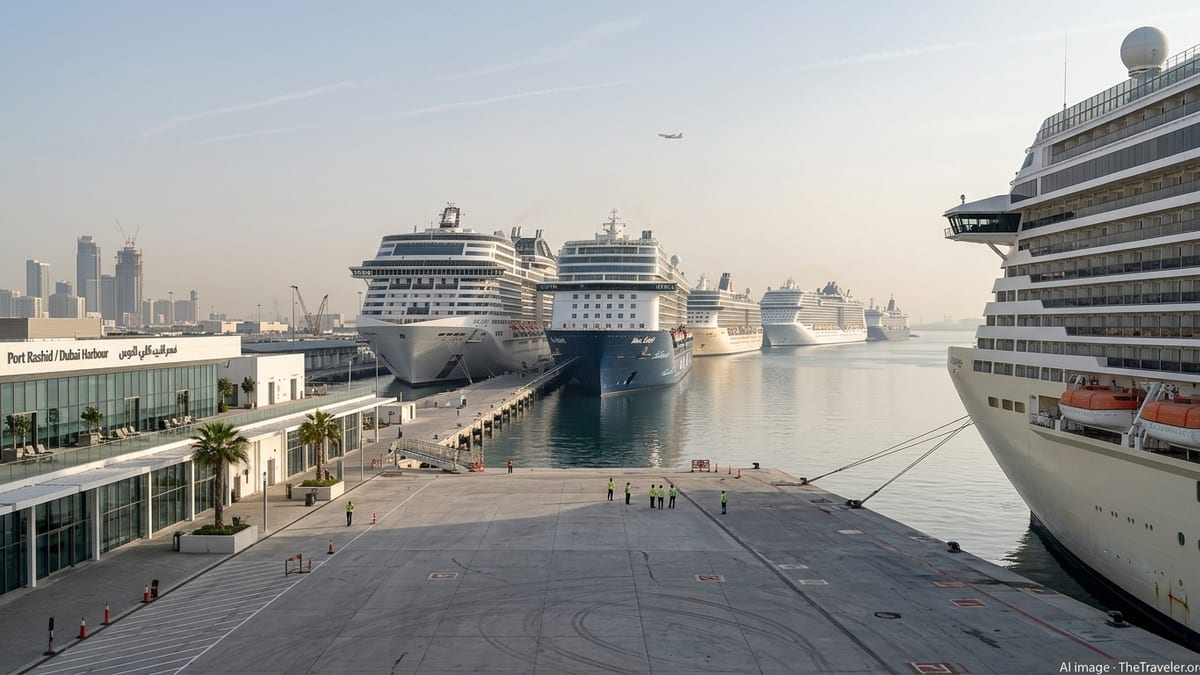
Publicly available coverage indicates that the ship has remained in the Middle East since late February, after a rapidly evolving security situation affected traffic through key sea lanes linking the Arabian Gulf with the Red Sea and onward to Europe. Repositioning sailings that would normally carry the vessel back to European homeports have been unable to operate as planned, leaving Euribia effectively out of position for the start of her European season.
Specialist cruise outlets report that MSC decided it was no longer operationally feasible to guarantee Euribia’s arrival in Kiel in time for the 2 May departure, even as talks over regional ceasefires and shipping corridors continued. Rather than wait in the hope that the passage might reopen, the company has opted to draw a line under the first sailing and focus on stabilising the rest of the season.
The cancellation comes after MSC already trimmed the final weeks of Euribia’s winter programme in Dubai and other Gulf ports. The Kiel departure had been widely viewed as the symbolic reset point at which the ship would leave the crisis zone behind and resume normal European operations.
Who Is Affected and Which Itinerary Was Cancelled
The cancelled cruise was marketed as a classic week long Northern Europe escape, with a round trip route from Kiel to the Norwegian fjords at the height of spring. Ports listed in sample itineraries included popular scenic calls such as Bergen and other west coast gateways, along with cruising through dramatic fjord landscapes that are typically in strong demand for early season sailings.
While exact passenger numbers for the 2 May departure have not been made public, a ship of Euribia’s size can carry several thousand guests at full capacity. Travel trade coverage suggests that a significant proportion of cabins had already been sold, including to international travellers who had combined the cruise with longer stays in Germany or independent overland trips.
Reports from cruise agencies and consumer forums indicate that booked guests are being contacted in stages, with notification emails outlining cancellation terms and alternative options. Travellers who booked through third party agents are generally being advised to liaise directly with their agent, while those who booked direct are receiving instructions through MSC’s own channels and digital platforms.
Beyond passengers, the decision reverberates across the local tourism ecosystem in Kiel and along the Norwegian coast. Early season calls typically provide an economic boost for port operators, tour companies and hospitality businesses, all of which now face the loss of one of the marquee sailings on the regional calendar.
What Options Are Being Offered to Impacted Travellers
According to current cruise industry reporting and information circulated to the trade, MSC is offering affected guests a set of remediation options designed to preserve flexibility while keeping business on the books where possible. The core framework echoes responses seen in previous large scale disruptions within the region.
Published summaries of the policy indicate that passengers can request a full refund of the cancelled cruise fare, typically returned to the original form of payment. For many travellers who organised their own flights, hotels and rail connections, this refund will be only part of a more complex financial picture, underscoring the role of independent travel insurance in recovering associated costs.
Alongside refunds, MSC is reported to be encouraging guests to rebook on alternative sailings in 2026. In several cases highlighted by trade and enthusiast media, the line is permitting moves to other Northern Europe departures without additional change fees. Some accounts describe instances where fare differences on selected replacement cruises have been waived and modest onboard credit has been provided as a goodwill gesture, although specific terms may vary by market and date.
Travel advisors note that rebooking options are proving more attractive for guests whose annual leave and school holiday windows remain flexible. For those who had anchored once in a lifetime trips or milestone celebrations on the 2 May date, the choice between shifting plans and abandoning the cruise altogether is proving more complicated.
How the Wider Middle East Crisis Is Reshaping Cruise Schedules
The MSC Euribia disruption is unfolding against a wider backdrop of cruise cancellations and redeployments across the Middle East. Travel trade publications tracking the situation describe multiple ships from several brands either remaining in port, cutting seasons short or skipping planned transitions through the region entirely as the conflict and associated security restrictions continue.
Reports from industry analysts highlight the particular vulnerability of repositioning cruises that depend on safe passage through chokepoints such as the Strait of Hormuz and onward routes to the Suez Canal. When these corridors are disrupted, ships can become stranded far from their next scheduled homeport, with ripple effects that extend for months across multiple itineraries.
In MSC’s case, Euribia is one of the highest profile vessels affected, but not the only one. The line has already adjusted future deployment plans for other ships that were due to spend upcoming winters in the Gulf, with some now shifted toward Caribbean or Mediterranean programmes instead. This underscores how cruise operators are rethinking long term strategies for the region in light of the current instability.
For European travellers, the most immediate impact is a tightening of capacity on certain marquee routes as ships are repositioned differently or enter service later than planned. Industry observers suggest that this may lead to reduced last minute availability and pockets of higher pricing on popular Northern Europe sailings in early summer 2026 compared with previous years.
Practical Steps for Passengers Holding MSC Euribia Bookings
For guests booked on the cancelled 2 May sailing, the first priority is to respond promptly to official notification and choose between the available options. Consumer advocates recommend reviewing all documentation carefully, including booking confirmations, cancellation notices and any applicable travel insurance policies, before making a final decision.
Travellers who decide to rebook on a different MSC cruise should check that the replacement itinerary, cabin category and fare conditions are clearly confirmed in writing, particularly if any fare differences have been waived or onboard credit has been granted. Where flights and hotels are being changed, it is advisable to coordinate new dates only after the cruise line or travel agent has issued updated confirmations.
Those opting for a full refund are encouraged to keep detailed records of all associated trip costs, such as independently booked air travel and pre or post cruise stays. While cruise lines are not automatically responsible for third party expenses, some travellers may find support through insurance coverage that includes trip interruption or supplier default, subject to the usual policy terms and claim procedures.
Passengers booked on later MSC Euribia departures from Kiel and other Northern Europe ports are watching developments closely. At the time of writing, publicly available schedules still show subsequent sailings going ahead, but regional analysts note that continued volatility in the Gulf could yet lead to further timetable fine tuning. Monitoring official channels, maintaining flexible arrangements where possible and allowing extra time for itinerary changes are becoming key strategies for anyone planning to sail on Euribia during the early part of the 2026 European season.