

More news on this day
Rapidly rising cruise arrivals in The Bahamas and Turks and Caicos are converging with the deployment of MSC Seashore on short, high-frequency Caribbean runs, helping to trigger fresh investment and a new phase of tourism growth across the northern Caribbean arc.
Get the latest news straight to your inbox!
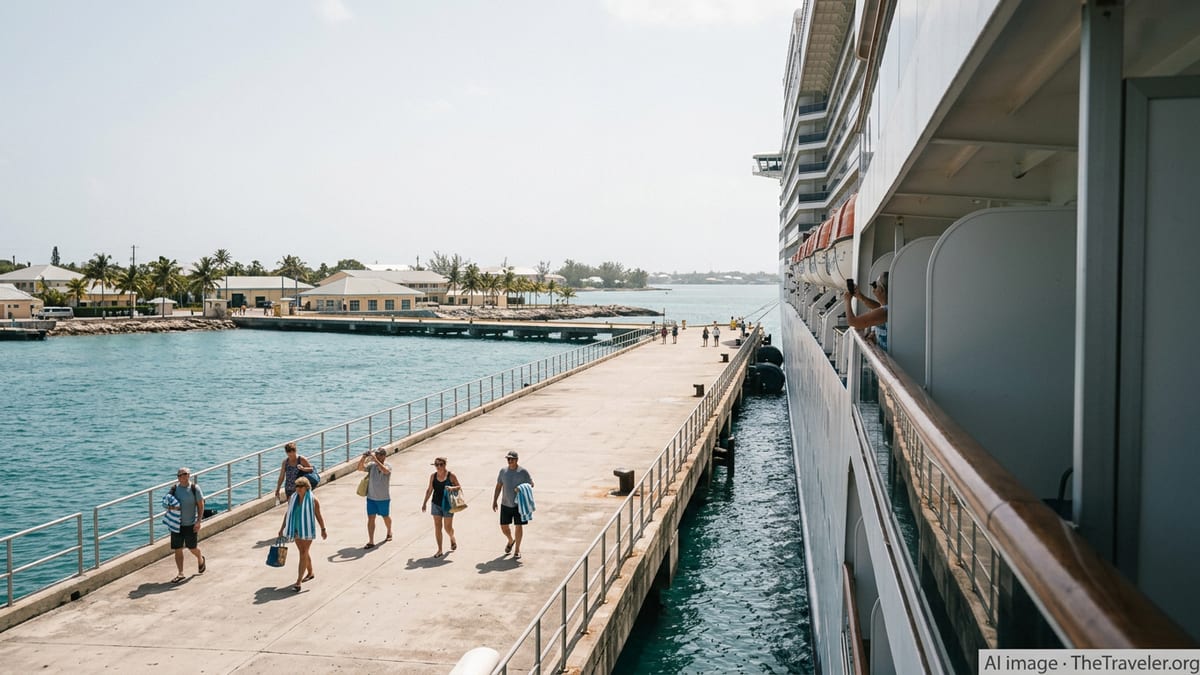
A High-Capacity Ship Anchors a Short-Cruise Boom
MSC Seashore, one of MSC Cruises’ Seaside-class vessels, has become a workhorse on three and four night itineraries from Florida to The Bahamas, with calls that commonly combine Nassau with the line’s private island, Ocean Cay MSC Marine Reserve. Publicly available schedules show the ship operating near year-round in these waters, translating its capacity of more than 5,000 guests into a steady flow of short-break visitors to the region.
These short sailings align with a broader shift in the cruise market toward quick, easily bookable getaways from major US homeports. Industry reports for 2024 and 2025 note that the Caribbean, including The Bahamas, remains the leading global cruise region by passenger volume, with short itineraries playing an outsized role in that growth. MSC Seashore’s regular rotation through Bahamian ports plugs directly into this demand pattern.
Travel forums and booking data indicate that Seashore’s itineraries are particularly popular with first-time cruisers and multigenerational families, demographics that tend to spend heavily on shore excursions and day passes. For destinations seeking to convert cruising into onshore economic impact, the ship’s deployment is therefore strategically significant, especially at a time when many Caribbean ports are racing to expand capacity.
The scale of Seashore’s traffic means that even marginal increases in per-passenger spending can translate into millions of dollars annually for local economies. With multiple calls each month to Nassau and Ocean Cay, the vessel has effectively become a floating bridge delivering repeat business to Bahamian tourism providers.
Bahamas Cruise Arrivals Hit Records As New Projects Advance
The Bahamas is experiencing a sustained cruise boom, to which MSC’s fleet, including MSC Seashore, is a visible contributor. Government statistics and port operator reports show that the country welcomed more than 11 million visitors in 2024, with roughly 9.1 million arriving by cruise ship. Nassau Cruise Port alone handled about 5.6 million passengers that year and has projected further growth for 2025.
Port executives and tourism agencies describe this momentum as part of a multi-year transformation of the Bahamian cruise product. Nassau’s waterfront has undergone a major redevelopment, while Freeport Harbour on Grand Bahama is the focus of a new cruise port and water park project involving MSC Cruises among other partners. Public information on the project characterizes it as a cornerstone of efforts to reposition Grand Bahama as a more competitive cruise and family-leisure destination.
Ocean Cay MSC Marine Reserve, MSC’s private island in the Bimini chain, has become a central piece of this strategy. Initially opened in late 2019, the island has continued to evolve, with the company highlighting marine restoration work and the April 2025 inauguration of a Marine Conservation Centre as part of its long-term environmental positioning. Recent industry coverage also details plans for expanded family and wellness amenities from 2026, reinforcing Ocean Cay’s role as a repeat-visit draw.
Satellite imagery, cruise-mapping services and trade press reports point to ongoing physical enhancements at Ocean Cay, including a second berth and a small auxiliary cay intended to handle premium experiences and higher passenger volumes. For ships such as MSC Seashore, greater capacity at the island translates into more reliable calls, fewer weather-related diversions and the ability to schedule near-daily stops during peak seasons.
Nassau and Ocean Cay Capitalize on Shore-Spend Opportunities
While cruise calls do not automatically guarantee broad-based economic gains, spending surveys in The Bahamas indicate that passenger and crew expenditure remains a major revenue stream for local businesses. Items such as tours, beach club access, food and beverage, and duty-free shopping consistently rank among the top categories for visitor outlay.
In Nassau, the redevelopment of the cruise port precinct has been designed to lengthen the time passengers stay ashore and to encourage them to explore beyond the immediate pier area. New dining, entertainment and cultural spaces adjacent to the terminal aim to convert rapid in-and-out visits into half-day or full-day experiences. With MSC Seashore often in port for limited windows, efficient passenger flow and attractive, walkable offerings are becoming critical to converting arrivals into meaningful spend.
Ocean Cay’s model is different but complementary. Because the island is fully operated by the cruise line, most economic activity there is captured within the MSC ecosystem, from cabana rentals to upgraded dining and paid activities. However, the island’s branding as a marine reserve and the investment in restoration projects are regarded by many analysts as enhancing the wider perception of The Bahamas as a sustainable, nature-oriented destination, which can indirectly support national marketing campaigns and long-stay tourism.
For Bahamian stakeholders, the challenge remains ensuring that the cruise boom feeds back into local supply chains, employment and community-based tourism experiences. The continued upscaling of ships like MSC Seashore and the expansion of private islands are prompting renewed debate over how the benefits of cruising are shared among ports, national governments and residents.
Turks and Caicos Rides a Parallel Wave of Cruise Growth
Down the island chain, Turks and Caicos is experiencing its own cruise surge, centered on Grand Turk Cruise Center. Tourism statistics compiled by the territory and referenced in regional media indicate that cruise arrivals approached or exceeded one million passengers in 2024, with spending by cruise visitors and crew estimated in the hundreds of millions of dollars.
By late 2025, commentary from local observers and legal and business consultancies noted that Grand Turk had surpassed one million cruise passengers for the year, with arrivals up several percentage points compared with 2024. Over a longer horizon, the port has recorded double-digit increases in ship calls and passenger volumes, underscoring its emergence as a marquee stop on Western Caribbean and Bahamas itineraries.
Although MSC Seashore’s core deployment remains focused on The Bahamas, Turks and Caicos features in a wider pattern of northern Caribbean itineraries that combine Bahamian ports with Grand Turk and nearby destinations. Industry schedules for MSC and other major lines show that ships following similar routes are increasingly weaving Nassau, Ocean Cay and Grand Turk into short and medium-length voyages, distributing passenger flows across multiple jurisdictions.
Local tourism agencies in Turks and Caicos have framed the cruise upswing as part of a broader visitor economy strategy that also prioritizes high-value stayover guests. The influx of cruise passengers, however, is helping to justify investments in port infrastructure, coastal amenities and heritage sites on Grand Turk, many of which are being refreshed or expanded to handle higher daily peaks.
Infrastructure Investments Signal Long-Term Bets on Cruise Demand
The combined effect of MSC Seashore’s deployment and the rapid expansion of cruise volumes in The Bahamas and Turks and Caicos is visible in a growing pipeline of infrastructure projects across the region. In addition to the Freeport Harbour redevelopment and Ocean Cay enhancements, other cruise lines are investing in new private destinations and upgraded terminals, raising the competitive bar for ports that rely on transit calls.
Regional media coverage describes Nassau Cruise Port’s back-to-back record years as both a consequence and a driver of this trend. As more megaships homeport in Florida and demand for short Caribbean getaways grows among US travelers, ports are investing in additional berths, expanded terminal facilities and improved passenger services to secure and retain ship deployments.
Cruise industry reports for 2025 emphasize that the Caribbean and Bahamas remain the world’s top cruise destination by passenger numbers, with further capacity growth projected over the next several years. For destinations such as The Bahamas and Turks and Caicos, the current boom is therefore not a short-lived spike but part of a structural shift toward higher baseline volumes.
As MSC Seashore continues to shuttle thousands of guests on compact Caribbean loops, its wake is being felt far beyond the gangways. From Nassau’s redeveloped waterfront to Grand Turk’s busy pier and the evolving landscape of Ocean Cay, the ship is emblematic of a new cruise era in which vessel deployment decisions can rapidly reshape tourism fortunes across multiple island economies.