

More news on this day
MSC Cruises is marking five years of service for MSC Virtuosa with an aggressive expansion of itineraries across the Caribbean, South America and the Mediterranean, positioning the 2021-built flagship as a centerpiece of the line’s growth strategy in key warm-weather markets through 2027.
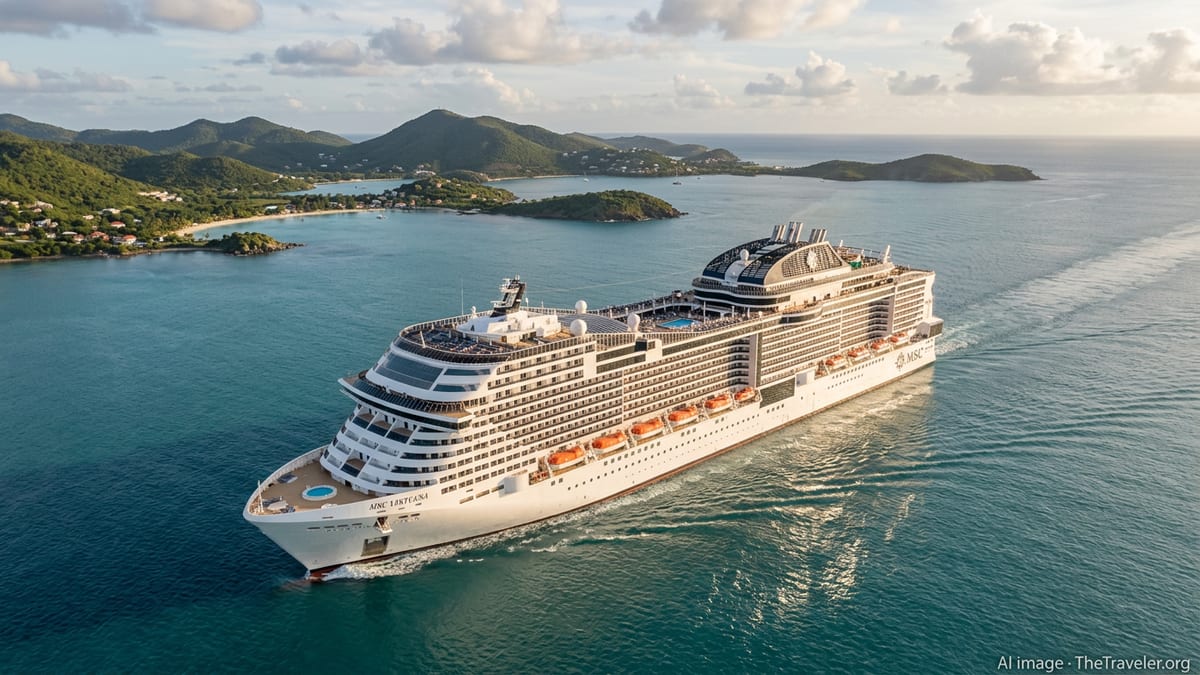
Five-Year Milestone for a Modern Flagship
Delivered in early 2021 and entering service that May, MSC Virtuosa has quickly become one of MSC Cruises’ most versatile large vessels, moving from its initial deployments in Europe into a globe-spanning schedule that now stretches from Northern Europe to the Caribbean and, soon, South America.
The 181,000-gross-ton Meraviglia-Plus ship, with capacity for more than 4,800 guests at double occupancy, was designed around flexible public spaces and high-yield features such as a central indoor promenade, a large pool deck and a sizable Yacht Club complex. Those elements have allowed the line to reposition the ship between regions as demand patterns shift, particularly for premium all-weather experiences.
As the ship approaches its fifth full year in service in 2026, MSC is capitalizing on that flexibility. The company is using Virtuosa to reinforce its presence in competitive markets where rivals are also adding hardware, most notably in the Caribbean and in South America, while preserving the brand’s stronghold in the Mediterranean during shoulder and summer seasons.
Industry observers note that deploying one of the newest and largest ships in the fleet across several high-profile regions at once is a clear signal that MSC intends to keep Virtuosa at the forefront of its growth narrative, rather than relegating the vessel to a single niche or secondary market.
Expanded Caribbean Program Centers on Southern Routes
For winter 2025–26, MSC Virtuosa is pivoting from Northern Europe to a series of Southern Caribbean sailings, using Fort de France in Martinique and Pointe-à-Pitre in Guadeloupe as key turn ports. The program includes seven-night cruises that combine classic sun-and-sand calls with lesser-visited islands, catering both to first-time Caribbean cruisers and to repeat guests seeking new ports.
Sample itineraries feature island-hopping routes touching ports such as Castries in Saint Lucia, Bridgetown in Barbados and Kingstown in Saint Vincent, along with additional Eastern Caribbean calls including Road Town on Tortola and Basseterre in St. Kitts. The line is marketing these voyages around their convenient flight connections from Europe and North America, along with shore excursions that highlight local culture, gastronomy and nature-focused activities.
Beyond the core winter schedule, MSC has also highlighted specific one-off departures, including a late-December 2025 New Year’s sailing that packages the Southern Caribbean loop into a holiday-focused week at sea. The company says the expanded presence of Virtuosa in the region will dovetail with the broader buildup of MSC capacity in the Caribbean, including year-round operations using additional ships and homeports.
By assigning one of its newest vessels to a series of longer, port-intensive Southern Caribbean voyages, MSC is directly targeting travelers who might otherwise choose premium or luxury brands for island-heavy itineraries, while still leveraging the line’s value positioning and family-friendly profile.
Inaugural South America Season Signals Regional Bet
After wrapping up its 2025–26 Caribbean deployment, MSC Virtuosa is scheduled to shift south for its first full season in South America, joining an expanded regional fleet that the company has begun rolling out for the 2026–27 austral summer.
The move is being framed by MSC as a pivotal moment for its Latin American operations, with Virtuosa taking on a flagship role alongside other large vessels that will serve Brazil, Argentina and neighboring markets. The deployment follows several seasons in which South America has steadily gained capacity from the brand, as demand from local passengers and long-haul fly-cruise guests has grown.
While detailed port lineups vary, itineraries are expected to connect marquee coastal cities and resort areas with beach-focused destinations and islands, reflecting the model MSC has used successfully with other ships in the region. The presence of Virtuosa is also being viewed by ports and tourism boards as an opportunity to showcase upgraded terminals and infrastructure capable of handling newer, higher-capacity ships.
Cruise analysts point out that assigning Virtuosa to South America at a time when newer World-class vessels are being concentrated in North America and the Caribbean suggests a conscious effort by MSC to avoid a two-tier fleet strategy in emerging markets. Instead, the line appears intent on ensuring that South American guests have access to some of its most modern onboard hardware.
Mediterranean and Northern Europe Still in the Mix
Even as MSC Virtuosa charts an increasingly global course, the ship is not abandoning the brand’s European base. Prior to its Caribbean and South American deployments, the vessel continues to feature prominently in Mediterranean and Northern Europe programs, including sailings from Southampton that call at the Norwegian fjords, the Canary Islands and key Atlantic ports.
During the main summer season, Virtuosa has been used on a mix of short breaks and longer itineraries, including voyages that link the Western Mediterranean’s marquee ports with less frequented coastal towns and islands. Those sailings allow MSC to keep one of its most recognizable ships visible in its home region while still freeing the vessel for long-haul repositioning in winter.
The company has also used shoulder-season Mediterranean cruises on Virtuosa to test demand for new port combinations and shore excursion concepts. Executives say this experimental approach helps refine offerings that can later be rolled out in other regions, particularly where cultural touring and gastronomy are major draws.
Looking ahead, travel agents in key European markets report strong interest in itineraries that include both classic city ports and more boutique destinations, a trend that aligns with MSC’s push to market Virtuosa as a ship capable of delivering both big-ship amenities and destination-focused journeys.
Strategic Role in MSC’s Long-Term Growth Plan
MSC Virtuosa’s fifth anniversary comes as MSC Cruises pursues one of the most ambitious fleet growth plans in the global industry, with multiple newbuilds scheduled and a steady stream of deployment shifts designed to match evolving demand.
By rotating Virtuosa through the Caribbean, South America and the Mediterranean over the next several years, the line gains a flexible asset that can be reassigned quickly in response to market movements, currency shifts or geopolitical developments affecting specific regions.
The ship’s scale supports high onboard revenue potential, from specialty dining and entertainment to upgraded accommodation categories such as the MSC Yacht Club. That revenue mix is particularly important on long-haul fly-cruise itineraries, where ticket pricing pressure can be intense but guests often spend more once on board.
For destinations, the arrival or return of Virtuosa is equally significant. Ports in the Southern Caribbean and along the South American coast anticipate a measurable boost in visitor numbers and spending during the vessel’s calls, while Mediterranean and Northern European gateways benefit from continued access to one of MSC’s most visible ships. As Virtuosa enters its next five years of service, its multi-region deployment underlines how central the vessel has become to the cruise line’s global ambitions.