


More news on this day
Persistent monsoon downpours drenched Mumbai over the weekend, severely disrupting air traffic, flooding arterial roads and stranding thousands of commuters across India’s financial capital and its adjoining districts.
Get the latest news straight to your inbox!
Runway shutdown and cascading flight disruptions
Heavy rain and gusty winds on Sunday, 5 July led to a temporary halt of runway operations at Mumbai’s Chhatrapati Shivaji Maharaj International Airport, with publicly available information indicating that all movements were paused for around an hour in the late morning. The shutdown came as visibility dropped sharply and wind speeds picked up over the city.
Reports from aviation trackers and news outlets show that at least four IndiGo flights were cancelled as conditions deteriorated, while more than a dozen arriving aircraft operated by various airlines were diverted to alternate airports before later returning to Mumbai once conditions stabilised. The combination of cancellations, diversions and missed slots quickly produced a backlog of aircraft on the ground and in the air.
Data from live flight-monitoring platforms cited in published coverage indicated widespread delays throughout the day, with a large majority of outbound flights leaving behind schedule and many inbound services arriving late. Passengers posted images from crowded terminals and departure boards filled with delayed and rescheduled services, underscoring the scale of the interruption at one of Asia’s busiest single-runway airports.
Travel advisories issued by multiple carriers through the day urged passengers to check updated flight status before heading to the airport, highlighting the potential for further knock-on delays as aircraft and crew rotated back into place after the weather-related stoppage.
Waterlogged roads and stalled surface transport
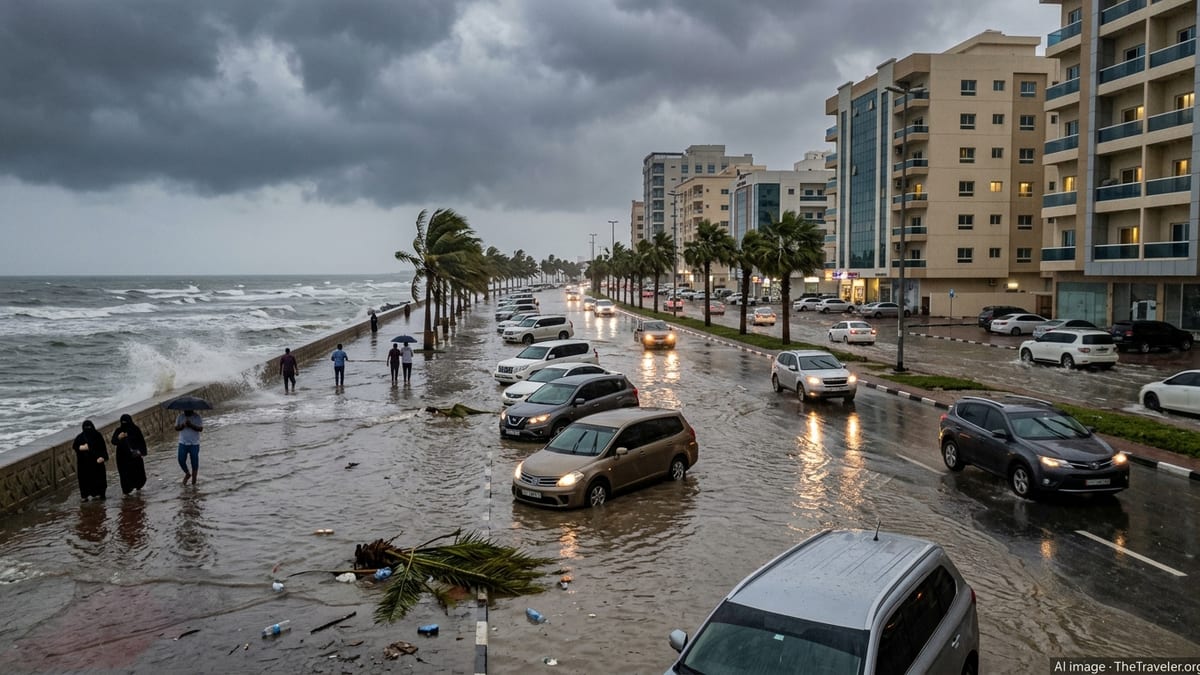
While aircraft were grounded, Mumbai’s surface transport network also struggled under the weight of the intense rainfall. News photographs and local footage showed vehicles moving slowly through deep water on major corridors, with low-lying stretches of the Eastern and Western suburbs experiencing significant waterlogging.
Publicly available information from city updates and local media pointed to congestion and temporary closures at several underpasses and junctions where drainage systems were overwhelmed. In some neighbourhoods, stranded buses and private cars added to the gridlock as engines stalled in rising water, forcing passengers to disembark and walk along flooded medians.
Despite the severity of road flooding, suburban rail services, often described as Mumbai’s lifeline, were reported to be running close to normal on most main lines, albeit with slower speeds in waterlogged sections. This kept a critical mobility channel open for office workers and essential staff, although platforms and station approaches were themselves affected by standing water and overflowing drains.
Taxi and app-based cab fares surged in pockets of the city as demand spiked, but drivers reported long detours around submerged streets and barricaded stretches, turning short hops into slow, circuitous journeys for both residents and visitors.
Red alert conditions and rainfall extremes
The disruption followed a period of exceptionally heavy monsoon activity over the Mumbai Metropolitan Region. The India Meteorological Department had issued a red alert for the city and neighbouring districts, warning of the potential for extremely heavy rainfall over the weekend and advising heightened preparedness for urban flooding.
According to compiled rainfall data published in national and regional outlets, parts of Mumbai recorded close to 300 millimetres of rain in roughly a 24-hour window, with particularly intense spells during the early hours. Such totals, concentrated over densely built coastal terrain, can quickly exceed the capacity of storm-water drains and pumping stations, especially when high tide coincides with peak downpours.
The alert also extended to nearby districts such as Thane and Palghar, where residential areas and smaller townships reported flooding of internal roads and localised power interruptions. Social media posts from these areas described knee-deep water in housing complexes, disrupted bus services and concerns around tree falls in saturated soil.
Meteorological forecasts indicate that heavy to very heavy showers are likely to continue intermittently over the next one to two days across Mumbai and parts of the Konkan belt, keeping the risk of renewed waterlogging and travel disruption high, particularly during tide peaks.
Daily routines upended across the city
As the rain intensified, everyday life in Mumbai slowed to a cautious shuffle. Morning commuters reported starting significantly earlier to account for flooded intersections and sporadic transport, while many offices and educational institutions pivoted back to remote or hybrid arrangements for the day to minimise non-essential travel.
Images carried by national and regional media showed schoolchildren wading through murky water, shopfronts partially submerged along market streets and residents forming human chains to help the elderly navigate inundated stretches. In some localities, ground-floor homes and small businesses stacked sandbags or makeshift barriers at entrances in an attempt to keep water out.
Travel industry observers noted that weekend visitors and transit passengers faced particularly acute challenges, with hotel check-ins delayed as guests arrived late from the airport and tour itineraries across the wider Maharashtra coast forced into last-minute changes. For many, indoor attractions and shopping centres became default refuges from the relentless rain, even as getting to them remained complicated.
Publicly available information from municipal updates highlighted instances of tree falls and minor structural damage, and localised power shutoffs were reported in pockets to reduce risk while repairs were undertaken. Community groups and resident associations amplified guidance on avoiding flooded underpasses, staying away from seafront promenades during high tide and reporting open manholes or fallen live wires.
Strain on infrastructure and questions over resilience
The latest deluge has once again pushed Mumbai’s infrastructure to its limits, reviving familiar debates over the city’s readiness for increasingly intense monsoon events. Urban planners and citizen groups, writing in recent commentaries and opinion pieces, point to a combination of aging drainage networks, loss of natural floodplains and rapid construction in low-lying zones as key stress points that are exposed each season.
Despite periodic desilting drives and investment announcements, many residential neighbourhoods reported repeat flooding at the same junctions and housing colonies that see water accumulation almost every year. Online discussions among residents highlighted concerns about blocked inlets, incomplete road works and reduced green cover, arguing that such factors compound the effect of extreme rainfall episodes.
At the airport, the temporary runway shutdown and subsequent backlog will likely feed into broader industry conversations about monsoon operating procedures, contingency scheduling and the need for more resilient airside infrastructure at high-traffic hubs. Aviation analysts have long noted that the combination of a single-runway configuration and intense weather can have outsized ripple effects on national air traffic.
With the monsoon season still in its early stages, travel and weather analysts indicate that Mumbai and other coastal cities along the Arabian Sea may need to brace for additional high-impact rain events in the weeks ahead. For residents, daily commuters and visitors alike, the latest disruption serves as another reminder to build extra time into journeys, track advisories closely and remain prepared for sudden changes in conditions as the rains continue.