

The Museum of Contemporary Art Detroit, better known as MOCAD, is one of the city’s most influential cultural spaces, blending cutting-edge exhibitions with a raw, industrial setting that reflects Detroit’s own spirit of reinvention. Whether you are dropping in for an afternoon of art, building a weekend around Detroit’s cultural district, or revisiting after its 2025–2026 renovation, this guide walks you through what to expect, from hours and tickets to exhibits, neighborhood tips, and frequently asked questions.
Essential Facts: Location, Reopening Date, and What Is Open Now
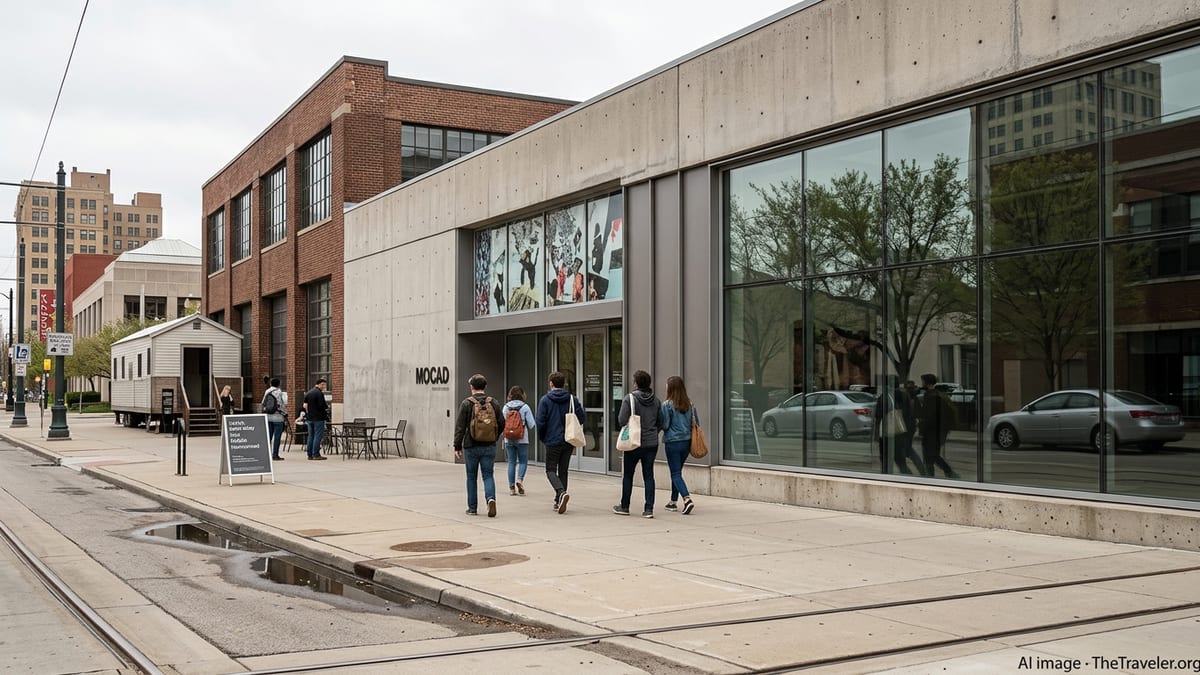
MOCAD sits on Woodward Avenue in Detroit’s Midtown, in the heart of the city’s cultural corridor. It shares the neighborhood with the Detroit Institute of Arts, the Charles H. Wright Museum of African American History, and the Detroit Historical Museum, which makes it easy to combine several museums into a single day. The building itself is a converted 22,000-square-foot former auto dealership, stripped back to its industrial bones, with exposed ceilings, concrete floors, and large open galleries that regularly change with each new exhibition.
In August 2025, MOCAD temporarily closed its main building to complete major renovations, including infrastructure upgrades and a redesigned facade along Woodward featuring a new window art display. Coverage from Detroit-focused outlets noted that only the main museum building would be closed during this work, while Mike Kelley’s Mobile Homestead, the standalone artwork and gallery beside the museum, remained open with programming during the closure. As of early 2026, MOCAD is preparing to reopen its main building for the spring season.
The museum has announced that it will reopen to the public on April 25, 2026, kicking off its 20th anniversary celebrations with a new season of exhibitions. Reports preview a reopening program organized around the theme of multiplicity and featuring major shows by Detroit-connected artists such as Olayami Dabls, known for the MBAD African Bead Museum, and textile artist Carole Harris, whose improvisational quilts and fabric works are central to the city’s contemporary art history. If you are planning a trip for spring or summer 2026, build your visit around this reopening window for the fullest experience.
Until the main building is fully back in regular use, specific exhibition details and gallery configurations may shift. For that reason, it is wise to double-check the museum’s official channels shortly before your visit. Treat what follows as a practical framework for planning, then confirm exact dates and any special closures closer to your travel dates.
Hours, Tickets, and Free Options
MOCAD’s public hours have historically followed a midweek to weekend rhythm, opening in the late morning or early afternoon and staying open into early evening several days a week, with later hours often scheduled around exhibition openings, performances, or film screenings. During the renovation and reopening period, exact hours can change more frequently than at larger, permanent-collection museums, so it is best to check the museum’s latest posted schedule during the week you plan to visit. Many visitors pair MOCAD with nearby museums that keep standard daytime hours, then end the day at MOCAD if it is open later for an event.
When it comes to admission, past seasons and local reporting give a good benchmark. A 2025 report about a traveling memorial exhibition at MOCAD noted a general admission price in the range of roughly twelve dollars per adult, with reduced or free admission for certain events. That suggests that full-price entry is typically in the low double digits, in line with other independent contemporary art spaces rather than large encyclopedic museums. Children, students with ID, and seniors often benefit from discounted admission at similar institutions, and some MOCAD programs or partner events are open to the public free of charge.
MOCAD also frequently participates in community-focused initiatives. For example, special exhibitions tied to citywide events, artist talks, film screenings, or family days are sometimes free or pay-what-you-can, especially when funded by grants or corporate sponsors. If you are traveling on a budget, look at the museum’s calendar for programs scheduled on Thursday evenings or weekends; those time slots often coincide with free or reduced admission activities at many Detroit cultural institutions.
Membership is another way frequent visitors save money. While specific prices can change, a typical contemporary art museum membership might pay for itself in three or four visits, especially if you attend ticketed talks, concerts, or film programs. Members usually receive free general admission, advance notice of openings, and discounts in the cafe or store. For Detroit locals, or visitors who return to the city regularly, a MOCAD membership can be an economical way to support the institution while maintaining easy access to rotating shows.
Getting There, Parking, and Neighborhood Basics
MOCAD’s Midtown location makes it straightforward to reach by car, rideshare, or public transit. Woodward Avenue is one of Detroit’s major north–south arteries, and the QLINE streetcar runs along this corridor, linking downtown with Midtown and the New Center area. If you are staying at a downtown hotel, you can often ride the QLINE up to the cultural district, then walk a short distance to the museum. This can be a practical choice if you want to leave your car parked at the hotel and avoid navigating multiple parking lots.
For drivers, MOCAD has emphasized in recent visitor information that parking for museum visitors is free in the on-site lot, a significant advantage in a city where many downtown garages and metered spaces charge hourly rates. The lot is directly adjacent to the building, which makes it easy to move between your car and the museum during winter or on rainy days. On busy opening nights or special events, the lot can fill quickly, so arriving near opening time, or slightly before a reception begins, helps secure a spot without circling.
The blocks around the museum are part of a walkable cultural district. Within a short stroll you will find the Detroit Institute of Arts, with its Diego Rivera murals and vast collection; the Charles H. Wright Museum of African American History, which offers large-scale historical exhibitions; and the Detroit Historical Museum, focused on the city’s social and industrial story. Many visitors plan a full day by starting at a larger institution such as the DIA in the late morning, having lunch nearby, then spending the afternoon at MOCAD and possibly one additional museum or gallery.
In terms of safety and comfort, Midtown is one of Detroit’s more active and visitor-friendly neighborhoods, with a mix of students, museumgoers, and local residents. Normal urban precautions apply: keep valuables out of sight in your car, pay attention to your surroundings at night, and use well-lit main streets if walking back to your hotel after evening events. Rideshare services are widely used and can be a simple way to travel between MOCAD and restaurants or music venues elsewhere in the city.
Inside the Museum: Layout, Atmosphere, and Visitor Experience
Stepping into MOCAD, you will notice immediately that this is not a traditional white-columned museum. The building’s origin as a former auto dealership is still visible in the open, warehouse-like galleries, exposed beams, and raw concrete floors. Exhibition walls may appear temporary or modular, and lighting is often carefully tuned to each show, with some rooms kept dim for video installations and others brightly lit for paintings or sculpture. The effect is more like entering a working studio or experimental space than a formal gallery, which suits the contemporary and often socially engaged work on display.
The museum typically organizes its main floor into several large gallery zones that can host solo exhibitions, thematic group shows, and large-scale installations. Past seasons have featured projects that range from abstract painting and kinetic sculpture to immersive installations that respond to Detroit’s history or to national conversations about race, labor, technology, and public space. Because MOCAD is a noncollecting museum, almost everything on view is temporary. A visitor who saw a particular installation in spring might encounter a completely different set of works by fall.
A distinctive feature of the campus is Mike Kelley’s Mobile Homestead, a permanent artwork by the late Detroit-born artist. It resembles a small suburban house and has its own interior spaces used for exhibitions and community programs. The piece was originally conceived as a mobile structure that could travel down Michigan Avenue to the artist’s childhood neighborhood, and its presence at MOCAD creates a bridge between the museum and the wider city. Depending on the season, you might find exhibitions inside the Homestead that focus on local artists, social practice projects, or collaborations with neighborhood groups.
Visitor facilities typically include a small cafe area and a museum store, both of which emphasize design-forward objects, artist-made goods, and books about contemporary art and Detroit. Even if you are not planning to buy anything, the shop can be a good place to pick up a sense of the region’s creative community, from zines and small-press publications to posters designed by local artists. Seating areas in and around the lobby offer a place to rest between galleries or wait for friends before a tour or performance.
Current and Upcoming Exhibitions: What to Expect in 2026
Because MOCAD’s program changes several times each year, the specifics of what you see in the galleries will depend on your travel dates. However, the museum’s publicly announced plans for its 2026 reopening provide a sense of the themes and types of exhibitions you are likely to encounter. Reporting on the reopening has highlighted a spring exhibition season organized around a practice of multiplicity, with a focus on artists who have shaped or been shaped by Detroit’s cultural landscape.
One headline exhibition will be the first comprehensive museum retrospective of Olayami Dabls, the artist and historian behind Detroit’s MBAD African Bead Museum. Visitors familiar with Dabls’ outdoor installations on the city’s west side can expect to see related works brought into the museum context, along with archival materials that trace his decades-long engagement with African material culture, storytelling, and community building. For travelers, this exhibition creates a natural pairing: see the museum show indoors, then visit the bead museum site itself to experience his work in the open air.
Another major exhibition will focus on fiber artist Carole Harris, whose layered quilts and textile pieces draw heavily on improvisation, rhythm, and the visual energy of Detroit’s neighborhoods and music. Coverage of the planned show notes that it will trace her career across several decades, providing both a survey of her evolving style and a window onto the city’s Black arts scene from the 1970s through the 1990s. If you are interested in design, craft, or the intersections between fine art and everyday materials, this retrospective will be a highlight of any 2026 visit.
In recent years, MOCAD has also hosted traveling exhibitions and collaborative projects that tackle urgent social issues. For example, a 2025 season featured a memorial project focused on gun violence, with glass bricks housing personal mementos of victims and statistics visualized through the architecture of the installation. While that particular project may have concluded, it is indicative of the kind of challenging, emotionally charged work the museum is willing to present. Visitors in 2026 should be prepared for exhibitions that combine aesthetic experimentation with strong social and political content, rather than purely decorative displays.
How Much Time You Need and How to Plan Your Visit
For most visitors, a focused visit to MOCAD takes between 60 and 90 minutes. That allows time to walk through the main galleries at a moderate pace, read key wall texts, watch portions of any video works, and spend a few minutes in the shop or cafe. If you are an avid contemporary art enthusiast who likes to read every caption and listen to full video soundtracks, plan on two hours. Because the museum does not have a permanent collection, the number of works on view at any given time is manageable, even during a major season.
A common strategy is to pair MOCAD with one other major cultural stop. For example, you might spend the late morning and early afternoon at the Detroit Institute of Arts, have a leisurely lunch nearby, then arrive at MOCAD by midafternoon and stay through closing. Alternatively, if MOCAD is hosting an evening opening or performance, you can visit earlier that same day just to see the exhibitions, grab dinner in Midtown, then return for the event, which will give you two very different experiences of the space.
Families with children should consider the age and interests of their group. While some exhibitions are highly visual and accessible even to young kids, others may deal with heavy themes or include sound and imagery better suited to teenagers and adults. Check exhibition descriptions in advance and be ready to skip certain sections if needed. Fortunately, the museum’s compact layout makes it easy to step back to the lobby or outdoor areas for a break without feeling you are missing an entire wing.
On busy nights, such as the reopening weekend or major exhibition launches, the galleries can become crowded, especially around popular installations or narrow passages. If you prefer a quieter viewing experience, pick a weekday afternoon, shortly after opening time, when the museum is often relatively calm. This is also when staff and gallery attendants may have more time to answer questions or offer recommendations about what to see next.
Nearby Food, Drink, and Cultural Pairings
MOCAD’s Midtown location gives you easy access to a wide range of dining and cultural options within a short drive or moderate walk. Around the immediate area, casual cafes and sit-down restaurants cater to students, museumgoers, and residents alike. Diners often combine a MOCAD visit with a meal at one of the neighborhood’s coffee shops, vegetarian-friendly spots, or modern American restaurants. A vegetarian restaurant just around the corner has been a popular choice among museum visitors in recent years, offering plant-based takes on comfort food classics and a relaxed atmosphere that works well for lunch between museums.
For a broader Midtown experience, consider starting your day at a bakery or coffee shop near Woodward, visiting one or two museums, then ending with dinner and live music. While MOCAD itself occasionally hosts performances and DJ nights, the wider Detroit area is known for its jazz clubs, small rock venues, and electronic music events. It is entirely possible to spend the afternoon immersed in visual art, then carry that creative energy into the evening with a concert or club set elsewhere in the city.
If you are staying overnight, many visitors choose hotels in Midtown or nearby neighborhoods to remain close to the cultural district. Some hotels promote their proximity to museums such as MOCAD, the DIA, and the Wright Museum, and offer standard midrange nightly rates with amenities like free breakfast and parking. Choosing a hotel within a short walk or quick rideshare of MOCAD makes it simple to return for an evening event after resting or changing clothes, rather than commuting across town.
Art travelers with extra time should also explore other independent galleries and art spaces around Detroit. Venues like Detroit Artists Market, small nonprofit galleries, and artist-run spaces regularly collaborate with MOCAD and share artists and audiences. Checking local listings or arts calendars for concurrent openings can turn a simple museum visit into a full weekend of gallery hopping, especially during citywide events such as design festivals or neighborhood art walks.
The Takeaway
A visit to the Museum of Contemporary Art Detroit is less about checking masterpieces off a list and more about stepping into an active, evolving conversation about art, community, and the city’s future. Set in a former auto dealership along Woodward Avenue, the museum reflects Detroit’s industrial past while focusing squarely on the present, from installations that grapple with social justice to retrospectives of artists who have shaped the city’s cultural identity.
With the main building reopening in April 2026 after a period of renovation, visitors can expect refreshed galleries, a striking new facade, and a lineup of exhibitions that highlight Detroit-connected artists such as Olayami Dabls and Carole Harris. Practical touches like free on-site parking, a compact layout, and a location within walking distance of several major museums make MOCAD straightforward to add to any Detroit itinerary, whether you are a first-time visitor or a returning art lover.
Plan on one to two hours inside the museum, build in time for a coffee or meal nearby, and, if possible, schedule your visit to coincide with an opening, performance, or talk. Above all, arrive willing to encounter work that might challenge your expectations of what a museum can be. At MOCAD, the building, the neighborhood, and the artworks all function as part of a larger story about Detroit’s resilience and imagination.
FAQ
Q1. When will the Museum of Contemporary Art Detroit fully reopen after renovations?
As of early 2026, the museum has announced a public reopening date of April 25, 2026 for its main building, following infrastructure upgrades and a redesigned facade along Woodward Avenue. The exact schedule of opening events and hours for that weekend may evolve, so check the latest details shortly before your visit.
Q2. How much does it cost to visit MOCAD?
Recent reporting about exhibitions at MOCAD has mentioned general admission in the low double digits for adults, roughly in the twelve-dollar range, with discounts or free entry for selected programs. Because prices can change from season to season, especially around major exhibitions or special events, confirm current admission rates close to your travel dates.
Q3. How much time should I plan to spend at the museum?
Most visitors are comfortable planning 60 to 90 minutes for a standard visit, which allows enough time to see all open galleries, read key wall labels, and briefly visit the shop or cafe. Contemporary art enthusiasts who like to move slowly, watch full video pieces, or attend a talk or performance may want to allocate closer to two hours.
Q4. Is parking available at MOCAD?
Recent visitor information from the museum highlights that there is a dedicated on-site parking lot for MOCAD visitors and that parking is free for those using the museum. On busy opening nights or special programs, this lot can fill, so arriving earlier in the day or before the start of an event increases your chances of finding a spot in the lot.
Q5. Is MOCAD suitable for children and families?
MOCAD can be a rewarding visit for families, especially with older children and teenagers who are curious about contemporary art and social issues. Because exhibitions often address complex themes and may include intense imagery or sound, parents may want to review current show descriptions in advance and be prepared to skip certain works or take breaks in the lobby with younger children.
Q6. What is Mike Kelley’s Mobile Homestead and can I visit it?
Mobile Homestead is a permanent artwork by the late Detroit-born artist Mike Kelley, located beside the main MOCAD building. It resembles a small suburban house and serves as both a sculpture and a functional space for exhibitions and community programs. During the main building’s renovation period, the Homestead has remained an active site, and it is expected to continue hosting projects that visitors can enter as part of their museum experience.
Q7. Are there guided tours or public programs?
MOCAD regularly offers public programs such as artist talks, panel discussions, film screenings, performances, and occasional tours, especially around major exhibitions and opening weekends. Some of these programs are included with admission, while others may require separate tickets or registration. Checking the museum’s calendar before your visit is the best way to align your trip with events that match your interests.
Q8. Can I combine a visit to MOCAD with other nearby attractions?
Yes. MOCAD is located in Detroit’s Midtown cultural district, close to institutions like the Detroit Institute of Arts, the Charles H. Wright Museum of African American History, and the Detroit Historical Museum. Many visitors plan a day that includes two or three museums plus a meal at a nearby cafe or restaurant, taking advantage of the area’s walkability and the QLINE streetcar along Woodward Avenue.
Q9. Is there food or a cafe at the museum?
The museum has typically maintained a small cafe area that serves light refreshments and connects to the lobby and store. Hours and offerings can vary, especially during renovation and reopening periods, so it is wise to treat the cafe as a convenient supplement rather than your only meal plan and to look to the surrounding Midtown neighborhood for more substantial dining options.
Q10. How often do exhibitions change at MOCAD?
Because MOCAD is a noncollecting museum, exhibitions are temporary and rotate several times each year. A visitor who sees a particular show during the spring season will likely encounter a completely different set of exhibitions by the fall. This makes the museum especially appealing for repeat visits, as the content of the galleries is frequently refreshed with new projects, traveling shows, and collaborations.