

Germany rewards first-time visitors with a mix of big-city energy, storybook villages, river valleys and alpine scenery, all stitched together by efficient trains and walkable historic centers. From Berlin’s powerful landmarks to Bavaria’s fairytale castles, the country is compact enough to explore comfortably yet varied enough to feel like several destinations in one. This guide highlights the must-see places that give a balanced first impression of Germany’s culture, history and landscapes, with practical context to help you decide where to go and how long to stay.
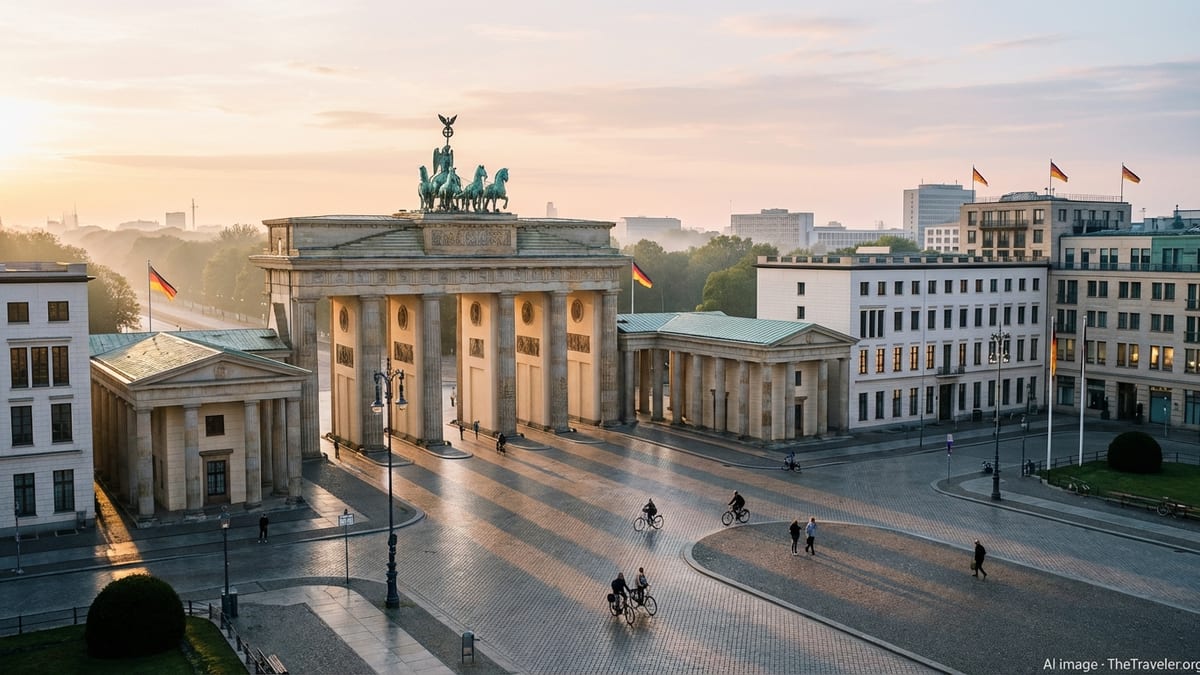
Berlin: History, Culture and Contemporary Edge
For many first-time visitors, Berlin is the natural starting point. The German capital combines layers of 20th century history with a creative, informal atmosphere that feels very different from many other European capitals. The city’s symbolic heart is the Brandenburg Gate, an 18th century neoclassical monument that once stood beside the Berlin Wall and is now a national gathering place and one of Germany’s most recognized landmarks. Nearby, the Reichstag building, home to the federal parliament, is famed for its modern glass dome that offers sweeping views over the city and a powerful sense of transparency in politics.
Berlin’s central area is compact enough to explore on foot or by short public transport rides. Around Unter den Linden and Museum Island you find grand boulevards, royal-era buildings and some of Europe’s most important collections of classical antiquities and art. A short walk away, the Memorial to the Murdered Jews of Europe and preserved sections of the Berlin Wall offer sobering but essential context on Germany’s 20th century history. The contrast between stately museums, postwar architecture and gritty street art gives Berlin its distinctive visual mix.
Beyond the big sights, much of Berlin’s appeal lies in its neighborhoods. In districts like Prenzlauer Berg, Kreuzberg and Neukölln, sidewalk cafés, independent galleries and multicultural food scenes show the city’s modern identity. Parks such as Tempelhofer Feld, a former airfield turned public space, underline how Berliners treat open areas as living rooms, with barbecues, skating and kite-flying on warm days. Allow at least three full days on a first visit to experience both headline attractions and the slower rhythm of local life.
Berlin also works well as a base for day trips. Potsdam, with its palaces and parks, is reachable in under an hour by regional train, making it easy to add an excursion into Prussian royal history without changing hotels. If your time in Germany is limited, pairing Berlin with one or two other key regions still gives a satisfying overview of the country.
Munich and Bavaria’s Alpine Dreamscapes
Where Berlin feels experimental, Munich projects a more traditional image of Germany, with ornate churches, broad squares and beer halls. The Bavarian capital is known for its tidy streets, strong regional identity and a setting close to lakes and the northern Alps. In the historic center, you can wander from Marienplatz, with its animated Glockenspiel clock tower, to the Viktualienmarkt food market and the sprawling English Garden, one of the world’s largest urban parks. The city balances big-name museums with relaxed outdoor spaces where locals linger over coffee or beer.
Munich is also the main gateway to Bavaria’s alpine landscapes. Within a couple of hours by train or car, the scenery shifts from urban avenues to mountain lakes and jagged peaks along the Austrian border. The region around Garmisch-Partenkirchen offers hiking and cable cars in summer and winter sports in colder months. Even if you are not an avid hiker, a short walk in the foothills or a lakeside promenade at places like Tegernsee gives a strong sense of the Bavarian countryside that many travelers picture when they imagine Germany.
For first-time visitors, Munich’s appeal lies in how easily you can combine cultural sightseeing with day trips into nature. One or two full days in the city allow time for key museums, such as the Deutsches Museum for science and technology or the art museums of the Kunstareal district, while another day or two can be dedicated to the mountains. The city’s pedestrian center and reliable public transport mean you can see a lot without needing a car, which simplifies planning.
Timing matters in Munich, especially if you are considering Oktoberfest. The beer festival, typically held from late September into early October, draws very large crowds and drives hotel prices up across the city. Outside that period, you find a more relaxed version of Munich, with traditional beer gardens, seasonal festivals and enough space to appreciate the city’s architecture and slower pace.
Neuschwanstein Castle and the Romantic Road
Few images are as closely associated with Germany as Neuschwanstein Castle, perched on a hill in the foothills of the Alps near the town of Füssen in southern Bavaria. Built in the late 19th century in a romanticized medieval style, it was commissioned by King Ludwig II as a private retreat and later opened to the public after his death. Today it is one of Germany’s most visited attractions, drawing well over a million visitors each year and recently recognized as part of a UNESCO World Heritage ensemble of Ludwig’s palaces.
Expect a carefully managed visitor experience. Access to the interior is by guided tour at fixed times, and tickets are controlled to manage crowding. Advance reservations are strongly recommended in high season, and even with a booking you should allow time for the uphill walk or shuttle ride from the ticket area to the castle. The views from nearby bridges and walking paths, looking back at the white towers against forested slopes and distant peaks, are often as memorable as the lavish interiors themselves.
Neuschwanstein fits naturally into a broader itinerary along the Romantic Road, a scenic route that links a series of well-preserved towns, castles and countryside between Würzburg and Füssen. While you do not need to follow the route formally, choosing one or two towns along this corridor can give you that storybook Germany of half-timbered houses and cobbled squares. The town of Füssen makes a practical base, offering accommodation, restaurants and access to lakeside walks in addition to the famous castle nearby.
Because Neuschwanstein is so popular, consider timing your visit for early morning or late afternoon to avoid the heaviest crowds. Shoulder seasons in spring and autumn often offer clearer views and more manageable visitor numbers than peak summer. Even in less-than-perfect weather, the castle’s silhouette emerging from mist or low cloud can make for atmospheric photographs and a memorable stop on a first-time trip.
Romantic Old Towns: Rothenburg, Heidelberg and Beyond
Germany’s smaller historic towns often become the unexpected highlights of a first trip. Rothenburg ob der Tauber, in northern Bavaria, is one of the country’s best-preserved medieval towns, with intact walls, towers and a dense center of half-timbered houses. Walking along the town walls and exploring quiet side streets in the early morning or evening can feel remarkably removed from modern life. During the day, Rothenburg is popular with tour groups, but lingering overnight allows you to experience a calmer, more authentic atmosphere.
Further west, Heidelberg lines the Neckar River and is anchored by a partly ruined hillside castle that has long attracted writers, painters and students. The view from the castle terrace over the red roofs of the old town and the river is one of classic Germany’s defining panoramas. The town’s university, one of the oldest in Germany, keeps the streets lively with cafés and bookshops, while the riverside paths offer easy walks with broad views of wooded hills.
Other towns like Bamberg, with its riverside town hall and multiple breweries, or Lübeck on the Baltic with its brick Gothic architecture, show how varied Germany’s regional histories and building styles can be. Even if you do not have time to explore extensively, including at least one or two smaller towns in your itinerary helps balance the intensity of big cities. These places tend to be compact and walkable, with central squares that naturally draw you into local routines.
When planning, pay attention to travel times and connections. Many of these towns are reachable by direct or one-change train rides from major cities, so you can visit as a day trip or choose one as an overnight stop between larger hubs. Staying the night often proves rewarding, as the atmosphere after day-trippers leave becomes more local, with evening concerts, relaxed dinners and the simple pleasure of strolling through illuminated streets that feel largely your own.
The Rhine and Moselle Valleys: Castles, Vineyards and River Scenery
The Rhine and Moselle river valleys provide some of Germany’s most accessible scenic landscapes, with steep vineyard terraces, hilltop castles and villages clustered along the banks. The section of the Middle Rhine between roughly Koblenz and Bingen is particularly known for its density of castles and riverside towns, and is recognized by UNESCO for its cultural landscape shaped by centuries of river trade and wine growing. Short river cruises, regional trains and well-marked walking paths make it easy to explore without a car.
For a first-time visitor, basing yourself in a town such as Bacharach, St. Goar or Boppard gives you a quiet backdrop of slate-roofed houses and church spires, with frequent ferries and trains linking nearby points of interest. You might spend one day on a boat cruise, passing castles and vineyards, and another day walking a section of a long-distance trail or visiting a castle ruin with panoramic views over a bend in the river. The pace here is slower than in the big cities, and evenings often revolve around simple meals featuring local wines and seasonal dishes.
The Moselle, a major tributary of the Rhine, offers a slightly softer landscape of winding loops and densely planted vineyards, with towns such as Cochem and Bernkastel-Kues drawing visitors for their photogenic riverfronts and castle-topped hills. Even if you do not consider yourself a wine traveler, tasting rooms and terraces are a convenient way to sample regional culture. Many family-run wineries offer informal tastings where staff are used to introducing newcomers to local grape varieties in approachable language.
Weather and river levels can affect how you experience the Rhine and Moselle, especially for cruising, so it is wise to keep some flexibility in your plans. In high summer, the valleys can be warm and lively, while spring and autumn bring changing foliage and a more subdued pace. Visiting for one or two nights as part of a broader itinerary can be enough to appreciate the landscape, though many travelers find themselves wishing they had stayed longer.
Hamburg, Cologne and the Appeal of Northern Germany
While southern Germany often dominates travel images, the north offers a different perspective, shaped by maritime trade, Gothic brick churches and a flatter, more open landscape. Hamburg, Germany’s second-largest city, has long been a major port on the Elbe River. Today its redeveloped harborfront districts, including areas of converted warehouses and modern concert halls, mix industrial heritage with contemporary architecture. Canals, bridges and lakes give the city an almost coastal feel despite its inland location, and a strong music and nightlife scene adds to its energy.
Cologne, further southwest along the Rhine, is dominated by its twin-spired cathedral, one of the largest Gothic churches in Europe and a defining symbol of the city. The old town around the cathedral and the riverfront promenade offers compact streets lined with traditional houses and breweries serving local beer styles. Cologne’s Roman history, varied museums and calendar of events, including one of Germany’s most famous Carnival celebrations, make it an engaging stop for culture-focused travelers.
Smaller northern cities such as Lübeck and Bremen provide further insight into the legacy of the medieval Hanseatic League, a powerful trading network along the Baltic and North Sea coasts. Their historic cores often center on market squares, city halls and merchant houses built in a distinctive red-brick Gothic style. These northern towns tend to be easy to navigate on foot and are well connected by rail, making them realistic additions to a first-time itinerary if you are curious about the coastal dimension of German history.
If you are working with limited time, choosing either Hamburg or Cologne offers a good introduction to northern Germany without stretching your schedule too thin. Both are well linked to Berlin and the Rhine region by fast trains, and each can be explored comfortably in two days. Including at least one northern city broadens your sense of Germany beyond the widely promoted images of Bavarian mountains and castles.
The Black Forest and Southwest Germany
In Germany’s southwest, the Black Forest and surrounding regions offer dense woodlands, spa towns and a network of small cities that feel distinctly different from both Berlin and Bavaria. The Black Forest itself is a large, forested mountain range, with valleys hosting villages known for traditional farmhouses, craft workshops and guesthouses. Hiking and cycling are popular here, but there are also scenic drives and viewpoints reachable by public transport, so you can enjoy the landscape even without extensive outdoor experience.
The university city of Freiburg sits at the edge of the Black Forest and makes an appealing base. Its compact medieval center, dominated by a Gothic cathedral, is laced with narrow water channels and lined with cafés and markets. From Freiburg, regional trains and buses connect to mountain villages and viewpoint peaks, allowing day trips into higher elevations while returning to an urban base each evening. The climate here is among the milder in Germany, and outdoor dining is common for much of the year.
Nearby, the spa town of Baden-Baden is known for historic bathhouses and grand 19th century architecture. Visitors come to experience both traditional thermal baths and more contemporary wellness facilities, often pairing a few hours of bathing with a walk in the surrounding parks and forested hills. For first-time travelers, even a single afternoon at a spa can be a memorable contrast to city sightseeing and an introduction to Germany’s strong bathing culture.
The southwest also places you within reach of wine regions along the Rhine and smaller cities like Stuttgart, which blend industrial heritage with cultural institutions and green spaces. If your itinerary already includes the Rhine Valley, adding a stop in the Black Forest or Freiburg can deepen your sense of how varied Germany’s landscapes and lifestyles are within relatively short travel distances.
The Takeaway
Germany is compact yet remarkably diverse, and first-time visitors can experience a broad cross-section of its character by combining a few key regions. Berlin provides historical depth and modern creativity, while Munich and Bavaria deliver the alpine and traditional images many travelers expect. Iconic sights like Neuschwanstein Castle and Rhine Valley castles live up to their reputations when approached with realistic expectations about crowds and travel times.
Balancing large cities with smaller towns and scenic areas is often the most rewarding approach. A mix of Berlin or Hamburg with a romantic old town such as Heidelberg or Rothenburg, plus time in wine country or the Alps, offers both variety and a manageable pace. Efficient trains make it possible to cover meaningful ground without feeling rushed, particularly if you limit hotel changes and allow extra time for unplanned wanderings.
Ultimately, the must-see places in Germany are those that match your interests, whether that is art museums, river landscapes, medieval streets or contemporary culture. The destinations in this guide are well established on the tourist map because they reliably give first-time visitors a strong sense of place and a desire to return. Treat them not as a checklist but as building blocks for an itinerary tailored to your own curiosity and travel style.
FAQ
Q1. How many days should a first-time visitor spend in Germany?
Most first-time visitors find that 10 to 14 days allows a comfortable overview, combining two or three main regions without rushing. With a week, focus on one city such as Berlin or Munich plus a nearby scenic area.
Q2. Is it better to travel around Germany by train or by car?
For most first-time visitors, trains work best. Germany’s rail network is extensive, with fast connections between major cities and reliable regional services to many smaller towns. A car can be useful in rural areas, but parking and city driving add stress.
Q3. Which city is better for a first visit, Berlin or Munich?
Berlin offers more contemporary culture and recent history, while Munich feels more traditional and is closer to alpine scenery. If your interests lean toward museums and modern history, start with Berlin. If you want mountains and classic old-world architecture, choose Munich.
Q4. When is the best time of year to visit Germany?
Late spring and early autumn often provide mild temperatures, longer daylight and fewer crowds than peak summer. Winter has its own appeal, especially for Christmas markets and alpine skiing, but days are shorter and some attractions may have reduced hours.
Q5. Do I need to speak German to travel comfortably?
English is widely understood in major cities and tourist areas, particularly among younger people and in hotels and restaurants. Learning a few basic German phrases is appreciated and can be helpful in smaller towns, but it is not essential for most travelers.
Q6. How much should I budget for daily expenses?
Costs vary by city and travel style, but Germany generally sits in the mid-range for Western Europe. Accommodation and dining are often more affordable than in cities like Paris or London, while still offering high quality. Booking in advance usually helps secure better rates.
Q7. Are Germany’s castles and historic sites suitable for children?
Many castles, open-air museums and river cruises are family-friendly and can be engaging for children. Some historic sites involve stairs or steep paths, so checking accessibility in advance is wise, but overall Germany works well for family travel.
Q8. How crowded are popular places like Neuschwanstein Castle?
Neuschwanstein and a few other landmarks can be very busy, especially in summer and on weekends. Booking timed tickets in advance and visiting early or late in the day usually helps reduce waiting times and crowding.
Q9. Can I visit multiple regions without changing hotels too often?
Yes. Cities such as Berlin, Munich, Frankfurt or Cologne make good bases for day trips. From these hubs you can reach several nearby towns, castles or scenic areas by train and return each evening, which simplifies logistics.
Q10. Is tap water safe to drink in Germany?
Yes, tap water in Germany is generally safe to drink and meets strict quality standards. In restaurants, still water is often bottled, so if you prefer tap water it helps to request it clearly and politely.