


When I booked my first Contiki trip, I thought I was signing up for a fast-paced sightseeing sprint: big coach, tight schedule, and a blur of European capitals. I expected convenience and maybe a couple of new Instagram mutuals. What I did not expect was how deeply social the experience would feel, and how quickly the group dynamic would become the real highlight of the trip.
Get the latest updates straight to your inbox!
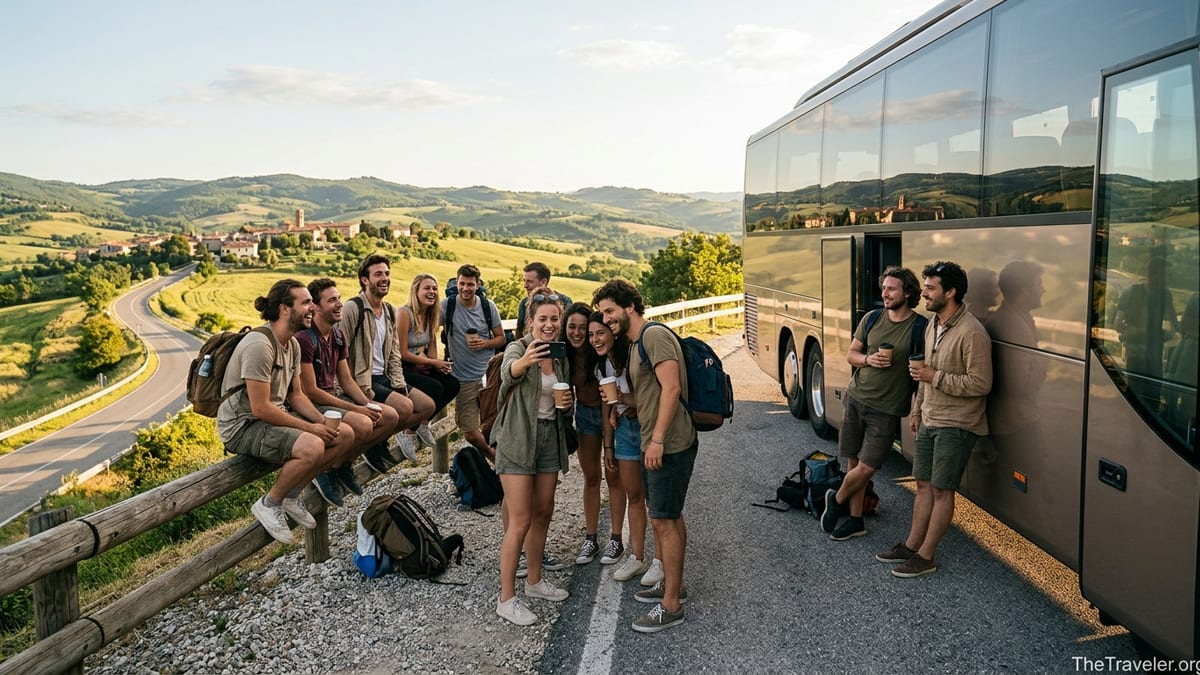
Arriving Alone, But Never Really Solo
Most people board a Contiki coach alone. The company itself says a huge share of its guests are solo travelers between 18 and 35, joining more than 350 itineraries across Europe, Asia, the Americas and beyond. You see it right away on day one: people rolling up with one suitcase and a backpack, looking slightly nervous in the hotel lobby or at the departure point, eyes flicking from name tags to the Trip Manager’s clipboard.
On my European itinerary, we met outside a budget hotel near London’s Russell Square. Within 20 minutes, our Trip Manager had us in a loose circle doing names, home countries and “one thing you’re most excited for.” It felt cheesy for about thirty seconds. Then the ice broke. Someone from Toronto cracked a joke about mispronouncing “Leicester,” another traveler from Sydney admitted she’d never seen snow before heading to the Swiss Alps, and suddenly people were comparing flight delays and jet lag like they had known each other for days.
The real shift happened on the coach ride to Paris. You expect people to put in headphones and retreat into their own worlds. Instead, half the bus was swapping snacks from home: Tim Tams making the rounds from the Aussies, Reese’s from the Americans, Cadbury from the Brits. By the first service station stop on the M20, small groups had already formed around shared interests: the art enthusiasts plotting a Louvre visit, the nightlife crew researching bars in Bastille, the early birds planning sunrise photos at the Trocadéro.
There is a practical reason the social connections happen fast. Contiki takes care of logistics: accommodation, city transfers, major tickets and many activities are pre-arranged, so no one is buried in booking apps. With those decisions off the table, people naturally spend more time talking, swapping recommendations, and getting to know each other instead of stress-scrolling for train times or hostel beds.
Shared Moments That Turn Into Micro-Communities
The company talks openly about “social travel,” but it is only on the road that you see how engineered this can feel in the best way. Group sizes in Europe often sit somewhere between about 30 and 50 travelers, large enough to find your crowd but small enough that faces and names become familiar after a couple of days. In places like Asia or Latin America, the groups are often smaller and even more intimate, which several returning travelers say leads to deeper friendships by the end of the trip.
On a summer itinerary across Western Europe, our coach became a moving micro-community. By the time we reached the Rhine Valley, the same four people were always in the front seats, a trio of Canadians had claimed the back row, and a rotating group kept a running Spotify queue that blended German techno with Australian indie and 90s throwbacks. It was not cliquey in the high school sense, more like natural constellations of people who gravitated together for certain activities but mixed freely throughout the day.
In the evenings, those small groups came alive in local settings. In Amsterdam, one part of the group followed our Trip Manager to a canal-side bar for Dutch beers and stroopwafels split across the table. Another, more introverted cluster headed to a brown café to sip hot chocolate and talk about books and travel stories. In Lucerne, a handful rented bikes and rode around Lake Lucerne at sunset, while others stayed in the lakeside hostel common room playing cards with a couple of New Zealanders they had just met in the hallway.
What surprised me most is how often you end up doing things you would never attempt alone simply because the group energy carries you. A traveler who had always been afraid of heights joined the gondola ride up to Mount Stanserhorn in Switzerland because three new friends promised to ride with her. In Florence, a usually shy solo traveler from Singapore volunteered to join a local cooking class, rolling out fresh pasta next to a student from Texas and a British couple who had met on a previous Contiki and come back together.
The Role of Trip Managers in Shaping the Social Vibe
The Trip Manager and driver are more than logistics staff. On most Contiki itineraries, they are the quiet architects of the group’s social atmosphere. They plan optional dinners in local trattorias, casual bar meetups, walking orientations in each city, and even low-key nights in, like movie screenings on the coach during long stretches of highway. Their job is not only to keep things on schedule, but to make it feel easy for strangers to talk to one another.
On a 16-day run from London to Rome, our Trip Manager seemed to know everyone’s name by day two. She made a point of rotating seat assignments so no one was marooned at the back, and she encouraged people to swap WhatsApp details early, which later became a lifeline for spontaneous meetups. By the time we reached Munich, the group chat was full of shared photos, jokes about “coach naps” and invitations to everything from early-morning runs along the Isar River to late-night kebab missions.
Trip Managers also set expectations that help temper some of the stereotypes around Contiki. While the brand’s party reputation still exists, recent years have seen a visible shift: there are now itineraries marketed with more emphasis on wellness, food, and local culture, and the company has started offering “sober curious” options for travelers who want social time without alcohol at the center. On our trip, nights out were always framed as an option rather than a requirement, and our Trip Manager made sure alternative activities were mentioned with equal enthusiasm.
This kind of leadership matters when your group ranges from 18 to mid-30s, with very different ideas of a good night out. In Berlin, some chose a club in Friedrichshain and rolled in just before breakfast. Others joined a low-key craft beer tasting near Alexanderplatz, or stayed at the hotel playing board games picked up in a local bookstore. Nobody felt judged for their choice, and it was understood that the coach would leave on time the next morning regardless of how much sleep you had managed to get.
Social Travel Beyond the Party Stereotype
Before I joined, friends warned me that Contiki was “basically a rolling pub crawl.” On some itineraries, especially in Europe during peak summer, that reputation has some basis in reality. But focusing only on the party side misses how much the social experience has diversified as the traveler profile has changed. Many Gen Z and millennial travelers now place greater value on mental health, meaningful experiences, sustainability and, increasingly, moderate or sober socializing.
On board, that translated into a wide spectrum of social styles. Yes, in Mykonos there was a group that headed for the beach clubs in Paradise and Super Paradise as soon as we checked in. But there was also a smaller cluster who spent the evening wandering Mykonos Town’s back alleys, taking photos of the blue-and-white doorways, then splitting a seafood platter at a taverna overlooking the harbor. In Santorini, some watched the famous Oia sunset elbow-to-elbow with hundreds of other visitors, while others found a quiet rooftop bar in Fira to sip lemonade and talk about future trips.
Reviews from recent travelers echo the same point. Many highlight the social aspect as the best part of the experience, describing how they made friends from half a dozen countries in a single week, or how they arrived anxious about fitting in and left with a global contact list. At the same time, some note that the intensity of the social scene can vary trip to trip, and that doing a bit of research about itineraries, time of year, and overall vibe can help align expectations before you book.
For those wary of the party stereotype, newer themed trips and certain destinations naturally tilt toward a calmer rhythm. A sailing itinerary along the Turkish coast, for example, often centers on long days in quiet bays, swimming off the back of a gulet and sharing simple meals on deck, with the socializing happening over card games and stargazing rather than club-hopping. Hiking-focused trips in places like New Zealand or the Canadian Rockies tend to draw travelers more interested in early starts and scenic viewpoints than sunrise after-parties.
How Social Design Shows Up in the Details
Contiki’s “social travel” label is not just a marketing phrase. It reveals itself in small design choices built into the trips. Accommodation is often selected for communal spaces as much as for the rooms themselves. In Austria, for instance, one of Contiki’s long-running winter hubs is a ski lodge-style property where guests share hearty dinners in a big dining room, then migrate to a snug bar or lounge to swap stories from the slopes. In summer, a French château used on some Europe itineraries invites late-night conversations under fairy lights in the courtyard and early morning coffee meetups before buses depart for nearby towns.
Even single supplements are handled in a way that nudges people toward connection without forcing it. Many travelers share twin rooms with another guest of the same gender by default, which means you start with at least one built-in acquaintance. Those who prefer more privacy can, on some itineraries, pay for a private room, but a significant number still choose to share because the cost savings are real and the social benefits can be unexpectedly big. More than one pair of former roommates now plan annual trips together long after their original tour ended.
The daily structure also shapes how the social energy flows. Mornings usually start with a brief briefing on the coach, outlining the day’s highlights and optional activities. That is when spontaneous sub-groups often form: three people committing to a free walking tour, two others opting for a museum deep dive, another cluster choosing a food market exploration. Afternoons tend to be more fluid, then dinner brings everyone back together, whether at a group restaurant booking or in small, self-organized circles.
There are also deliberate digital touchpoints. Before departure, many travelers join their trip’s online forum or chat group, sometimes through the company’s own community tools. People introduce themselves weeks in advance, share packing tips and discuss optional add-ons they are considering. By the time you are standing in that first hotel lobby or airport meeting point, there are already familiar names and profile photos, and seeing someone in a “Contiki” hoodie feels oddly comforting rather than awkward.
When the Group Becomes the Destination
On longer itineraries, something subtle happens: the places become a backdrop to the story you are building with the group. You still see the big-ticket sights, but what you remember most vividly are the shared reactions and running jokes. It is the way everyone collectively gasped when a storm cleared over Neuschwanstein Castle revealing a double rainbow, or the night a power cut in a small Tuscan town forced the whole restaurant to eat by candlelight, turning a simple group dinner into something that felt like a movie scene.
By week two of our trip, people had settled into a rhythm that felt almost like living in a traveling village. There was the unofficial “coach DJ” who always wired their phone into the sound system during long drives, taking requests for everything from K-pop to classic rock. There was the person who always carried spare sunscreen and plasters, instantly elevated to group hero status on hot days. There was the quiet duo who never missed a sunrise and would share their photos on the group chat before breakfast, letting the night owls see what they had slept through.
Travelers from other Contiki departures tell similar stories. Someone who did a New Zealand adventure remembers an impromptu haka lesson in a Rotorua hostel common room, led by a Kiwi traveler who was not even officially part of the group but drifted in for a chat. Another recalls late-night card games on a ferry between Greek islands, where the smell of souvlaki drifted from the snack bar while half the group debated which island had the best beaches.
By the final days, the idea of saying goodbye can feel heavier than you expect. On our last night in Rome, people lingered over gelato near the Trevi Fountain, taking group photos and promising to visit one another in Melbourne, Vancouver, or Dublin “as soon as possible.” A few had already booked future trips together, including an Iceland itinerary and a festival-focused run through Spain. Even those who knew they might never cross paths again said the experience had reset their confidence about traveling solo in the future.
The Takeaway
What surprised me most about Contiki was not the pace, the coach travel, or even the party potential, but the depth of its built-in social fabric. It is easy to assume a group tour will feel generic or transactional, like ticking boxes with strangers. In practice, when the logistics are handled for you, the real trip happens in conversations on the coach, impromptu dinners, shared misadventures and inside jokes that make distant cities feel suddenly familiar.
Contiki will not be the perfect fit for every traveler. If you strongly prefer complete independence, or if your ideal trip involves maximum solitude, the constant proximity to others might feel intense. But if you are even slightly curious about meeting people from around the world, especially as a first-time or nervous solo traveler, it can be an unexpectedly gentle way into that world. The surprises are not only the landmarks you visit, but the friendships and small community that form along the way.
FAQ
Q1. Is Contiki only for people who want to party all the time?
Contiki does attract travelers who enjoy nightlife, especially on popular Europe summer itineraries, but it is not only a party-focused experience. Many trips now highlight culture, food, wellness and nature, and there is usually a mix of people who go out late and others who prefer early starts and quieter evenings.
Q2. Will I feel left out if I join Contiki as a shy or introverted traveler?
Probably not. A large share of guests travel solo, and Trip Managers are practiced at helping people connect gently, with low-pressure icebreakers and optional group activities. You can dip in and out of the social scene as it suits your energy, and plenty of introverts say they made close friends without feeling overwhelmed.
Q3. What is the typical age range on a Contiki tour?
Contiki is designed for travelers roughly between 18 and 35. On any given trip you might see a cluster of early-twenties travelers plus a solid group in their late twenties and early thirties. Some departures also offer narrower age bands, such as late-twenties to mid-thirties, which can shift the social vibe.
Q4. Are most people on Contiki trips traveling alone or with friends?
It is a mix, but solo travelers are very common. Many join specifically to avoid feeling alone on the road. Others come with a friend or partner. Because the group dynamic starts forming on day one, the line between solo and non-solo travelers blurs quickly, and it is normal to head out in mixed groups by the second or third day.
Q5. How big are Contiki groups, and does size affect how social it feels?
Group sizes vary by destination and itinerary. In parts of Europe and North America, groups often sit somewhere between roughly 30 and 50 travelers, which creates a lively, high-energy feel. In regions like Asia, Latin America or parts of Africa, numbers can be smaller, sometimes closer to a dozen to 30, which many people find more intimate.
Q6. What if I do not drink alcohol? Will I still enjoy the social side?
Yes. While drinking is part of the experience for some guests, it is not mandatory. Recent trips increasingly include travelers who drink lightly or not at all, and some newer itineraries are designed with “sober curious” or wellness-focused themes. There are usually plenty of non-alcoholic options and alternative evening activities.
Q7. How much free time do you get to explore on your own?
Most tours blend structured activities with pockets of free time. You might have a morning city orientation followed by several hours to explore independently, then regroup for an optional dinner. This balance lets you share key experiences with the group but still wander off for solo coffee breaks, museum visits or people-watching.
Q8. Can I choose my roommate, or will I be paired with a stranger?
If you book with a friend, you can usually request to share with them. Solo travelers are commonly paired in twin rooms with another guest of the same gender, which many people find is a quick way to make a first friend. On some itineraries you can pay extra for your own room if you prefer more privacy.
Q9. Do Contiki trips feel safe, especially for solo female travelers?
Many solo female travelers choose Contiki because there is a built-in group and a Trip Manager who knows the local area. Accommodation and transport are pre-vetted, and there is usually someone to walk back with at night. As with any travel, basic precautions still apply, but the structured environment often feels more reassuring than going completely alone.
Q10. Do people stay in touch after the tour ends?
Very often. Group chats, social media connections and reunion plans start forming during the trip itself. Some travelers go on to visit each other’s home countries or book new itineraries together, while others simply keep a looser, digital connection. Even if you never meet again, those shared travel memories have a way of lingering.