

Niagara Falls had lived in my mind for years as a shimmering postcard: a roaring white curtain of water framed by rainbows, a misty boat ride, fireworks over the gorge, and a romantic skyline of hotels sparkling on both sides of the border. When I finally went, I brought all of those expectations with me, along with a camera roll I was sure would be filled with dramatic, once in a lifetime shots. What I found on the ground was more complicated, sometimes jarring, often impressive, and ultimately far more human than the filtered photos that had shaped my imagination.
Imagining Niagara: The Picture in My Head
Like many travelers, my expectations of Niagara Falls were built on a steady drip of images and stories. I knew that the falls straddle the border between Ontario in Canada and New York State in the United States, that the largest curve of water is called Horseshoe Falls, and that millions of people come every year. Travel articles and glossy brochures promised dramatic viewpoints, easy access, and a neat blend of nature and city energy. It all sounded both wild and perfectly managed, like chaos on a well marked path.
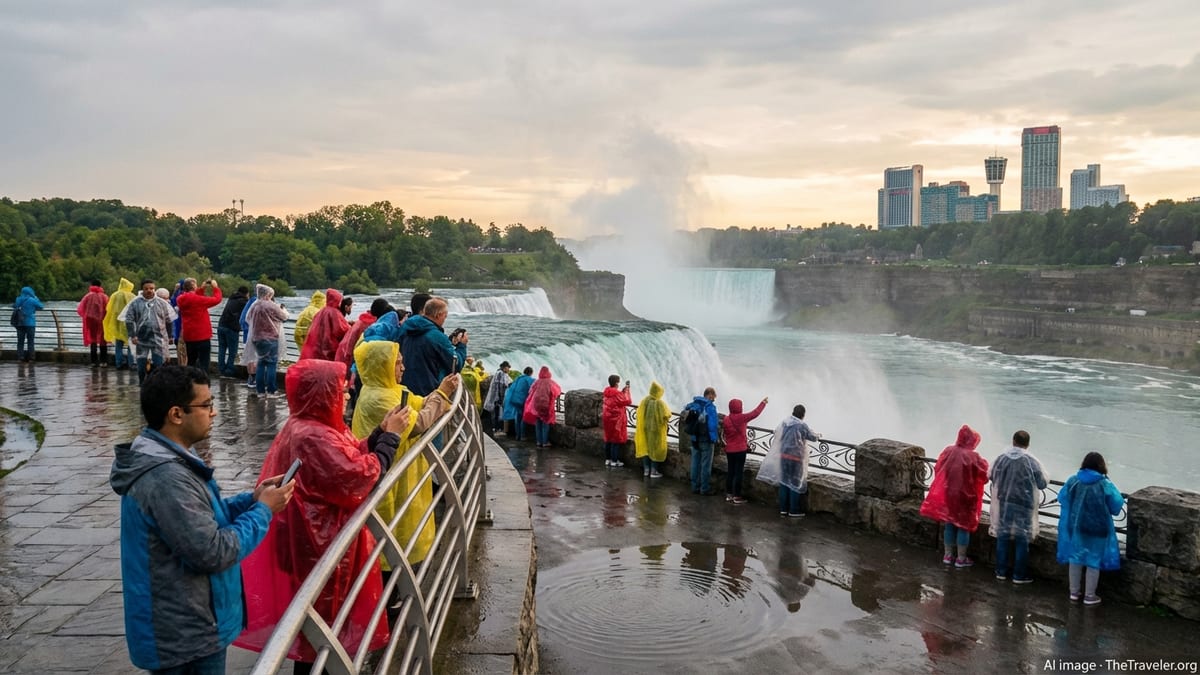
I also assumed the experience would feel almost solitary at times: that there would be a moment in the mist when I would stand alone, just me and the thunder of the Niagara River. The reality of sharing the edges of a famous waterfall with what is now roughly tens of thousands of people on a typical day, especially in summer, is hard to picture until you are actually shoulder to shoulder on a railing and angling for a gap large enough for a photo.
Another expectation I carried was seamless access between the U.S. and Canadian sides. I imagined wandering across a scenic bridge after breakfast, sampling viewpoints in one country by late morning and crossing back for dinner. The guidebook phrases like "twin cities" and "border town" made it sound as simple as strolling across a city park, not an international border shaped by real time regulations, ID checks, and sometimes long waits.
Finally, I expected the falls themselves to dominate everything. I thought the water would be the story and that the surrounding infrastructure would disappear into the background. Instead, the hotels, casinos, neon lights, tour buses, souvenir shops, and parking lots are an undeniable part of the experience. How you feel about that mix of natural spectacle and commercial energy will shape your visit more than you might think.
The First Glimpse: Scale, Sound, and Surprise
Whatever expectations you arrive with, the first close look at Niagara Falls is still a shock. Horseshoe Falls alone drops close to 50 meters and stretches roughly 800 meters across, taking the bulk of the Niagara River with it. When you stand at Table Rock on the Canadian side or Terrapin Point on Goat Island in New York, the scale is almost disorienting. The sound is not just noise; it is a constant low thunder that you feel in your chest, and the mist hangs in the air like weather of its own.
In my imagination, the water had always been a long, continuous white curtain. In person, you see texture and movement you do not catch in photos: the turquoise interior where the river curves toward the brink, the dark seams where currents collide, the broken, foaming water below American Falls and Bridal Veil Falls where it crashes over boulders. On bright days, the spray creates small, shifting rainbows that appear and disappear without warning. It all feels very alive, more chaotic and less polished than it looks on a postcard.
The surprise, for me, was how directly the city presses up against this natural drama. A few steps back from the railings on either side and you are in a landscape of paved paths, visitor centers, food stalls, and high rise hotels. Nighttime illuminations, which now run for long stretches each evening, paint the falls with color, and during warmer months scheduled fireworks add yet another layer. It is dramatic and memorable, but it also makes clear that this is not a remote wilderness. Niagara is a working tourism engine, and the falls are its centerpiece.
That tension between raw nature at the edge and commercial reality a few meters back is what defines the first impression. If you arrive expecting a secluded national park, you may feel disappointed. If you expect a major attraction that happens to be attached to a very real, very powerful waterfall, the experience feels more honest.
The Crowds and Costs: From Dreamy Escape to Busy Attraction
One of the biggest gaps between expectation and reality is the sheer number of people. Recent estimates suggest that the Niagara region on both sides together sees well over twenty million visits in a typical year, with peak months between June and August drawing the heaviest flows. In practice, that means summer afternoons at the most famous viewpoints can feel less like quiet contemplation and more like a festival, complete with lines, chatter, and a soundtrack of camera shutters.
I had imagined having time and space to linger at the railings, but on a sunny high season day, the rhythm is closer to a slow moving human tide. Families with strollers, tour groups moving in clusters, couples taking turns swapping places at the best vantage points: all of us are trying to catch that perfect frame. To really appreciate the falls, I found myself stepping away to less obvious stretches of the promenade or returning very early in the morning and again near dusk, when the walkways briefly thinned and the roar of the water rose above everything else.
Costs are another area where reality bites harder than expected. While simply looking at the falls from public viewpoints is free, most of the classic experiences carry a price: boat tours, behind the falls tunnels, observation towers, and parking in convenient lots can add up quickly. Hotels near the edge with direct views often charge a premium, especially on weekends and during holidays. Food on the most touristy strips, such as the entertainment district on the Canadian side, tends to be more expensive than similar options a few blocks away.
None of this means Niagara is out of reach, but it does mean that going in with a loose budget and the idea of a low cost getaway can lead to sticker shock. A more realistic approach is to choose one or two paid signature experiences you care about most and combine them with free walks along the river, viewpoints in the state park on the U.S. side, or quieter stretches of the parkway on the Canadian side. Planning around that balance made the entire visit feel more intentional and less like a series of ticket lines.
Classic Attractions: Misty Dreams vs Practical Realities
For many visitors, the mental image of Niagara Falls is tied to the famous boat tours. I pictured myself in a poncho, pushed almost under the curtain of Horseshoe Falls, swallowed by mist and roaring water. That part turned out to be quite accurate, but the practical reality around it was different from what the glossy brochures suggest. On busy days, boarding a boat can involve purchasing timed tickets, waiting in long zigzag queues, and shuffling along walkways while staff manage the flow. The actual ride is fairly short, often measured in tens of minutes rather than hours, but intense while it lasts.
The same balance between drama and logistics applies to other signature experiences like walking close to the base of Bridal Veil Falls on the American side or exploring tunnels behind Horseshoe Falls in Ontario. The reality involves waterproof pathways, stairs or elevators, safety railings, and a lot of fellow visitors sharing the same platforms. You are never really alone with the water, but when you focus on the sensation of spray on your face and the way the sound fills the space, the crowds recede and the intensity of the falls takes over.
Weather plays a much larger role than I had anticipated. On cool or windy days, the mist can feel like driving rain, chilling hands and soaking clothes despite the plastic poncho. On hot afternoons, the same spray is a welcome relief, but it can fog camera lenses and leave phones damp. Shoes with good grip are more than a comfort; wet wooden walkways and stone paths can be slippery, and staff frequently remind visitors to hold onto rails and keep a respectful distance from edges.
In the end, the reality of these classic attractions is less a dreamy, carefree drift into the mist and more a carefully managed encounter with a powerful natural force. Understanding that tradeoff helped me appreciate how much behind the scenes infrastructure and safety planning is required to bring so many people that close to such an immense volume of water.
U.S. vs Canadian Sides: Two Very Different Moods
Before I went, I had heard a simple rule of thumb: go to the Canadian side for the best views and the American side for the most natural feel. Like many rules, there is truth in it, but the reality is more nuanced. Standing on the Canadian promenade, you do get a sweeping, almost panoramic perspective of all three main waterfalls at once, including the dramatic curve of Horseshoe Falls. High rise hotels line the ridge, and you are never far from bright lights, arcades, restaurants, and a constant flow of traffic.
On the American side, Niagara Falls State Park offers a more grounded, park like environment. Paths wind through trees on Goat Island, and some viewpoints bring you almost to the lip of the falls. There are fewer high rises in sight, and the overall atmosphere is quieter, especially later in the evening when day trippers head home. It is easier here to find a bench, listen to the water, and feel slightly removed from the urban bustle, even though the city is close by.
The part I had underestimated was the practical side of crossing an international border to sample both moods in a single day. You need appropriate documentation, whether that is a passport or other accepted ID, and you need to be prepared for lines at inspection booths, especially during holidays or peak travel times. Pedestrian crossings over the river offer dramatic views and are a memorable experience in themselves, but they are still official border points subject to rules and wait times.
If your expectation is that you can stroll back and forth as casually as changing neighborhoods, reality may feel restrictive. If you treat each side as a distinct destination with its own pace and personality, the experience becomes richer. I found it helpful to focus one full day on each bank, building in time for a slower wander along lesser used paths rather than trying to squeeze every highlight into a single whirlwind circuit.
Weather, Seasons, and the Mood of the Falls
Another area where expectations and reality diverge is the role of weather and season. Promotional images often show Niagara Falls on bright summer afternoons, complete with vivid blue skies and crisp white spray. While summer is indeed the busiest period, the falls present very different personalities at different times of year, and those shifts can make or break your visit if you arrive expecting only one version.
In warm months, longer daylight hours and comfortable temperatures invite slow walks along the river and late night visits to watch the illuminations. The tradeoff is thicker crowds, higher prices for accommodation, and more competition for parking and restaurant tables. Shoulder seasons in spring and autumn can feel gentler, with milder temperatures, changing foliage, and fewer visitors. Some days bring clouds and drizzle, but the softer light can make the water look almost more dramatic in photos.
Winter is the most surprising season. Not all attractions run year round, and boat tours typically pause in the colder months, but the tradeoff can be extraordinary. Spray freezes on railings and branches to create icy sculptures, and on very cold days parts of the riverbank can look like a frozen world. Walking paths may be slick and some areas fenced off for safety, so footwear and caution matter even more, but there is also a stillness that is almost impossible to find in summer. The roar of the water feels even louder in cold, clear air.
If you expect a single, unchanging Niagara, the reality of a destination that shifts character with each season might feel confusing. If you embrace those changes, you can choose the mood that best fits the kind of experience you want, whether that is festive and social or stark and contemplative.
Behind the Photos: Logistics, Noise, and Small Moments
Scrolling through social media before I went, it was easy to focus on the polished images of perfect rainbows, empty railings, and couples standing alone with the falls as a backdrop. In reality, those moments exist but are surrounded by many others that rarely make it into a carefully curated feed. There are the lines at public restrooms and snack stands, the jostling on crowded sidewalks, the slightly damp shoes, and the constant hum of buses and cars along the main roads.
The soundscape is particularly different from what I imagined. The falls provide a steady, thunderous base note, but layered on top are tour announcements, music from nearby attractions, the beeping of crosswalk signals, and an ongoing murmur of conversation in many languages. At first, I found it distracting, but over time it became part of what made Niagara feel alive and global, a place where visitors from every direction converge to look at the same sheet of falling water.
What surprised me most were the quieter, unscripted moments that happened in the spaces between attractions. Early in the morning, before day tours arrived, I watched local joggers running along the river, apparently as accustomed to the view as others are to a neighborhood park. On a cool evening, I wandered a little beyond the densest cluster of lights and found stretches of railing with only a handful of people, each wrapped in their own thoughts as the illuminated falls glowed in the distance.
These small experiences did not match the grand expectations I had come with, but they are what I remember most clearly now. Niagara is not only about the big, staged encounters; it is also about the everyday human rituals that play out around an extraordinary backdrop.
The Takeaway
My time at Niagara Falls did not match the postcard in my head, and that turned out to be the best part of the journey. I arrived expecting a neatly packaged, almost cinematic spectacle, where the water was always perfectly lit and the viewpoints always waiting for me. What I found was a living destination shaped by weather, seasons, international borders, and the flow of millions of visitors. It is messy in places, commercial in others, sometimes overwhelming, and often breathtaking.
If you travel to Niagara with the idea that you will have the falls to yourself, reality will likely disappoint you. If you arrive understanding that this is both a powerful natural wonder and a major tourism hub, you can make choices that bring you closer to the experience you want: visiting early or late to soften the crowds, exploring both banks with respect for border requirements, combining paid attractions with free riverside walks, and leaving room for unplanned, quiet interludes.
In the end, Niagara Falls is less a single moment and more a collection of impressions: the weight of the sound, the chill of the mist, the glow of lights on falling water after dark, the hum of many languages along the railings, and the sight of a river that does not stop. Expectations might draw you there, but it is the layered, imperfect reality that stays with you long after you have dried off your poncho and scrolled back through your photos.
FAQ
Q1. Is Niagara Falls worth visiting if I have already seen other major waterfalls?
Yes. Even if you have visited other famous waterfalls, Niagara stands out because of its combination of sheer water volume, easy access, and the way a busy border city wraps around a powerful natural feature. The experience is as much about the human energy and infrastructure as it is about the falls themselves.
Q2. Which side is better, the U.S. or Canadian side of Niagara Falls?
The Canadian side generally offers broader, postcard style views and more concentrated entertainment, while the U.S. side tends to feel more like a traditional state park with closer, more intimate viewpoints. Many visitors feel the trip is most rewarding when they plan dedicated time on both sides rather than choosing only one.
Q3. How crowded does Niagara Falls really get in peak season?
During summer and on holiday weekends, walkways and railings near the main viewpoints can feel very busy, with steady streams of tour groups and day trippers. You can still enjoy the falls by visiting early in the morning or later in the evening, and by walking a little farther from the most obvious vantage points.
Q4. Do I need a passport to see both sides of Niagara Falls?
Yes. Because the falls sit on the border between the United States and Canada, you must cross an international boundary to visit both sides. That means carrying valid identification that meets current border requirements and allowing time for inspection lines when you cross bridges on foot or by vehicle.
Q5. How expensive is a typical visit to Niagara Falls?
Seeing the falls from public viewpoints is free, but costs add up through parking, hotels, food, and ticketed attractions like boat rides and observation towers. With planning, you can control your budget by choosing a few key paid experiences, looking for off peak accommodations, and relying on free riverside walks for much of your viewing time.
Q6. What is the best time of day to experience the falls?
Early mornings and late evenings usually offer a calmer atmosphere and softer light, which can make both photos and quiet reflection more rewarding. Midday visits provide strong sunlight and more activity but are also when crowds and heat tend to be at their peak, especially in summer.
Q7. Is Niagara Falls accessible for visitors with limited mobility?
Many of the main viewpoints and visitor centers on both sides have ramps, elevators, and paved paths, and major attractions work to accommodate wheelchairs and strollers. Some routes, especially those involving stairs near the water, may be challenging, so it helps to check access details in advance and build in extra time to move between locations comfortably.
Q8. Can I enjoy Niagara Falls without taking a boat tour?
Absolutely. While boat rides are iconic, you can have a rich experience from land based viewpoints, walking paths along the gorge, and platforms near the tops and bases of the falls. Some visitors prefer to skip the boat altogether and spend their time exploring quieter trails, observation towers, and scenic overlooks.
Q9. What should I wear for a realistic day at Niagara Falls?
Comfortable, non slip shoes and weather appropriate layers make a big difference, since paths can be wet and conditions change quickly. A light waterproof jacket or poncho, along with protection for your camera or phone, will help you stay comfortable when mist or sudden showers move through the area.
Q10. How long should I plan to stay at Niagara Falls?
A focused day trip can give you a good taste of the falls and one or two key attractions, especially if you stick to one side. For a more relaxed experience that includes both the U.S. and Canadian viewpoints, evening illuminations, and some time on nearby trails or in town, two to three days allows a better balance between sightseeing and simply absorbing the atmosphere.