

I landed in Hawaii expecting beautiful beaches and postcard sunsets. I left understanding why so many people describe the islands not simply as a destination, but as an experience that stays with you. My first trip showed me that what makes Hawaii feel so special is not just the scenery, but the way land, ocean, and culture are woven tightly together into everyday life.
Arriving in the Islands and Feeling the Aloha Spirit
The feeling that Hawaii is different begins before you even step outside the airport. After a long flight over open ocean, the sight of green mountains rising sharply from the sea and the soft, humid air in the jet bridge send a clear signal that you have arrived somewhere distinct. The first sounds of Hawaiian language over the public address system and the fragrance of fresh flowers hint that this is not a generic beach destination, but a place with its own identity and rhythm.
For many first time visitors, the welcome is literal as well as emotional. Being greeted with a lei, whether by a friend, family member, or a local welcoming service, instantly sets a different tone. This simple gesture represents connection, respect, and gratitude, and it makes visitors feel like guests rather than anonymous tourists. It is a small moment that carries cultural meaning and quickly shows that relationships matter as much as scenery here.
Driving away from the airport, the landscapes make a powerful first impression. Volcanic slopes, swaths of bright green vegetation, and glimpses of the Pacific appear and disappear around every curve in the road. Yet what stood out to me most were the small details: roadside fruit stands, family run plate lunch spots, and neighborhood beach parks where residents gather after work. It felt clear almost immediately that daily life in Hawaii unfolds in close relationship with the outdoors.
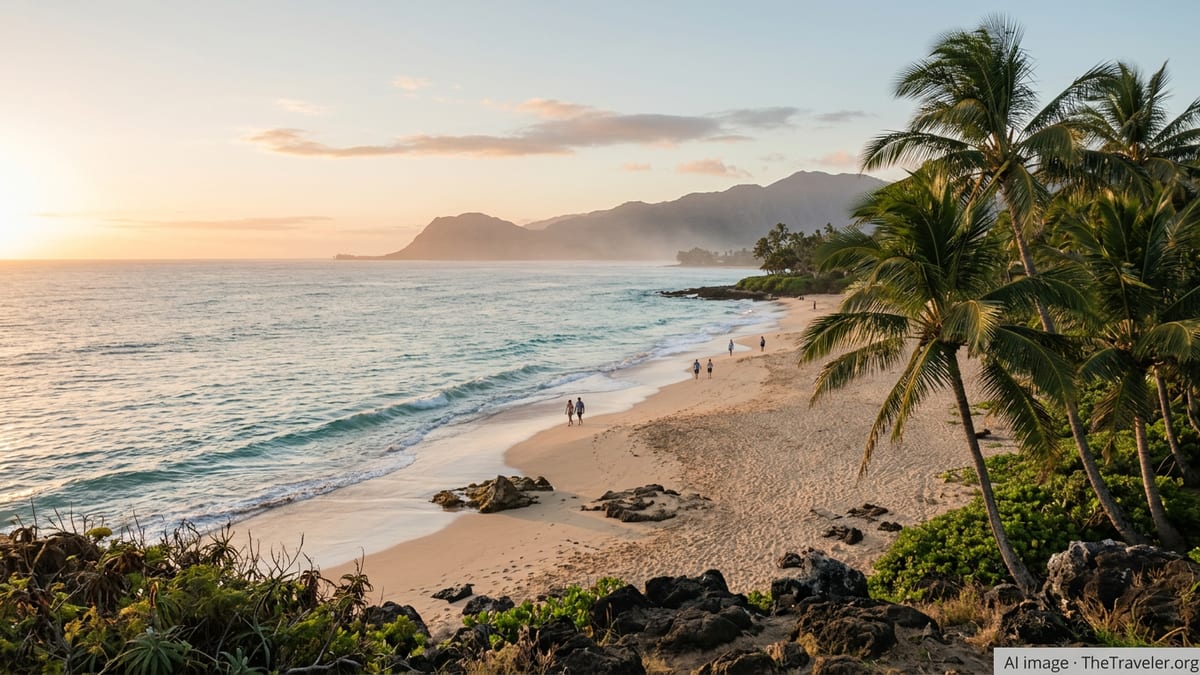
By the time the first evening arrived and the sky faded through hues of gold and pink, I began to understand why people talk about the islands with a kind of softness in their voice. The transition from daylight to night seems slower and more deliberate here, as if the entire place pauses to acknowledge the sunset. Locals and visitors alike stop along beaches and promenades, quietly watching the sun meet the horizon, and that shared moment of stillness is part of Hawaii’s quiet magic.
Landscapes That Feel Larger Than Photographs
I had seen thousands of photos of Hawaii before I ever stepped foot on the islands, but none fully prepared me for how the landscapes feel in person. The scale of the valleys, volcanic craters, sea cliffs, and open ocean is difficult to translate into images. Standing on a ridge trail, where one side drops into dense forest and the other falls away to crashing surf, you experience the islands in three dimensions and with all five senses at once.
Each island has a distinct personality shaped by its geography. Oahu combines urban Honolulu and Waikiki with lush mountain ranges and windward beaches. Maui layers resort towns with winding roads that lead to waterfalls and high elevation volcanic vistas. The island of Hawaii, often called the Big Island, offers stark lava fields, rainforest, and snow topped peaks in one day’s drive. Kauai leans into deep green cliffs, quiet towns, and a slower pace. Even on a short first trip, you quickly realize that “Hawaii” is not one uniform place, but an archipelago of very different environments.
The volcanic origins of the islands are visible almost everywhere. Black lava rock forms tide pools along the shore, cliffs rise abruptly where lava once flowed into the sea, and, depending on current activity, visitors may witness glowing lava lakes or steam rising from fissures in national parks. You do not need to know the detailed geology to feel the power of a landscape that is still being shaped from within the earth.
Yet the most memorable moments were often quiet ones: watching morning light filter through palm trees, listening to trade winds rustle leaves, and noticing how quickly a passing rain shower gives way to a rainbow. The islands’ microclimates mean you can drive from sunny beaches into misty highlands in less than an hour, which keeps every day full of small surprises. Over time, you begin to sense why residents talk about having deep respect for the land, or ʻāina, not as an abstract idea but as something they interact with constantly.
Ocean Encounters and the Rhythm of the Coast
On my first morning by the water in Hawaii, the ocean seemed both inviting and humbling. The color shifted from pale turquoise near shore to deep cobalt further out, and the sound of waves landing against the sand formed a steady backdrop to everything else. What I came to understand is that the coast here is not just for sunbathing. It is a living space where culture, recreation, and spirituality intersect.
Surf culture is one of the most visible examples. Out beyond the breaking waves, lines of surfers wait patiently for the right swell, reading the ocean with an attention that only years of practice can produce. On shore, families gather at beach parks with coolers and tents, keiki learn to paddle in shallow water, and elders sit in folding chairs, watching generations share the shoreline. Even if you never set foot on a surfboard, you feel that the ocean is a teacher, playground, and provider all at once.
Snorkeling on clear days reveals another layer of the islands’ personality. Coral reefs, schools of tropical fish, and, with luck, graceful sea turtles move quietly beneath the surface. Floating above this world, you begin to see why local guidelines emphasize reef safe sunscreen, careful fin kicks, and not touching marine life. Respect for the ocean is not just about safety. It is about preserving a relationship that sustains both wildlife and community life, from fishing traditions to modern ocean sports.
Seasonal events on the water add to this sense of connection. During winter months, humpback whales migrate through Hawaiian waters, and the sight of a tail fluke rising above the waves or a blow of mist on the horizon stays with you long after you return home. Whether you choose a guided boat tour or simply scan the horizon from a lookout or beach, these encounters highlight that Hawaii’s story stretches far beyond its shorelines.
Meeting the Culture Beyond the Postcard
Before my trip, I associated Hawaiian culture mainly with hula performances and flower leis. Once I arrived, I realized how incomplete that picture was. The islands’ cultural life incorporates Native Hawaiian traditions, the legacies of plantation era laborers, and contemporary influences from Asia, the Pacific, and the mainland United States. Together they create a layered, living culture that visitors can glimpse if they are willing to listen and learn.
Attending cultural presentations, whether at a museum, community center, or visitor program, provided important context. Exhibits about the Hawaiian language, the overthrow of the Hawaiian Kingdom, and traditional navigation methods used by Polynesian voyagers reframed the islands as a sovereign homeland rather than just a vacation spot. Hearing about place names, legends tied to particular valleys or peaks, and the revival of practices such as voyaging canoe expeditions helped me understand why residents often talk about protecting both culture and land.
Music and hula also took on new meaning when I saw them outside of a staged setting. A group of musicians playing slack key guitar at a small neighborhood venue, a halau practicing hula near the beach at sunset, and families singing together at gatherings all made it clear that these arts are not just performances for visitors. They are ways of telling stories, honoring ancestors, and passing down knowledge. As a guest, being invited into those spaces, even briefly, felt like a privilege.
Food became another gateway into culture. Plate lunches layered with rice, macaroni salad, and local style preparations, poke made with fresh fish, and dishes such as laulau and kalua pork reflect Native Hawaiian roots alongside influences from Japan, the Philippines, Portugal, and other places. Farmers markets, where vendors sell local fruits, baked goods, and crafts, show how contemporary Hawaii continues to draw from both land and sea in creative ways. Eating in small, family run spots and purchasing items made in Hawaii provided a more grounded sense of place than any souvenir shop could offer.
Learning to Travel With Respect
During my planning, I repeatedly encountered local guidance about responsible travel, and it quickly became part of how I approached my visit. The message was consistent: Hawaii welcomes visitors, but asks them to travel in ways that support, rather than strain, the islands’ communities and ecosystems. As a first time guest, that meant paying attention not only to where I went, but how I behaved once I got there.
On the environmental side, simple choices made a difference. Staying on marked trails prevented erosion and protected fragile plants. Packing out all trash and using refillable water bottles helped keep beaches and parks cleaner. Choosing reef safe sunscreen reduced harm to coral systems, especially at popular snorkeling spots. And checking local advisories before swimming or hiking, particularly during heavy rain or high surf, respected the ocean’s power and the limits of rescue resources.
Cultural respect required listening and humility. Reading about the significance of sacred sites, or heiau, helped me understand why some places request quiet, modest clothing, or no photography. Learning basic Hawaiian words such as aloha and mahalo, and pronouncing place names with care, showed effort, even if my accent was imperfect. Whenever I joined guided activities, asking questions about history and tradition, rather than just photo opportunities, often led to richer conversations with local guides.
Economic choices also play a role in thoughtful travel. Supporting local farmers markets, independent shops, and community based tours helps keep more benefits within Hawaii. Many operators now emphasize cultural education, sustainability, and smaller group sizes, and choosing them sends a clear signal that visitors value those priorities. Over the course of my trip, I realized that traveling with respect deepened my own experience. Acting as a mindful guest made Hawaii feel less like a backdrop and more like a place I was temporarily, and gratefully, allowed to share.
Moments That Stay With You Long After Departure
When I think back on my first trip to Hawaii, my most vivid memories are not the ones I anticipated. I had imagined that a single famous beach or viewpoint would define the experience. Instead, what lingers are smaller, human scale moments that revealed the islands’ character in quiet ways.
One evening, I sat on a low wall near a modest neighborhood beach park where families gathered after work. Children splashed at the shoreline, elders played cards at picnic tables, and someone’s portable speaker played a mix of Hawaiian and contemporary songs. As the sun dropped, no one seemed in a rush to leave. Conversations slowed, people turned toward the horizon, and for a few minutes, everyone simply watched the sky. That shared pause, unchoreographed and ordinary, felt like the essence of the aloha spirit: presence, gratitude, and connection.
Another day, driving along a two lane road framed by taro fields and forested hills, I pulled over at a small fruit stand. The person behind the table explained which mangoes were local and in season, recommended how to eat a particular variety of banana, and pointed out a nearby trail favored by residents. That five minute interaction provided more insight into daily life than any guidebook paragraph ever could. It reminded me that the specialness of the islands is carried, day by day, by the people who call them home.
Even leaving Hawaii underscored how different it felt from other places I have visited. At the airport, while waiting for my flight, I heard travelers already planning their return, talking about which island they would visit next or what they would do differently to go deeper. It became clear that many people do not treat Hawaii as a once in a lifetime trip, but as a relationship they hope to continue. As my plane lifted off over the coastline, I understood why. The islands had offered beauty, certainly, but also a sense of perspective and calm that felt rare.
The Takeaway
My first trip to Hawaii changed the way I think about travel. I arrived expecting scenic views and warm water, and I found those in abundance. What surprised me was how the islands blended natural wonder, living culture, and everyday community life into something that felt both welcoming and humbling. It is not simply that Hawaii is beautiful. It is that beauty is intertwined with history, responsibility, and a deep respect for both land and ocean.
If you are planning your own first visit, it helps to approach the islands not only as a place to relax, but as a place to learn. Give yourself time to sit with the landscapes rather than rushing from sight to sight. Seek out local voices and small, genuine experiences instead of focusing only on famous viewpoints. Read a bit about the history and the ongoing efforts to protect culture and environment before you go. Those small acts of preparation can transform your trip from a beach holiday into a meaningful encounter.
Hawaii will almost certainly exceed your expectations in ways that no photograph can fully capture. You may remember the color of the water or the sweep of a valley, but you are just as likely to recall the warmth of a conversation, the taste of a local dish, or the quiet of a trail where wind moves through tall grass. These are the details that give the islands their lasting hold on visitors’ imaginations.
Perhaps that is why, long after returning home, I still catch myself planning a future trip. Hawaii did not feel like a place I checked off a list. It felt like a place I had only just begun to know. The islands’ specialness lies in that combination of awe and invitation, urging you to come back, learn more, and tread a little more lightly each time you return.
FAQ
Q1. Which Hawaiian island is best for a first time visitor?
Oahu is often recommended for first timers because it offers a mix of beaches, city amenities, historic sites, and easy access to guided cultural and nature experiences.
Q2. How many days should I plan for my first trip to Hawaii?
If possible, plan at least seven to ten days. That allows time to adjust to the time change, explore at a relaxed pace, and avoid rushing between activities.
Q3. Is it better to visit one island or several on a first trip?
Sticking to one or two islands usually makes for a more enjoyable first visit. You spend less time in airports and more time actually experiencing each place.
Q4. What is the best time of year to visit Hawaii?
Hawaii is a year round destination, but shoulder seasons such as late spring and early fall often offer pleasant weather, slightly fewer crowds, and potentially better value.
Q5. How can I be a respectful visitor in Hawaii?
Learn basic local guidelines, stay on marked trails, use reef safe sunscreen, respect sacred sites, support local businesses, and listen to community recommendations.
Q6. Do I need to rent a car for my first trip?
On many islands, renting a car gives you more flexibility to explore beaches, lookouts, and small towns, especially outside major resort areas and city centers.
Q7. Are traditional luaus worth attending for first time visitors?
Many travelers find luaus worthwhile as an introduction to local food, music, and dance, especially when they include context about history and cultural meaning.
Q8. What should I pack that people often forget for Hawaii?
Reef safe sunscreen, a light rain jacket, sturdy walking shoes, a reusable water bottle, and modest clothing for visiting cultural or sacred sites are all useful.
Q9. Is Hawaii suitable for budget travelers?
Hawaii can be expensive, but traveling in shoulder seasons, choosing simple accommodations, eating at local spots, and focusing on free outdoor activities can help manage costs.
Q10. How far in advance should I book activities and accommodations?
Booking accommodations several months ahead is wise, especially during busy periods. Popular tours, parks, and cultural experiences also benefit from advance reservations.