


If you are planning an Amalfi Coast trip in November 2026, you will not be able to fly into Naples Capodichino. The airport is closed to all air traffic from 1 to 30 November 2026 for extensive runway and taxiway renovation, part of a major safety and capacity upgrade. Travelers heading for Sorrento, Positano, Amalfi or Capri will need to reroute via Salerno Costa d’Amalfi Airport or Rome Fiumicino and rely on trains, buses, ferries and private transfers to reach the coast.
Get the latest updates straight to your inbox!
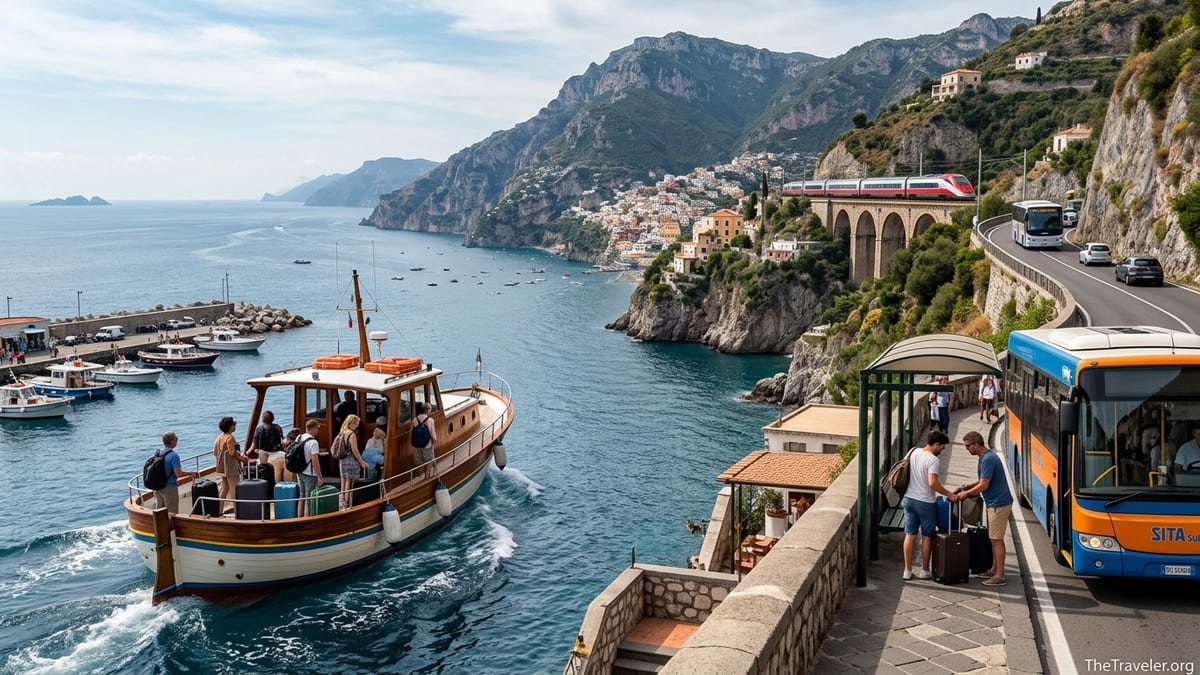
What the November 2026 Naples Airport closure means
Naples Capodichino Airport, the main international gateway to the Amalfi Coast, is closed from 00:00 on 1 November 2026 until 23:59 on 30 November 2026 while its only runway and several taxiways are rebuilt and reconfigured. Official notices from the airport operator and aviation authorities describe this as extraordinary maintenance linked to a wider modernization plan. With just one runway serving all traffic, partial closure was not considered feasible, so the airport has suspended all commercial flights for the entire month.
The closure affects all airlines and routes using Naples, including popular services from major European hubs such as London, Paris, Munich and Barcelona, as well as point to point flights from other Italian cities. Many carriers have removed Naples from their November schedules entirely, while others have retimed or rerouted flights to nearby airports. For example, some low cost and leisure airlines have announced that selected Naples flights in November will instead operate to Salerno Costa d’Amalfi Airport, while long haul passengers from North America are generally being rebooked to connect via Rome Fiumicino.
Importantly, the closure is limited to air traffic. Naples city itself, its central railway station and the port remain fully operational. That means you can still reach Naples by high speed train from Rome, Milan or Florence, and you can still use ferries between Naples and coastal destinations such as Sorrento and Capri when seasonal services are running. The disruption is therefore concentrated on the flight segment of your journey and the last mile transfers from your arrival airport to the Amalfi Coast.
Travelers arriving on 1 December 2026 or later are not affected by the November closure, although there may be some residual schedule changes. If you are flying in the last days of October or first days of December, carefully check your booking, as airlines sometimes adjust surrounding dates when infrastructure works are this significant.
How airlines are rerouting flights and what you should check
Most airlines serving Naples have contacted passengers with November tickets to offer rebooking or refunds. In practice, the options differ depending on the carrier and route. Some European low cost airlines have switched a portion of their Naples flights to Salerno Costa d’Amalfi Airport for the closure period, especially services from nearby countries such as Germany, Switzerland and France. Others have cancelled Naples flights outright in November and invite passengers to rebook to Rome Fiumicino or Rome Ciampino, which remain the main southern Italian hubs.
If you already hold a ticket to Naples in November 2026, your first step is to log into your booking on the airline’s website or app and check the latest status. In many cases, your flight number will be the same but the airport code will have changed from NAP to QSR for Salerno or to FCO for Rome. A traveler originally booked on a Friday London to Naples service, for example, might now see the same departure time but with arrival into Rome Fiumicino and an automatic rebooking on a high speed train segment, or an invitation to arrange surface transport independently with a partial refund.
Passengers whose flights are cancelled instead of rerouted are generally entitled to a refund of the unused ticket, and in some cases to rebooking on an alternative route. Conditions depend on the fare you bought and the regulations that apply, so it is essential to read the disruption email or message carefully. Some carriers have published dedicated Naples closure pages explaining policies, including whether they will cover the cost of onward rail tickets to Salerno or Sorrento. Because policies can change quickly, travelers should rely on the latest information from their airline rather than assumptions based on earlier announcements.
When choosing whether to rebook to Salerno or to Rome, consider both the timing of your arrival and your final destination. For a traveler headed to Positano, a morning flight to Rome followed by a same day high speed train and ferry may be more comfortable than a late evening arrival into Salerno with fewer onward buses. For someone staying in Salerno city itself or nearby Vietri sul Mare, a direct flight to Salerno Costa d’Amalfi with a short taxi ride can be more efficient.
Using Salerno Costa d’Amalfi Airport as an alternative gateway
Salerno Costa d’Amalfi Airport, often shown with the code QSR, plays a key role during the Naples closure. Located near the town of Pontecagnano Faiano, around 20 kilometers south of Salerno city, it has been expanding scheduled services in 2025 and 2026 and is used as a partial diversion airport while Naples is shut. Official airport information shows that in November 2026 both terminals are in use, handling a mix of domestic Italian and international flights. Airlines operating at Salerno during this period include a handful of European carriers flying to destinations such as Rome, Milan, Verona, Luxembourg, Barcelona and some Middle Eastern and North African hubs.
Upon landing at Salerno, travelers can reach Salerno city by taxi, ride service or local bus in roughly 20 to 30 minutes depending on traffic. Recent fare indications suggest that a metered taxi from the airport to central Salerno typically costs in the region of 30 to 40 euros, but passengers should always confirm approximate pricing with the driver or dispatch point before departure. Some airlines or tour operators also arrange dedicated shuttle buses between the airport and Salerno’s main railway station for their customers; these are usually timed to coincide with arriving flights.
From Salerno city, you have several options to continue to the Amalfi Coast. For coastal towns such as Amalfi and Positano, many travelers choose a combination of ferry and bus. In season, ferry companies run boats from Salerno’s Concordia or Manfredi piers to Amalfi in about 35 to 40 minutes, with onward connections to Positano taking another 25 to 30 minutes. In early November, ferry frequency is already reduced compared with summer but there are often at least a few daily departures in good weather, with single fares to Amalfi commonly in the range of 10 to 20 euros per person depending on the operator and timetable.
Where ferries are limited by weather or seasonal cuts, the SITA Sud bus network becomes the fallback. Buses from Salerno to Amalfi follow the winding coastal road and can take 75 to 90 minutes or more in traffic, but they are relatively inexpensive. Tickets can usually be purchased at tobacconists and bars near the station or at the bus terminal. For travelers going directly from Salerno Airport to smaller towns such as Ravello or Minori, booking a private transfer is often the most straightforward choice, especially if you are carrying large luggage or arriving in the evening after public transport has thinned out.
Reaching Sorrento, Positano, Amalfi and Capri via Rome Fiumicino
Rome Fiumicino Airport, code FCO, serves as the main long haul alternative during the Naples closure and offers dense connections to North America, the Middle East and Asia, as well as plentiful European flights. From Fiumicino, the most efficient way to reach the Amalfi Coast is usually to combine a train journey with either a ferry or a road transfer. Many intercontinental flights land in the morning, which makes it realistic to continue the same day to Sorrento, Positano, Amalfi or even Capri if connections line up.
To travel by rail, you first leave the airport using either the dedicated Leonardo Express train to Roma Termini station or a regional train to one of Rome’s other main stations. The Leonardo Express normally runs every 15 minutes and takes about 32 minutes to reach Termini. A one way ticket is often priced around 14 euros. From Roma Termini, high speed trains operated by companies such as Trenitalia and Italo run frequently to Naples Centrale and Salerno. The journey from Rome to Naples can be as fast as 1 hour 10 minutes on the fastest services, with advance purchase fares sometimes starting in the 25 to 35 euro range in second class. Rome to Salerno typically takes around 2 hours on a high speed service.
Once in Naples Centrale by train, even during the airport closure you can continue to Sorrento using the local Circumvesuviana commuter line or a privately run express service where available. The Circumvesuviana is inexpensive, but trains are often crowded and basic. Official schedules commonly show a journey time of approximately one hour between Naples and Sorrento. An increasing number of travelers now choose commercial shuttle buses that link Naples station or airport area with Sorrento using modern coaches, at prices that have recently been around 13 euros per person one way. In November 2026, with Capodichino closed, several of these operators are expected to consolidate departures around the central station and main city hotels.
For Positano and Amalfi, a common same day route in November is Rome Fiumicino to Roma Termini, high speed train to Salerno, and then either ferry or bus to Amalfi and on to Positano. For Capri, travelers usually take a high speed train from Rome to Naples, then a taxi or metro to the port of Molo Beverello and board a hydrofoil to Capri. However, by early November many Capri hydrofoils operate on reduced schedules and are subject to cancellations in rough seas, so overnighting in Naples and continuing the following morning can be more comfortable if your arrival into Rome is late in the day.
Connecting from Salerno and Rome to Sorrento
Sorrento is often used as a practical base for exploring the Amalfi Coast because it offers better rail connections than most coastal villages and more hotel capacity. From Salerno, there is no direct train to Sorrento, so travelers typically route via Naples or choose a private transfer. One realistic option if you arrive at Salerno Airport in the morning is to reach Salerno city by bus or taxi, take a regional or high speed train to Naples, then change to the Circumvesuviana or a shuttle bus to Sorrento. While this introduces an extra connection, it keeps your journey on public transport and avoids the stress of driving on mountain roads.
From Rome Fiumicino, an increasingly popular pattern is to book a through rail ticket from Rome to Sorrento using a combination of high speed and local services sold in a single reservation by some platforms and tour operators. These tickets often pair a Rome to Naples high speed segment with a reserved seat on an onward bus operated by a private company that waits outside Naples station and continues directly to Sorrento. Example prices advertised for autumn dates in recent years are in the range of 40 to 70 euros per person in total for the rail plus bus combination, depending on how early you book and the class of service.
For families or small groups carrying multiple suitcases, a private car transfer from Rome to Sorrento can be cost effective when shared. Several licensed limousine operators quote prices that in recent seasons have started around 350 to 450 euros for a one way transfer in a standard sedan or van from Rome Fiumicino to Sorrento, including motorway tolls. The drive usually takes about three hours outside heavy traffic. This can be appealing if you land jet lagged after a long haul flight and prefer to avoid hauling luggage through multiple train stations.
Once in Sorrento, reaching nearby sights such as Pompeii or Herculaneum is straightforward by local train, while ferries and buses connect onwards to Positano, Amalfi and Capri in season. Because November sits at the edge of the off season, schedules are thinner than in summer and some routes stop completely for winter, so always verify ferry timetables for your exact travel dates before committing to same day transfers.
Practical routes to Positano, Amalfi and Capri in November
Positano and Amalfi are perched on a narrow coastal road that can be slow and congested even in shoulder season. In November, traffic is lighter than in August but roadworks and weather related delays are still possible. A practical route from Rome Fiumicino to Positano on a midweek day might look like this in broad outline: morning arrival into Rome, Leonardo Express to Roma Termini, high speed train to Salerno arriving early afternoon, ferry to Amalfi if sea conditions permit, and then a SITA bus or prebooked taxi for the final stretch to Positano. If sea conditions are poor, travelers often substitute the ferry leg with a direct bus from Salerno to Amalfi.
For Amalfi itself, traveling via Salerno is usually more direct than going through Naples. The walk from Salerno railway station to the main ferry pier takes roughly 10 minutes with light luggage. In many recent seasons, ferry operators have charged approximately 10 to 15 euros for a one way ticket from Salerno to Amalfi and around 18 to 25 euros from Salerno to Positano, though exact prices and services for November 2026 will be set closer to departure. In poor weather or at the very end of the season, you may find that the only option from Salerno is the coastal bus, so building slack into your schedule and traveling earlier in the day is wise.
Capri presents a different set of challenges in November. While Capri has year round residents and ferries operate in most months, tourist frequency drops sharply outside summer. Most visitors in November reach Capri from Naples rather than from Salerno or Sorrento, because Naples has the highest number of year round sailings. A realistic route during the Naples airport closure is to arrive at Rome Fiumicino, take the train to Naples, stay overnight near the port and then take a morning hydrofoil to Capri. Typical hydrofoil crossing times are around 50 minutes, with fares in recent years often in the 20 to 30 euro range each way, but sailings are cancelled if the sea is rough. Booking a flexible hotel rate in Naples or Sorrento can help you adapt to last minute ferry changes.
Travelers who insist on same day connections from their flight to Capri need to be particularly careful in November 2026. An afternoon arrival at Rome Fiumicino followed by a train to Naples may get you to the port only in time for the last hydrofoil, which could be cancelled due to wind. For this reason, experienced local guides often advise treating Capri as an overnight stop reached in the morning rather than as a rushed same day add on in late autumn.
Tickets, luggage and realistic travel times
Because the Naples airport closure is known well in advance, November 2026 is expected to be a busy month for alternative routes, especially on key weekends and around public holidays. High speed trains between Rome and Naples or Salerno already sell out at peak times in normal years. With diverted passengers from Naples flights, it is sensible to buy rail tickets as early as your plans allow in order to access lower fares and secure preferred departure times. Many rail operators in Italy open bookings around four to six months ahead and offer discounted fares for advance purchases that can be significantly cheaper than buying on the day of travel.
Allow generous margins when planning connections. From Rome Fiumicino, a safe minimum connection from scheduled flight landing to a high speed train departure at Roma Termini is often around two and a half to three hours, factoring in passport control, baggage claim, transfer to Termini and possible delays. Similarly, when connecting from trains to ferries in Salerno or Naples, leaving at least an hour between scheduled train arrival and ferry departure provides a buffer for minor disruptions and the time needed to move between station and port with luggage.
Luggage handling is a practical concern on these multi leg journeys. Many Italian stations, including Roma Termini, Naples Centrale and Salerno, offer left luggage offices or automated lockers where you can temporarily store bags while waiting for onward connections or taking a short sightseeing break. Fees are usually calculated per bag per hour or per calendar day. Using these services can make it easier to navigate busy stations and ferries, especially for travelers with heavy suitcases or families with children.
In terms of total door to door travel time, a typical journey from Rome Fiumicino to Sorrento can take around four to five hours in good conditions when using a mix of train and bus, while Rome to Positano or Amalfi via Salerno can take five to seven hours depending on connections. From Salerno Airport, reaching Amalfi Coast towns on the same day is usually straightforward if you land in the morning, but late evening arrivals may require a private car or an overnight in Salerno before continuing.
Planning strategies and concluding advice
The temporary closure of Naples Airport in November 2026 adds complexity to Amalfi Coast itineraries, but it does not make them impossible. The key to a smooth trip lies in accepting that you will need at least one extra surface leg, choosing your alternative gateway carefully, and keeping your expectations realistic about how much ground you can cover in a single day. For many travelers, routing flights through Rome Fiumicino and then continuing to Sorrento or Salerno by train is the most reliable backbone of the journey, with the final segment to Positano, Amalfi or Capri tailored to weather conditions and seasonal ferry schedules.
When booking, prioritize flexibility. Opt for train tickets that can be changed with modest fees, avoid non refundable hotels on nights when you are relying on same day connections from long haul flights, and consider travel insurance policies that specifically cover travel disruption due to infrastructure works or schedule changes. Saving a small amount of money on a rigid fare can be false economy if a missed ferry or delayed flight forces you to buy last minute alternatives.
If you feel overwhelmed by the logistics, remember that you can divide the journey into manageable pieces. One night in Rome or Naples on arrival, followed by a fresh start the next morning toward Sorrento or Amalfi, often results in a more enjoyable experience than trying to string together multiple tight connections after a long flight. The shoulder season also rewards this slower pace. November days on the Amalfi Coast tend to be quieter, with cooler temperatures, fewer crowds at viewpoints and historic sites, and a more local rhythm in towns that are packed in midsummer.
By confirming your airline’s diversion plan, understanding how Salerno and Rome can stand in for Naples, and building extra time into your route to Sorrento, Positano, Amalfi or Capri, you can turn the November 2026 runway works from a source of stress into a manageable detour. Careful planning and a little flexibility will still get you to that terrace overlooking the sea, even if your plane no longer lands where you first expected.