

More news on this day
The NCAA is cautioning schools that charter aircraft could be harder to secure during the heart of the 2026 championship season, as severe spring storms and an already stretched charter network converge just as men’s and women’s basketball, hockey and other tournaments send dozens of teams crisscrossing the country.
Get the latest news straight to your inbox!
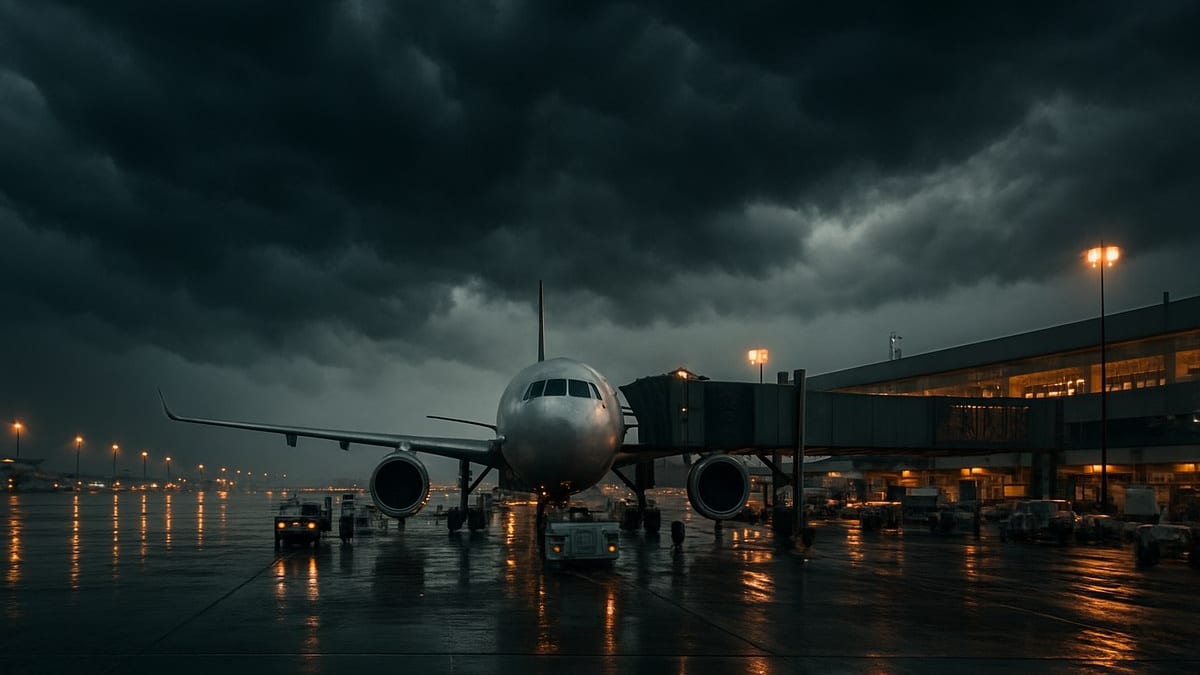
Weather Turbulence Collides With Tournament Travel
The travel warning is emerging against a backdrop of volatile April weather across large parts of the United States. A series of storm systems has rolled from the Plains into the Midwest and East in recent days, bringing lines of thunderstorms, heavy rain and strong winds through several major aviation hubs. Publicly available weather summaries point to repeated rounds of unsettled conditions since late March, creating ideal circumstances for widespread delays as aircraft and crews fall out of their planned rotations.
Recent coverage of commercial aviation performance in early April 2026 describes thousands of delays and hundreds of cancellations in a matter of days, particularly at busy hubs such as Atlanta, Chicago, New York and Dallas. These disruptions ripple across the national network, leaving airlines short of available aircraft and complicating efforts to position planes where they are most needed. While charter flights do not rely on the same fixed schedules as commercial carriers, they share the same skies, air traffic control system and runway infrastructure, meaning storms can be equally disruptive.
For college programs, the timing is particularly sensitive. Tournament travel typically clusters around a handful of days each week, immediately following Selection Sunday announcements and before each new round of games. When those windows coincide with major storm systems, the margin for error shrinks quickly, especially for teams that must arrive in time for media appearances, practice sessions and tightly regulated tip-off times.
NCAA Memos Highlight Tight Charter Market
Travel guidance issued during the 2025 to 2026 academic year already signaled that the charter market was operating near capacity as March Madness and other championships approached. A February 24, 2026 memorandum covering women’s Division I basketball travel noted that response and hold times for charter flights could be longer than usual because of the number of teams drawing from the same pool of aircraft on the same days. The document also emphasized that a dedicated charter program using specific regulated operators was in place, but that availability would depend on safety protocols, crew scheduling and overall demand.
Those warnings have taken on new urgency as storm activity has increased and delays across the broader aviation system have mounted. Public documents show that the NCAA relies on a mix of large national and smaller regional charter providers to assemble a tournament fleet capable of moving full travel parties, band members and staff, often on relatively short notice once brackets are revealed. Large cabin and group charter aircraft, which can accommodate an entire roster and equipment, represent only a fraction of the overall charter fleet, leaving little slack when multiple teams need to depart the same region within a narrow time frame.
Industry commentary in recent weeks has described the situation less as an absolute shortage of airplanes and more as a capacity squeeze in specific markets and time windows. Demand spikes immediately after games, when winning teams must move on to new host cities while others head home, all while charter operators contend with weather diversions, crew duty limits and maintenance needs. For schools and tournament organizers, even a small reduction in available aircraft at the wrong time can translate into last minute schedule changes or extended ground time.
Recent Disruptions Underscore Risks for Teams
Recent tournament seasons have offered several examples of how quickly travel plans can unravel. Coverage of the 2025 men’s basketball tournament described a high profile program encountering mechanical problems with its NCAA arranged charter flight, resulting in a late arrival and missed media availability ahead of a First Four game. Reports from the 2024 Final Four detailed a national title contender arriving in the host city in the early hours of game week after a combination of weather issues, mechanical delays and crew time limits forced multiple aircraft changes.
Social media posts and fan accounts from March 2026 have similarly highlighted teams and pep bands stuck at airports as storms moved through key connecting regions. In at least one instance, public comments indicated that a charter flight for a lower seeded school was delayed long enough to push much of the team’s preparation into the early morning hours. While games ultimately proceeded as scheduled, the experiences reinforced concerns that a more severe disruption could one day threaten a tip-off time or force a compressed recovery period between travel and competition.
These episodes are not confined to basketball. NCAA championships across multiple sports rely on charter aircraft, especially when events are staged in smaller markets with limited commercial service or tight game calendars. As spring weather patterns grow more erratic, the risk increases that one or more tournaments will collide head-on with a high impact storm system at a moment when charter capacity is already committed elsewhere.
Impact on Fans, Travel Budgets and Host Cities
While the NCAA travel warning is aimed at schools and teams, the implications extend to the wider travel ecosystem around major college events. Commercial flight disruption in recent weeks has driven up fares and reduced available seats into several tournament host cities, according to fare tracking and travel industry reports. With charter slots harder to secure, some schools and fan groups are leaning more heavily on scheduled airlines, which are themselves managing the fallout of storm related delays and aircraft shortages.
Host cities, which often invest heavily in marketing and logistics for NCAA events, must plan for the possibility that incoming teams or large fan contingents could arrive later than expected. Local tourism boards and hotel operators are watching airline performance closely as storms move across the country, balancing staffing, room inventory and ground transportation needs in an environment where arrival times can shift by hours in a single afternoon. For many destinations, NCAA tournaments represent one of the busiest weekends of the year, amplifying the financial stakes of any large scale disruption.
School administrators, meanwhile, are weighing the cost of contingency plans. Some athletic departments are evaluating whether to reserve backup commercial tickets, arrange flexible ground transportation or adjust departure times to build in additional buffers ahead of critical games. These strategies can add significant expense to already strained travel budgets, especially for mid major programs that rely heavily on NCAA reimbursements and do not have access to private donor aircraft or premium commercial options.
Colleges Urged to Build Flexibility Into 2026 Travel Plans
As the 2026 spring championship calendar unfolds, publicly available NCAA guidance encourages schools to respond quickly to charter offers and to communicate early with the association’s travel coordinators about specific needs. Teams eligible to drive to nearby sites may be advised to consider overland options if weather threatens flight reliability, while those traveling longer distances face pressure to lock in departure windows that leave time for potential rerouting.
Travel industry analysis suggests that flexibility will be the key asset for athletic departments in the coming weeks. By scheduling departures earlier in the day, building extra hours into itineraries and maintaining backup routings where possible, schools can reduce the risk that a single storm cell or mechanical issue will jeopardize their tournament schedules. Some programs are also reviewing their relationships with local airports and charter operators to better understand how decisions will be made if capacity becomes constrained at short notice.
For travelers following their teams, the message is similar. With storms and a tight charter market reshaping the 2026 spring travel season, fans heading to tournament sites may benefit from refundable tickets, travel insurance and flexible hotel bookings. As the NCAA and its partners work to keep teams moving through an increasingly complex aviation landscape, the path from campus to tip-off is likely to remain more unpredictable than the bracket itself.