

More news on this day
Thousands of travelers across the United States are facing cascading disruptions as nearly 2,000 flights are canceled and more than 4,600 delayed, snarling operations at major hubs including Chicago, Minneapolis, Atlanta, Detroit, New York and Dallas and leaving passengers stranded with limited rebooking options.
Get the latest news straight to your inbox!
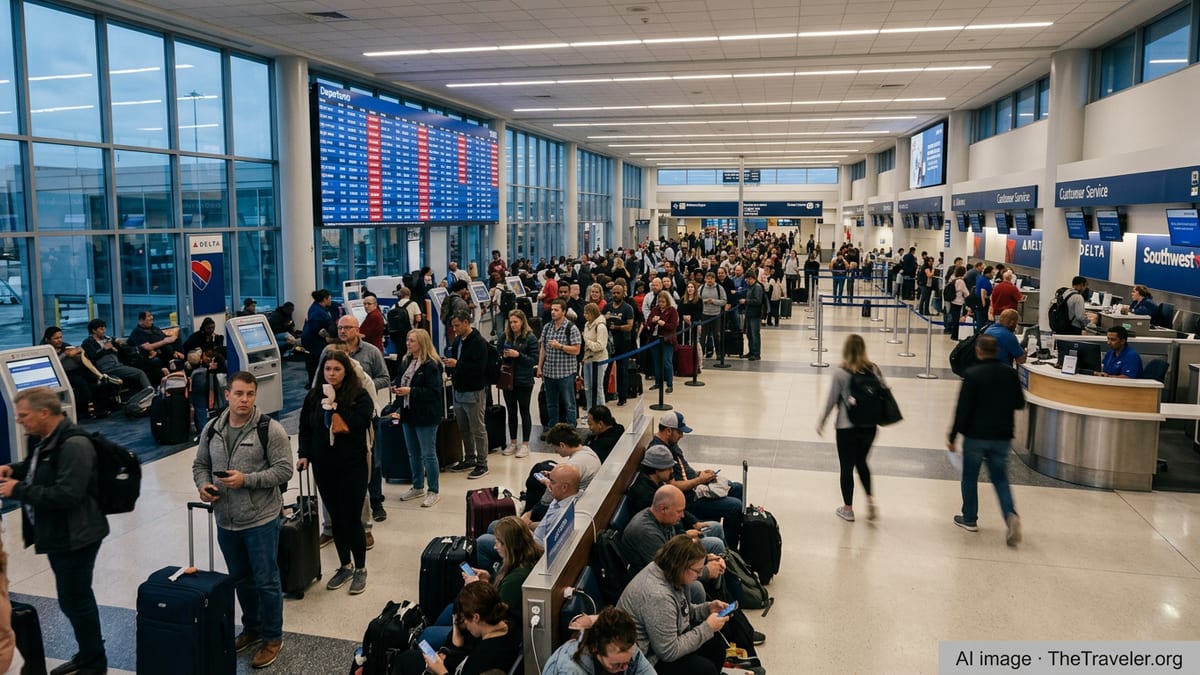
Mass Cancellations Hit Major US Hubs
Publicly available flight-tracking data shows a sharp spike in cancellations and delays across the US network, with regional carriers such as SkyWest, Envoy and Republic heavily affected alongside large operators including Delta Air Lines and Southwest Airlines. The combined impact amounts to roughly 2,000 canceled departures and arrivals and more than 4,600 delays, disrupting schedules through the day and into the overnight hours.
Chicago, Minneapolis, Atlanta, Detroit, New York and Dallas appear among the hardest-hit metropolitan areas, reflecting their roles as key hubs and connection points. Disruptions at these airports have a knock-on effect across the national system as missed inbound aircraft and crew shortages ripple through subsequent flights.
Operational data indicates that many of the cancellations are concentrated among regional jets operated for major network airlines under codeshare agreements. SkyWest, Envoy and Republic feed traffic into larger hubs for brands such as Delta, American and United, so issues at the regional level quickly translate into missed connections for long-haul and cross-country routes.
While point-to-point carriers like Southwest are somewhat less dependent on hub banks, a high volume of delays still emerges in its schedules at large bases including Chicago, Dallas and key leisure destinations. The result is a patchwork of cancellations, rolling delays and aircraft reassignments across much of the domestic network.
Weather, Congestion and Crew Positioning Drive Disruption
Reports from aviation trackers and published weather coverage indicate that a combination of adverse conditions and operational constraints is driving the current wave of cancellations. Periods of low visibility, strong winds and lingering winter weather at several hubs have reduced airport capacity and slowed departures and arrivals, especially at tightly scheduled hubs such as Chicago and New York.
Once flight banks begin to back up, crew and aircraft positioning becomes a significant constraint. If an inbound aircraft arrives late or is canceled entirely, the outbound segment often cannot depart, forcing airlines to either reassign aircraft from other routes or cancel flights outright. This pattern is particularly visible at regional affiliates like SkyWest, Envoy and Republic, which operate intricate schedules linking numerous small and mid-size cities to a handful of major hubs.
Airlines also face federal limits on pilot and flight attendant duty hours, which can quickly become binding during extended irregular operations. When weather or air traffic control programs slow the system, crews who have already been on duty for many hours may time out, leaving aircraft available but without legally rested staff to operate them. This constraint can lead to late-day cancellations even after weather has improved.
Compounding these challenges are reports of ground handling slowdowns as airport teams manage aircraft de-icing, runway inspections and baggage operations in difficult conditions. Each added minute on the ground stretches turnaround times, increases gate congestion and can force last-minute gate changes that further delay boarding and push departures past their scheduled slots.
Traveler Impact: Long Lines, Missed Connections and Limited Seats
For passengers, the statistics translate into crowded terminals, long customer-service queues and mounting frustration. Published accounts from affected airports describe travelers camping out near gates overnight, long waits at rebooking counters and difficulty reaching airline call centers as call volumes spike.
At major hubs like Atlanta, Chicago and Dallas, missed connections have created clusters of stranded travelers whose itineraries relied on tightly timed transfers. When a first leg is canceled or delayed significantly, onward flights often depart full, leaving rebooked customers with limited same-day options. In some cases, travelers are being re-accommodated one or two days later, particularly on popular routes where load factors are already high.
The disruption is particularly challenging for passengers relying on regional links operated by SkyWest, Envoy and Republic. When smaller-community flights are canceled, there may be only one or two remaining departures per day, and alternate ground transport can be time-consuming. Reports indicate that some travelers are turning to rental cars, intercity buses or rail where available, especially for distances under 400 miles.
In addition to missed vacations and family events, business travelers face canceled meetings and rescheduled conferences. Published coverage notes that many travelers are now proactively building longer layovers into itineraries through major hubs and considering flexible tickets or travel insurance products that cover weather-related disruptions and additional hotel nights.
How Affected Airlines Are Responding
Publicly available information from airline status pages and travel alerts suggests that major carriers involved in the disruption are using a mix of strategies to stabilize operations. Delta, Southwest and partner operators such as SkyWest, Republic and Envoy have issued travel-flexibility policies on select routes, generally allowing rebooking to nearby dates without change fees for customers whose flights are canceled or significantly delayed.
Operationally, airlines are prioritizing the restoration of core hub-to-hub and high-demand trunk routes, which serve the largest number of passengers and help reposition crews and aircraft. This often means that lower-frequency regional services or late-evening departures are more likely to remain canceled in the short term as schedules are simplified.
Some carriers are also making targeted use of larger aircraft types to consolidate disrupted flights, shifting passengers from multiple canceled or downgauged services onto a single departure where possible. While this can help reduce backlogs, it may also lead to longer waits between available flights, especially at smaller airports.
Customer-facing measures include extended hours at airport help desks, additional staff at self-service kiosks and increased digital notifications through mobile apps and email. Travelers are being encouraged through public messages to check flight status frequently, confirm gate information close to departure and consider rebooking through airline websites or apps instead of standing in line whenever possible.
What Travelers Can Do if Their Flight Is Affected
For those caught in the current wave of cancellations, travel experts and consumer advocates commonly recommend a series of practical steps. First, passengers are advised to monitor their flight status closely and sign up for airline alerts so that any schedule changes appear as soon as they are posted. When a cancellation occurs, using the airline’s app or website to request rebooking can often be faster than queuing at a service desk.
Travelers are also encouraged to look at alternative airports and nearby cities, especially in multi-airport regions such as Chicago, New York and Dallas. In some situations, seats may be available from a secondary airport even when the main hub is heavily disrupted. However, passengers need to weigh the additional ground travel time and costs involved in repositioning themselves.
Published consumer guidance further suggests protecting essentials such as medications, chargers and a change of clothes in carry-on luggage in case of unexpected overnights. When widespread disruption is likely, booking earlier flights in the day can reduce exposure to the compounding delays that often accumulate by evening.
Looking ahead, analysts note that as extreme weather and congestion events continue to affect the aviation system, travelers may increasingly incorporate buffer days and flexible planning into itineraries. While airlines are investing in technology and schedule resilience, periods of mass cancellations and delays like the current disruption highlight the vulnerability of tightly optimized networks when multiple factors go wrong at once.