

More news on this day
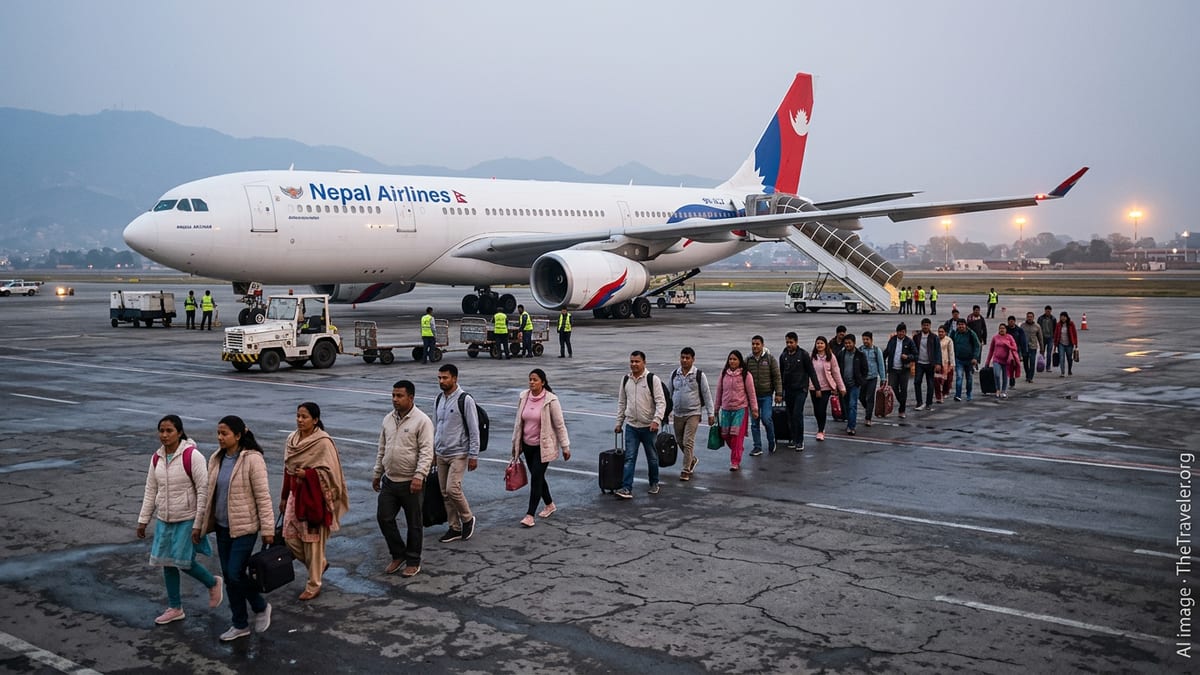
Nepal Airlines Corporation is dispatching a special wide-body flight to Dubai on Wednesday night to rescue hundreds of Nepali passengers who have been stranded for nearly two weeks after Middle East airspace closures disrupted regular routes between Kathmandu and the Gulf.
Get the latest news straight to your inbox!
Special Mission After Twelve Days of Disruption
The national flag carrier confirmed that it will operate an emergency service on the Kathmandu–Dubai sector late on March 11, marking its first direct operation on the route in 12 days. The move comes after a wave of cancellations left travellers stuck both in Nepal and across Gulf hubs as regional tensions forced key countries to temporarily shut their skies.
According to airline officials, the rescue flight will depart Tribhuvan International Airport at around 11:15 p.m. local time, carrying passengers from Nepal to Dubai before turning around with stranded Nepalis on board. The service will use one of Nepal Airlines’ wide-body Airbus aircraft, which can accommodate several hundred travellers in a single rotation, significantly easing the current backlog.
While exact passenger numbers were not disclosed, officials indicated that the mission is intended to serve those who have been waiting the longest, particularly migrant workers and travellers whose original flights were repeatedly cancelled since late February.
The decision to mount a dedicated emergency mission underscores the scale of the disruption, with airport authorities in Kathmandu reporting a sharp drop in international movements since the start of the crisis and thousands of tickets needing rescheduling or refund assessment.
Middle East Tensions Leave Nepalis Stranded
The emergency operation is the direct result of a cascading aviation crisis triggered by armed conflict involving the United States and Iran, which prompted several Middle Eastern nations to close their airspace on safety grounds. Those restrictions quickly rippled through the region’s dense network of transit hubs, from Dubai and Doha to other Gulf gateways, severing key links for Nepali travellers.
Nepal Airlines had already suspended its regular Kathmandu–Dubai and Kathmandu–Doha services at the start of March, issuing a series of notices that confirmed cancellations on multiple dates while urging passengers not to proceed to the airport without explicit confirmation of new schedules. Similar reductions by other carriers sharply curtailed connectivity between Nepal and West Asia.
For many Nepalis, especially migrant workers heading to or returning from jobs in the Gulf states, the sudden halt in flights translated into days of uncertainty. Images from Kathmandu’s Tribhuvan International Airport showed large crowds camped in terminal halls, clutching baggage and booking printouts, uncertain when they would be able to travel.
Travel agents in Kathmandu reported mounting frustration among customers who had exhausted their savings on tickets and accommodation, only to watch departure after departure scrubbed from airport screens. With alternative routings limited and often prohibitively expensive, the national carrier’s decision to send a dedicated rescue ship has been greeted as a crucial, if overdue, relief measure.
Coordinated Effort to Prioritize the Most Vulnerable
Nepal Airlines executives say the special Dubai mission has been coordinated closely with government authorities, airport officials, and foreign missions to ensure that the most vulnerable travellers are prioritized. Passengers who have been stranded the longest, including those sleeping at Dubai International Airport and those stuck in Kathmandu with expiring visas or job contracts, are being placed at the front of the queue.
Embassy officials in the United Arab Emirates have been compiling lists of Nepali citizens affected by the flight suspensions, while the Department of Consular Services in Kathmandu has registered tens of thousands seeking assistance. The rescue flight is expected to focus first on confirmed ticket-holders from previously cancelled Nepal Airlines departures, before accommodating additional travellers on a standby basis if seats remain.
The airline has advised affected passengers to stay in close contact with its sales offices and call centers rather than arriving unannounced at airports, where security and capacity constraints remain tight. Officials have emphasized that only those who receive direct confirmation should head to Dubai International or Tribhuvan International for boarding, in order to avoid further crowding and confusion.
Though framed as a one-off emergency operation, Nepal Airlines has left the door open to additional special flights if regional conditions fail to normalize quickly and if significant numbers of Nepalis continue to remain stranded in the Gulf.
Slow, Cautious Reopening of Gulf Flight Corridors
The rescue mission to Dubai is unfolding against a backdrop of gradual, uneven recovery in air services across the wider Middle East. Some carriers have begun limited operations to and from major hubs such as Dubai, Abu Dhabi, and Doha, but schedules remain heavily reduced, and priority is being given to passengers with earlier cancelled bookings.
Nepal’s aviation authorities report that overall international movements through Kathmandu have fallen markedly since the end of February, just as the country was entering its busy spring season for tourism and labor travel. Airlines serving Gulf routes have trimmed or reshuffled their schedules on a near-daily basis, forcing passengers and travel agents to monitor updates closely.
While Nepal Airlines has now resumed a handful of services to destinations like Doha and Dammam on specific days of the week, its regular Dubai rotation has been among the most disrupted, given the centrality of the city as a transit hub. The special rescue flight is designed both to clear part of the existing backlog and to test operational conditions on the corridor under heightened security protocols.
Aviation analysts in Kathmandu note that it could take weeks for full schedules to return, even if hostilities ease, as airlines work to reposition aircraft, process rebookings, and manage compensation claims. Until then, targeted rescue operations like the Dubai mission are likely to remain a key tool for governments and flag carriers trying to reconnect citizens with their homes and workplaces.
Human Stories Behind the Emergency Operation
Behind the logistics of aircraft rotations and schedule notices are the personal stories of the passengers waiting on this special flight. Many are Nepali migrant workers who had taken loans to secure overseas contracts and were due to start or resume employment in the Gulf, only to find themselves stranded in transit or unable to depart.
At Kathmandu’s airport, some passengers have described sleeping on chairs and terminal floors rather than returning to distant home districts, fearing they might miss any sudden chance to board a rare outbound flight. Others stuck in Dubai have shared accounts of juggling unexpected accommodation costs and visa concerns while they wait for news of a confirmed seat back to Nepal.
For families in Nepal, the uncertainty has been equally stressful. Relatives of stranded workers have been making regular visits to airline offices in the capital, pressing for updates and seeking assurances that their loved ones will be prioritized on the rescue service. Community organizations and labor rights groups have stepped in to help passengers navigate complex rebooking rules and documentation.
As the Nepal Airlines wide-body prepares for its late-night departure, the flight has taken on symbolic weight beyond its immediate passenger list. For many Nepalis affected by the crisis, the emergency mission represents a hopeful sign that, even amid regional volatility, there is a concerted effort to bring people home and begin restoring a fragile lifeline between Nepal and the Gulf.