


More news on this day
The Netherlands continues to punch above its weight in Europe, combining a densely populated landscape and centuries of maritime trade with a modern, innovation-driven economy that remains highly open to travelers and international business.
Get the latest news straight to your inbox!
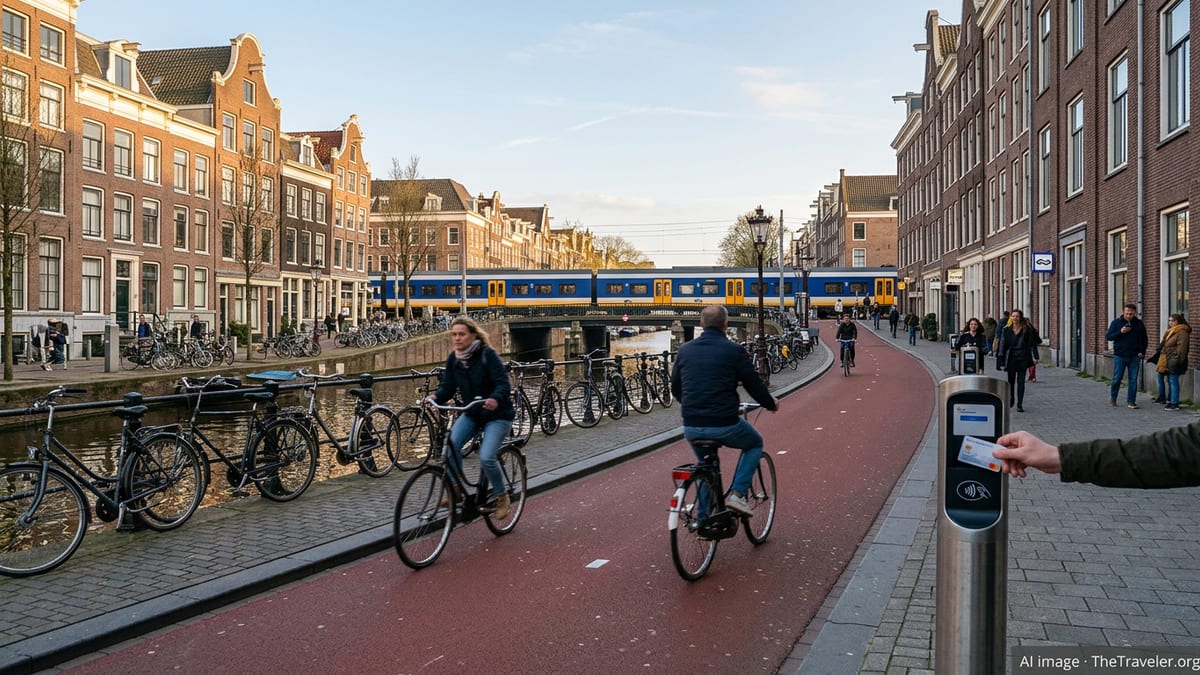
Geography, people and governance
The Netherlands sits on the North Sea coast of Western Europe, sharing land borders with Germany and Belgium and maritime borders with the United Kingdom. Much of its territory lies at or below sea level, shaped by centuries of land reclamation, dike building and coastal engineering that have created a patchwork of polders, canals and managed wetlands. The European part of the country covers just over 34,000 square kilometers, making it one of the most densely populated states in the European Union.
Recent population figures indicate around 17.8 million residents, giving the Netherlands one of Europe’s highest population densities. Urban life is concentrated in the Randstad conurbation, which links Amsterdam, Rotterdam, The Hague and Utrecht with a ring of medium-sized cities. Despite this density, the country maintains extensive green spaces, protected coastal dunes and agricultural land that support both biodiversity and a long-established farming sector.
The Netherlands is a parliamentary constitutional monarchy. The monarch serves as head of state, while executive power rests with a council of ministers led by the prime minister. Parliament and government are based in The Hague, even though Amsterdam is the constitutional capital. The state is divided into 12 provinces and hundreds of municipalities, alongside a separate system of regional water authorities that oversee flood protection and water management, reflecting the centrality of water control to Dutch public life.
The Kingdom of the Netherlands also includes several Caribbean territories, which have varying degrees of autonomy but share foreign policy and defense with the European Netherlands. These territories contribute to the country’s maritime identity and extend its footprint into the Caribbean basin, supporting trade, tourism and cultural links beyond Europe.
Economic snapshot and trade role
Publicly available data describe the Netherlands as one of the most open and trade-dependent economies in the world. Its prosperity is closely linked to its position as a European logistics hub, anchored by the port of Rotterdam and Amsterdam’s Schiphol Airport. Rotterdam remains Europe’s largest seaport by cargo volume, serving as an entry point for energy, manufactured goods and raw materials that move onward across the continent.
Recent assessments from European and international institutions suggest that economic growth has moderated but remains positive, with forecasts pointing to modest expansion over 2026 as global trade and energy markets remain volatile. Inflation, which spiked in the mid-2020s amid high energy prices, is projected to ease gradually toward central bank targets, helped by a normalization of commodity markets and tighter monetary policy across the euro area.
The Dutch economy is diversified, with strengths in agri-food exports, chemicals, high-tech manufacturing, financial services and creative industries. A highly educated workforce, extensive digital infrastructure and a strong research base underpin its innovation profile. The country regularly scores near the top of European rankings on competitiveness, ease of doing business and logistics performance, although recent reports highlight concerns about declining investment in some sectors and policy uncertainty around climate and housing.
Income distribution indicators point to relatively low inequality by European standards, and employment rates remain high. At the same time, national statistics offices and research bodies note growing pressure on housing markets, infrastructure and public services, particularly in major cities, and persistent challenges around labour market access for some younger and migrant groups.
Environment, water and climate pressures
Environmental agencies and European monitoring bodies describe the Netherlands as facing a complex sustainability agenda. The country’s geography makes it acutely vulnerable to sea level rise, river flooding and coastal storms. Large swathes of land are protected only by an intricate system of dikes, pumping stations and storm surge barriers, making long-term adaptation a central focus of public investment and planning.
Environmental profiles note that while the Netherlands performs strongly on certain socioeconomic indicators, pressure on ecosystems, water quality and air emissions remains high. Intensive agriculture, dense transport networks and industrial clusters contribute to nitrogen deposition and greenhouse gas emissions, prompting a series of contentious policy debates over farm regulation, land use and the pace of decarbonisation in recent years.
National and EU-level strategies promote a transition to a more circular and low-carbon economy, including ambitious targets for renewable energy, building efficiency and sustainable mobility. Progress has been uneven, and official assessments stress that further structural changes are needed to put the country on a path consistent with its climate commitments. Nonetheless, ongoing investments in offshore wind, green hydrogen pilots and rail infrastructure position the Netherlands as an important player in Europe’s wider energy transition.
Quality of life indicators compiled by national statistics agencies paint a nuanced picture. Many residents report high levels of material well-being and access to services, but recent monitoring exercises point to weakening social cohesion, fewer community ties and concerns about opportunities for younger generations. These trends are feeding into national debates about housing, spatial planning and how to balance economic dynamism with social and environmental resilience.
Tourism trends and travel conditions
The Netherlands is a well-established destination for international visitors, though tourism’s direct share of national output is smaller than in Europe’s most tourism-dependent economies. Major draws include Amsterdam’s historic canals and museums, the tulip fields and gardens of spring, cycling routes, North Sea beaches and a calendar of cultural and sporting events. Beyond Amsterdam, cities such as Rotterdam, Utrecht, The Hague and Maastricht are increasingly promoted as alternatives to spread visitor flows more evenly.
Recent tourism outlooks from national marketing organisations and European bodies indicate that visitor numbers have largely recovered from the pandemic era and are expected to grow slightly in 2026. Forecasts point to modest increases in overnight stays, supported by stable travel intentions across key source markets and by the Netherlands’ strong position in rail and air connectivity. Analysts note that a planned rise in value-added tax on accommodation from early 2026 may temper growth on the domestic market, but international demand is projected to remain resilient.
Policy discussions increasingly focus on managing visitor pressure in popular city centres and safeguarding liveability for residents. Municipal measures in Amsterdam and other hotspots include tighter rules on short-stay rentals, crowd management in historic areas and campaigns to encourage respectful behaviour. National and regional tourism bodies are also promoting slower styles of travel, encouraging visitors to explore lesser-known towns, nature reserves and cultural landscapes beyond the usual urban icons.
Travelers planning short stays in the Netherlands within the Schengen area are affected by updated European border systems. Since October 2025, the country participates in the EU’s automated Entry/Exit System at external borders, which records certain data for non-EU nationals on arrival and departure. Additional travel authorisations for some visitors are expected to become standard within the broader European framework, reinforcing the importance of checking the latest entry requirements before departure.
Outlook for visitors and investors
The coming years are set to test how the Netherlands balances its role as a gateway economy with domestic demands for climate action, affordable housing and social cohesion. Economic projections point to moderate but stable growth, backed by strong trade links, robust public finances and continued demand for high-value goods and services. At the same time, political debates around nitrogen emissions, energy pricing and spatial planning will continue to shape the investment environment and public sentiment.
For travelers, the country is likely to remain an accessible and familiar entry point to Europe, with dense rail connections, frequent air links and an expanding network of long-distance cycling routes. Authorities at national and local level are signaling a shift from volume-driven tourism to more sustainable and regionally balanced visitor flows, which may gradually change marketing messages and the on-the-ground experience in key destinations.
For international businesses and investors, the Netherlands’ core advantages remain its central location, skilled workforce and deep integration into European markets. Logistics, clean tech, digital services and life sciences are among the sectors identified in recent policy papers as priorities for future growth. How effectively the country manages its environmental constraints and social pressures will help determine whether it can sustain its long-standing reputation as one of Europe’s most competitive and outward-looking economies.