


More news on this day
Myanmar, a Southeast Asian country once promoted as an emerging travel hotspot, now faces deep political crisis, widespread armed conflict and some of the world’s strictest travel warnings, reshaping how visitors and residents experience the nation.
Get the latest news straight to your inbox!
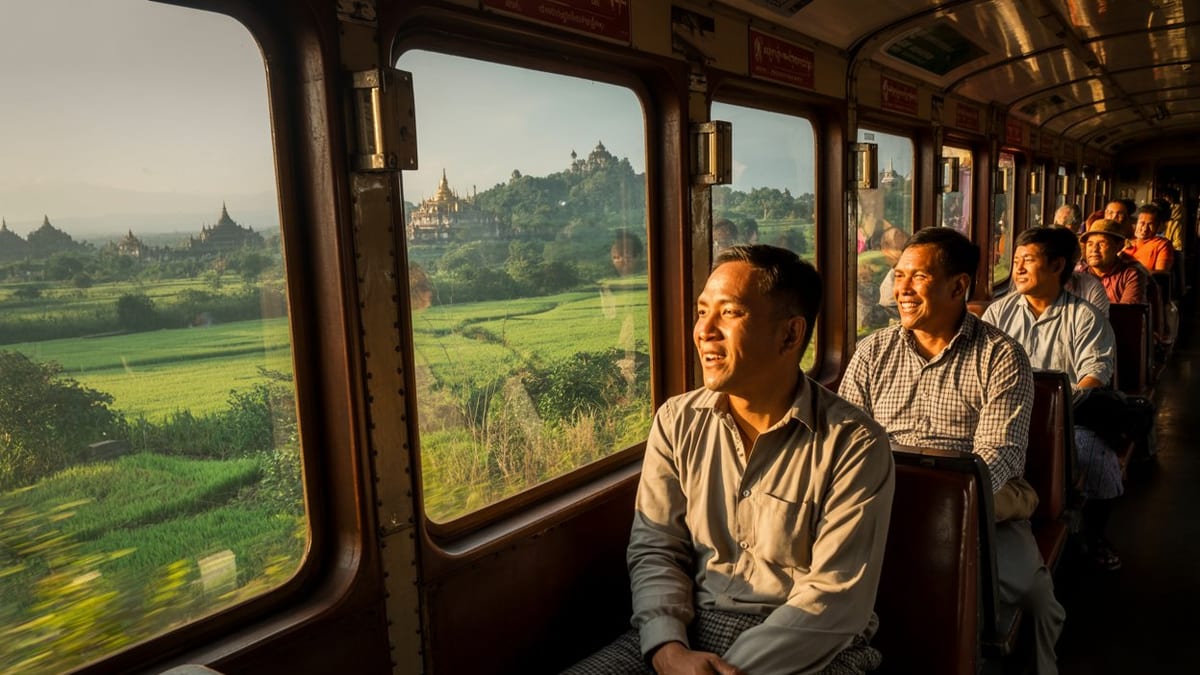
Geography, people and pre-coup promise
Myanmar, historically known as Burma, sits at the crossroads of South and Southeast Asia, sharing borders with China, India, Bangladesh, Thailand and Laos. Its terrain stretches from snow-capped highlands and forested hills to the vast central dry zone and the low-lying Irrawaddy Delta. The country’s long coastline opens onto the Bay of Bengal and the Andaman Sea, giving it strategic maritime importance and significant potential for trade and tourism.
The population is ethnically and linguistically diverse, with the Bamar majority living alongside numerous ethnic minorities such as the Shan, Karen, Rakhine, Chin, Kachin and Rohingya communities. Buddhism plays a central cultural role for much of the population, reflected in the thousands of pagodas that dot the landscape, from the temple plain of Bagan to the hilltop shrines above Mandalay and Yangon.
In the decade before 2021, Myanmar was frequently described in travel media as a “last frontier” destination. Gradual political opening, the release of political prisoners and easing of sanctions drew a surge of international visitors who came for historic cities, river cruises and coastal resorts. Tourism strategies and master plans projected steady growth, and international hotel brands entered major cities as air connectivity expanded.
That short-lived boom ended abruptly after the February 2021 military takeover and the subsequent nationwide conflict. Since then, many of the visitor-ready areas that symbolized Myanmar’s opening have become closely associated with political unrest, security incidents and militarization, dramatically altering the country’s profile for international travelers.
Political landscape and human rights climate
Myanmar is currently under military rule following the 2021 coup, which overturned a period of partial civilian government under a military-drafted constitution. Reports by international monitoring groups describe a deeply repressive environment, with harsh crackdowns on dissent and extensive controls over media and civil society. Civil liberties and political rights are assessed as severely restricted, and internet and mobile communications are frequently disrupted in contested areas.
The post-coup period has seen the rapid expansion of armed resistance groups and long-running ethnic conflicts intensify. Urban centers such as Yangon and Mandalay have experienced explosions, targeted attacks and tightened security measures, while large swaths of the countryside are affected by clashes between the military and a range of opposition forces. Humanitarian organizations document large-scale internal displacement, with communities fleeing airstrikes, ground offensives and economic collapse.
International coverage highlights concerns over arbitrary detention, heavy-handed security operations and the use of emergency laws to silence critics. Sanctions from Western governments remain in place against military-linked individuals and entities, further isolating Myanmar’s authorities from global financial and diplomatic systems. These dynamics directly influence how other countries frame their own travel advisories and how airlines, insurers and tour operators assess risk.
The human rights situation has also had profound regional implications, with refugees and migrant workers moving across borders into neighboring Thailand, India and Bangladesh. Cross-border population flows and security concerns shape how surrounding states manage visas, employment and border controls, contributing to a complex environment for overland travel and regional tourism circuits.
Travel advisories and security risks for visitors
As of mid-2026, many governments classify Myanmar as a high-risk destination and advise citizens not to travel. Publicly available advisories from North America, Europe and the Asia-Pacific region describe an unstable security environment, armed conflict across multiple states and the possibility of sudden movement restrictions. Some governments explicitly cite a high potential for civil unrest, improvised explosive devices and targeted attacks near military or political sites.
Reports indicate that curfews, checkpoints and military patrols remain common in parts of the country, including areas that previously hosted international tourists. Security incidents have been recorded in and around major cities, while regional risk assessments point to rapidly shifting front lines in central and northern states. International travel guidance notes that the situation can change quickly, with little or no warning to residents or visitors.
Travel advisories also flag practical constraints that can complicate emergency response, including limited consular access outside key urban centers, shortages of fuel and cash, and disrupted healthcare systems. Airlines have reduced or suspended routes in periods of heightened tension, and flight schedules may change at short notice. Some borders are formally open only at designated checkpoints, and internal movement can be curtailed by local regulations or active combat.
Foreign travelers who still choose to enter Myanmar are urged by multiple governments to ensure comprehensive travel insurance, maintain a low profile, avoid political gatherings and remain alert to evolving guidance. However, the strong wording of many advisories, combined with insurance exclusions for conflict zones, has effectively halted mainstream leisure tourism from a number of key source markets.
Tourism under strain and shifting visitor patterns
The conflict and political uncertainty have had a severe impact on Myanmar’s tourism sector, which only recently began to recover from the COVID-19 pandemic. Arrivals are estimated to remain far below pre-2020 levels, and industry commentary describes a fragile market reliant on a mix of regional travelers, business visitors linked to specific projects and a small number of niche tourists.
Several international hotel brands have paused expansion plans or scaled back operations, while many smaller guesthouses that emerged during the reform period report long closures or sharply reduced occupancy. Tour operators that once promoted multi-stop itineraries featuring Yangon, Bagan, Mandalay and Inle Lake now face complex risk assessments, high insurance costs and the challenge of sourcing reliable, up-to-date information from the ground.
Despite the difficulties, Myanmar’s tourism authorities continue to promote the country’s cultural and natural attractions, emphasizing heritage sites, beaches and ecotourism. Regional travel trade events in 2026 have featured presentations on Myanmar’s long-term tourism potential, though participants frequently acknowledge that domestic conflict and international travel warnings remain substantial barriers. Some neighboring countries highlight Myanmar’s situation as a reminder of how quickly destination reputations can change in response to political shocks.
Industry observers suggest that any meaningful rebound will depend not only on security improvements but also on investor confidence, restoration of transport links and the lifting or softening of foreign travel warnings. Until broader stability is established, Myanmar’s tourism economy is expected to function at a fraction of its previous capacity, with significant knock-on effects for local communities that once relied on visitor spending.
Practical considerations for future travel
For travelers monitoring Myanmar as a potential future destination, current guidance emphasizes caution, flexibility and careful timing. Prospective visitors are encouraged to review multiple sources of travel advice, focusing on the date of the latest update and the specific regions covered, since security conditions can vary widely between states and even between neighboring townships.
Publicly available information from governments and independent organizations indicates that visitors should anticipate limited services in many areas, including irregular electricity, intermittent mobile coverage and shortages of fuel or basic supplies. Banking and digital payments may not function reliably, and cash availability can be unpredictable, adding complexity to trip planning and emergency preparedness.
Travel specialists note that if and when conditions improve, interest in Myanmar is likely to return, given the country’s rich cultural heritage and diverse landscapes. However, the timing of such a shift is uncertain, tied closely to political developments, ceasefire prospects and the ability of authorities and local communities to ensure safer conditions for residents and visitors alike.
For now, Myanmar remains a country where geopolitical upheaval, human rights concerns and travel risk assessments intersect directly with tourism. As the situation evolves, travelers, industry stakeholders and regional governments will continue to watch closely, weighing the country’s enduring appeal against the realities of a deeply unsettled moment in its history.