

The Netherlands rewards curious travelers with compact cities, storybook canals, and quietly beautiful landscapes that are easy to explore in a single trip. Excellent public transport, a strong cycling culture, and a growing focus on responsible tourism make it an ideal destination for first-time visitors to Europe or seasoned travelers looking for stress-free planning. This guide brings together up-to-date entry advice, essential planning tips, standout destinations, and a realistic first-time itinerary to help you make the most of a week or more in the country.
Understanding the Netherlands Today
The Netherlands is a small, densely populated country in northwestern Europe, bordered by Germany and Belgium and facing the North Sea. Despite its size, it has an outsized cultural and economic footprint, with global influence in art, design, trade, and sustainability. Amsterdam is the capital and major tourism hub, while the seat of government and royal residence are in The Hague. English is widely spoken, especially in cities, which makes navigating daily life relatively straightforward for international visitors.
Tourism plays a significant role in the Dutch economy, and visitor numbers have rebounded strongly in recent years. Amsterdam alone receives many millions of visitors annually, which has prompted active discussions around crowding and quality of life for residents. Authorities in the capital are implementing measures to spread tourism more evenly across neighborhoods and the wider country, including stricter rules on group tours and campaigns that steer visitors toward more responsible behavior. For travelers, this means it is increasingly important to plan visits thoughtfully and respect local guidelines, particularly in busy central areas.
The country’s compact size is a major advantage for planning. Fast intercity trains connect most major cities in under an hour or two, making it practical to base yourself in one place and take day trips, or to string together several cities in a short itinerary. Cycling is part of daily life for many Dutch residents, supported by extensive bike paths and secure parking. As a visitor, renting a bike is a rewarding way to experience cities and countryside, provided you are comfortable sharing space with confident local cyclists and following the rules of the road.
Entry, Safety, and Practical Planning Essentials
Most short-stay visitors enter the Netherlands under the Schengen framework, which covers tourism and business trips of up to 90 days within a 180-day period for eligible nationalities. Citizens of visa-waiver countries such as the United States typically do not need a traditional visa for short stays, but the European Union is introducing a digital travel authorization system known as ETIAS. This system is expected to be required for many non-EU travelers in the near future, so it is wise to check official government sources shortly before your trip for the most current requirements, including any electronic preclearance or biometric checks at the border.
Regardless of nationality, you should travel with a passport that is valid for at least three months beyond your intended departure from the Schengen area and has empty pages for entry and exit stamps. Border officials may ask for proof of onward travel, accommodation bookings, and sufficient funds, as well as evidence of travel insurance that includes medical coverage. Requirements can evolve as European border rules are updated, so verifying details with an official consular site or national immigration authority close to your departure date is strongly recommended.
The Netherlands is generally a safe country with low levels of violent crime. As in any popular European destination, the main risks for travelers are petty theft and scams in busy areas such as major train stations, central nightlife districts, and trams or metros serving the city centers. Simple precautions go a long way: keep bags zipped, avoid leaving phones on cafe tables, be alert when boarding or exiting public transport, and use hotel safes when available for passports and extra cash. Tap water is safe to drink, healthcare is of a high standard, and emergency services are easily accessible.
From a budgeting perspective, the Netherlands is not a low-cost destination, but careful planning can moderate expenses. Accommodation and dining are typically the largest line items; prices rise significantly in peak periods such as spring tulip season and major events. Booking hotels and key attractions well in advance often saves both money and stress. Public transport is efficient and can be cost-effective, especially if you avoid peak commuting hours when possible. Contactless payment with major bank cards is widely accepted in shops and on transport, which simplifies day-to-day spending.
Top Places to Visit: Cities, Towns, and Landscapes
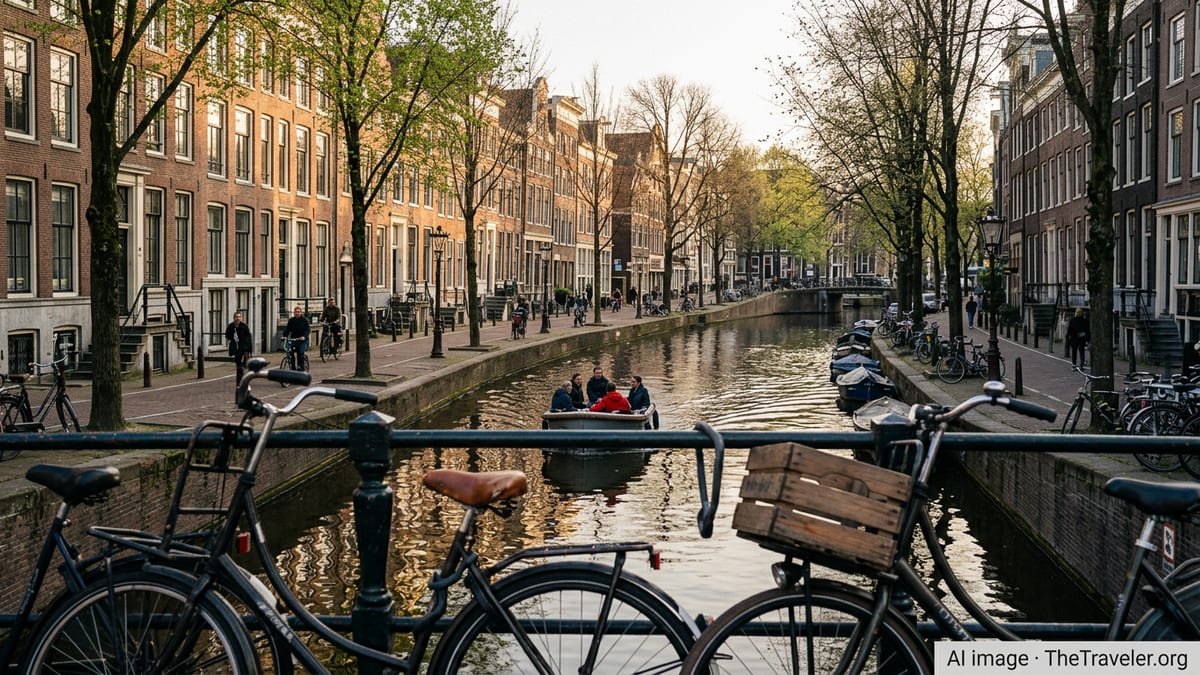
Amsterdam is the natural starting point for many itineraries. Its historic canal belt, lined with narrow gabled houses, is a UNESCO World Heritage site and remains the city’s visual centerpiece. World-class museums, including those dedicated to Dutch Golden Age painting and modern art, sit alongside smaller institutions that explore everything from maritime history to contemporary design. Despite its popularity, Amsterdam still offers plenty of quieter corners, from residential canal districts to waterside parks, particularly if you are willing to explore beyond the busiest streets near the central station and red-light district.
Rotterdam provides a striking contrast with its modern skyline, contemporary architecture, and major port. Much of the city was rebuilt after the Second World War, resulting in bold experiments in urban design and high-rise development. Visitors are drawn to its innovative bridges, modern food halls, and waterfront neighborhoods, as well as its thriving arts and nightlife scenes. Rotterdam also serves as a convenient base for exploring coastal areas and smaller historic towns in the province of South Holland.
Utrecht, centrally located and easily reached by train from both Amsterdam and Rotterdam, has emerged as a standout destination in its own right. Its medieval city center, bisected by canals that sit below street level and are lined with terraces and wharf cellars, feels intimate and atmospheric. A tall church tower dominates the skyline, and the city has a substantial student population that keeps cafes and cultural venues lively. Utrecht’s mix of livability, heritage, and accessibility has earned it increasing recognition in international travel rankings, making it an excellent choice for travelers seeking an alternative to Amsterdam that still offers strong rail connections.
Beyond the cities, the Netherlands offers a patchwork of small towns, villages, and natural landscapes. Historic trading towns in the north and east, traditional fishing villages on former Zuiderzee shores, and polder landscapes reclaimed from the sea all tell stories of the country’s relationship with water and commerce. Depending on the season, you might visit bulb-growing regions known for spring flowers, protected dunes and beaches along the North Sea coast, or national parks with heathlands and forests in the interior. While some of these areas are easiest to access by car, many can also be visited using regional trains and buses combined with local bike rentals.
Getting Around: Trains, Trams, and Bikes
The Netherlands has one of Europe’s densest rail networks, making train travel the backbone of most visitors’ itineraries. Intercity trains link major urban centers frequently, often at intervals of 10 to 30 minutes during the day, and local sprinter services connect smaller towns. Journey times between many key cities are under an hour, which allows for efficient day trips. For most domestic routes, seat reservations are not required, and tickets are valid on a range of departures on the chosen date. International high-speed trains to neighboring countries typically do require advance booking and seat reservations, so it is worth confirming details if your itinerary crosses borders.
Paying for public transport has become more streamlined in recent years. In addition to traditional smart cards and single-use tickets, travelers can now use contactless payment cards or compatible phones directly at the gates of many train and metro stations and on trams and buses. This pay-as-you-go model debits fares automatically at regular ticket prices, which is especially convenient for short visits. If you plan to travel frequently within a limited period, some regional or national discount passes and day tickets can still offer savings, particularly outside peak commuting hours. As rules, prices, and available passes can change, it is worth checking current options shortly before arrival.
Cycling is deeply woven into Dutch daily life, and the country’s extensive network of dedicated bike paths and calm residential streets is a major attraction in its own right. Many train stations, including those in smaller towns, offer bicycle rentals that allow you to cover the last stretch of a journey on two wheels. In cities, a growing number of rental outlets and bike-share schemes make it easy to find a suitable bicycle, including models with step-through frames and e-bikes. Helmets are less commonly used by locals than in some other countries, but visitors may still prefer to wear one, especially if they are not accustomed to riding in busy urban environments.
When cycling, it is vital to treat bike lanes as serious traffic corridors rather than casual recreation spaces. Cyclists have clearly marked lanes and signals, and they expect others to follow rules, signal turns, and avoid blocking paths while walking or taking photos. Similarly, on public transport, validating tickets or tapping in and out correctly is mandatory, even to access platforms. Inspectors carry out checks, and traveling without a valid ticket can result in substantial fines. Respecting these systems not only avoids penalties but also contributes to the smooth operation of a network that many residents rely on daily.
When to Go and How Long to Stay
The Netherlands has a temperate maritime climate, with relatively mild winters, cool summers, and frequent clouds or light rain at any time of year. Weather can be changeable, so packing layers, a waterproof jacket, and comfortable walking shoes is more important than chasing a specific temperature. Spring is perhaps the most iconic season for tourism, especially when tulip fields and other bulb flowers are in bloom, typically from late March through April and sometimes into early May depending on conditions. This period sees heightened demand for hotels and popular attractions, so reservations should be secured well in advance.
Summer brings longer days, more outdoor events, and busier cities, particularly in July and August. Canal-side terraces, festivals, and coastal beaches are lively, and temperatures are generally pleasant rather than extreme. Autumn is an underrated time to visit, with colorful foliage in parks and along canals, thinner crowds after the peak vacation months, and a full cultural calendar as theatres and concert halls resume regular programming. Winter can be damp and chilly, but it carries its own charms, including atmospheric lights, holiday markets, and the possibility, though not guarantee, of ice and snow in colder spells.
For a first trip, a stay of seven to ten days strikes a good balance between covering highlights and leaving space for slower exploration. In one week, you can comfortably experience Amsterdam and an additional one or two cities such as Utrecht, Rotterdam, or The Hague, along with a day trip to a smaller town or countryside area. With ten days or more, you can add more regional variety, spending nights in smaller cities or near coastal or rural areas. Because distances are short, it is entirely possible to combine city time with at least one quieter base that offers a different pace of life.
Timing your visit may also be influenced by special events. Amsterdam is commemorating major anniversaries and cultural milestones over the coming years, with programs of exhibitions, performances, and public events expected to draw additional visitors at certain times. Large festivals, national holidays such as the late-April King’s Day celebrations, and major sporting events can affect everything from accommodation prices to crowd levels on trains, so checking an events calendar and adjusting your dates by a few days can make a meaningful difference in your experience.
Responsible and Respectful Travel
As visitor numbers grow, Dutch cities, particularly Amsterdam, are placing more emphasis on sustainable and respectful tourism. Measures adopted or proposed in recent years include limiting large guided tour groups in the historic center, restricting certain types of new tourist-focused businesses, and public campaigns discouraging nuisance behavior in nightlife districts. Travelers are encouraged to spread their time beyond the most iconic streets and to balance party-oriented activities with cultural and local experiences that contribute more positively to the city’s economy and residents’ quality of life.
Practical steps for responsible travel start with choosing accommodation and activities that align with local priorities. Staying in licensed hotels, guesthouses, or registered apartments helps ensure safety standards and fair taxation, while seeking out locally owned cafes, shops, and cultural venues keeps spending within the community. Supporting museums, theatres, and smaller attractions in less crowded neighborhoods not only enriches your trip but also reduces pressure on the most heavily visited sites. When visiting residential areas, keeping noise low at night and being mindful about photographing homes helps maintain a respectful atmosphere.
Environmental considerations are also central to travel in the Netherlands. The country is actively investing in climate adaptation and sustainable mobility, and visitors can contribute by embracing low-impact transport options such as trains, trams, and bicycles instead of frequent short-haul flights or unnecessary car trips. Carrying a refillable water bottle, minimizing single-use plastics, and properly disposing of waste are small but meaningful actions. Many hotels encourage responsible energy and water use through towel and linen policies, which are worth observing.
Finally, understanding local norms will make interactions smoother. The Dutch communication style is often direct, but it is typically paired with politeness and a practical mindset. Punctuality is valued, particularly for scheduled tours or restaurant bookings. Tipping is appreciated but not as obligatory as in some other countries; rounding up bills or leaving a modest percentage in restaurants and for taxi rides is customary. Respecting cycling infrastructure, following posted rules in parks and on trams, and moderating behavior in nightlife areas, especially where residents live above bars and cafes, all help maintain good relations between visitors and locals.
A Realistic 7-Day First-Time Itinerary
This sample seven-day itinerary assumes arrival and departure through Amsterdam and focuses on a mix of major sights and lesser-known corners. It can be adjusted easily depending on flight times and interests. Treat it as a flexible framework rather than a rigid schedule, and allow extra time when traveling with children or larger groups.
On day one, arrive in Amsterdam and settle into accommodation near the center or in a well-connected neighborhood served by trams or the metro. Use your first afternoon to walk along the canals, orient yourself, and recover from jet lag. A gentle loop through the historic canal belt and a relaxed dinner near your hotel is usually enough on the first day. Consider an early evening canal cruise to get an overview of the city’s layout without much walking.
Day two can be dedicated to Amsterdam’s major museums and cultural institutions. Focus on one museum district rather than trying to see everything at once, and prebook timed tickets for high-demand attractions where possible to avoid long queues. In the evening, explore a different neighborhood for dinner, perhaps venturing to a less central area known for local restaurants and bars. Returning to your accommodation on foot or by tram will give you a feel for the city’s nighttime atmosphere.
On day three, continue exploring Amsterdam with a focus on neighborhoods and local experiences. Rent a bike only if you feel confident, starting on quieter streets and parks rather than the busiest inner-city routes. Alternatively, concentrate on markets, smaller museums, and canalside cafes. This is also a good day to plan any shopping for design items, books, or food specialties, as you will have a better sense of the city’s layout by this point.
Day four is an ideal moment to shift base. Travel by train to Utrecht, Rotterdam, or The Hague, all of which are typically less than an hour from Amsterdam by rail. After checking into your new accommodation, spend the afternoon exploring the compact historic centers on foot, climbing a church tower for views if available, or strolling waterfront promenades. Even a short journey can provide a sense of contrast from Amsterdam’s canals and tourist traffic.
On day five, take a day trip from your new base to a nearby town or rural area. From Utrecht, for example, you might head to a castle, riverfront village, or national park reachable by regional trains and buses. From Rotterdam or The Hague, coastal towns and dune landscapes are easy to access. Build in time for a leisurely lunch, and plan to return before too late in the evening to avoid fatigue.
Use day six as a buffer. Depending on weather, you might add another excursion, revisit a favorite neighborhood, or simply take things slowly with café time, shopping, and park walks. Having at least one unscheduled day allows for delays, recovery from an unexpectedly busy earlier day, or spontaneous discoveries such as local festivals or temporary exhibitions.
Day seven is reserved for return travel. If your departure is later in the day, keep activities close to your base and avoid tight connections between trains and flights. Many Dutch cities offer left-luggage services at main train stations, which can be useful if you need to check out of accommodation hours before heading to the airport. Aim to arrive at the airport with ample time to navigate security, border checks, and any additional screening that may apply under evolving European entry systems.
The Takeaway
The Netherlands offers an accessible, rewarding introduction to Europe, pairing world-famous cultural attractions with everyday rituals such as cycling, coffee on canal terraces, and strolls through compact, walkable neighborhoods. Thoughtful planning around entry requirements, transport, and timing can significantly enhance your experience, especially as the country adapts to increased visitor numbers and new border technologies.
By combining Amsterdam with at least one additional city and a taste of smaller towns or landscapes, you can experience the country’s variety without rushing. Embracing public transport, respecting local norms, and seeking out less obvious corners will help you travel more sustainably and enjoy a more balanced view of Dutch life. Whether you come for art, architecture, canals, or simply a sense of everyday European urban living, the Netherlands rewards those who move a little slower, stay a little longer, and look beyond the first postcard-perfect view.
FAQ
Q1. Do I need a visa to visit the Netherlands for a short trip?
For many nationalities, including citizens of several visa-waiver countries, a short stay of up to 90 days within 180 days does not require a traditional visa, but upcoming European entry systems such as ETIAS are expected to add a digital travel authorization step, so you should always verify the latest rules with official government sources before you travel.
Q2. What is the best time of year to visit the Netherlands?
Spring and early autumn are often considered ideal, with spring bringing tulip season and milder temperatures and autumn offering fewer crowds and pleasant weather, although with the Dutch climate you should be prepared for some rain and changeable conditions at any time of year.
Q3. How many days should a first-time visitor spend in the Netherlands?
A stay of seven to ten days is a comfortable starting point, allowing enough time for Amsterdam, one or two additional cities such as Utrecht or Rotterdam, and at least one day trip to a smaller town or rural area without feeling rushed.
Q4. Is it necessary to rent a car to explore the country?
For most itineraries focused on cities and larger towns, a car is not necessary, as the Dutch rail and public transport networks are extensive and efficient; a car becomes more useful only if you plan to spend significant time in rural regions that have limited bus or train services.
Q5. How safe is the Netherlands for solo travelers?
The Netherlands is generally considered safe for solo travelers of all genders, with low rates of violent crime in most areas; standard urban precautions against pickpocketing and scams in busy districts and on public transport are usually sufficient.
Q6. Can I drink tap water in the Netherlands?
Yes, tap water is safe to drink throughout the country, and many restaurants and cafes will provide it on request, which helps reduce the need for single-use plastic bottles.
Q7. Do people speak English widely in the Netherlands?
English is widely spoken, especially in cities and among younger people, so most travelers can manage daily interactions, public transport, and basic services without speaking Dutch, though learning a few simple Dutch phrases is appreciated.
Q8. How should I pay for public transport?
Most visitors find it easiest to use a contactless bank card or compatible phone to tap in and out at gates and on trams and buses, while those making frequent journeys may benefit from specific day tickets or regional passes, which should be researched shortly before travel as options can evolve.
Q9. Is cycling suitable for visitors who are not very experienced?
Confident cyclists usually enjoy riding in the Netherlands thanks to the extensive bike lanes and relatively flat terrain, but those who are less experienced may prefer to start on quieter routes, parks, or guided rides and to avoid the busiest urban junctions until they feel comfortable with local traffic patterns.
Q10. How far in advance should I book museums and attractions?
For popular museums and attractions, particularly in Amsterdam and during peak seasons such as spring and summer, it is wise to book timed tickets several weeks in advance when possible, while smaller venues and off-peak periods may allow more flexibility, though advance booking still helps avoid disappointment.