

More news on this day
Travelers eyeing Iceland’s dramatic landscapes in 2026 will have more ways than ever to get there, as Alaska Airlines, Icelandair and United Airlines roll out new routes and expanded schedules linking Reykjavik with key hubs across North America and Europe.
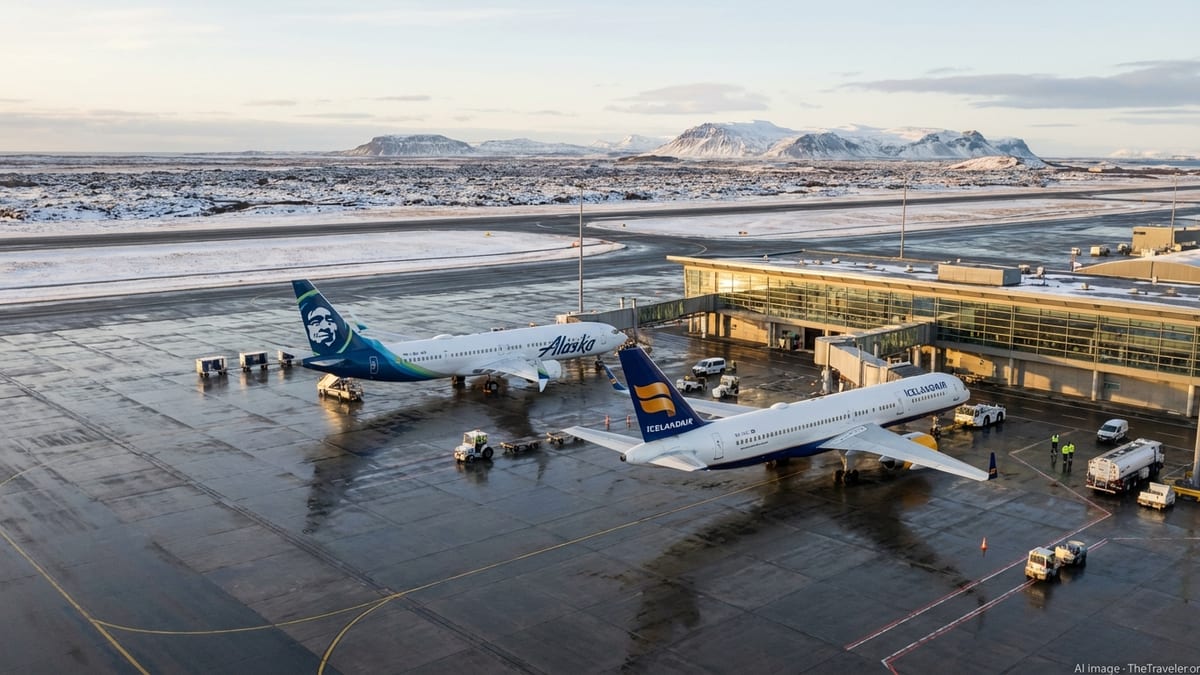
Alaska Airlines Enters the Iceland Market From Seattle
West Coast travelers will gain a powerful new option in 2026 as Alaska Airlines launches nonstop service between Seattle and Keflavik, Iceland’s main international gateway. The move plugs one of the last major gaps in nonstop U.S.–Iceland connectivity and creates a head-to-head rivalry with Icelandair on the busy Seattle–Reykjavik corridor.
Alaska plans to operate the route with Boeing 737 MAX 8 aircraft, aligning capacity with strong leisure demand from the Pacific Northwest while preserving flexibility outside the summer peak. Industry schedule filings show Icelandair transitioning some of its own Seattle services to smaller 737 MAX aircraft in 2026, a shift that reflects both heightened competition and a strategic redeployment of its long‑range Airbus A321neo jets to East Coast markets.
For passengers, Alaska’s entry brings more nonstop seats to Iceland and easier onward connectivity across the airline’s extensive West Coast network. Travelers from secondary cities such as Spokane, Boise, Sacramento and San Diego will be able to reach Reykjavik with a single connection in Seattle, cutting both travel time and the uncertainty of transatlantic connections through Midwest or East Coast hubs.
The new service also deepens Alaska’s international portfolio at Seattle, reinforcing the airport’s position as a gateway for nature‑focused long‑haul travel. With Iceland’s geothermal pools, glacier hikes and aurora viewing now a single overnight flight away, the route is expected to appeal strongly to adventure travelers and frequent flyers seeking unique long‑weekend escapes.
Icelandair Builds a Denser Hub Linking North America and Europe
While Alaska brings new competition, Icelandair continues to refine its hub‑and‑spoke model that positions Keflavik as a mid‑Atlantic bridge. By 2026 the carrier’s network will span more than 60 destinations, with an expanding roster of gateways in both North America and Europe timed to connect smoothly through Reykjavik.
On the North American side, Icelandair has recently added Miami to its schedule, operating three weekly flights between Miami and Reykjavik through early May 2026 with Airbus A321LR aircraft. The service gives South Florida travelers a direct link to Iceland and onward connections to Europe, while also rounding out Florida’s coverage with nonstops to all five sovereign Nordic countries.
The airline is also modernizing and consolidating its New York presence, preparing to move operations to the new Terminal 6 at John F. Kennedy International Airport in 2026. The facility, which will be connected to JetBlue’s Terminal 5, is expected to streamline transfers for U.S. passengers connecting to Icelandair’s transatlantic services and enhance the overall experience with upgraded lounges, retail and dining options.
In Europe, Icelandair is using new aircraft and schedule flexibility to push deeper into regional markets that support its transatlantic flows. Recent and upcoming additions include Malaga and Edinburgh, as well as Gdańsk in Poland from autumn 2026 and a winter route to Tromsø in Northern Norway. These destinations are timed to allow same‑day onward travel from North American cities, effectively turning Reykjavik into a one‑stop gateway to niches of Europe that are difficult to reach nonstop from across the Atlantic.
United Airlines Adds Capacity on Established U.S.–Iceland Corridors
United Airlines, which has operated seasonal Iceland flights in recent years, is expected to lean further into the Reykjavik market in 2026 by reinforcing service from major U.S. hubs. While full schedules are still being finalized, network trends point toward stronger coverage from Newark and Chicago in particular, both key gateways for passengers originating across the Midwest and East Coast.
United’s strategy centers on leveraging its domestic reach to feed nonstop Reykjavik flights, offering travelers a familiar full‑service product with alliance connectivity. From Newark, the carrier can pull from a vast catchment area along the Eastern Seaboard and interior Northeast, while Chicago O’Hare provides access from secondary cities in the central United States that lack direct European service.
The airline’s Iceland flights complement, rather than replace, its broader transatlantic network. For many travelers, Reykjavik serves not only as a destination but also as a convenient entry point into the Schengen Area, with onward options on Icelandair and other European carriers. As more direct seats come online in 2026, pricing pressure is likely to benefit leisure travelers, particularly in the shoulder seasons when airlines are keen to stimulate demand.
United’s presence also underpins corporate and premium travel segments, offering business‑class cabins, frequent‑flyer accrual and lounge access that appeal to higher‑yield customers. This blend of leisure and business demand is important on thinner seasonal routes such as those to Iceland, where profitability often depends on optimizing both cabin mix and connecting traffic.
Direct Flight Options From North America in 2026
By the summer of 2026, most major regions of North America will enjoy at least one nonstop option to Iceland. On the U.S. East Coast, Keflavik will be linked to New York area airports, Boston and Washington, with additional service from cities like Orlando and Miami providing strong coverage in the Southeast. In Canada, Icelandair’s presence in Toronto and Halifax anchors access from central and Atlantic Canada, bolstered by connections from Western provinces via U.S. hubs.
In the central United States, Chicago and Denver continue to serve as important launchpads for nonstop Iceland flights, drawing travelers from the Great Lakes, Plains and Rocky Mountain states. The new Alaska Airlines service from Seattle, combined with Icelandair’s own operations on the route, ensures the Pacific Northwest remains one of the best‑connected regions to Reykjavik despite the long transatlantic stage length.
For travelers planning trips, the practical takeaway is that an increasing number of itineraries will not require a same‑day change of aircraft in mainland Europe. Nonstops from North American gateways into Iceland, followed by a short hop into smaller European cities, will often be the fastest and most reliable option, especially in winter when weather disruptions can ripple through continental hubs.
The proliferation of direct services also favors flexible pricing, with carriers able to adjust capacity between hubs as demand shifts. Savvy travelers booking Iceland or Europe in 2026 will likely find more options to mix airlines, cabins and stopover durations than in previous years, particularly outside the peak summer months when schedules are no longer as rigidly seasonal.
European Gateways: How the Continent Connects to Iceland
On the European side, 2026 will see an ever‑denser web of routes into Reykjavik from both primary cities and emerging regional gateways. Icelandair’s long‑standing services from London, Copenhagen, Amsterdam and Paris remain the backbone of its European network, but newer destinations are increasingly important in feeding transatlantic traffic.
Malaga and Edinburgh, for example, extend Iceland’s reach into high‑growth leisure markets in Southern Europe and the UK, while Gdańsk brings the airline into Poland for the first time via a city with strong tourism and diaspora ties. The upcoming winter link to Tromsø positions Reykjavik as a practical transfer point for travelers chasing Arctic experiences in both Iceland and Northern Norway, with flight times calibrated to connect from North American arrivals.
For European travelers bound for Iceland alone, this expanded map means shorter travel times and more choice in departure days, reducing the need for awkward overnight stays at major hubs. For those continuing to North America, it consolidates Reykjavik’s role as an alternative to crowded airports such as London Heathrow, Frankfurt or Paris Charles de Gaulle.
As more carriers coordinate schedules and airport infrastructure upgrades come online, particularly at New York JFK’s Terminal 6, the passenger experience on Iceland‑bound routes is expected to improve further. Shorter walking distances, streamlined transfers and modern aircraft cabins together make the 2026 season one of the most attractive yet for travelers using Iceland as either a destination or a smart halfway gateway between continents.