

More news on this day
Arriving passengers at San Francisco International Airport on April 9, 2026, encountered a more measured flow of traffic as federal capacity limits, refund rules and runway construction combined to reshape how flights reached the Bay Area hub.
Get the latest news straight to your inbox!
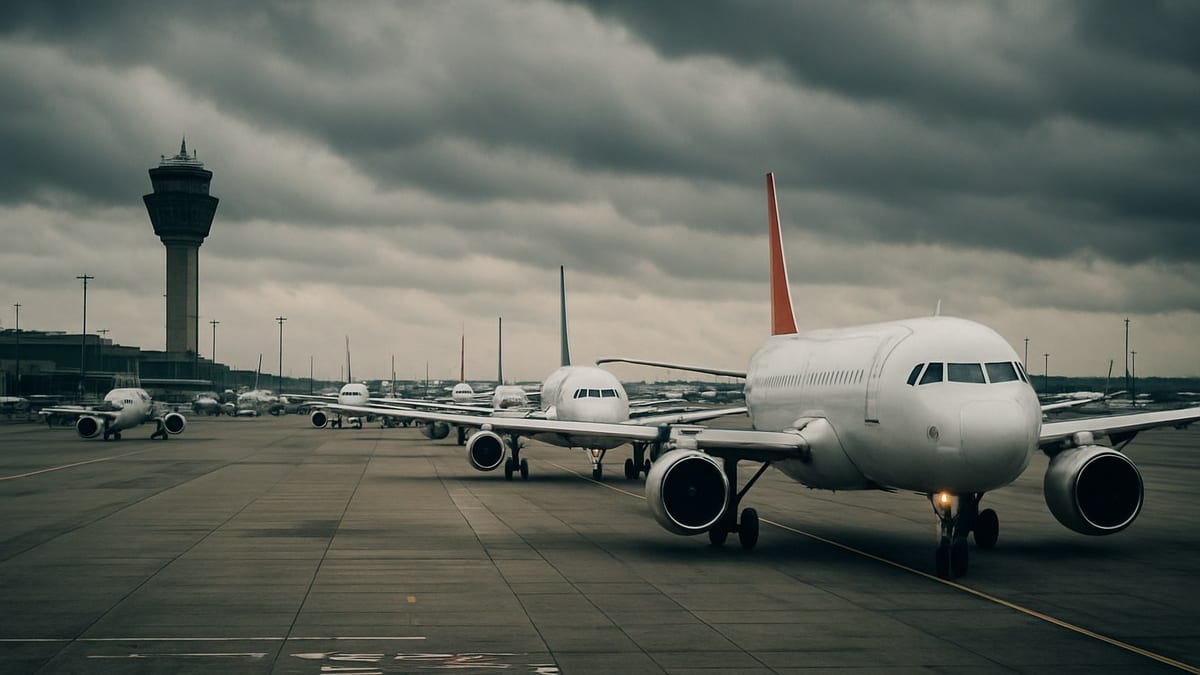
Runway Closure Cuts Arrival Capacity for the Summer Season
San Francisco International entered April 9 with one of its key landing surfaces offline, after a long-planned closure of Runway 1 Right for a six‑month resurfacing and lighting upgrade. Publicly available project information indicates the work, priced in the hundreds of millions of dollars with partial federal funding, is expected to last into October and concentrate virtually all jet traffic onto the longer 28 Left and 28 Right runways.
Airport materials and aviation coverage suggest the runway overhaul was initially forecast to generate modest delays, concentrated in the midmorning and evening peaks. Earlier planning documents described expectations that fewer than one in ten flights would be pushed back, typically by under half an hour, as airlines padded schedules and air traffic managers fine‑tuned arrival spacing.
By April 9, those assumptions were being tested in real time. With crosswind‑friendly Runway 1 Right unavailable, arriving traffic relied more heavily on the 28‑series runways that already handle most of SFO’s busiest bank of transcontinental and international flights. For many inbound passengers, this translated into extended holding patterns over the Central Valley or offshore, as controllers sequenced converging streams of aircraft onto the remaining pair of runways.
Local aviation observers noted that the extended work would likely shift noise and traffic patterns toward communities under the 28 approach path for much of 2026. On April 9, residents reported a denser‑than‑usual parade of arriving jets, a visible sign of how infrastructure work on a single runway can ripple through both airspace and neighborhoods.
FAA Limits Parallel Landings and Tightens Arrival Rates
Compounding the runway closure, recently implemented Federal Aviation Administration practices have reduced San Francisco’s arrival rate on clear‑weather days that previously allowed near‑simultaneous approaches. Industry commentary and public discussions describe a move away from closely spaced parallel operations on the 28 runways, replacing them with more conservative, staggered sequences intended to build a larger safety buffer between aircraft.
Travel coverage in early April indicated that the combined effect of the runway construction and the new arrival rules would cut the number of aircraft SFO can accept each hour, with estimates dropping from more than 50 arrivals per hour to the mid‑30s in some scenarios. On April 9, that constraint translated into longer gate‑to‑gate times for flights from the Pacific Northwest, Southern California and the Mountain West, as aircraft slowed to fit into the narrower arrival window.
The shift aligns with a broader federal push to ease congestion at large hubs by managing the total number of scheduled operations during high‑demand periods. Similar limits at other major airports in recent years have been framed as a tool to reduce cascading delays, even as they trigger short‑term schedule adjustments and occasional crowding at terminals when banks of flights bunch up.
For airlines, the new arrival profile on April 9 required operational improvisation. Carriers with dense schedules into SFO flexed by swapping aircraft types, retiming select departures from origin cities and, in some cases, consolidating thinner routes. For travelers, the most immediate impact was felt as longer taxi‑in and waiting times before gates became available, even after wheels‑down over San Francisco Bay.
Consumer Refund Rules Shape Response to Delays
Layered onto the operational changes at SFO are evolving federal rules on when and how airlines must refund passengers for disruptions. Recent regulatory updates from the U.S. Department of Transportation define, in greater detail than before, what constitutes a “significant” schedule change or delay and under what circumstances travelers are entitled to a prompt cash refund if they choose not to travel.
Guidance documents and industry analysis explain that, for domestic itineraries, delays of several hours can meet the threshold for a significant change, especially if the new schedule requires a different routing, additional connections or arrival at a different airport. On April 9, some SFO‑bound flights approached these parameters as they absorbed extra time in the air and on the ground to comply with the tightened arrival rules.
According to publicly available compliance summaries, airlines are obligated to process refunds for affected passengers within specific time frames, rather than steering customers solely toward vouchers or credits. Those requirements have given travelers clearer leverage on days when airport‑specific constraints, such as SFO’s reduced arrival rate, tip a delay from inconvenient to material.
Travelers monitoring their itineraries on April 9 were encouraged by consumer advocates to keep careful records of schedule changes, actual arrival times and any missed connections. The greater clarity around refund eligibility, combined with more transparent airline delay dashboards, has turned days of congestion at major hubs into real‑time case studies in how the newer rules function in practice.
April 9 Arrivals Reflect a New Normal at SFO
Flight‑tracking data and airline status pages on April 9 showed a pattern consistent with the predicted impact of the runway project and arrival limits. Many inbound flights arrived close to schedule in the early morning, when demand was lighter, but delays grew more common as midday and evening peaks approached. Short‑haul routes from nearby West Coast cities often absorbed the brunt of spacing adjustments, holding briefly in the terminal area while longer‑haul flights were given priority in the landing queue.
Reports from passengers described a patchwork of experiences: some aircraft parked early at lightly used gates, while others waited on taxiways as ground crews worked through a compressed wave of inbound traffic. With aircraft spending more time in the system, turnaround intervals tightened, occasionally pushing subsequent departures behind schedule and creating a feedback loop that extended into the late evening.
Airport operations summaries indicate that SFO has encouraged airlines to build additional slack into schedules throughout the construction period and under the revised arrival rules. That approach is intended to reduce the number of tightly timed connections that can unravel when a single holding pattern or runway bottleneck appears, though it may result in longer advertised journey times on some routes.
For Bay Area travelers and visitors alike, April 9 provided a clear illustration of how regulatory and infrastructure decisions made months or years in advance can reshape the tempo of a single travel day. With the runway work projected to run through much of 2026, and updated federal refund standards now embedded in airline contracts, the pattern seen in SFO’s arrivals is likely to remain a defining feature of flying into the region this year.