

More news on this day
Arriving flights at San Francisco International Airport on April 9 are navigating a new set of federal safety rules and construction constraints that sharply reduce the number of aircraft allowed to land each hour, reshaping schedules for thousands of spring travelers even as the airport reports generally clear skies.
Get the latest news straight to your inbox!
New Safety Rules Cut Parallel Approaches
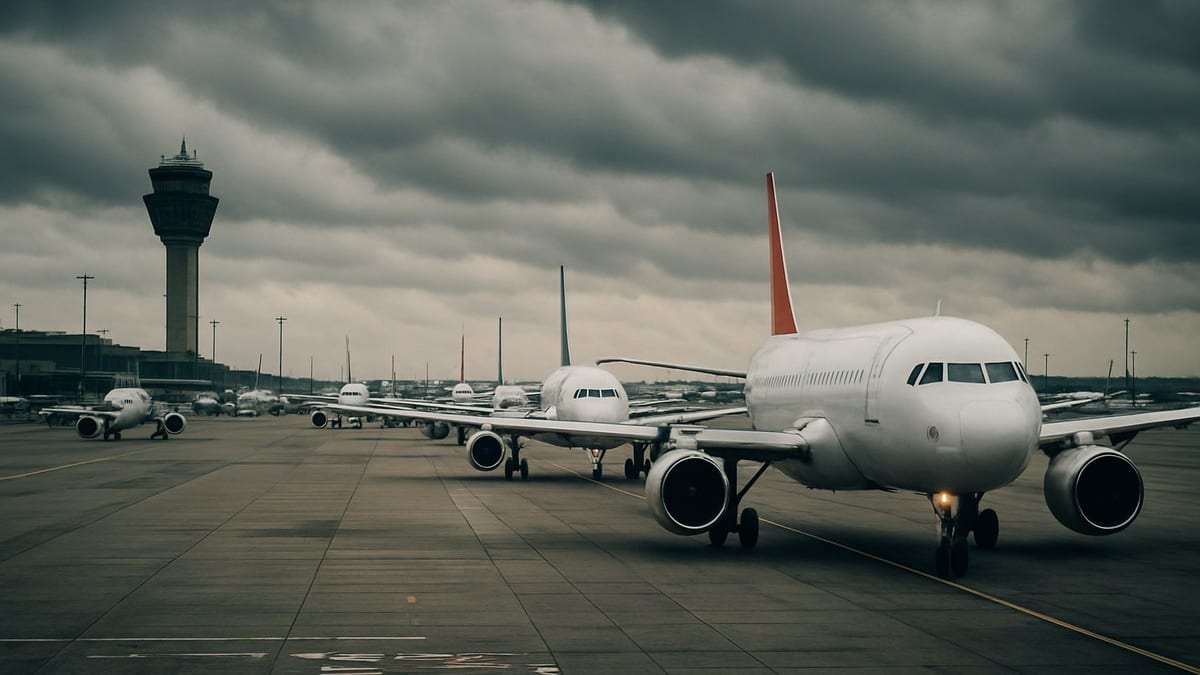
San Francisco International is operating under a recently announced Federal Aviation Administration safety measure that restricts the use of its hallmark side by side landings on the two main east west runways. Publicly available FAA statements describe a requirement for staggered approaches, with one aircraft offset from the other rather than flying parallel visual approaches in clear weather conditions. The change is framed as a safety enhancement following recent runway risk concerns in the national system.
Parallel approaches were already curtailed in poor visibility, when fog or low clouds forced the airport to space aircraft farther apart. The new rule extends that more conservative spacing into clear weather, effectively lowering the maximum arrival rate even on days with few weather complications. Industry analyses of FAA data indicate that the airport had relied heavily on clear weather parallel approaches to handle peak flows from transcontinental and transpacific banks of flights.
Travel coverage in recent days notes that the FAA has told airport operators and airlines to expect a sustained reduction in arrival capacity as a result. Estimates cited in local and national outlets suggest that arrival throughput on the long east west runways is being trimmed as aircraft are sequenced one behind another rather than paired, a structural change that could influence schedules at SFO well beyond the current construction season.
Runway Repaving Further Reduces Capacity
The safety measure is taking effect just as SFO embarks on a six month runway repaving project that removes one of its north south runways from service. Aviation trade publications report that the project, budgeted at roughly 180 million dollars with partial federal funding support, focuses on a busy arrival runway that typically handles a significant share of domestic operations.
With that runway out of use, remaining surfaces must absorb more arrivals and departures even as the FAA limits how many aircraft can line up to land on the main east west pair. Local news analyses of flight data show that, taken together, the rule change and the construction work cut the airport’s theoretical maximum arrival rate from about 54 planes per hour to roughly 36. Airlines have been encouraged to build extra time into their schedules to accommodate the tighter throughput.
Airport briefings published in recent days indicate that SFO initially expected about 10 to 15 percent of flights to experience delays due to the runway project alone. After the FAA communicated the reduced arrival rate associated with the new safety rules, that estimate was revised upward, with projections that approximately one quarter of arriving flights could see delays of at least 30 minutes during the peak of the work.
April 9 Arrivals: Manageable Weather, Structural Delays
On April 9 specifically, federal airport status pages list SFO as operating without major weather related delays, with only a few clouds and light northwest winds reported overnight. The relatively benign conditions mean that most disruptions to arriving flights are being driven by capacity rules rather than storm systems, a reversal from many past delay prone days at the airport.
Recent nationwide reports describe how low visibility and spring storm systems triggered ground delay programs at several major hubs earlier in the week, including in California. Those weather driven initiatives were expected to ease as systems moved offshore, but SFO stands out on April 9 as an airport where structural constraints created by safety policy and pavement work continue to limit arrivals even as skies clear.
Flight tracking services on the morning of April 9 show a pattern of modest but persistent holding for inbound aircraft and extended scheduled flight times built into carrier timetables. In many cases, flights are departing their origin airports on time but touching down later than they would have under the previous higher capacity regime, as traffic managers meter flows into the Bay Area to honor the new hourly limit.
Impact on Airlines and Connecting Passengers
Major airlines that use SFO as a hub are adjusting to the new parameters by rebalancing schedules and rerouting some traffic. Coverage in business and travel media notes that carriers are evaluating whether to spread arrivals more evenly across the day, shift some flights to nearby airports such as Oakland or San Jose, or consolidate less profitable frequencies to stay within the lower slot like arrival counts.
For passengers, the immediate effect on April 9 is most visible in tighter connection windows and a greater risk of missed links when arriving flights encounter even small delays. Analysts point out that if a quarter of incoming flights are running 30 minutes or more behind schedule, hub banks in the late afternoon and evening become particularly fragile, especially for longer itineraries that rely on SFO to connect Asia, Hawaii, and the U.S. East Coast.
Travel advisors quoted in recent coverage suggest that passengers with time sensitive plans consider booking earlier flights, allowing longer layovers, or opting for nonstop options that avoid tight connections through the Bay Area. While security screening times at SFO are reported to be relatively stable despite a broader federal government funding squeeze, the constraint on runway capacity means that on time performance hinges more heavily on how airlines sequence their arrivals into the reduced flow.
What Travelers Should Expect Through the Summer
Published timelines from the airport and federal regulators indicate that the runway repaving is expected to last about six months, stretching through much of the busy summer travel season. The FAA safety measure limiting side by side approaches has been described as an ongoing policy rather than a temporary order, suggesting that the lower arrival rate could persist even after all runways return to service.
That combination points to a prolonged period in which SFO functions with less margin to absorb surges in demand or weather related slowdowns. Aviation observers note that even on calm days like April 9, the airport will have fewer options to recover from earlier disruptions because the arrival stream cannot be compressed as aggressively as before. On days with coastal fog or strong crosswinds, the effect could be magnified.
In the near term, travelers headed to or through San Francisco on April 9 and in the coming weeks are likely to see a mix of on time arrivals and moderate delays rather than dramatic shutdowns. However, public information from the airport and analyses by travel outlets emphasize that the structural changes now in place have reset expectations for what on time performance looks like at one of the country’s most capacity constrained hubs.