

More news on this day
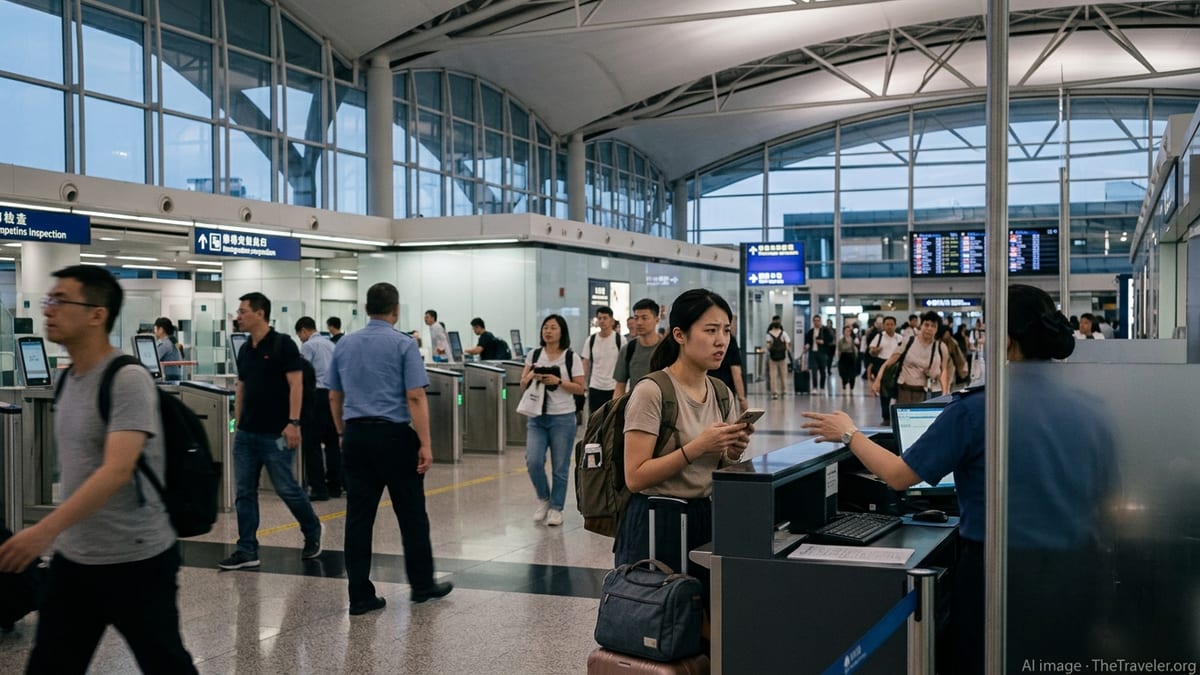
Travellers heading to Hong Kong are being warned to think carefully about what they carry on their phones, as the city’s rapidly expanding national security framework raises fears that a routine stop at the airport could escalate into a demand to unlock devices or risk serious legal jeopardy.
Get the latest news straight to your inbox!
A Tougher Security Regime Meets a Global Travel Hub
Hong Kong International Airport serves tens of millions of passengers each year, many of them using the city as a gateway to Asia. At the same time, Hong Kong has undergone a sweeping transformation of its security and legal environment since 2020, culminating in the Safeguarding National Security Ordinance, commonly referred to as the Article 23 law, which took effect on 23 March 2024. Publicly available information indicates that this law significantly widens the range of offences linked to state security and expands investigative powers for police and other agencies.
The new ordinance sits on top of the 2020 National Security Law, which already introduced broad offences such as secession, subversion and collusion with foreign forces. Rights groups and legal analysts describe the combined framework as far-reaching, with a wide margin for interpretation and lengthy maximum penalties for a range of information-related and speech-related conduct. Some jurisdictions, including Australia and the United Kingdom, have updated travel advisories since 2024 to warn that visitors may face legal exposure for activities that would be considered ordinary political expression elsewhere.
For travellers, the central concern is less about the headline offences and more about how the new rules may play out in everyday procedures at the airport and other border checkpoints. The fear is that broad concepts of national security could be used to justify more intrusive searches of electronic devices, including requests or orders to unlock phones, tablets and laptops so that data can be inspected.
Expanded Powers and What They Could Mean for Your Phone
Legal texts and public briefings around Article 23 show that the ordinance enhances police powers to obtain information, search premises and seize materials in national security investigations. Commentaries by legal academics and rights organisations note that the framework allows extended detention in some circumstances and introduces offences related to the handling, storage and disclosure of certain types of information, including state secrets and material deemed to be assisting foreign organisations.
While the law does not read like a technical manual for border checks, experts point out that device searches are a common investigative tool worldwide and can be folded into existing authorities to search luggage and property. In Hong Kong, publicly available documents indicate that investigators may apply for orders compelling individuals or service providers to hand over information or assist in accessing data relevant to national security cases. That has prompted concern that, in practice, refusing to unlock a phone in a security context could be framed as non-compliance with lawful instructions or even obstruction of an investigation, exposing a traveller to potential arrest.
The stakes are high because national security offences in Hong Kong carry sentences that can extend for many years. Research compiled by rights groups on national security cases since 2020 highlights a high rate of pre-trial detention and a strong tendency toward conviction once charges are brought. Against that backdrop, privacy advocates warn that a seemingly simple decision at an airport checkpoint about whether to unlock a device could, in extreme scenarios, become the starting point of a case that ends in prolonged loss of liberty.
There is, however, an important distinction between what is legally possible and what travellers are likely to experience day to day. Public reporting and anecdotal accounts suggest that most international visitors still pass through Hong Kong International Airport without any request to inspect their phones. The concern is less about routine practice today and more about the legal room that now exists for authorities to escalate scrutiny quickly in politically sensitive or high-profile situations.
Blurry Line Between Hong Kong and Mainland-Style Checks
Part of the anxiety around device searches in Hong Kong stems from practices reported at border crossings into mainland China, where travellers have, for years, described more frequent and more intensive inspections of phones and laptops. Accounts in international media and online travel forums refer to incidents in which travellers were asked to unlock phones, had social media or messaging apps checked, or saw devices briefly taken out of sight for technical scanning.
Although Hong Kong retains a separate legal system, analysts note that its security and data rules are gradually being aligned more closely with those of mainland China. Business risk consultancies and academic commentators argue that the direction of travel since 2020 has been toward greater integration on security issues, from information controls to cross-border policing arrangements. The Article 23 ordinance is widely viewed as part of that convergence, reinforcing expectations that investigative standards will continue to tighten.
For travellers, that raises a practical question: how different will Hong Kong feel from nearby mainland entry points in the coming years. Some reports suggest that customs and immigration settings are a likely frontline for enforcing new expectations around data access, given that border checks already involve identity verification, declarations and physical searches. While there is no public registry of phone-search statistics at Hong Kong’s airport, the fear is that the combination of broad legal powers and sensitive political context could make travellers’ digital lives more exposed than they realise.
Foreign Travel Warnings and Human Rights Concerns
Government advisories from several Western countries now caution that Hong Kong’s security legislation may affect visitors in ways that are hard to predict. Updates from Australia, the United Kingdom and others since 2024 advise travellers that public statements, social media activity or materials carried on electronic devices, including content critical of authorities, could be scrutinised under national security and sedition-style provisions. Some of these advisories explicitly flag the risk of detention and prosecution for activities that took place outside Hong Kong but are accessible digitally when a person enters the city.
Human rights organisations have issued detailed analyses of both the 2020 National Security Law and the 2024 Article 23 ordinance, arguing that the combined framework fails to provide adequate safeguards against arbitrary interference with privacy and freedom of expression. Their reports point to the breadth of offences, the potential for retroactive use of online content as evidence and the enhanced investigative powers that may reach deeply into personal communications and data stored on devices.
These concerns are reinforced by case studies showing how digital footprints have already played a central role in prosecutions, from social media posts to encrypted messaging groups. In that context, travel advocates say that it is reasonable for visitors to assume that anything on a phone at the point of entry could, in a worst-case scenario, be inspected and potentially used as part of a security investigation.
How Travellers Are Responding and What to Consider Before You Fly
In response to the changing legal environment, some travellers, especially those involved in advocacy, journalism or politically sensitive work, report adjusting their digital habits before flying to Hong Kong. Common strategies described in public commentary include travelling with a separate low-data device, minimising stored messages and documents, logging out of cloud accounts, or using temporary phones and laptops that contain only the essentials for the trip.
Digital rights groups emphasise the importance of understanding that laws like Article 23 can reach beyond physical borders, because online content and communications leave traces that may be accessible when a person enters a jurisdiction that treats them as potential evidence. They recommend that travellers think not only about photos and chat histories, but also about contact lists, notes apps, cloud storage connections and saved files that might be viewed as sensitive in a national security context.
For most leisure and business visitors, travel through Hong Kong is likely to remain uneventful, and there is no public indication that the majority are being stopped and ordered to unlock devices at the airport. However, the direction of legal change means that the risk profile has shifted. With broad security powers now in force and significant penalties available, even a single misjudgment at the border could have consequences far beyond a missed flight, especially for those whose digital lives intersect with politically charged issues.
Travel specialists advise that anyone planning a trip should check the latest official travel advisories from their home country, review what is stored on devices and consider whether carrying certain data is necessary. In an era when a smartphone is often a portable archive of a person’s private and professional life, the combination of expanded security laws and discretionary border powers makes it more important than ever to think before you swipe to unlock.