

More news on this day
Tacloban’s Daniel Z. Romualdez Airport is racing toward a 2026 opening of its new passenger terminal, a flagship Philippine infrastructure project that aims to transform Eastern Visayas into an international aviation gateway by the end of the decade.
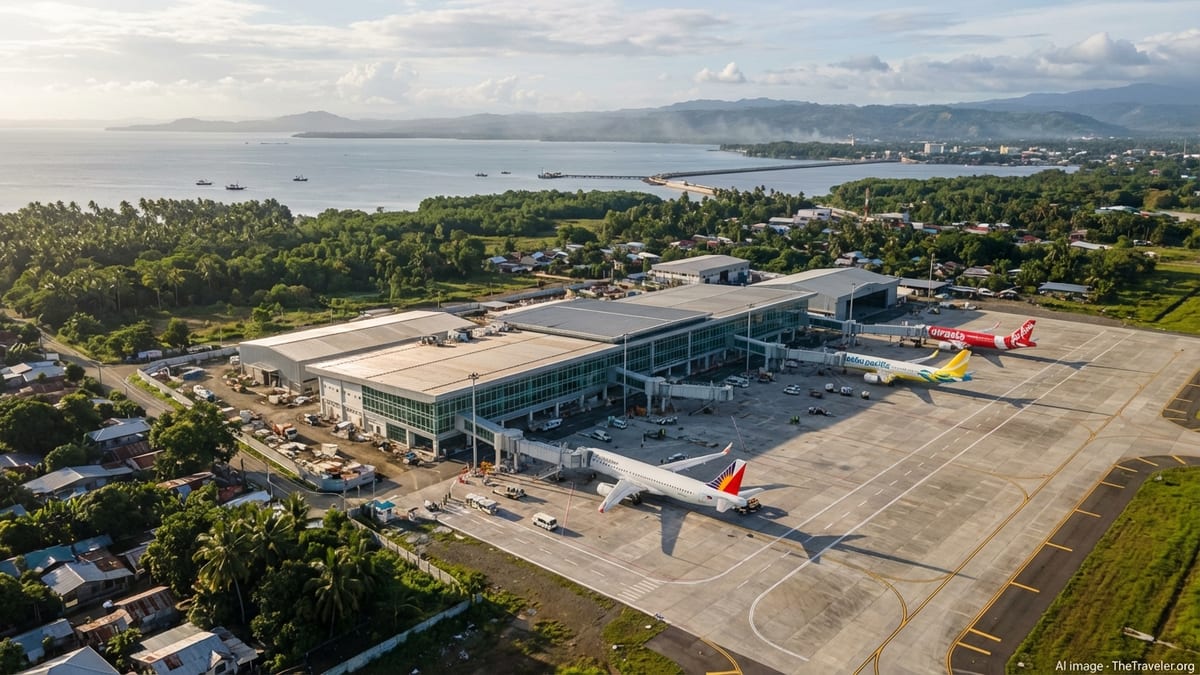
A Strategic Gateway for Eastern Visayas
The modernization of Tacloban’s Daniel Z. Romualdez Airport is emerging as one of the Philippines’ most closely watched aviation projects, seen by officials and industry observers as a key step in rebalancing air traffic away from Metro Manila and deepening regional connectivity. Long serving as the primary air gateway to Eastern Visayas, Tacloban is now being prepared to handle more passengers, larger aircraft and eventually international routes.
The airport handled about 1.69 million passengers in 2024 and now records more than 20 daily flights linking Tacloban with Manila and Cebu, placing it among the busiest regional airports in the country. Authorities say the new terminal and associated airside upgrades are being designed to meet international standards and relieve pressure on existing facilities that were pushed to their limits by steady traffic growth over the past decade.
National government planners have repeatedly highlighted the airport’s role in the broader “Bagong Pilipinas” infrastructure push, arguing that regional gateways like Tacloban can unlock new corridors for tourism and trade. For Eastern Visayas, a modern, eventually international-ready terminal is expected to strengthen links with key domestic hubs in the near term and lay the groundwork for direct overseas services later in the 2020s.
New Terminal Targets 2026 Operations
Construction of the new passenger terminal building, which began earlier in the decade, has accelerated under closer coordination between the Department of Transportation and the Civil Aviation Authority of the Philippines. Recent inspections by senior transport officials confirmed that the upgraded terminal is tracking toward an April 2026 readiness date for full domestic operations, with some agencies speaking of a possible partial opening earlier in the year as systems are commissioned in phases.
The development is structured in multiple stages. Phase 1, covering the core structure of the new terminal building, has been reported as substantially completed, with more than 700 million pesos in works delivered. Phase 2, which includes roofing, architectural finishes and further structural enhancements, carries a budget of around 1.05 billion pesos and is targeted for completion in early 2026, aligning with the planned opening of the domestic sections.
A third phase, overseen by the Department of Public Works and Highways, covers key fit-out and support systems such as elevators, escalators, air-conditioning, passenger boarding bridges and additional civil works. Regional officials say progress on Phase 3 has been running ahead of schedule, with completion milestones set through late 2025 to ensure that the terminal can transition smoothly into full operations by 2026.
Pathway to International Status by 2028
While 2026 is the target year for domestic operations in the new building, planners are working toward a longer-term horizon in which Tacloban assumes a more prominent role as an international-capable airport. Government documents and regional development plans now frame 2028 as the benchmark year for full international readiness, including completion of runway extension works and the finalization of airside safety upgrades required for regular medium-haul services.
Earlier projections had suggested Tacloban could meet international operational standards as early as 2025, but the timeline has been recalibrated as construction schedules and budget allocations adjusted in the wake of the pandemic and subsequent inflationary pressures. Officials emphasize that the revised targets are more realistic and allow for thorough implementation of safety, security and passenger service systems needed to secure international certifications.
To accommodate overseas flights, the airport is proceeding with plans to lengthen its existing 2.1-kilometer runway toward 2.5 kilometers, enabling it to handle larger jets under varying weather and load conditions. Site development and reclamation activities are being prepared in tandem with the passenger terminal works so that, once the building opens in 2026 for domestic operations, the airfield upgrades can continue with minimal disruption.
Aviation planners stress that “international-ready” does not necessarily mean immediate regular long-haul connections, but rather the attainment of infrastructure and regulatory standards that would allow the airport to welcome charter and scheduled flights from nearby markets such as East Asia once airline demand materializes.
Capacity Upgrades and Passenger Experience
The new terminal is designed to markedly increase Tacloban’s handling capacity and improve the overall travel experience. Project briefings indicate the facility will accommodate around 1,600 passengers at any given time, significantly easing congestion compared with the existing terminal, which has long struggled with peak-hour queues at check-in, security and boarding gates.
Passengers can expect more spacious departure and arrival halls, expanded check-in areas and modernized security screening lanes aimed at reducing processing times. The installation of passenger boarding bridges, a first for the airport, will allow all-weather boarding and disembarkation, a notable upgrade in a region frequently affected by heavy rains and strong winds.
Back-of-house improvements are equally important. The project includes enhanced baggage handling systems, upgraded power and cooling infrastructure, and new rescue and firefighting facilities that align with international safety benchmarks. A larger vehicular parking area and improved curbside layout are being built to manage the growing volume of private vehicles, taxis and public transport services feeding the terminal.
Authorities say the design also takes into account the lessons of past weather events. Tacloban was devastated by Super Typhoon Haiyan in 2013, and engineers have worked to integrate more resilient construction methods, drainage systems and backup power solutions to minimize disruptions from future extreme weather incidents.
Funding, Oversight and Construction Progress
Delivering the Tacloban upgrade on its revised schedule requires close coordination among multiple agencies. The Department of Transportation is leading the overall aviation program, while the Civil Aviation Authority manages the early phases of terminal construction and airside works. The Department of Public Works and Highways is responsible for much of the Phase 3 fit-out as well as several support facilities around the site.
Recent progress reports from the public works department indicate that terminal Phase 3 works and associated support infrastructure are advancing ahead of plan, with actual accomplishment levels significantly outpacing earlier targets. Contracts for rescue and firefighting facilities, maintenance and motor pool buildings, sewage treatment systems, parking areas, taxiways and site development are all moving through 2025 with a completion schedule geared to match the 2026 operational goal.
The project has secured billions of pesos in combined funding through the national budget, with allocations covering structural works, equipment procurement and land acquisition for the runway and access improvements. Officials note that steady disbursement has been crucial in keeping contractors mobilized and avoiding the stop-start cycles that have delayed other big-ticket infrastructure projects in the past.
Regular site inspections by senior transport leaders have become a hallmark of the Tacloban development. These visits are intended not only to monitor construction but also to quickly address bottlenecks such as right-of-way issues, supply-chain delays and weather-related setbacks that could threaten the April 2026 target.
Regional Connectivity, Tourism and Jobs
The new Tacloban terminal is expected to carry significant economic weight well beyond the confines of the airport perimeter. Eastern Visayas tourism stakeholders have long argued that air access is the main constraint holding back destinations across Leyte, Samar and Biliran from reaching their full potential, noting that visitors often face crowded flights and limited scheduling options during peak seasons.
With a modern, higher-capacity terminal, airlines will have greater flexibility to add frequencies and upgauge aircraft, particularly on the heavily trafficked Manila and Cebu routes. Over time, authorities hope to attract direct links to other domestic hubs and eventually short-haul international services that would bring foreign tourists closer to the region’s beaches, dive sites and heritage attractions without having to transit through Manila.
Economic planners also highlight the project’s job footprint. Construction alone has created employment for hundreds of workers in and around Tacloban, from heavy equipment operators and engineers to suppliers and support staff. Once fully operational, the expanded airport is expected to support additional roles in ground handling, security, retail, food and beverage, transport services and tourism-related enterprises.
Local business groups are already positioning for a potential upswing in investment, particularly in hotels, logistics facilities and commercial developments near the airport and along its improved access roads. They point to Tacloban’s strategic location in the heart of Eastern Visayas as a natural hub for regional trade once air connectivity improves.
Supporting Infrastructure: Causeway and Access Roads
Key to maximizing the benefits of the new terminal is a parallel effort to improve ground access between Tacloban’s urban core and the airport in the San Jose district. Central to this is the Tacloban causeway project across Cancabato Bay, envisioned as a four-lane elevated corridor with bike lanes, sidewalks and wave deflectors that will substantially shorten travel times for passengers and cargo heading to and from the terminal.
The causeway is designed to cut the journey from the city center to the airport from well over half an hour in peak traffic to roughly 10 minutes. For airlines and logistics operators, the improved reliability and predictability of access are expected to make Tacloban a more attractive node in regional supply chains, particularly for time-sensitive goods.
Additional road improvements are planned or underway to complement the causeway, including upgraded approach roads and junctions in the airport’s vicinity. These investments are intended to prevent the new terminal from becoming a fresh bottleneck by dispersing traffic flows more evenly and offering alternative routes for residents who do not necessarily need to enter the terminal complex.
Officials say the combination of a modern terminal, extended runway and improved surface connectivity will position Tacloban as a more resilient and efficient transport hub, enhancing its capacity to respond to both everyday travel demand and emergency logistics needs during natural disasters.
Part of a Wider Philippine Aviation Upgrade
The Tacloban project is unfolding alongside a broader wave of airport modernizations across the Philippines as the government seeks to raise aviation capacity to keep pace with growing tourism and domestic mobility. Other regional airports in Visayas and Mindanao, including those in Bukidnon, Bohol and Aklan, are likewise undergoing upgrades aimed at expanding capacity, improving safety and attracting new air services.
In this context, Tacloban is frequently cited by national officials as a showcase for how targeted investments in regional gateways can complement the ongoing redevelopment of Manila’s main airports. By dispersing traffic and creating more direct links between secondary cities, planners hope to reduce congestion in the capital while spreading the economic benefits of aviation more evenly throughout the archipelago.
Aviation analysts note that the success of Tacloban’s transition from busy domestic hub to international-ready airport will depend not only on infrastructure delivery but also on coordinated marketing, route development efforts and the wider tourism strategy for Eastern Visayas. Airlines will ultimately decide when and how to deploy aircraft, but a modern terminal and compliant runway are seen as essential preconditions.
For now, the focus remains squarely on meeting the 2026 deadline for the new terminal’s domestic operations. If current construction momentum holds and supporting projects like the causeway advance on schedule, Tacloban could soon offer travelers a significantly upgraded airport experience, setting the stage for its next chapter as an emerging international gateway.