


More news on this day
American travelers eyeing Dubai for winter stopovers face a markedly different risk calculus this year, as new U.S. advisories on the United Arab Emirates intersect with ongoing regional tensions and tighter airport scrutiny.
Get the latest news straight to your inbox!
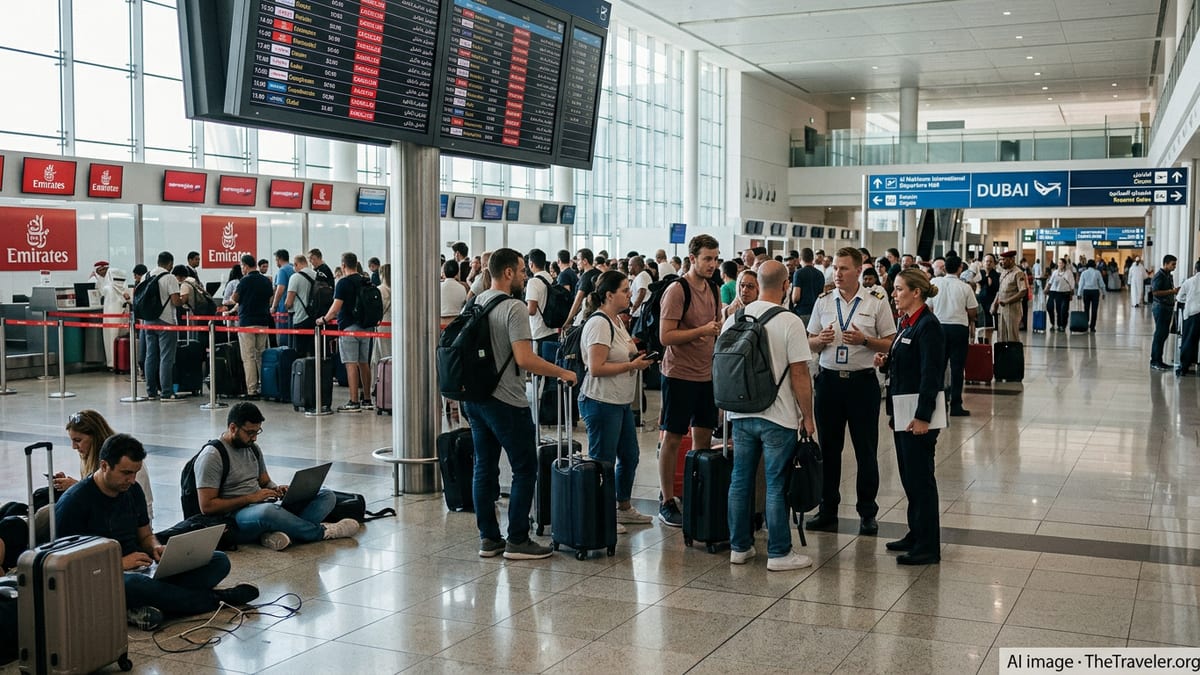
State Department Raises UAE to Level 3 as Winter Travel Nears
Publicly available information from the U.S. Department of State shows that the United Arab Emirates is currently rated Level 3, "Reconsider Travel," with the advisory updated in late October 2026. The notice cites terrorism and armed conflict as primary concerns, reflecting a regional security picture that has shifted since large-scale missile and drone attacks earlier in the year.
The Level 3 designation itself does not prohibit Americans from flying to or through Dubai, but it signals that U.S. travelers should weigh whether their trip is essential, review contingency plans, and closely follow carrier and airport updates. Advisory trackers comparing positions from multiple governments indicate that Washington is now among the most cautious on the UAE, while several other countries advise travelers to exercise increased caution rather than reconsider travel entirely.
Separate security alerts circulated by the U.S. mission in the UAE in mid October highlighted the potential for attacks on U.S. and Western interests in the wider region and warned of possible airspace closures, flight disruptions, and short notice changes to airport operations. These notices have drawn particular attention from travelers booked on winter itineraries that rely on Dubai as a hub between North America, Europe, Africa and Asia.
Regional travel disruption earlier in 2026 also underscored how quickly conditions can change. Aviation and consultancy briefings issued in March described partial airspace closures, exceptional flight operations and heavy congestion at several Gulf hubs, including Dubai, as authorities responded to missile activity and carriers rerouted or consolidated services.
Transit Still Operating, But With Tighter Timing and Scrutiny
Despite higher risk ratings, scheduled flights through Dubai International Airport continue to operate at significant scale. Updates published by Emirates in early October advised passengers departing from U.S. gateways to arrive at least four hours before departure, citing extended security screening and additional checks before boarding. That guidance goes beyond the three hour window many long haul passengers previously relied on and has been aimed particularly at the busy winter period.
Travel updates have also emphasized that connecting passengers are accepted only when onward flights are confirmed to operate, a policy that first appeared during the spring disruption period and remains part of carrier contingency procedures. Public reports from affected travelers earlier this year described last minute cancellations, rebookings days later and routings via alternate European or Asian hubs when regional traffic was constrained.
Dubai’s own travel advisory pages, updated at the end of October, stress that air traffic and airport operations are running, while acknowledging that schedules may be adjusted in response to security or operational requirements. Airport information channels highlight that passengers should monitor their flight status on the day of travel and be prepared for changes in departure times or, in more severe scenarios, temporary holds outside UAE airspace until routes are cleared.
For Americans planning winter stopovers, the practical impact is likely to be longer time spent in security queues before U.S. bound departures, a higher premium on through tickets that keep both legs on one carrier, and a need to build in additional time between connections in case of knock on delays around the region.
Local Laws Put Extra Focus on What Transit Passengers Carry
Alongside security concerns, legal risks have moved higher on the agenda for travelers routing through Dubai. Travel advisories from North American and European governments reiterate that the UAE enforces strict zero tolerance drug laws, including for some prescription medications and for small quantities that might be treated more leniently in other jurisdictions. Guidance for foreign nationals notes that even transit passengers can face arrest if they are found with prohibited substances or if banned ingredients appear in blood or urine tests.
Dubai Airports and customs information specify that medicines and controlled drugs must be declared on arrival and that travelers should carry a prescription and, in some cases, prior approval from UAE health authorities. Publicly available airline policies indicate that only up to three months’ supply of prescription medication is generally accepted and that passengers are advised to consult a UAE embassy before carrying any strong painkillers, psychotropic drugs or other controlled substances.
Alcohol and tobacco allowances are also clearly defined. Dubai customs material lists a maximum of four litres of alcohol or two cartons of beer, together with limits on cigarettes and other tobacco products, for travelers entering the emirate. Advisories from foreign ministries caution that being under the influence of alcohol in public is an offense, and published travel guidance points out that even passengers in transit have faced legal problems after arriving intoxicated or becoming disruptive in the terminal.
Electronic cigarettes and vaping devices remain another area of close scrutiny. Airline dangerous goods policies state that e cigarettes and similar devices must be carried only in cabin baggage, not checked bags, and note that their use is prohibited on board and restricted in many airports. In the UAE, some nicotine liquids and related products are regulated, and travelers are encouraged to verify current rules before carrying large quantities through Dubai.
Security Environment and Missile Threats Shape Risk Calculations
The current U.S. advisory for the UAE references the broader regional security environment rather than specific, ongoing attacks in Dubai itself. In parallel, updated advice from several other governments in October highlights the potential for further missile or drone launches affecting states across the Gulf, including possible threats to aviation, energy infrastructure and military facilities.
Public summaries of UAE related advisories describe a security situation that is unpredictable but managed, with authorities maintaining what they describe as an active defense posture. International travel advice sites for the UAE refer to the threat of terrorism and the risk of long range attacks as persistent, even during periods when no incidents are reported in major cities.
Earlier in 2026, a series of high profile missile and drone launches toward Gulf targets led to temporary airspace closures and flight reroutings across several countries. Aviation industry analyses from March noted that major hubs such as Dubai, Abu Dhabi and Doha experienced knock on congestion as flights were consolidated, passengers were rebooked, and crews and aircraft were repositioned. While those conditions eventually eased, the precedent informs current winter planning for airlines and travelers.
For Americans weighing a winter stopover, the practical interpretation of these risks often comes down to tolerance for disruption rather than a binary safe or unsafe judgment. The heightened U.S. advisory level means travelers may want to consider whether a non Gulf connection is available for discretionary trips, while those who proceed through Dubai are encouraged by government and airline guidance to register with consular programs, share itineraries with family and maintain flexibility in case schedules change at short notice.
What Winter Travelers Can Do Now
With outbound holiday bookings ramping up, a growing number of U.S. travelers are revisiting itineraries that use Dubai as a one or two night stopover between North America and long haul destinations. Publicly available airline and government guidance points to several concrete steps that can help reduce risk and inconvenience in the months ahead.
First, official advisories recommend reviewing the full text of the U.S. travel advisory for the UAE and monitoring subsequent security alerts from the U.S. mission in Abu Dhabi and Dubai. Because the situation in the wider region remains fluid, these notices may be updated more frequently than the headline advisory level and can contain specific references to airports, airspace and Western branded facilities.
Second, carrier updates suggest allowing more time at origin airports, particularly on U.S. departures, and building generous connection windows through Dubai in case screening or air traffic control measures slow down operations. Travelers booking new winter trips may wish to prioritize tickets that keep connections on a single airline or within one alliance so that rebooking options are clearer if schedules change.
Finally, multiple national travel advisories highlight careful preparation around luggage and personal conduct. That includes checking medication against UAE controlled lists and carrying prescriptions and any required approvals, staying within alcohol import limits, avoiding intoxication in public areas of the airport, and complying fully with security and customs instructions. For Americans who remain comfortable with these conditions, Dubai is expected to continue functioning as a major transit hub this winter, albeit under a sharper level of U.S. scrutiny than in recent years.