

More news on this day
Air travelers across Brazil are facing fresh disruption this week as more than 20 newly canceled flights by United, LATAM, American, Delta, Azul and other carriers ripple through major hubs including São Paulo, Rio de Janeiro and Brasília, compounding an already volatile summer of delays and operational setbacks.
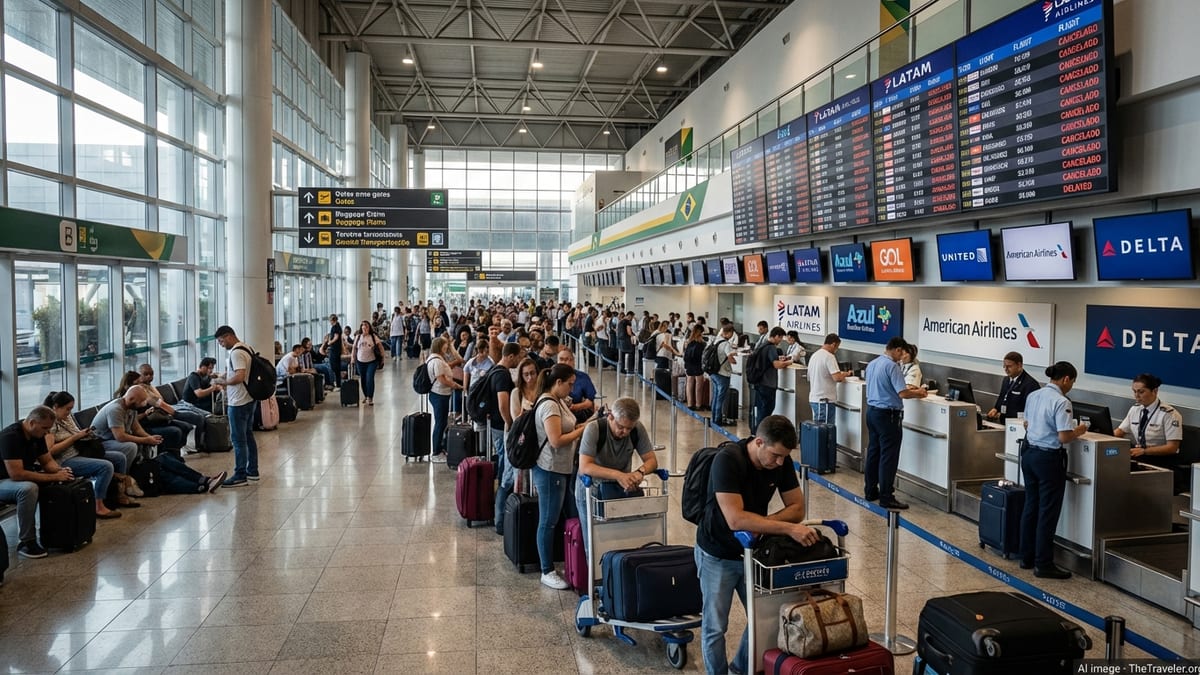
New Cancellations Add to Season of Uncertainty
The latest wave of cancellations, spanning both domestic and international services, follows a month of heightened disruption at Brazil’s busiest gateways. In late January, more than 40 flights were scrapped across Rio de Janeiro, São Paulo, Brasília and Campinas as a mix of operational constraints and weather issues strained airline schedules. Those earlier cuts have now been followed by over 20 additional cancellations affecting marquee carriers such as United Airlines, LATAM, American Airlines, Delta Air Lines and Azul Brazilian Airlines.
While precise tallies vary by day and airport, data from major terminals show a pattern of rolling disruption rather than a single isolated incident. On some recent days, São Paulo–Guarulhos alone has recorded multiple cancellations in just a few hours of operations, on top of dozens of delays. For passengers, the practical impact is mounting: missed connections, forced overnight stays and rebookings onto already crowded later flights.
The trend is particularly troubling for travelers who depend on high-frequency shuttle corridors between São Paulo, Rio and Brasília. Even a handful of cancellations on these dense routes can rapidly cascade through the network, as aircraft and crew are repositioned, leaving little slack for recovery when weather or technical issues flare up.
Key Hubs Under Pressure: São Paulo, Rio and Brasília
São Paulo’s Guarulhos and Congonhas airports remain at the center of the disruption, reflecting their role as Brazil’s primary domestic and international gateways. Recent operational data from Guarulhos has shown dozens of delays in a single day accompanied by a cluster of outright cancellations, affecting both domestic hops and long haul flights to North America and Europe. Airlines including LATAM, Azul, GOL, American, Delta and United have all seen their schedules adjusted at various times as conditions deteriorated.
Rio de Janeiro’s dual-airport system, with Galeão handling most long haul and Santos Dumont focusing on the shuttle to São Paulo and other domestic routes, has also felt the squeeze. A run of cancellations there has hit business travelers particularly hard, as popular morning and evening departures between Rio and São Paulo have been trimmed or consolidated, increasing crowding on the services that do operate.
In Brasília, a key political and connecting hub, smaller numbers of cancellations have still had outsized effects. Flights from the capital feed into dozens of secondary cities, so when a departure is dropped, passengers often lose same-day onward options. Even on days when cancellation percentages are low, higher-than-usual delay rates have caused long queues at customer service desks and boarding gates, with airlines juggling aircraft rotations to keep the broader network moving.
Weather, Fleet Constraints and Operational Knock-On Effects
Industry analysts point to a familiar mix of causes behind the current turbulence. Seasonal storms in southeastern and central Brazil, combined with heavy rainfall and low visibility around São Paulo and Brasília, have frequently forced temporary ground stops or extended spacing between departures and arrivals. Once a bank of flights is pushed back, airlines face a complex puzzle of crew duty limits, aircraft maintenance windows and tight turnaround times.
At the same time, Brazilian carriers are still fine-tuning fleets and finances after a prolonged period of restructuring and cost control. Azul, which recently exited Chapter 11 protection with new backing from U.S. partners, continues to rebalance capacity and aircraft utilization across its extensive domestic network. LATAM and GOL have likewise been recalibrating schedules to match demand and manage higher operating costs, leaving less room to absorb shocks when storms or technical issues arise.
For U.S. airlines such as United, American and Delta, Brazil is a crucial long haul market tied closely to alliances and codeshare agreements with local partners. When domestic operators adjust or cancel feeder services, some international flights face weaker connectivity or misaligned banks of arriving passengers. In several recent instances, this has contributed to decisions to preemptively cancel or consolidate select U.S. bound services rather than operate with heavy disruption and misconnected travelers.
Impact on Passengers and Practical Advice for Travelers
For travelers, the most visible result of these layered disruptions has been crowded terminals, long check in and rebooking lines and frequent last minute gate changes. At times when São Paulo or Rio experience clusters of cancellations, social media has filled with images of passengers camping out on terminal floors, waiting for updated departure information or hotel vouchers as airlines work through backlogs.
Consumer advocates in Brazil are reminding passengers that local aviation rules provide for assistance in many disruption scenarios, particularly when cancellations are not solely caused by extraordinary weather. Food vouchers, hotel accommodation and rebooking at no extra cost may be owed depending on the length of delay and the airline’s role in the operational problem. However, accessing those rights often requires persistence and careful documentation of boarding passes, receipts and communication with the carrier.
Travel planners advise building more buffer time into itineraries that rely on connections through Guarulhos, Congonhas, Galeão or Brasília, especially during the current rainy season. Booking slightly longer layovers, avoiding tight same day connections on separate tickets and monitoring flight status several hours before heading to the airport can all reduce the risk of becoming stranded mid journey.
Outlook: Volatile Summer Ahead for Brazil’s Air Network
Looking ahead, airline executives and airport operators caution that sporadic disruption is likely to continue in the near term. Weather patterns across southeastern Brazil remain unsettled, and airlines are still in the process of optimizing newly restructured fleets and restored international capacity after the pandemic era slump and subsequent financial shakeouts.
On busier days, even a relatively modest figure of 20 or 30 cancellations across Brazil’s main hubs can have systemwide consequences once knock on delays are factored in. With passenger numbers climbing back toward record levels on both domestic shuttle routes and long haul services to North America and Europe, the margin for error is slim.
For now, travelers planning trips through São Paulo, Rio de Janeiro, Brasília and other key Brazilian airports are being urged to stay flexible, keep a close eye on schedules from airlines including LATAM, Azul, GOL, United, American and Delta, and brace for the possibility that their carefully arranged plans may still be upended by another sudden round of cancellations.