

More news on this day
Travelers across South Korea are facing fresh disruption as Qatar Airways, Korean Air and Air Seoul cancel more than a dozen services, disrupting links between Doha, Guam and major Korean gateways including Incheon, Busan, Jeju and Seoul’s Gimpo airport.
Get the latest news straight to your inbox!
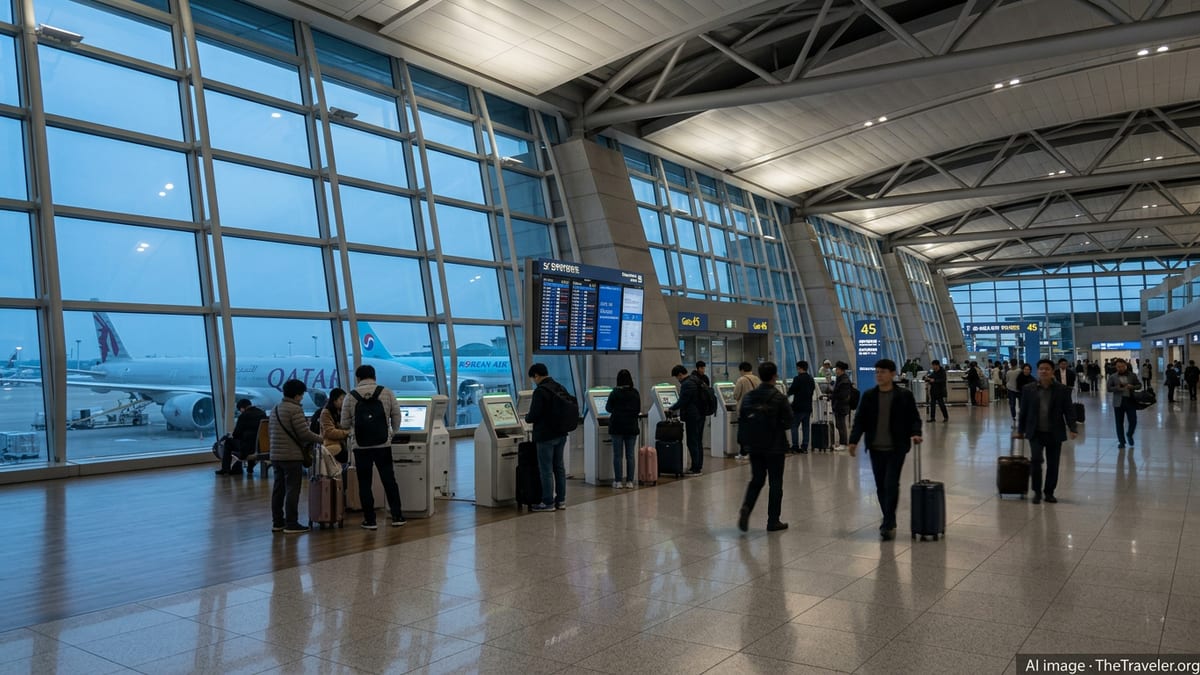
Middle East Tensions Ripple Into Korean Skies
The latest round of cancellations comes as airlines continue to grapple with the effects of airspace closures and security concerns in the Middle East, following Iranian strikes that forced Qatar to temporarily shut its airspace in late February. While limited emergency corridors have since reopened, normal commercial operations remain heavily constrained, and carriers are trimming schedules or withdrawing routes at short notice.
Qatar Airways, a major connector between South Korea and Europe, Africa and the Middle East via Doha, has shifted to a reduced schedule and is selectively operating flights after securing temporary approvals from Qatari regulators. Services between Doha and Seoul Incheon are running on a limited basis, but some rotations in the coming days have been pulled, leaving passengers to navigate last-minute rebookings, refunds or complex rerouting through third countries.
South Korea’s foreign ministry has been coordinating with Qatari authorities to secure special services to bring home nationals stranded in the Gulf region. Recent emergency flights between Doha and Incheon have operated at or near full capacity, highlighting how quickly regular seat supply evaporated after the initial wave of cancellations and how dependent Korean travelers have become on Middle East transit hubs.
Korean Air Tightens International Network as Cancellations Mount
Korean Air, already operating under heightened scrutiny as it progresses with the integration of Asiana Airlines, is also paring back its schedule amid the turmoil. The flag carrier has extended suspensions on certain Middle East routes and quietly canceled select services touching South Korean gateways, further squeezing long-haul connectivity from Incheon and regional links used by leisure and business travelers alike.
Industry data and airport notices show Korean Air scrapping multiple services that either connect into disrupted Middle East flows or rely on aircraft and crews positioned on those routes. The knock-on effect is being felt at Incheon and Busan’s Gimhae airport, where passengers have reported short-notice cancelations and rebookings, particularly on itineraries involving onward travel to Doha, Dubai and beyond.
These adjustments are being layered on top of existing capacity reductions from regional airports that began well before the current crisis, as Korean Air focused more flying through its Incheon hub. For travelers in cities such as Busan and Jeju, the latest cancellations mean fewer alternatives, longer connection times and, in some cases, the need to reposition via Seoul Gimpo or Incheon just to start an international journey.
Air Seoul Cuts Add Pressure on Guam and Jeju Leisure Routes
Low cost carrier Air Seoul has added to the disruption by cutting services that are vital to popular leisure corridors from South Korea. Industry and tourism reports indicate that flights linking Incheon with Guam and other island destinations have been reduced or pulled, compounding earlier schedule changes tied to softness in outbound demand and shifting capacity among Korean low cost airlines.
The routes to Guam, Jeju and other resort destinations are heavily favored by families and package tourists, particularly out of Seoul and Busan. When even a handful of daily flights are withdrawn, tour operators face immediate challenges reassembling itineraries, while independent travelers often discover that remaining options have surged in price or require inconvenient middle-of-the-night departures from alternate airports.
These cuts also come at a sensitive time for Guam’s tourism economy, which has been working to rebuild its Korean visitor base. Fewer seats from Incheon or Busan translate directly into fewer hotel bookings and excursion sales on the island, and local officials have warned that ongoing volatility in airline schedules could dampen the recovery trajectory just as demand showed signs of stabilizing.
Domestic Hub Disruptions at Incheon, Gimpo and Jeju
Within South Korea, the cascading effects of international cancellations are being felt at key domestic hubs. Incheon International Airport, normally a model of tightly choreographed connectivity, is contending with abrupt timetable changes as Qatar Airways and Korean Air adjust their operations. Passengers bound for Jeju, Busan or other domestic destinations after long-haul flights are seeing missed connections and unplanned overnight stays become more common.
Seoul Gimpo, traditionally the workhorse for dense shuttle traffic to Jeju and Busan, is also feeling the strain. When inbound international flights are canceled or diverted, the onward flow onto domestic services is disrupted, prompting airlines to consolidate or cancel select departures with lower load factors. This, in turn, reduces flexibility for Koreans who rely on last-minute seat availability for business trips or weekend getaways.
Jeju, one of the busiest leisure routes in the world, is particularly exposed. Even modest schedule cuts ripple quickly through the island’s accommodation and transport sectors, creating uncertainty for local businesses that have only recently emerged from years of pandemic-related volatility. The latest disruptions, though smaller in scale than those seen during Covid-era shutdowns, are a reminder of the fragile balance between airline capacity and tourism demand on the route.
Passengers Face Refund Headaches and Tight Rebooking Windows
For affected travelers, the operational fine print is now at the forefront. Korean Air, Qatar Airways and Air Seoul have each issued varying levels of flexibility, including fee waivers, refunds and rebooking options, but policies differ depending on the original travel date, route and point of purchase. Some passengers have succeeded in securing full refunds or alternative flights within days, while others report lengthy call center waits and confusion over which airline is responsible for multi-carrier itineraries.
Travel agencies and online booking platforms in South Korea have been inundated with queries as customers seek clarity on whether cancellations qualify for cash refunds or credit vouchers. Consumer advocates note that, while airline waivers are more generous than in typical operational disruptions, the rapid pace of schedule changes means passengers must monitor their bookings and proactively request changes rather than waiting for automatic reassignment.
With school holidays and spring travel season approaching, industry analysts warn that further short-notice cancellations cannot be ruled out as long as airspace restrictions and security concerns persist in the Middle East. Travelers planning routes that touch Doha or connect via Korean gateways to Guam, Jeju, Busan, Incheon or Seoul Gimpo are being urged to build in longer layovers, secure flexible tickets where possible and keep a close eye on airline advisories in the days before departure.