

More news on this day
Hundreds of passengers were left stranded at Newark Liberty International Airport as widespread operational disruption led to an estimated 385 flight delays and cancellations, snarling transatlantic services for Air France, Delta Air Lines, United Airlines and other carriers on key routes between Newark and Paris.
Get the latest news straight to your inbox!
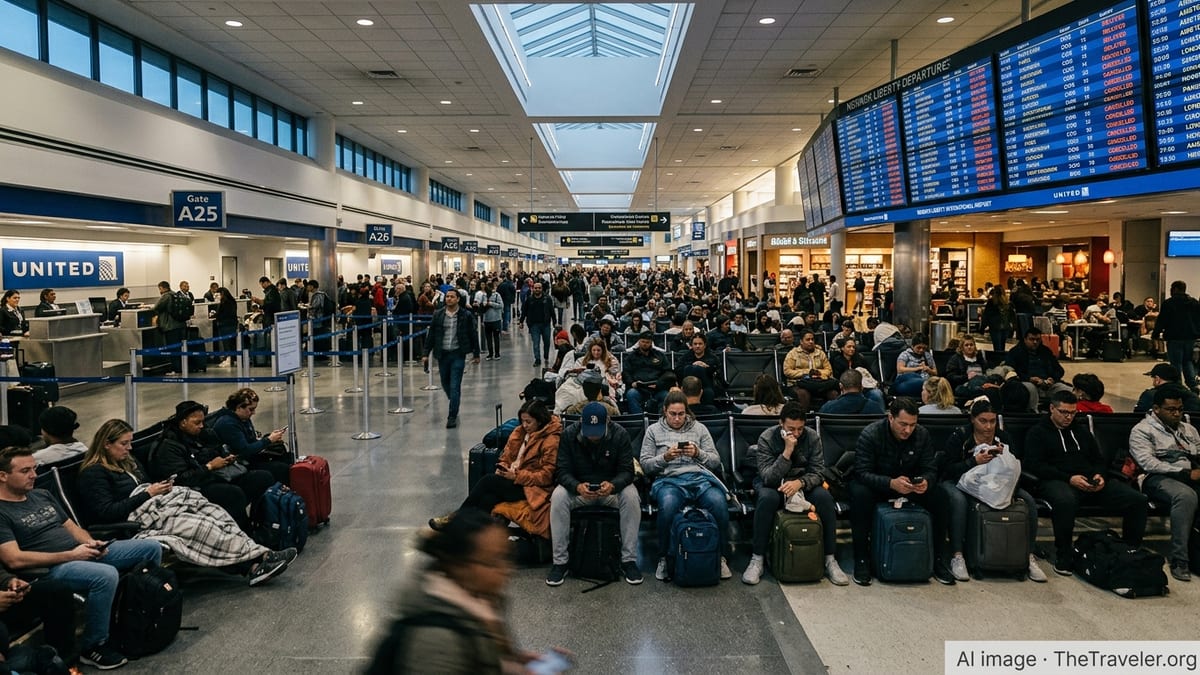
Major Hub Brought to a Standstill
Newark Liberty International, one of the main gateways for transatlantic traffic from the United States, experienced severe schedule disruption as airlines struggled to keep operations running. Publicly available flight-tracking data and media coverage point to rolling delays, missed connections and cancellations building through the day, ultimately affecting several hundred flights across arrivals and departures.
The disruption was most visible on long-haul services, where wide-body aircraft rotations are tightly timed. Flights between Newark and Paris, including services operated by United Airlines and Air France, were among those hit, with multiple departures delayed for hours or pulled from the schedule altogether. Some passengers reported spending much of the night in terminal seating areas as they waited for rebooking options.
The impact radiated far beyond New Jersey. With Newark functioning as a major hub for United and an important North American station for Air France and Delta’s joint-venture partners, delays on Newark to Paris routes quickly translated into missed onward connections across Europe, Africa and the Middle East.
Transatlantic Links Between Newark and Paris Hit Hard
Connections between Newark and the Paris airports, particularly Charles de Gaulle, saw a cascade of schedule changes as airlines adjusted to the disruption. According to flight-board snapshots and tracking services, some departures left hours behind schedule, while others were cancelled outright, forcing passengers onto later services or entirely different routings.
United’s nonstop services between Newark and Paris are key links for both business and leisure travelers. When those flights are delayed or cancelled, rebooking options are often constrained, especially on busy travel days when alternative departures run close to full. Reports from stranded travelers indicate that some were shifted onto next-day departures, turning a planned overnight hop into an unplanned extra day in transit.
Air France’s network planning has also been affected when Newark operations slow. Delays outbound from the United States can create knock-on schedule pressures in Paris, where arriving aircraft turn around to serve destinations across the carrier’s global network. Industry observers note that even a handful of delayed long-haul arrivals can ripple into schedule adjustments across multiple continents.
Multiple Airlines, One Bottlenecked Airspace
While United accounts for a large share of Newark traffic, the day’s problems spread across several airlines. Delta and codeshare partners feed passengers into and out of the airport on connecting itineraries, while Air France, other European carriers and a variety of domestic airlines all share the same congestion-prone runways and airspace.
Recent coverage of Newark operations has highlighted structural challenges that make the airport vulnerable to large-scale disruption. High demand, dense scheduling and chronic air traffic control staffing constraints in the New York–area airspace mean that any spike in delays can quickly cascade. When weather, equipment issues or traffic management programs are layered on top of already heavy schedules, airlines have limited room to recover, especially during peak travel hours.
Analysts point out that similar patterns have emerged at Newark in previous disruption episodes, with a cluster of delayed flights in the morning or early afternoon gradually turning into a backlog that lasts late into the evening. Once the queue builds, subsequent flights are pushed back in sequence, leaving carriers to choose between operating heavily delayed departures or cancelling and consolidating operations.
Stranded Travelers Face Long Waits and Limited Options
For passengers, the operational complexities translated into long lines, crowded gate areas and extended waits for information. Social media posts and passenger accounts describe families camped out near power outlets, travelers sleeping on the floor near departure gates, and confusion over evolving departure times as airlines updated schedules in real time.
Those on Newark to Paris itineraries appeared particularly affected when their flights were among the 385 delays and cancellations. Missing an overnight transatlantic departure often meant losing a full day of a planned trip, while business travelers reported scrambling to adjust meetings and onward train bookings in Europe. Some passengers were rebooked via alternative hubs, adding extra connections and travel time to already long journeys.
Accommodation and meal support varied depending on airline policies and the specific reasons for delay or cancellation. Publicly available guidance from major carriers indicates that assistance is more likely when disruptions are linked to controllable operational issues rather than severe weather or air traffic control constraints, but travelers often had to queue at service desks or navigate customer-service channels to secure vouchers and new itineraries.
Ongoing Scrutiny of Newark’s Reliability
The latest disruption adds to growing scrutiny of Newark Liberty’s reliability as a major U.S. and transatlantic hub. Industry reporting over the past year has repeatedly cited the airport among facilities with some of the nation’s highest rates of delays and cancellations, particularly during peak travel periods and in complex weather or airspace conditions.
United and other carriers have previously adjusted schedules at Newark in an effort to improve on-time performance, including trimming peak-hour flights and shifting some capacity to other airports. However, the scale of the latest disruption, with hundreds of flights affected in a single day, underscores how sensitive the operation remains to pressure points such as staffing shortages, airspace constraints and equipment issues.
Travel analysts suggest that passengers connecting through Newark, especially on long-haul routes such as Newark to Paris, may benefit from building longer connection times into their itineraries and monitoring flight status closely on days when broader disruption is reported. While the airport remains a vital gateway for the New York region and a key bridge between North America and Europe, episodes like this highlight the continuing fragility of one of the country’s busiest aviation hubs.