

More news on this day
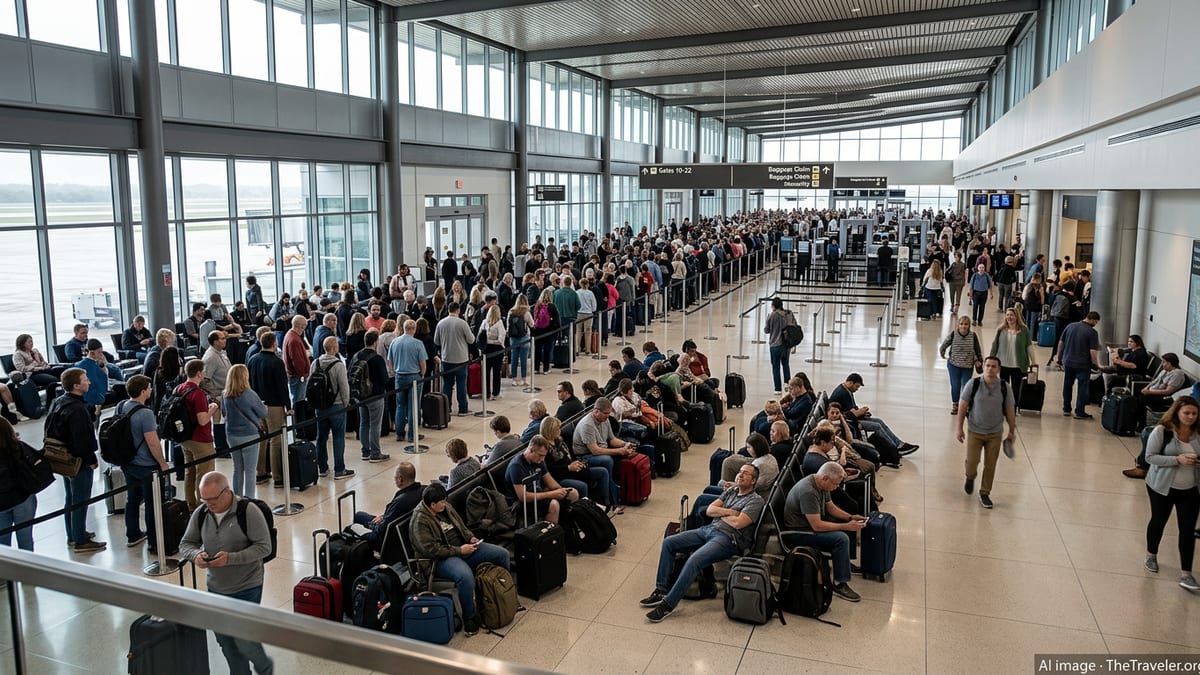
Travelers moving through Newark Liberty International Airport on April 6 faced another bruising day of disruption, as flight-tracking data showed about 260 delays and more than a dozen cancellations affecting major carriers and sending knock-on effects across the United States and on transatlantic and India-bound routes.
Get the latest news straight to your inbox!
Major Carriers Hit as Delays Stack Up
Publicly available flight-monitoring tallies for Monday indicated that operations at Newark Liberty International Airport were again under pressure, with roughly 260 departures and arrivals delayed and more than a dozen flights canceled. The disruption concentrated around peak morning and early evening banks, when hub carriers and international airlines schedule high volumes of connecting traffic.
United Airlines, which uses Newark as a primary hub, accounted for a substantial share of the snarled operations, with dozens of its departures and arrivals showing late departure times. Delta Air Lines and Spirit Airlines also reported multiple delayed flights into and out of Newark, while smaller numbers of cancellations were spread among United, Spirit and other carriers. The pattern echoed recent days in which Newark has ranked among the U.S. airports with the highest number of schedule disruptions.
International operators were not spared. Flight-tracking boards showed Air France services between Newark and Paris facing delays, while select Air India departures linking Newark with major Indian gateways also posted late operating times. Additional transatlantic partners flying to European hubs reported schedule slippages, adding to the pressure on already busy long haul corridors at the start of the spring travel period.
These disruptions followed a weekend in which travel industry outlets documented roughly 90 delays and 10 cancellations at Newark in a single day, primarily affecting United, Spirit and Delta, and creating ripple effects across domestic networks that connect through New Jersey to cities such as Los Angeles, Houston, Dallas and Chicago.
Ripple Effects Across U.S. Hubs and International Gateways
The strain at Newark formed part of a broader pattern of early April disruption across the United States. Recent coverage of operations at major hubs such as Atlanta and Washington has highlighted hundreds of delayed flights in just a few days, underscoring how quickly conditions at one busy airport can cascade through the national system. When Newark, Atlanta or other large hubs slow down, aircraft rotations, crews and inbound connections are all thrown off balance.
From Newark, the delays touched a wide portfolio of routes. Domestic flights to large markets including Los Angeles, Houston, Dallas and Chicago operated behind schedule, complicating onward connections for travelers heading to secondary cities. On the international side, late departures to European hubs such as London and Frankfurt increased the risk of missed onward flights deeper into Europe, North Africa and the Middle East.
Long haul services to and from India were particularly exposed. Newark is an important North American gateway for India-bound travelers, and late departures on nonstop and one-stop itineraries had the potential to push arrivals into less convenient early morning or late night windows. Passengers traveling on Air India and on codeshare itineraries involving United and European partners faced extended time in transit as schedules slipped.
The disruption coincided with a period of heightened global travel volatility. Separate reports from Asian hubs in recent days described thousands of delays and hundreds of cancellations triggered by severe weather, while North American airports are still recalibrating after repeated storms and operational challenges earlier in the year. Against this backdrop, the struggles at Newark added another pressure point for itineraries that cross multiple regions and airline alliances.
Operational Strains, Weather and Infrastructure Challenges
Operational data and recent analyses of Newark Liberty International Airport point to a combination of factors behind the persistent delays. In earlier months, construction on a key runway, continuing air traffic control staffing constraints and several technology outages affecting radar and communications in the region have been cited in public reports as contributing to congestion and schedule instability.
Even as runway rehabilitation projects were completed ahead of schedule last year, federal regulators opted to keep temporary caps on arrivals and departures at Newark in place through 2026, with the stated goal of limiting excessive stacking of flights during peak periods. Industry observers note that, despite those limits, the airport continues to run close to capacity during busy waves, leaving little margin when weather or minor technical issues arise.
Weather continues to be an unpredictable wild card. The wider New York region has experienced bouts of low clouds and strong winds in recent weeks, conditions that can quickly trigger spacing requirements and ground delay programs for traffic heading into Newark. When that occurs, aircraft and crews often wind up out of position, leading to secondary delays even after the immediate weather improves.
Infrastructure and staffing constraints across the broader Northeast airspace compound the problem. Flight-routing responsibilities for Newark were shifted to a facility in Philadelphia in recent years in an effort to ease workload, but subsequent system glitches and staffing pressures at that facility have drawn scrutiny from pilots, travelers and policy analysts who argue that the current configuration leaves limited resilience when systems falter.
Passengers Face Long Lines, Missed Connections and Rebookings
For travelers on the ground on April 6, the numbers translated into crowded gate areas, long customer service queues and an uptick in missed connections as late-arriving aircraft squeezed into available slots. Domestic passengers bound for smaller markets via Newark reported extended layovers as they waited for delayed feeder flights, while some were rebooked through alternative hubs when cancellations made original itineraries unworkable.
International passengers faced similar challenges. Delayed transatlantic departures from Newark raised the risk of missed onward connections in Europe, prompting some travelers to be reprotected onto later flights or rerouted via partner hubs in other countries. Those heading to India via nonstop or one-stop itineraries encountered longer total journey times and, in some cases, unplanned overnight stays when onward connections were no longer feasible.
Budget-conscious travelers flying on low cost carriers such as Spirit encountered their own set of difficulties as limited spare capacity constrained rebooking options. Separate anecdotal accounts from recent days described Spirit passengers dealing with multiple cancellations out of Newark during periods of bad weather, highlighting how a single operational disruption can cascade when an airline operates tight turn times and a lean spare aircraft fleet.
Travel advocates note that in this environment, passengers who build extra buffer time into their itineraries, especially when connecting to or from international services, are more likely to avoid the most severe knock-on impacts. However, with disruption levels at Newark and other hubs remaining elevated, even careful planning does not fully eliminate the risk of extended travel days.
What Travelers Can Do as Disruptions Continue
With regulators indicating that flight limits at Newark will remain in place through at least late 2026 and airlines continuing to run intensive schedules through the airport, analysts expect periodic flare ups of delays to remain a feature rather than an exception. Travel industry commentary suggests that passengers may want to take a more proactive approach to monitoring conditions on days when their trips begin or end at Newark.
Practical steps that consumer advocates commonly recommend include checking flight status frequently on the day of travel, enrolling in airline alert systems, and considering earlier departures when making tight same day connections to international long haul flights. Some also suggest, when possible, selecting itineraries that offer alternative routings through other hubs, providing more options if a particular airport experiences severe disruption on a given day.
Published guidance from regulators and airlines outlines the circumstances under which passengers may be entitled to meal vouchers, hotel accommodation or refunds, particularly when delays or cancellations fall within a carrier’s control. Travelers are encouraged to review the specific policies of their airline before departure so they can act quickly at the airport if their flight is significantly disrupted.
For now, the latest wave of delays and cancellations at Newark underscores how fragile the balance remains at one of the country’s busiest and most capacity constrained airports. As spring travel ramps up and summer schedules approach, the experience of travelers stranded on April 6 serves as a reminder that the wider U.S. network is only as stable as its most stressed hubs.