

More news on this day
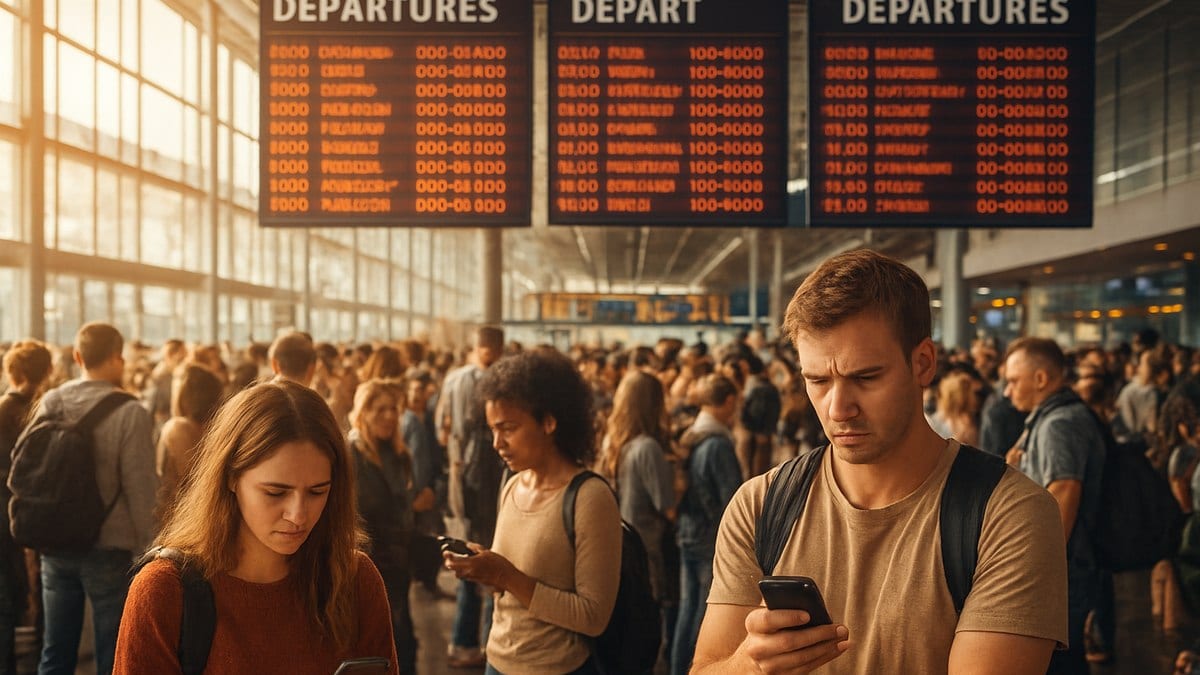
Spring travelers across the United States are feeling the impact of mounting disruption at Newark Liberty International Airport in early April 2026, as a cluster of delays and cancellations at the busy New Jersey hub ripples through airline networks and triggers knock-on schedule problems at airports from Florida to the West Coast.
Get the latest news straight to your inbox!
Heavy Disruption at Newark Sets the Tone for April Travel
Publicly available flight-tracking data compiled in industry coverage for April 6 and 7 indicates that Newark Liberty International Airport has recorded one of the higher disruption tallies in the national system at the start of the month, with roughly 85 to 90 delayed departures and around a dozen cancellations on April 6 alone, followed by a further spike to more than 180 delays and at least 10 cancellations on April 7. These figures place Newark among the most affected large hubs during a period when overall U.S. delays remain elevated after the busy Easter weekend.
Reports from aviation and travel outlets show that the impact has cut across multiple carriers. United Airlines, which uses Newark as a major hub, has experienced a significant share of the schedule changes, while JetBlue, Spirit, Delta, American, Frontier and several international airlines have also seen flights delayed or cancelled. Routes linking Newark with key leisure and business markets such as Orlando, Fort Lauderdale, Miami, Los Angeles and Chicago have been particularly affected, creating challenges for both origin and connecting passengers.
While security wait times at Newark have recently improved compared with the most intense weeks of the federal government funding impasse, operational resilience at the airport remains under pressure. Industry analyses note that even modest constraints in air traffic control capacity, runway availability or nearby airspace can quickly push Newark into a day of heavy delays, given its dense schedule and role as a gateway for long haul services to Europe and beyond.
Cascading Effects Across Major U.S. Hubs
The disruptions at Newark are not confined to the New York metropolitan area. Travel news coverage of the first days of April highlights a broader pattern of strain across the U.S. network, with Atlanta, Chicago, Houston, Minneapolis, Las Vegas and multiple Florida airports also reporting significant numbers of delayed or cancelled flights. Newark’s role as a central node in domestic and transatlantic traffic means any extended period of irregular operations can send ripples across thousands of miles.
On busy north south corridors, particularly between the Northeast and Florida, delayed departures from Newark have translated into late arrivals in Orlando, Fort Lauderdale and Miami, where aircraft and crew are then out of position for subsequent legs. This displacement effect has contributed to secondary delays on flights that do not touch Newark directly but depend on the same aircraft or crews further down the line.
Operational data referenced in national travel reporting for Easter Monday, April 6, shows more than 4,700 delays and over 300 cancellations across the United States in a single day, underscoring how quickly localized constraints at a handful of high volume hubs, including Newark, can compound into widespread disruption. For passengers, this has meant missed connections, unexpected overnight stays and rebookings on already crowded alternative flights as airlines work to recover their schedules.
Structural Strains: Airspace, Staffing and Capacity Limits
Behind the latest wave of Newark disruptions lies a mix of structural and short term factors. Federal aviation documents and prior rulemakings describe the Newark area as one of the most delay prone segments of the U.S. airspace system, with dense traffic converging from the Northeast corridor, tightly spaced airports and long standing air traffic control staffing challenges. Recent federal filings outline targeted staffing levels for the Newark approach area that remain difficult to achieve, reinforcing the sensitivity of the region to any spike in demand or weather.
To manage congestion, the Federal Aviation Administration has extended an order that limits scheduled arrivals and departures at Newark through late October 2026, part of an effort to keep traffic volumes aligned with available airspace and staffing capacity. The order is intended to reduce chronic delays, but the recent pattern of disruptions suggests that the margin for error remains narrow during holiday peaks and active weather periods.
Industry analyses of delay causes for 2025 and early 2026 point to a significant proportion of disruptions being attributed to what regulators classify as National Aviation System factors. These include heavy traffic, en route and terminal airspace restrictions, flow control programs and technology or equipment issues. Even on days when weather at Newark itself is relatively benign, storms elsewhere in the region or along key routes can trigger ground delay programs that slow departures and arrivals and eventually cascade into cancellations.
Weather and Recent Operational Shocks Add to the Pressure
The April disruption comes on the heels of a tumultuous late winter for U.S. aviation. A major March 2026 blizzard affecting large portions of the Central United States and the Upper Midwest forced airlines to cancel or reschedule hundreds of flights, leaving aircraft and crew scattered away from their usual rotations. While much of the immediate backlog from that storm has cleared, the event has added to the strain on already tight schedules as carriers head into the spring travel season.
Newark and other Northeast airports have also contended with periods of heavy rain and low ceilings in recent weeks, prompting travel waivers from major airlines and congestion managing measures from traffic control authorities. When such conditions coincide with the existing cap on scheduled operations and ongoing staffing challenges, the result is a higher likelihood that relatively routine thunderstorms or low visibility can tip the system into a day of widespread delays.
Separately, a series of operational incidents in the broader New York area over the past year, including equipment outages and tower issues that previously led to temporary ground stops, have reinforced concerns about redundancy and resiliency in local infrastructure. While those specific events predate the April 2026 disruptions now unfolding, analysts note that they demonstrate how quickly travel across the network can be affected when a single high volume facility experiences a sudden loss of capacity.
What Travelers Are Experiencing on the Ground
For passengers moving through Newark and its connected hubs this week, the statistics translate into crowded departure areas, long customer service lines and frequent gate and departure time changes. Consumer facing dashboards show clusters of Newark departures pushed back by one to three hours, particularly during peak morning and evening banks, with some flights ultimately cancelled after extended holds.
Coverage of conditions at Miami and other large airports linked to Newark highlights how these knock on effects manifest for travelers far from the New York region. At Miami International Airport, for example, more than 200 combined delays and cancellations were recorded on April 7, with several of the affected services tied to inbound or outbound connections involving Newark and other Northeast hubs. Similar patterns have been observed at Fort Lauderdale and Orlando, where leisure travelers returning from spring vacations are encountering crowded rebooking desks.
Major U.S. airlines have reiterated their published commitments to rebook passengers and provide assistance when disruptions fall within their control, but the sheer volume of affected flights can limit options, especially on high demand routes at the tail end of school holidays. Travel industry reports suggest that some passengers facing cancelled Newark flights in early April are being shifted to itineraries connecting through secondary hubs or rebooked a day or more later as carriers work to realign aircraft and crews.
With federal capacity limits at Newark set to remain in place through at least October 2026 and broader staffing and airspace constraints still being addressed, analysts expect episodes of pronounced disruption to remain a risk during busy travel periods. For now, April 2026 is offering another reminder that challenges concentrated at a single major hub can quickly cascade across an interconnected national network, reshaping air travel plans for thousands of passengers in a matter of hours.