

More news on this day
Niagara Falls is positioning itself as a natural base camp for World Cup 2026 trips, with fresh FIFA-themed light shows, expanded illumination programs and cross-border festivals set to link the famous cataract to nearby host city Toronto and U.S. fan hubs.
Get the latest news straight to your inbox!
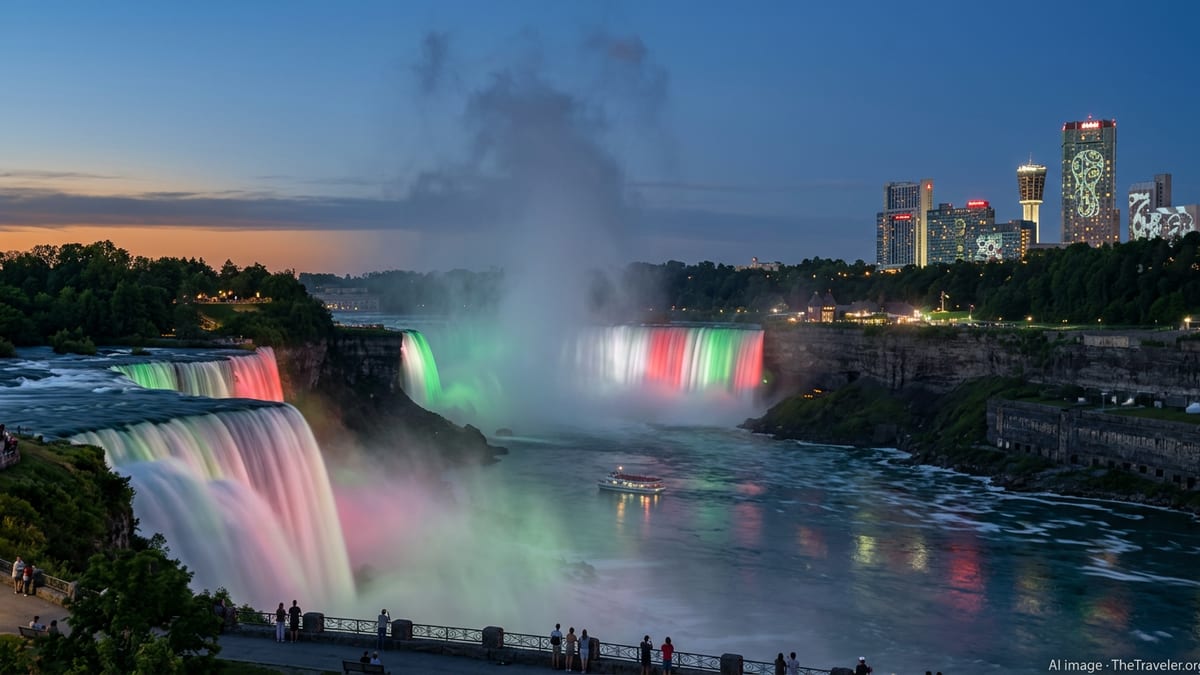
FIFA countdown lights turn Niagara Falls into a World Cup billboard
Publicly available tourism materials show that Niagara Falls has already begun leaning into World Cup branding, with a FIFA World Cup 26 countdown clock and special programming that frame the waterfall as a giant natural backdrop for soccer celebrations. A 2025 event billed as a landmark “One Year to Go” celebration combined live entertainment, giveaways and a branded viewing area overlooking the Horseshoe Falls, signaling how the destination plans to integrate the tournament into its night-time skyline.
The Niagara Falls Illumination Board, which routinely programs colour shows in support of sports teams and awareness campaigns, is expected to apply similar techniques to FIFA-themed displays in 2026. Regularly scheduled light shows already bathe the Canadian and American Falls in rotating colours throughout the evening, and tourism planners have indicated that tournament motifs and participating nations’ colours are likely to feature in special segments tied to key matchdays.
Travel industry coverage notes that fans are increasingly using the falls as a visual anchor for their World Cup planning, combining Toronto match tickets or fan-festival visits with overnight stays that include an evening along the illuminated Niagara Parkway. With the natural spectacle acting as a live billboard for the tournament, local operators are preparing packages that pair hotel views of the lights with transport to major fan events.
World Cup fan festivals in Toronto set the stage for side trips to the Falls
Toronto, around 90 minutes by road from Niagara Falls, is one of Canada’s two official World Cup 2026 host cities. Municipal planning documents and event guides describe a large FIFA Fan Festival running for the duration of the tournament, with Fort York and The Bentway highlighted as flagship venues where matches will be screened for ticketless fans alongside food markets, music and football-themed activities.
Specialist World Cup travel sites report that the Toronto fan festival is expected to be highly accessible by transit and integrated into the city’s wider waterfront and downtown attractions. BMO Field, the tournament stadium, sits on the lakeshore west of the core, making it relatively straightforward for visitors to spend a matchday in Toronto and then pivot to scenic or leisure time elsewhere in southern Ontario.
Travel features aimed at World Cup visitors increasingly recommend pairing Toronto fixtures with a Niagara Falls detour, positioning the falls as a signature day trip or overnight escape. Guides emphasize that the route between the city and the waterfall is well served by highways and organized coach tours, and that itineraries combining fan-zone viewing, live matches and nature-focused downtime are likely to appeal to international supporters seeking more than urban stadium experiences.
Cross-border festivals expected to link Canadian and U.S. viewing hubs
Although Buffalo is not a World Cup host city, its proximity to both Niagara Falls and the New York and New Jersey host cluster has placed the region on the radar of fan planners. Soccer travel commentators suggest that the Niagara corridor could emerge as an informal bridge between Canadian and U.S. celebrations, with visitors combining Toronto-based fan festivals, Niagara Falls sightseeing and road trips toward matches or viewing parties in New York State and beyond.
Recent developments in fan-zone planning across the United States indicate that some large, centralized festivals have been scaled back or reconfigured, including the cancellation of an earlier Liberty State Park fan festival concept near the Statue of Liberty. Coverage of these shifts notes a move toward more distributed fan zones and community viewing areas across multiple municipalities, a trend that could encourage traveling supporters to stitch together regional itineraries that include scenic stops such as Niagara Falls.
Local tourism boards on both sides of the border have experience staging cross-border events that use the falls as a shared backdrop, from coordinated light shows to synchronized fireworks over the gorge. Observers expect similar collaboration in 2026, with the potential for parallel viewing parties, themed cruises and binational celebrations that allow fans to watch matches in one country and celebrate in the other, all within the same day’s travel radius.
Illumination festivals and night-time experiences set to ride the World Cup wave
Niagara Falls’ long-running Winter Festival of Lights, described in tourism materials as Canada’s largest free outdoor light festival, already transforms the parkway and Dufferin Islands with installations across an extended season. Recent program details highlight more than 50 nights of illumination featuring themed displays and enhanced nightly Falls lighting segments, establishing a template for large-scale, family-friendly night experiences that can be adapted to the World Cup period.
Organizers have experimented with special illumination sequences, including a “Sparkling Winter Lights” show layered onto the regular Niagara Falls lighting schedule. Industry observers note that this technical flexibility makes it relatively straightforward to slot in World Cup motifs, national flags or team colours tied to marquee fixtures, particularly during late spring and early summer evenings when fan travel will peak.
Beyond dedicated festivals, the broader night-time economy in Niagara Falls is expected to benefit from the tournament halo. Casinos, restaurants with Falls views, rooftop bars and riverfront promenades are likely to synchronize promotions with high-profile matchdays, positioning the illuminated cataract as a dramatic after-match gathering point whether fans have been at Toronto’s fan festival, local viewing parties or stadium fixtures elsewhere in the region.
Travel logistics and tips for fans eyeing a Niagara base
Practical guidance from travel and soccer-focused outlets suggests that visitors treating Niagara Falls as a base for World Cup 2026 should book accommodation early, particularly for nights surrounding Toronto matchdays and key knockout fixtures. The area offers a wide range of hotels, from high-rise properties with direct Falls views to budget-friendly options farther from the river, but peak-season demand tied to both the tournament and standard summer tourism is expected to pressure availability.
Transport planning will also be critical. Coaches, shuttle services and rental cars are likely to be the main links between Niagara Falls and Toronto’s stadium and fan-festival zones, with some operators expected to tailor schedules around match kickoffs and evening light shows. Travelers are advised by existing guides to factor in border wait times if they plan to cross between the Canadian and U.S. sides of the falls on the same day as key matches or large-scale public viewings.
Analysts anticipate that the combination of a global sporting event and an iconic natural landmark will make Niagara Falls one of the most photographed backdrops of the 2026 World Cup. For fans willing to look beyond stadium seats, the convergence of FIFA-branded illuminations, established light festivals and emerging cross-border fan culture is poised to create one of the tournament’s standout travel stories.