

More news on this day
Rail passengers using the busy Brighton Main Line face a significant nine day shutdown in February 2027 as engineers carry out a new phase of intensive upgrade work, with operators urging travellers to check timetables and consider alternative routes well in advance.
Get the latest news straight to your inbox!
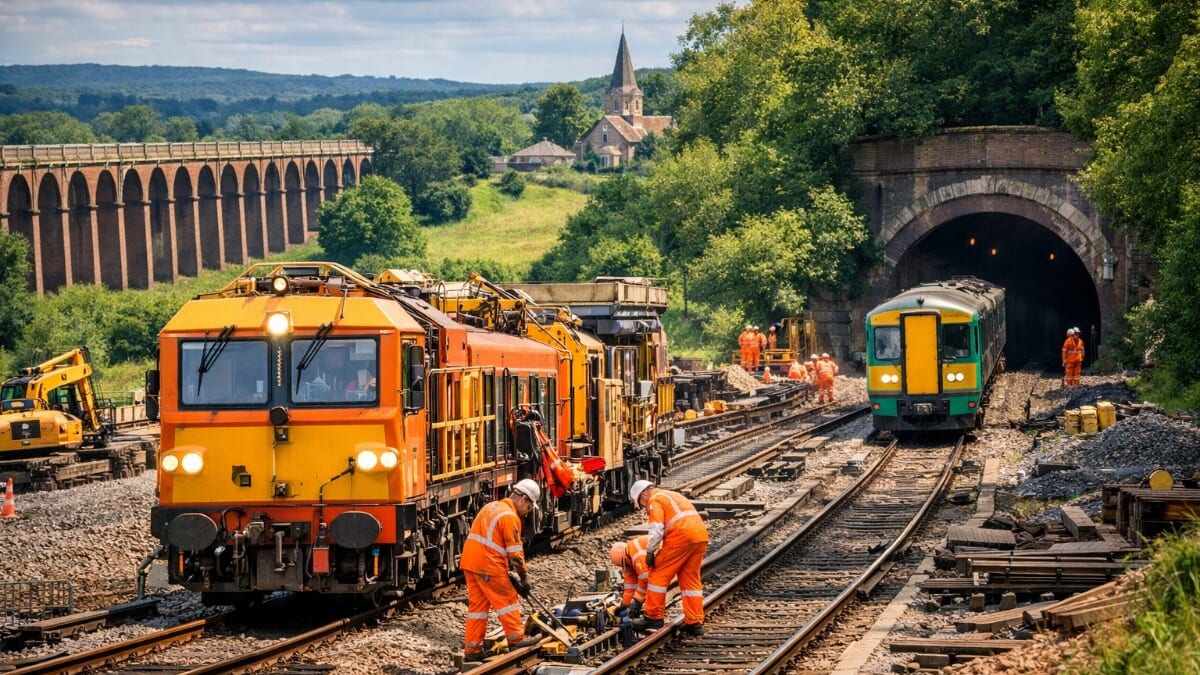
Image by Latest International Railway News, Global Rail Industry News
Intensive Closure Targets One of Britain’s Busiest Rail Corridors
The Brighton Main Line is one of the United Kingdom’s most heavily used commuter and intercity corridors, linking Brighton and the Sussex coast with Gatwick Airport, East Croydon and central London. Publicly available information from previous engineering programmes describes the stretch between Three Bridges and Brighton as among the most delay prone parts of the route, carrying hundreds of thousands of passenger journeys on a typical weekday.
In February 2027, the line is scheduled to close completely for nine consecutive days between key junctions to allow a concentrated package of works. The shutdown is expected to fall in the school half term period, a timing pattern seen in earlier upgrade phases intended to reduce disruption for daily commuters while still giving engineers continuous access to the infrastructure.
Published material on earlier Brighton Main Line blockades indicates that this style of intensive closure has been used to deliver the largest refurbishment of the route in more than three decades. The 2027 works are set to build on that model, with a focus on long term reliability rather than visible new stations or services, which may make the scale of disruption seem disproportionate in the short term to some passengers.
Passenger bodies and local commentators have previously highlighted how weekend and holiday engineering on the line can ripple across the wider Southern and Thameslink networks, affecting journeys well beyond Brighton and Gatwick. The extended 2027 blockade is likely to have similar network wide implications, reinforcing calls for travellers to consider their options early.
Planned Upgrades: Track, Signalling and Victorian Tunnels
Information from past Brighton Main Line improvement documents shows that previous nine day closures have focused on renewing complex junctions, replacing life expired signalling equipment and tackling long standing drainage issues that contribute to speed restrictions and signal failures. The February 2027 programme is expected to follow a comparable pattern, with engineers working around the clock at multiple sites along the route.
Earlier phases saw attention concentrated on embankments vulnerable to landslips, as well as on Victorian era tunnels where water ingress had caused repeated disruption. Similar structural and drainage vulnerabilities are understood to remain in parts of the corridor, and the 2027 works are being framed in industry briefings as another step towards reducing the risk of unplanned closures triggered by extreme weather or aging infrastructure.
Upgrades to lineside technology, including condition monitoring equipment that can identify faults before they cause a breakdown, have also featured prominently in previous Brighton Main Line projects. By extending these systems and integrating them with modern signalling, the 2027 works aim to shorten recovery times when incidents occur and to give controllers better real time insight into the state of the railway.
While exact worksite details for February 2027 are still to be set out in full public timetables, the pattern of earlier blockades suggests that key locations such as Balcombe, Haywards Heath, Wivelsfield, Hassocks and junctions near Preston Park may again see intensive activity. This reflects their importance as pinch points where minor infrastructure problems can quickly cascade into major delays.
Replacement Buses, Diversions and Longer Journey Times
During previous nine day closures of the Brighton Main Line, train operating companies have relied on a mix of rail replacement buses and lengthy rail diversions via alternative routes such as Littlehampton and Horsham. Publicly available timetables from those periods show that journey times between Brighton and London Victoria were significantly extended, in some cases to more than two hours.
The February 2027 shutdown is expected to follow a similar pattern, with no direct trains on the core section of the main line and a heavy dependence on buses connecting key hubs. Diversionary rail routes are likely to remain available for some London bound passengers, but capacity will be constrained and services may be slower and busier than normal.
Experience from recent weekend blockades around Gatwick Airport and East Croydon suggests that road congestion can be a major challenge for replacement buses, particularly at peak times or when works coincide with other highway projects. Passengers are being advised in early messaging to allow substantial additional time, to consider travelling at quieter times of day, or to explore non rail options where practical.
Air travellers using Gatwick Airport and leisure passengers heading to the Sussex coast during the half term period are expected to be among those most affected. Travel commentators have pointed out that earlier closures prompted some passengers to route via alternative airports or to switch to coach services, trends that may reappear in 2027 if journey times and interchange requirements on the rail network prove unattractive.
Why February 2027 Matters for Long Term Reliability
Although the Brighton Main Line has seen several major interventions over the past decade, operators and passenger groups continue to report recurrent delays linked to signaling faults, points failures and weather related incidents. The February 2027 closure is being positioned in public documents as a crucial further stage in addressing these structural weaknesses rather than as a routine maintenance exercise.
Network planning material indicates that each wave of upgrades is intended to remove specific bottlenecks and reduce the need for ad hoc repairs that require late notice timetable changes. By tackling multiple sites in a single extended possession, engineers can renew assets that are nearing the end of their life in a coordinated way, aligning track, signalling and drainage works to achieve a more resilient system.
For daily commuters between Brighton, Gatwick and London, the benefits of previous phases have been described in performance reports as modest but measurable, with fewer infrastructure related cancellations and a gradual improvement in punctuality statistics. The 2027 programme aims to build on that base, supporting future timetable changes and potential capacity increases once reliability has improved sufficiently.
Local business organisations and tourism interests along the south coast corridor are watching the plans closely, balancing concern about the immediate hit to accessibility against the prospect of a more dependable railway in the years ahead. Commentaries in regional media have previously argued that, for a line of such national importance, sustained periods of heavy engineering are unavoidable if rail is to remain competitive with road travel.
Advice for Passengers: Plan Early and Check Regularly
Travel information providers are already encouraging passengers who expect to use the Brighton Main Line in February 2027 to monitor operator announcements as detailed timetables and ticketing guidance are published. Based on earlier closures, the most significant changes are likely to fall on those who normally travel between Brighton, Gatwick Airport, Three Bridges, East Croydon and central London.
Passenger experience shared during recent engineering possessions on the route suggests that early booking of longer distance journeys, flexible working arrangements and a willingness to travel outside the busiest peaks can make a substantial difference to journey comfort. Some commuters have previously opted to work remotely for part or all of major blockade periods, particularly where employers support hybrid arrangements.
Experts in journey planning also recommend considering alternative railheads, such as using stations on different main lines, or combining rail and coach services to bypass the most heavily disrupted sections. However, they note that alternatives can quickly become crowded, so relying on last minute decisions may be risky, especially at the start and end of the half term week.
As February 2027 approaches, the key message from publicly available information is that the nine day closure is designed to deliver long term reliability gains on a corridor that millions of journeys depend on each year. For passengers, the priority will be to stay informed, factor extra time into travel plans, and make use of diversionary options so that an intensive week of rail engineering does not derail essential trips.