


More news on this day
India’s Noida International Airport is adding a new dimension to green aviation by outfitting its soon-to-open terminal with eco-friendly, low-emission furniture, positioning the project as a test case for how interiors can meaningfully cut an airport’s environmental footprint.
Get the latest news straight to your inbox!
A New Benchmark for Sustainable Airport Interiors
Recent coverage of the Noida International Airport development highlights a deliberate shift in how sustainability is applied inside aviation hubs, with the project using eco-friendly, low-emission furniture across passenger and staff areas. Rather than treating furniture as a purely aesthetic or functional afterthought, planners have integrated low-carbon materials and reduced-emission finishes into thousands of pieces installed throughout the facility. The goal is to ensure that the interiors align with the airport’s broader net-zero ambitions and green building targets.
Reports indicate that the terminal’s fit-out includes more than 6,000 custom-designed furniture elements and specialized installations, making it one of the more extensive sustainable furniture deployments in a major aviation project. These pieces are designed to minimize volatile organic compound emissions, use responsibly sourced or recycled inputs where possible, and offer durability that reduces the need for early replacement. The approach supports both operational efficiency and a lower lifecycle carbon footprint for the building.
The emphasis on greener interiors builds on the airport’s wider environmental strategy, which has been framed around creating one of India’s most sustainable aviation infrastructures. The initiative complements energy-efficient systems, passive design elements and a focus on renewable energy by addressing the embodied and operational emissions embedded in everyday fixtures, from seating clusters in departure halls to workstations in back-of-house areas.
The project’s interior design is also closely tied to the region’s cultural identity, combining local motifs and materials with advanced manufacturing techniques. This fusion of sustainability and place-specific design is intended to create spaces that are not only lower in emissions but also distinctive and welcoming for travelers and staff.
Passenger Spaces Designed for Comfort and Lower Emissions
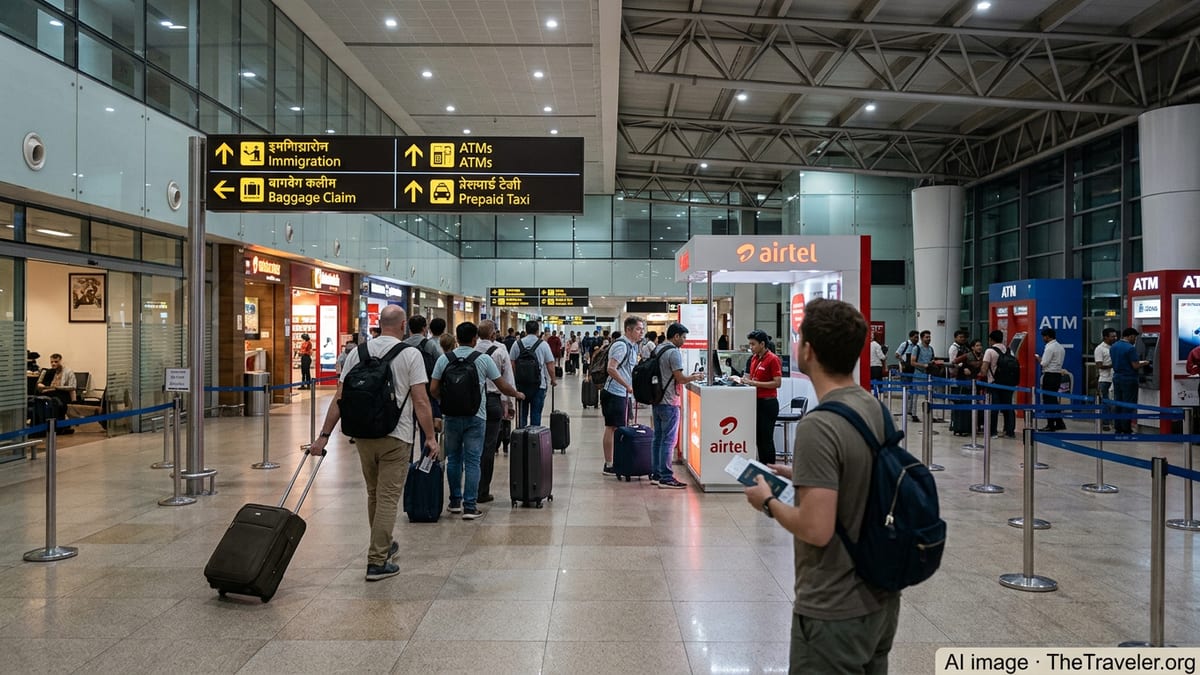
Within public areas, the airport’s sustainability push is most visible in its extensive passenger seating and lounge environments. Reporting on the terminal’s interior describes expansive check-in halls, waiting zones and boarding areas outfitted with bespoke benches, clusters of modular seats and integrated technology features. These installations are constructed using materials and finishes selected for low emissions and high durability, aligning with indoor air quality goals while withstanding the heavy use typical of a major airport.
Many of the seating systems incorporate charging points, device docks and small work surfaces, a configuration that reduces the need for multiple freestanding units and, in turn, the total volume of materials used. Energy-efficient task lighting and carefully planned power management further contribute to lower operational impacts, ensuring that comfort features do not significantly increase the airport’s energy demand.
The design strategy aims to support a calmer, more intuitive passenger flow, with furniture layouts helping to guide movement rather than obstruct it. Spacious circulation paths, clearly defined waiting areas and thoughtfully placed rest zones are intended to reduce congestion, which can indirectly support sustainability by decreasing the need for additional mechanical ventilation or energy-intensive crowd-control solutions.
Natural materials and color palettes reference local architecture and surrounding landscapes, drawing on elements associated with nearby ghats and havelis. By anchoring the sustainable furniture program in a strong visual narrative, the airport positions its green features as an integral part of the travel experience rather than a technical add-on that passengers might overlook.
Behind-the-Scenes Workspaces Built for Resilience
The eco-friendly furniture rollout extends well beyond the visible passenger areas into operational zones that support airport management and safety. Publicly available information describes modular workstations, ergonomic control desks and specialized console units installed in control rooms, security screening back offices and administrative spaces. These pieces are engineered for continuous, high-intensity use, prioritizing robust construction and ergonomic support while maintaining a focus on reduced emissions.
Modularity is a key feature of the back-of-house fit-out. Workstations and storage units can be reconfigured as operations scale up or shift, which reduces the likelihood that large volumes of furniture will need to be discarded as the airport grows. This flexible approach is consistent with circular-economy principles, where the emphasis is on extending product life and adapting existing assets instead of repeatedly procuring new ones.
The choice of low-emission materials and coatings in staff areas contributes to healthier indoor conditions for personnel who spend entire shifts inside enclosed work environments. Optimized layouts, coordinated with the airport’s passive design and building-management systems, allow furniture to support efficient airflow and sightlines, particularly in control rooms where visibility and access to critical displays are essential.
By aligning its operational furniture strategy with broader environmental and occupational health objectives, the airport underscores the idea that sustainability in aviation must also encompass the everyday workspaces that keep flights moving safely and on time.
Part of a Wider Net-Zero and Green-Building Vision
The low-emission furniture program forms one strand of a wider sustainability narrative surrounding Noida International Airport. Planning documents and design features described in earlier coverage present the facility as a future net-zero emissions airport that uses passive design, efficient systems and renewable energy to cut operational carbon. Measures such as maximizing natural light, improving thermal performance, reducing water consumption and investing in electric mobility and charging infrastructure all contribute to this objective.
The decision to prioritize eco-friendly interiors reflects a growing recognition that embodied emissions and product lifecycles are critical to aviation’s climate impact. Furniture, fixtures and equipment contribute significantly to the carbon footprint of large public buildings, particularly when they are replaced often or made from resource-intensive materials. By addressing this category early in the airport’s life, the developers are seeking to lock in lower emissions over the long term.
The project is also aligned with national and industry-level efforts to green India’s aviation sector, including initiatives to promote sustainable airport design and reduce greenhouse gas emissions at major hubs. The adoption of low-emission furniture supports these goals by demonstrating practical, scalable steps that can be replicated at other airports, from regional terminals to large metropolitan gateways.
Observers of sustainable infrastructure trends note that airports are increasingly judged not only on technical systems such as energy management or runway operations but also on the environmental performance of their interiors. In this context, Noida International Airport’s emphasis on low-emission, eco-friendly furniture positions it as a reference point for future terminal projects in India and beyond.
Implications for Future Airport Design and Procurement
The strategies adopted at Noida International Airport could influence how airport authorities and developers structure procurement and design briefs in the coming years. The scale of the furniture package installed at the new terminal illustrates how large public projects can use long-term contracts and volume orders to drive demand for lower-carbon products and materials, encouraging suppliers to innovate.
For manufacturers, the project serves as evidence that aviation clients are willing to prioritize emissions performance and lifecycle value over lowest initial cost alone. As more airports seek green-building certifications and set net-zero timelines, specifications for low-emission furniture, recycled content and extended durability are likely to become standard requirements rather than optional features.
The approach at Noida also highlights the importance of integrating sustainability criteria into interior design from the earliest planning stages. By aligning furniture choices with architectural concepts, passive design, building services and operational workflows, the project avoids retrofitting green features late in the process, when options are limited and costs are higher.
As commercial operations commence and passenger volumes increase, attention is likely to focus on how well the eco-friendly furniture withstands real-world use and whether it delivers the anticipated benefits in terms of emissions, maintenance and user experience. The performance of these interiors could shape future decisions across the aviation sector, providing data and practical lessons for airports looking to combine comfort, cultural expression and climate responsibility in their terminals.