

More news on this day
Hundreds of U.S.-bound travelers were stranded in Aruba today after a powerful nor’easter tearing through the Northeast prompted Delta Air Lines, American Airlines, JetBlue, United Airlines and other carriers to cancel 23 flights and delay 11 more, severing links to New York, Boston, Newark, Philadelphia and other major hubs.
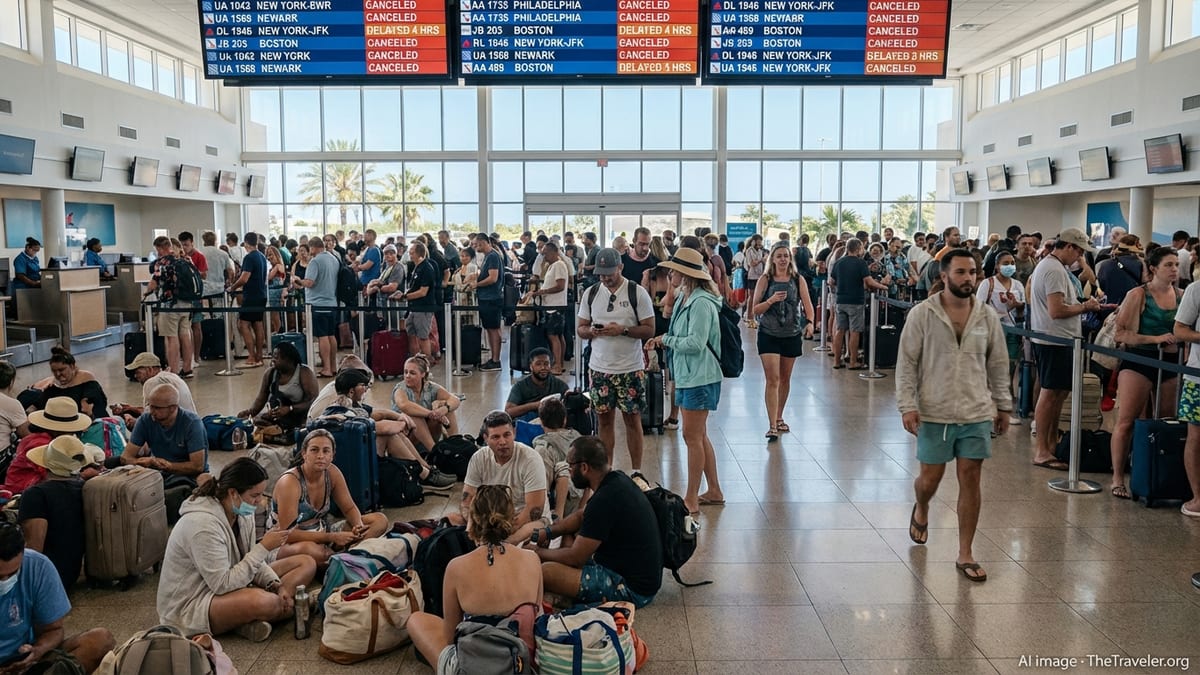
Island Departures Collapse as Storm Batters Northeast Hubs
What began as a routine Monday travel rush quickly unraveled at Queen Beatrix International Airport in Oranjestad as live departure boards switched from “on time” to “canceled” in cascading waves. By midday, at least 23 flights either departing for or arriving from the United States had been canceled, with another 11 showing prolonged delays, effectively cutting one of the Caribbean’s busiest leisure gateways off from its primary North American markets.
Airport staff said operations on the island itself remained normal, with clear skies and dry runways, but the bottleneck lay more than 2,000 miles north. A fast-deepening winter storm over the U.S. Northeast had already forced the near shut-down of airports in the New York, Boston and Philadelphia regions, leaving airlines with no choice but to halt or postpone services from Aruba that relied on those hubs.
“We are fully operational here. Our challenge is that the aircraft and crews we depend on are either stuck in the United States or cannot safely depart from there,” one operations supervisor said, adding that the airport was bracing for knock-on disruption into Tuesday as carriers attempted to reposition planes.
The cancellations impacted a mix of nonstop and connecting services, disrupting planned itineraries for vacationers returning home at the end of winter holidays and for local residents relying on connections through New York, Newark or Miami to reach the U.S. mainland.
Major U.S. Carriers Pull Back From Key Aruba Routes
Among the hardest-hit flights were routes operated by Delta Air Lines, American Airlines, JetBlue and United Airlines, all of which maintain strong ties between Aruba and East Coast population centers. Airline schedules showed multiple daily services from Aruba to New York’s John F. Kennedy and LaGuardia airports, Newark Liberty International, Boston Logan and Philadelphia either scrubbed entirely or subject to rolling delays exceeding three hours.
JetBlue, with its extensive New York and Boston footprint, appeared to bear a substantial share of the Aruba disruption, mirroring its broader struggles in the Northeast where the carrier has canceled the bulk of its schedule as whiteout conditions reduced runway visibility and crosswinds surpassed safe operating thresholds. American and Delta, both heavily exposed to New York and Philadelphia, cut back Aruba flights as they consolidated what little capacity remained viable across their U.S. domestic networks.
United, which relies on Newark as a primary international gateway, also pulled several departures serving Aruba and other Caribbean islands after operations at Newark were repeatedly throttled by snow, drifting slush and reduced arrival rates imposed by air traffic control. Smaller U.S. and regional carriers that codeshare on these routes were indirectly impacted, as their passengers suddenly found long-planned itineraries broken at the Aruba end.
The net result was a sharp, sudden reduction in seats linking Aruba with the continental United States, at exactly the time of day when most return flights to North America are scheduled to depart.
Stranded Passengers Face Long Lines, Limited Options
Inside the terminal, the operational story transformed quickly into a human one. Check-in areas and customer-service counters for the major U.S. airlines filled with anxious travelers clutching printouts and phones, attempting to rebook onto scarce remaining flights or find overnight accommodation on short notice.
Families with school-aged children, retirees on fixed itineraries and business travelers with meetings scheduled in New York and Boston all found themselves in the same queue, watching seat availability on the next day’s departures shrink in real time. With the same nor’easter also disrupting flights from other Caribbean islands, traditional backup options like rerouting via San Juan or St. Maarten were far less reliable than usual.
Hotel desks in the arrivals hall reported a surge in last-minute bookings as passengers accepted that they would be staying at least one more night, and in some cases two or three, depending on how quickly Northeast operations could restart. While some airlines offered meal vouchers and limited hotel assistance, many travelers said they received only rebooking confirmations, leaving them to shoulder added accommodation and food costs themselves.
“We were supposed to land in Newark tonight and drive straight home to Philadelphia,” one passenger said while refreshing a flight-tracking app that still listed their flight as “canceled” with no new departure time. “Now we are looking at Thursday at the earliest, and we are paying out of pocket for everything until then.”
Nor’easter Slams New York, Boston, Newark and Philadelphia
The source of Aruba’s turmoil lay squarely in the ferocious nor’easter sweeping across the U.S. Northeast on Monday, a storm system that meteorologists warned could be among the most disruptive of the season. Heavy, wind-driven snow blanketed New York City and its surrounding suburbs, while parts of New Jersey and coastal New England reported near-blizzard conditions and rapidly deteriorating visibility.
In aviation terms, that translated into a dramatic curtailment of operations at some of the country’s most critical hubs. LaGuardia and Boston Logan reported that nearly all arrivals and departures were canceled, while John F. Kennedy International, Newark and Philadelphia saw more than four out of five scheduled flights scrubbed or significantly delayed. Ground handling, deicing and snow removal teams struggled to keep up as snowfall rates approached two to three inches per hour at the height of the storm.
With so much capacity offline in the Northeast, airlines were forced to unwind complex aircraft and crew rotations across their networks. Planes scheduled to fly morning transatlantic services from New York, Boston and Newark never departed, leaving downstream short-haul routes, including those to Aruba, without aircraft. Similarly, flight crews that had legally timed out during extended delays triggered further cancellations as airlines scrambled to find replacements.
By early afternoon, flight-tracking services recorded more than 5,000 cancellations across the United States for the day, a figure that continued to climb as carriers preemptively scrapped evening departures rather than risk further disruption or strand aircraft out of position.
Ripple Effects Across the Caribbean
Aruba’s chaos did not occur in isolation. Airports across the Caribbean reported similar difficulties sending passengers to storm-battered U.S. hubs, with cancellations and long delays at major gateways in Puerto Rico, Jamaica, the Bahamas, the Dominican Republic and the Dutch Caribbean islands.
Regional aviation officials said that while infrastructure in the islands was generally unaffected, the concentration of Caribbean-bound traffic into New York, New Jersey, Boston and Philadelphia made the region highly vulnerable when winter weather crippled those specific airports. The nor’easter also disrupted connections via secondary hubs such as Washington, Baltimore and Hartford, limiting alternative routings for Caribbean travelers.
In recent weeks, Caribbean airlines and tourism ministries had already been warning visitors to build extra flexibility into their itineraries during the peak winter season, citing an uptick in large weather systems affecting the North American corridor. Monday’s events in Aruba and neighboring islands appeared to reinforce those concerns, offering a vivid reminder that even sun-drenched holiday destinations are at the mercy of weather thousands of miles away.
Some local tourism stakeholders expressed concern that repeated high-profile disruptions could dampen late-season bookings from the Northeast, although others argued that strong demand and limited alternatives for winter sun would likely keep planes full once schedules normalized.
Airlines Activate Waivers and Recovery Plans
In response to the widespread disruption, major U.S. carriers serving Aruba and the wider Caribbean activated flexible travel waivers, allowing passengers with tickets to and from affected Northeast cities to change their plans without incurring standard change fees or fare differences on select dates. Airline call centers, already operating at capacity from earlier winter weather events, reported surging call volumes as Aruba-based travelers sought to take advantage of the waivers to reroute through less-affected hubs or shift their travel later in the week.
Operationally, airlines began crafting recovery schedules that prioritized restoring connectivity between key U.S. hubs and high-demand leisure destinations such as Aruba, Cancun and Punta Cana once the nor’easter began to clear. This often involves scheduling early-morning ferry flights with no passengers to reposition aircraft, followed by a compressed series of revenue flights as crews and resources become available.
Industry analysts noted that carriers had become more proactive in canceling flights ahead of major weather events in an effort to avoid the kind of rolling, day-after-day meltdown that plagued several airlines in recent years. While such preemptive cancellations can be deeply frustrating for travelers in the short term, they can also speed overall recovery by keeping planes, crews and passengers from becoming scattered across the network.
For Aruba-bound and Aruba-based passengers, however, the value of those strategies was measured in long hours at the terminal, crowded hotel lobbies and extended stays that few had planned or budgeted for.
Tourism Industry Balances Disruption and Opportunity
Aruba’s tourism sector, heavily reliant on U.S. visitors, found itself in a familiar but uncomfortable balancing act on Monday: managing the immediate fallout of stranded guests while recognizing the potential short-term upside for local businesses. Hotels from Palm Beach to Eagle Beach reported a notable uptick in last-minute extension requests as guests whose flights were canceled opted to turn an unexpected layover into an extra vacation day or two.
Restaurant owners in resort districts said evening bookings swelled as travelers who expected to be back in New York or Boston by dinnertime instead settled in for an unplanned night out. Car-rental agencies extended existing contracts where possible, although some ran into fleet limitations as vehicles due to be returned and re-rented remained in the hands of delayed visitors.
At the same time, tourism authorities were mindful of the reputational stakes. Social media posts circulated quickly showing crowded departure halls and long check-in lines, prompting the Aruba Tourism Authority and airport management to post regular updates and reminders encouraging travelers to stay in close contact with their airlines and avoid arriving at the terminal too far in advance of newly scheduled departure times.
Local officials stressed that while the disruptions were significant, they were clearly linked to extraordinary weather conditions in the United States rather than any systemic failure in Aruba’s aviation infrastructure, a distinction they viewed as critical as the island competes for visitors in a crowded Caribbean market.
What Travelers Should Expect in the Coming Days
With the nor’easter expected to weaken and shift offshore by late Monday into Tuesday, airlines and airport authorities in the Northeast anticipate a gradual resumption of normal operations. However, the backlog of stranded passengers, displaced aircraft and out-of-position crews means that Aruba travelers should brace for residual disruption for at least 24 to 48 hours after the last snowflakes fall.
Industry experts recommend that passengers currently in Aruba check their flight status frequently through official airline channels, rather than relying solely on third-party apps, and avoid rebooking itineraries with tight connections through the hardest-hit hubs. Where possible, opting for nonstop flights or routings through less-affected airports may reduce the risk of further delays.
Travel insurers said they were already fielding claims linked to the storm, particularly from travelers who had purchased policies with robust trip-interruption and additional-expense coverage. For those without such coverage, the nor’easter served as a stark reminder of the financial exposure that can accompany modern air travel, especially during the volatile winter months.
For now, hundreds of travelers in Aruba will spend at least one more night under Caribbean skies, watching the storm play out on screens and news reports from thousands of miles away, waiting for the moment when runways in New York, Boston, Newark and Philadelphia are clear enough to welcome them home.