


More news on this day
North America’s biggest carriers are racing into 2026 with what industry analysts describe as record-breaking capacity growth, as Air Canada joins United Airlines, Delta Air Lines, American Airlines, WestJet and Alaska Airlines in unveiling aggressive new routes, added frequencies and larger aircraft that collectively promise a flood of new global travel options.
Get the latest news straight to your inbox!
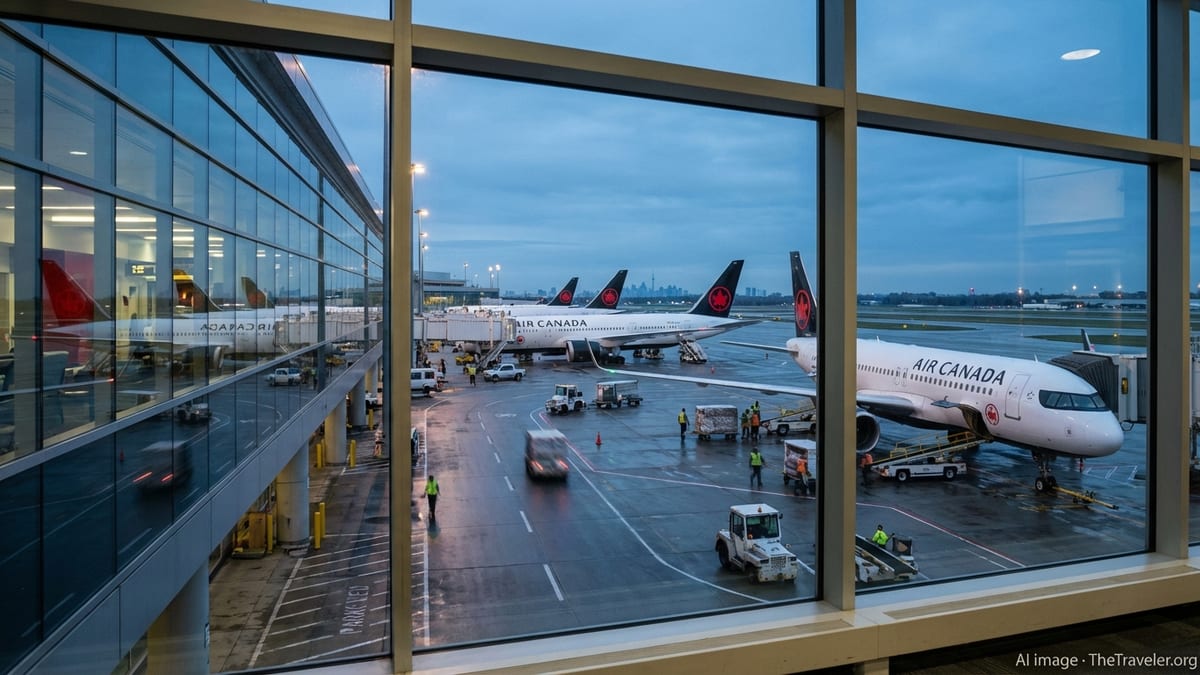
Air Canada Steps Up With Transborder and Mexico Growth
Publicly available scheduling data for summer 2026 shows Air Canada lifting capacity on key leisure and business corridors, including a reported 15 percent increase in U.S. transborder seats and an 18 percent bump on Mexico routes compared with the previous year. The airline has been emphasizing strategic additions such as new nonstop links from Montreal and expanded frequencies into major U.S. gateways, positioning itself to capture demand from both Canadian travelers and inbound visitors.
Recent investor materials indicate that these network moves come despite near-term cost pressures, including volatile jet fuel prices and selective route trims. The strategy centers on consolidating Air Canada’s role as the primary connector between secondary Canadian cities and major destinations across the United States, Latin America and Europe, using larger narrowbody aircraft and updated cabins to increase both capacity and revenue per flight.
Industry commentary suggests that 2026 will also be a year when Air Canada’s ongoing fleet refurbishment becomes more visible to passengers. Enthusiast reporting and corporate disclosures reference a broad cabin refresh rolling out across narrowbody and widebody aircraft, bringing upgraded seating, inflight entertainment and connectivity that align more closely with the premium-focused offerings of its U.S. rivals.
United Airlines Targets Global Scale With Historic Expansion
United Airlines continues to anchor the transatlantic and long-haul growth story for 2026, with schedule filings and aviation analysis pointing to nearly 3,000 weekly international roundtrips at the peak of next summer. The carrier is extending its 2025 expansion wave by adding new and returning destinations across Europe, the Middle East and the South Pacific, while also deepening service to secondary cities in Italy, Spain, Croatia and the United Kingdom that were once considered niche markets.
Fleet data compiled this spring shows United operating more than 1,000 mainline aircraft, the largest fleet among global carriers, with a rapid intake of Boeing 787 Dreamliners, Boeing 737 MAX jets and Airbus A321neos. The airline has simultaneously been retrofitting existing narrowbody aircraft with larger premium cabins and new interiors, a move aimed at securing more high-yield business and leisure demand on its densest domestic and international routes.
Network planners and investors view 2026 as a pivotal year in United’s effort to position itself as the default choice for U.S. travelers headed overseas. Expanded premium seating, enhanced onboard amenities and the scale of the international schedule, combined with growing partnerships at key hubs in Europe and Asia, are expected to create a powerful competitive moat in long-haul markets.
Delta and American Build Out Leisure and Transatlantic Capacity
Delta Air Lines is using 2026 to sharpen its transatlantic profile and high-end leisure focus. Official route announcements already highlight new nonstop service from New York to Mediterranean islands such as Sardinia and Malta, selected through a customer and employee voting initiative. Aviation schedule databases describe this as part of a broader 23-route expansion, adding seasonal and year-round service that deepens Delta’s presence in Europe while complementing an enlarged premium lounge footprint in Boston, New York, Los Angeles and Seattle.
Alongside new destinations, Delta is reshaping the onboard experience as it continues to deploy widebody aircraft equipped with Delta One suites and premium economy seating on a larger share of international routes. Reports on forthcoming inflight partnerships and connectivity upgrades underscore the airline’s focus on attracting high-spend customers who value consistent Wi-Fi, curated dining and expanded lounge access as much as nonstop routing.
American Airlines, meanwhile, is concentrating much of its 2026 push on North American leisure and domestic connectivity, while still bolstering selective long-haul links. Company announcements and trade coverage point to at least 15 new routes timed around peak summer demand, linking major hubs such as Chicago and Phoenix to coastal, mountain and sun destinations. Additional frequency on existing routes and longer operating seasons for certain summer-only services are designed to give travelers more options for weekend getaways and extended holiday stays.
Analysts note that American’s moves are particularly important at its largest bases, where enhanced schedules and improved bank structures at hub airports such as Dallas Fort Worth are allowing for tighter connections into its broader international network. The result is a more seamless flow from smaller U.S. cities into transatlantic and Latin American flights, even as the carrier contends with infrastructure constraints at crowded hubs.
WestJet and Alaska Scale Up Cross-Border and Pacific Networks
WestJet’s 2026 plans build on its transformation from a primarily domestic Canadian airline into a more diversified North American and transatlantic competitor. Industry reports point to increased widebody utilization on routes from Calgary and other western hubs to Europe, coupled with higher capacity on popular U.S. sun markets and cross-border business corridors. The airline has continued to rebalance its fleet toward longer-range aircraft, allowing it to serve a wider range of destinations nonstop from Western Canada.
In parallel, WestJet is expanding regional and narrowbody flying to feed these long-haul routes, including additional service into secondary U.S. cities that generate strong inbound tourism and corporate traffic. Trade coverage suggests that, by mid-2026, WestJet aims to position Calgary as a more prominent connecting point between parts of the U.S. Midwest and West and key European destinations, offering an alternative to larger hub airports in Canada and the United States.
Alaska Airlines is focusing much of its record growth on transborder and Pacific-facing markets, supported by its partnerships with larger global carriers. Route additions and upgauging on flights from West Coast hubs into Canada, Mexico and Hawaii are central to its 2026 strategy, with attention on schedules that favor both business travelers and high-yield leisure passengers in cities like Seattle, Portland and San Diego.
Public information on Alaska’s international footprint indicates a measured but steady expansion of service beyond North America through alliance connectivity, particularly across the Pacific. By layering additional frequencies and fine-tuning departure times on core trunk routes, the airline seeks to capture more connecting traffic flowing between Asia, the U.S. West Coast and destinations across Canada and Mexico.
Travelers Gain More Choice, but Also More Complexity
For travelers, the combined expansion of Air Canada, United, Delta, American, WestJet and Alaska in 2026 amounts to a surge in available seats, city pairs and schedule options across the Atlantic, Pacific and within North America. Aviation analytics firms have begun describing 2026 as a high-water mark for capacity growth in the post-pandemic era, particularly on transatlantic routes and sun-focused leisure markets where demand has remained resilient.
More flights and destinations are expected to intensify competition on fares and onboard product, but experts caution that the picture is nuanced. Some carriers, including Air Canada, have already trimmed underperforming U.S. routes in response to elevated fuel costs, even as they add capacity elsewhere. Slot constraints at major airports and evolving regulatory oversight of consolidation also create limits on how far schedules can grow, especially during peak travel hours.
Travel planners suggest that passengers may benefit most by closely comparing schedules, connection times and onboard offerings across these six carriers, rather than focusing on headline route announcements alone. With multiple airlines vying to capture the same high-value customers, 2026 is shaping up as a year when timing, reliability and the overall travel experience matter just as much as the sheer number of new routes now appearing on booking screens.