

More news on this day
North Korea is moving toward a significant reopening to Chinese tourists after six years of near-total closure, as rail links restart and new coastal resorts court visitors from its most important neighbor.
Get the latest news straight to your inbox!
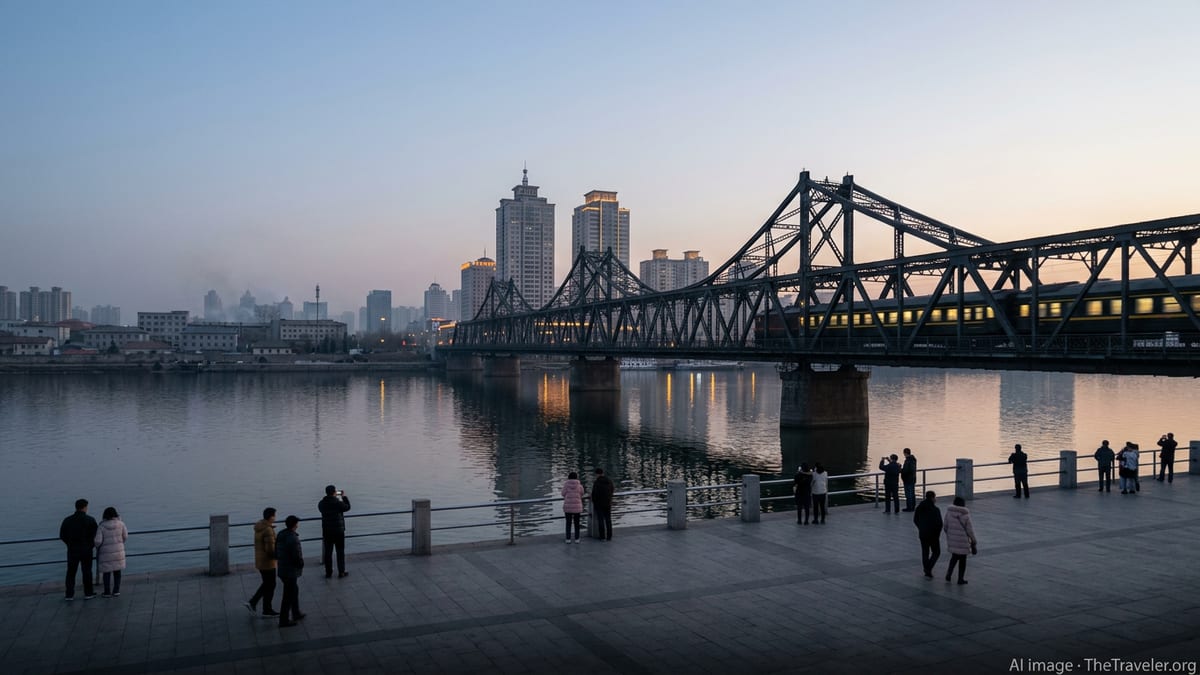
Rail Links Signal a New Phase in Cross-Border Travel
Passenger train services between China and North Korea are resuming after a six-year suspension triggered by the COVID-19 pandemic, marking one of the clearest signs yet that wider tourism from China is being prepared. Recent reports from ticketing agents in Beijing and the border city of Dandong describe services once again available to Chinese citizens who work or study in North Korea, with departures scheduled from mid-March 2026. While current passengers are primarily long-term residents, industry observers view the reopening of the rail corridor as a practical prerequisite for the return of organized tour groups.
Before the pandemic, the majority of Chinese tourists entered North Korea via trains and buses through key border hubs such as Dandong and Hunchun. The restoration of rail services is therefore seen as more than a logistical upgrade. It represents a structural step toward reactivating the tourism pipeline that once carried hundreds of thousands of Chinese visitors per year into North Korea’s northeastern provinces and onward to destinations such as Pyongyang and Mount Paektu.
North Korea has approached post-pandemic reopening cautiously, first permitting limited tour groups from Russia in early 2024 and then briefly allowing Western and regional visitors into the Rason Special Economic Zone in 2025. That experiment was quickly scaled back, and foreign tourism was again paused. The return of cross-border trains with China suggests a recalibrated approach in which Chinese travelers, rather than Western visitors, could form the vanguard of a more durable reopening phase.
Travel specialists monitoring the border say that once rail operations stabilize for residents and business travelers, it becomes far easier administratively for both sides to allocate group-tour carriages and coordinate security procedures. For Chinese tour agencies, confirmed train schedules are also vital for marketing multi-day itineraries that combine North Korean border cities with popular nearby Chinese destinations.
From Rason Pilot Trips to a Wider Tourism Strategy
North Korea’s cautious steps back into tourism began not with Chinese visitors, but with short pilot trips to the northeastern city of Rason. In February 2025, selected foreign tour companies arranged small group visits to the zone, which sits near the borders with China and Russia and has long been designated as a testing ground for limited market activity. Publicly available reports from those early tours describe controlled movement within the city, a reliance on cash and a narrow range of approved hotels and restaurants.
That opening was short-lived. By early March 2025, tour operators reported that North Korean authorities had halted foreign tourism again, citing internal concerns over social media coverage and a desire to reassess how outside visitors were managed. The sudden shift underscored the volatility that still characterizes travel to the country, and highlighted how sensitive Pyongyang remains to online imagery and narratives that fall outside state control.
Despite the reversal, Rason’s limited reopening demonstrated that North Korea is willing to experiment with segmented tourism rather than immediately restoring pre-pandemic patterns that focused heavily on Pyongyang. Analysts of the country’s economy note that testing procedures, payment systems and supervision mechanisms in a contained zone could help refine the framework for larger-scale operations, particularly when Chinese group tours resume in earnest.
For Chinese travelers, Rason and nearby areas have long been marketed as convenient cross-border escapes featuring markets, casinos and access to North Korean coastal scenery within a few hours of major northeastern Chinese cities. As rail and road links normalize, these pilot destinations are expected to re-emerge as entry points for early tour groups before any broader access to the capital or interior regions is considered.
New Resorts Geared to Chinese Visitors
Beyond the border zones, one of the most closely watched sites in North Korea is the Wonsan Kalma Coastal Tourist Area on the country’s east coast. The sprawling resort complex, which includes high-rise hotels, beaches and new tram infrastructure, has been repeatedly delayed since construction began in the late 2010s. Research on North Korea’s tourism plans indicates that the project was conceived with Chinese and Russian visitors in mind, as Pyongyang sought new ways to earn foreign currency amid international sanctions.
Recent coverage notes that Wonsan Kalma opened to domestic tourists in 2025, complete with a new tram line and upgraded seaside facilities, but remains largely closed to most foreign visitors. In early 2026, a visit by China’s ambassador and a delegation to the resort drew attention, fueling speculation that the site is being readied for Chinese package tours once broader travel from China resumes. The visit was widely interpreted as a signal that the zone could become a showcase destination for Chinese travelers, complementing shorter border trips in the northeast.
For tour planners, Wonsan offers a different tourism profile from Rason’s port and market-oriented appeal. Promotional materials and state media images emphasize long sandy beaches, promenades and large hotel blocks designed to handle substantial visitor numbers. Should Chinese tour groups gain access, itineraries may link the coastal resort with domestic air or rail services to other parts of the country, creating multi-stop packages similar to those that once focused on Pyongyang, Kaesong and the Demilitarized Zone.
However, tourism experts caution that opening a flagship resort to foreign visitors carries added sensitivities. The need to manage social media content, foreign currencies and interaction between local residents and guests is considerably more complex in a sprawling seaside complex than in a tightly controlled border city. As a result, observers expect any international rollout at Wonsan Kalma to be gradual, possibly starting with tightly supervised Chinese group tours before expanding to other markets.
Economic Stakes and Careful Calibrations
Before the pandemic, Chinese tourists represented the overwhelming majority of foreign visitors to North Korea and a key source of cash income. Studies drawing on trade data and specialist reporting estimate that spending by Chinese tour groups provided up to several hundred million dollars in revenue in 2019, supplementing income from exports and labor arrangements that have since faced tighter international restrictions. Rebuilding that tourism income appears to be a central incentive behind the current preparations.
At the same time, the broader context has changed dramatically since 2019. The outbound Chinese travel market has recovered strongly, with neighboring countries competing aggressively to attract group tours through visa waivers, targeted marketing and expanded flight capacity. North Korea, which still faces extensive sanctions and maintains strict internal controls, is entering a far more competitive regional tourism environment than the one it left six years ago.
Publicly available commentary from regional analysts suggests that Pyongyang is trying to balance the lure of much-needed hard currency with concerns over external information flows and cultural influence. The brief reopening and rapid reclosure of Rason to Western visitors in 2025 highlighted how quickly policies can pivot when leadership perceptions shift. For Chinese tourists, whose presence is politically less sensitive than that of Western travelers, access terms may be more generous, but the state’s instincts toward control and surveillance are expected to remain strong.
For China, expanded outbound tourism to North Korea would deepen already close political and economic ties while offering new destinations to travelers in northeastern provinces. It may also support broader Chinese objectives of stabilizing its border regions and promoting development in cities like Dandong and Hunchun, which benefit directly from cross-border trade and tourism.
What Prospective Travelers Should Watch Next
For now, large-scale leisure travel from China to North Korea has not fully resumed, and the situation remains fluid. Prospective travelers in China are closely following announcements from domestic tour agencies, many of which have begun signaling on social media that they expect to organize group departures to North Korea in the coming months. These signals, combined with the resumption of cross-border trains and high-level diplomatic engagement, suggest momentum toward a phased reopening rather than an abrupt, full-scale relaunch.
Travelers and industry professionals are watching several key indicators. One is the expansion of eligibility for train tickets and potential charter flights from major Chinese cities to North Korean destinations beyond existing routes linked to workers and students. Another is official confirmation that specific zones, such as Rason or Wonsan Kalma, are authorized for Chinese leisure groups, along with published guidance on itineraries, hotel options and payment methods.
Specialists also note the importance of monitoring how long any new tourism window stays open. North Korea’s abrupt halting of foreign tours in early 2025, only weeks after a celebrated reopening, demonstrated that tour companies and travelers face unique risks in planning trips far in advance. Flexible booking conditions, clear cancellation policies and careful timing will remain crucial for agencies catering to Chinese clients considering North Korea as a niche destination.
Until more detailed information emerges, the return of Chinese tourists to North Korea remains a story in motion. What is clear is that rail links are reviving, showcase resorts are being positioned for foreign audiences and tour agencies on the Chinese side are preparing offers. Together, these developments point to a historic, if tightly managed, reopening of one of Asia’s most closed-off destinations to the travelers who once formed its largest visitor base.