

More news on this day
Severe flash flooding on Oahu’s North Shore has forced the evacuation of more than 5,000 people, damaged homes and roads, and thrown Hawaii travel plans into disarray as a powerful Kona storm continues to drench the islands.
Get the latest news straight to your inbox!
What Is Happening on Oahu Right Now
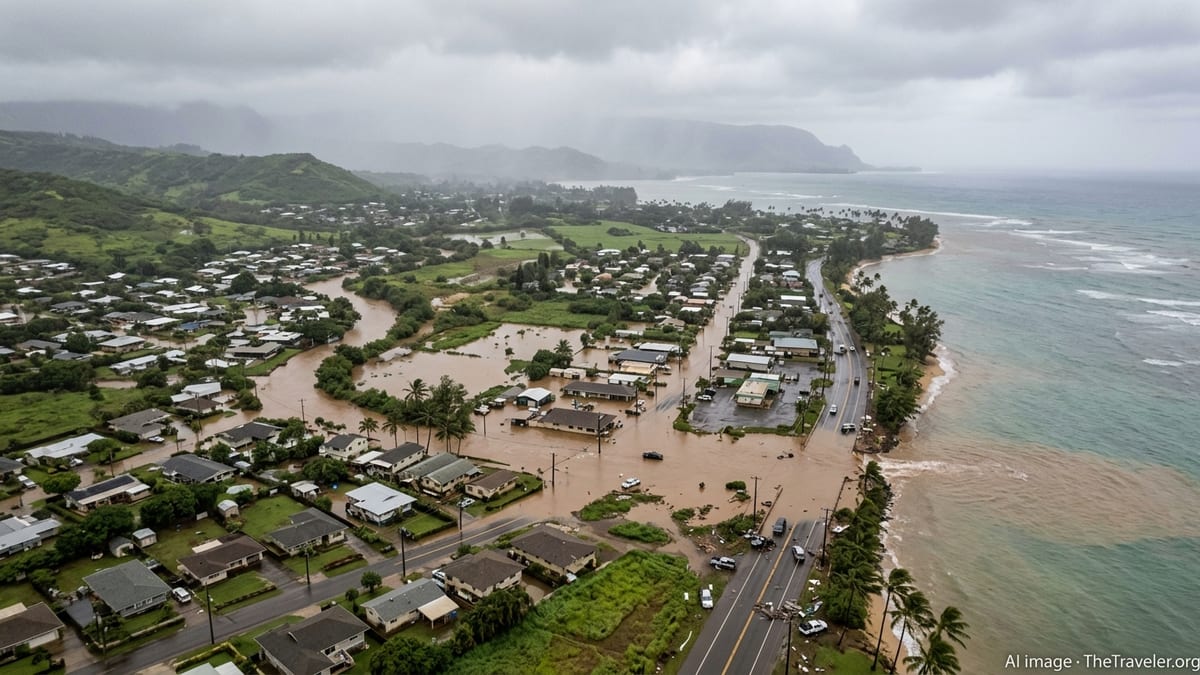
Publicly available information from March 20 and 21 indicates that intense, slow-moving bands of rain have delivered some of the worst flooding Oahu has seen in two decades. A series of Kona storms has soaked already saturated ground, sending muddy floodwaters through communities north of Honolulu, particularly around Haleiwa and Waialua on the famed North Shore.
Reports describe streets turned into fast-moving streams, vehicles partially submerged, and some homes lifted off their foundations. Emergency alerts have focused on areas downstream of the Wahiawa dam, a more than century-old structure highlighted in past assessments for its vulnerability in extreme rain events. Recent coverage notes that water levels at the reservoir have risen close to critical thresholds, prompting warnings about the risk of overtopping and structural damage.
As of March 21, local and national coverage points to evacuation orders and advisories affecting over five thousand residents in low-lying and downstream zones. Coast Guard overflight footage shared by regional outlets shows widespread standing water, debris-strewn fields, and brown runoff fanning into the ocean along Oahu’s northern coastline.
Forecasters expect periods of heavy rain and thunderstorms to continue through the weekend, raising concern that conditions could worsen or repeated flooding could occur even after initial waters recede. The situation remains highly dynamic, with updated alerts being issued as rainfall patterns shift across the island.
Impact on Visitors and Tourism Operations
The flooding has hit one of Hawaii’s most visited regions at the tail end of winter travel season. The North Shore’s renowned beaches and surf breaks, including areas near Haleiwa, are currently at the center of flood and evacuation zones. Travelers already on Oahu are reporting significant disruption, including canceled activities, damaged accommodations in some coastal pockets, and extended travel times around the island.
Published coverage and local updates describe key access routes on the North Shore as partially or fully closed at various points since Friday, cutting off or severely limiting road links in and out of flood-damaged communities. Where roads remain open, traffic has slowed due to debris, standing water, and ongoing clean-up efforts. Visitors have been urged through public advisories and local messaging to avoid nonessential travel to the North Shore to keep routes clear for residents, utility crews, and emergency responders.
Beyond the immediate flood zone, central and southern Oahu, including Honolulu and Waikiki, have experienced heavy rain, localized ponding, and minor disruptions, but remain largely operational. Major hotels and resort areas away from the North Shore are open, though some excursions, coastal hikes, and water-based tours have been postponed or rerouted in response to hazardous conditions and poor water quality from runoff.
Tourism businesses across the island are adapting day by day. Some have pivoted to indoor or alternative activities, while others that depend on North Shore access or calm ocean conditions are facing temporary shutdowns. Travelers are being encouraged through public information channels to maintain flexibility, check directly with operators, and build in extra time for any inter-island transfers or Oahu-wide sightseeing.
Travel Advice for Those Currently in Hawaii
For visitors already on Oahu, the primary guidance from weather bulletins and local advisories is to prioritize safety over itinerary commitments. Travelers in or near the affected North Shore and central Oahu areas are being asked to follow evacuation instructions for their specific neighborhood or lodging, move to higher ground where directed, and avoid driving through flooded roads or around barriers.
Anyone staying in Honolulu, Waikiki, or Ko Olina is advised to closely monitor local news outlets and weather alerts, as heavy showers can cause rapid changes in road conditions and flash-flooding in typically dry channels. Even short-lived downpours can overwhelm drainage in urban areas, leading to temporary street closures and difficulty reaching trailheads or scenic lookouts that require mountain or valley access.
Travelers with upcoming inter-island flights should allow extra time to reach Daniel K. Inouye International Airport, as congestion on alternative routes or weather-related slowdowns can lengthen drive times. While the main air and sea gateways remain open, schedules for smaller regional flights, harbor excursions, and some ground transport services may be subject to delay or short-notice cancellation as bands of heavy rain move through.
Health and environmental agencies have also flagged concerns about water quality following such intense runoff. Even when skies clear, nearshore waters may remain discolored and contaminated with sediment and pollutants for days, particularly off the North Shore and windward coasts. Visitors are being encouraged to heed any posted advisories before swimming, snorkeling, or surfing, and to consider land-based activities on days after major flooding.
Guidance for Travelers With Upcoming Trips
For those with trips to Oahu in the coming days and weeks, publicly available forecasts suggest that the most intense rainfall should gradually ease after the weekend, although scattered showers and unsettled weather could persist. The full picture of damage to roads, bridges, and coastal infrastructure on the North Shore will likely become clearer once waters recede and assessments can be completed.
Airlines serving Honolulu are currently operating, but travelers should review change policies and notifications in case of schedule adjustments tied to weather or operational constraints. Many carriers now offer flexible options during disruptive events, and several hotel brands and vacation rental operators in Hawaii have adopted more lenient change and cancellation terms following recent natural disasters, though specifics vary by property.
Prospective visitors are advised to verify the status of specific accommodations, especially smaller inns, vacation rentals, and surf lodges near Haleiwa, Waialua, and other low-lying coastal communities. Some properties may be closed temporarily for repairs, deep cleaning, or safety evaluations. Tour companies focused on waterfall hikes, off-road excursions, and river or stream activities may also suspend operations while trails and access roads are inspected for erosion, landslides, and downed trees.
Travel planners recommend building flexibility into itineraries, considering stays in areas less exposed to flooding, and keeping expectations realistic regarding beach conditions and outdoor access in the short term. Travelers seeking quieter itineraries may find that focusing on cultural sites, museums, and urban experiences in Honolulu provides a more predictable experience while cleanup and repairs proceed on the North Shore.
How the Flooding Fits Into a Broader Pattern
The current floods follow a series of powerful winter and early spring storms that have repeatedly soaked the Hawaiian Islands, from Kauai to the Big Island. Meteorologists describe the ongoing system as a Kona storm pattern, in which southerly winds and deep moisture feed bands of heavy rain over the islands, often for extended periods. This setup is known for triggering flash flooding, landslides, and coastal impacts, especially when storms arrive in quick succession.
Recent climate assessments for the region have highlighted increasing variability in rainfall, with longer dry spells punctuated by short, intense rain events that can overwhelm older infrastructure. The situation at Wahiawa dam, a more than 120-year-old structure now facing renewed scrutiny after these floods, has drawn attention to the challenges of maintaining legacy water-control systems in a changing climate.
Tourism analysts note that Hawaii’s visitor economy has already been grappling with the effects of extreme weather, from wildfires on Maui in 2023 to repeated flood events in subsequent years. The latest disruption on Oahu underscores the vulnerability of popular coastal destinations and the importance of clear communication with travelers when conditions deteriorate.
For now, the priority on Oahu remains protecting lives and stabilizing flooded communities. In the weeks ahead, the focus is expected to shift toward repairing damaged infrastructure, reassessing flood defenses, and evaluating how the islands can better balance a vital tourism industry with growing exposure to severe weather and climate-related risks.