

More news on this day
The Oberoi Rajgarh Palace in Madhya Pradesh has been named among TIME magazine’s World’s Greatest Places 2026, underscoring how carefully restored royal heritage and contemporary luxury are reshaping India’s tourism landscape in the heart of the country.
Get the latest news straight to your inbox!
TIME Recognition Puts Madhya Pradesh Heritage in Global Spotlight
The inclusion of The Oberoi Rajgarh Palace on TIME’s World’s Greatest Places 2026 list positions Madhya Pradesh alongside some of the world’s most talked-about destinations. According to published coverage of the annual list, the selection highlights places that stand out for innovative experiences, strong sense of place and distinctive hospitality, criteria that align closely with the palace’s restoration-focused development.
Reports indicate that the Rajgarh property represents one of the few Indian entries in the 2026 edition, giving central India a rare share of attention in rankings typically dominated by coastal and metropolitan destinations. The recognition follows a series of accolades for the hotel since its opening, including being listed among the world’s best new luxury hotels by specialist travel publications, and reinforces its status as a flagship for high-end, heritage-led stays in the region.
For Madhya Pradesh Tourism, the timing is notable. The state has been working to reposition itself as a premium cultural and wildlife destination beyond its well-known temples and tiger reserves. TIME’s global endorsement of a palace property near Khajuraho, one of India’s most prominent UNESCO World Heritage Sites, supports that narrative and is expected to drive fresh visitor interest from both domestic and long-haul markets.
Travel analysts note that such international listings often act as demand catalysts, particularly for emerging luxury regions. Industry commentary suggests that being named to TIME’s World’s Greatest Places typically correlates with a visible spike in search interest and bookings, benefitting not only the highlighted property but also the wider destination ecosystem around it.
A 350-Year-Old Bundela Palace Reimagined as a Luxury Retreat
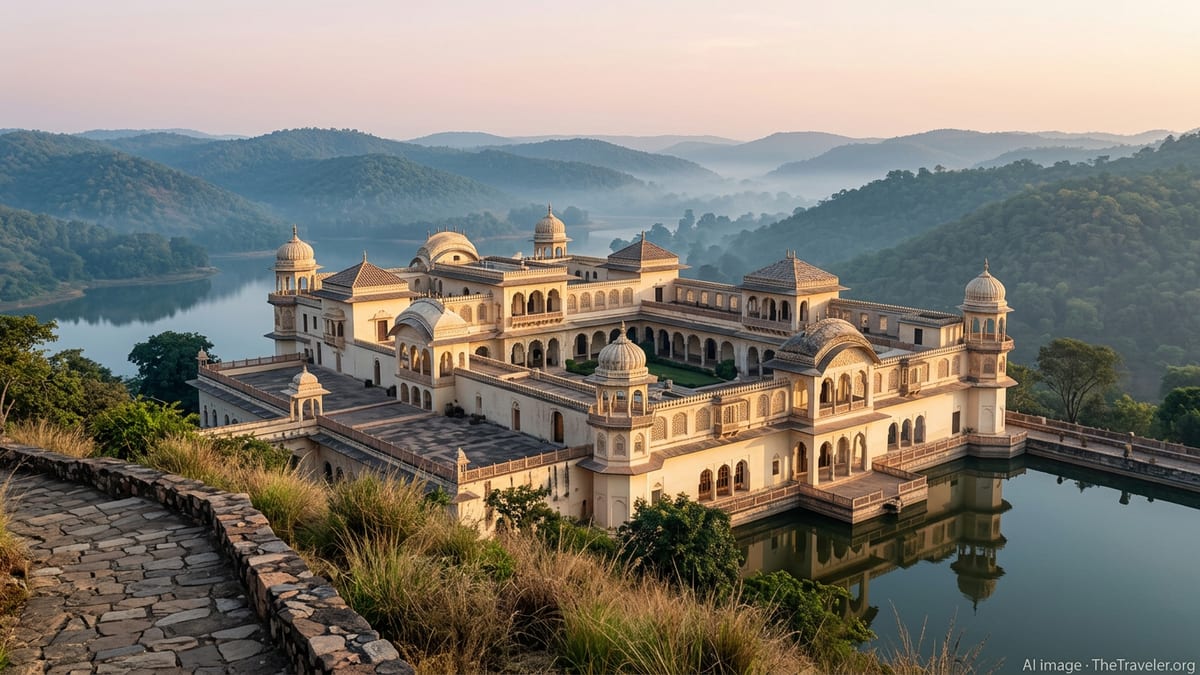
The Oberoi Rajgarh Palace occupies a 350-year-old hilltop residence historically linked to the Bundela dynasty, set above a rain-fed lake and overlooking the forests on the edge of Panna National Park. Publicly available information from the hotel group describes a multi-year restoration that aimed to preserve original architectural details such as arches, courtyards and stonework while integrating contemporary comforts in a discreet manner.
The estate now offers 65 keys, combining palace rooms, suites and private pool villas. Descriptions from travel operators highlight expansive terraces and verandas with 360-degree views of the Maniyagarh Hills, water bodies and surrounding woodland, giving guests a strong sense of the original royal vantage point. Interiors reference traditional Bundelkhand aesthetics through carved jaalis, fresco-style detailing and locally inspired textiles, but are paired with modern amenities associated with international luxury standards.
Reports on the opening indicate that the restoration work was intentionally low-rise and horizontal, echoing the original palace layout instead of introducing high-density vertical structures. Landscape design uses courtyards, gardens and stepped pathways to connect public and private zones, creating a sequence of intimate outdoor spaces that frame views of the hills and lake. The approach aligns with a broader trend in Indian heritage hospitality that favors adaptive reuse over new-build replicas.
Commentary from luxury travel media has emphasized that the project is being positioned as Oberoi Hotels & Resorts’ flagship palace offering in central India, comparable in ambition to its marquee resort properties in Rajasthan and Udaipur. The Rajgarh Palace, however, differentiates itself through its more secluded setting and closer integration with wilderness and rural landscapes rather than urban or lakefront environments.
Heritage-Led Luxury as a Model for Central India Tourism
The TIME listing draws fresh attention to the concept of heritage-led luxury that has been gaining ground in Madhya Pradesh. In this model, historic structures are renovated not only as accommodation but as anchors for cultural storytelling, local employment and landscape conservation. Rajgarh’s transformation from a long-closed royal residence into a high-end hotel is being cited in travel coverage as a case study in this approach.
According to travel and hospitality reports, a key element is the balance between exclusivity and authenticity. Room categories at The Oberoi Rajgarh Palace include suites with private pools and villas with gardens, targeting a global luxury audience, yet the design language references regional craft traditions and historical narratives rather than generic resort themes. Dining concepts are reported to spotlight traditional recipes and local ingredients from the broader Bundelkhand region, embedding the palace within a recognisable culinary landscape.
Observers of India’s hotel sector note that such projects can have an outsized impact on surrounding communities. High-spend guests typically combine a stay at Rajgarh with visits to Khajuraho’s temples, Panna National Park and nearby villages, extending the economic footprint beyond the palace gates. Travel features on the property point out that improved connectivity from Khajuraho’s airport and national highways is making multi-stop itineraries across central India more viable for luxury travelers.
Industry commentary suggests that success stories like Rajgarh could encourage similar adaptive reuse of heritage sites elsewhere in Madhya Pradesh, from riverside forts to colonial-era estates. However, conservation voices also stress the importance of clear guidelines, sensitive design and controlled visitor volumes to avoid over-commercialisation of culturally significant buildings.
Strengthening India’s Position in Global Luxury Rankings
The Oberoi Rajgarh Palace’s inclusion in TIME’s World’s Greatest Places 2026 follows its earlier appearance in rankings of the world’s best new luxury hotels, where it was cited as the sole representative from India on certain lists. Travel media coverage of those rankings underscored the property’s combination of intimate scale, service levels and standout setting as reasons for its strong performance against global peers.
For India’s hospitality sector, the continued international recognition supports a narrative that luxury experiences are no longer confined to long-established circuits in Rajasthan, Goa or major metros. Central India’s emergence, anchored by a palace property in Khajuraho, broadens the geographic spread of Indian hotels on global awards lists and showcases a different visual identity rooted in Bundelkhand rather than Rajput or Mughal design tropes.
Analysts tracking the Oberoi portfolio note that the group has been steadily expanding in destinations with strong cultural and natural credentials, using small, high-end properties to define new luxury routes. The Rajgarh project fits this strategy by offering a palace stay that can be easily combined with temple tourism, wildlife safaris and road journeys through less commercialised parts of Madhya Pradesh.
Published commentary from international travel titles indicates that such recognition also influences how tour operators program India for discerning clients. The presence of a TIME-listed property in the region can help reposition Khajuraho and Panna from optional add-ons to central pillars of itineraries, especially for travelers seeking quieter, heritage-focused alternatives to India’s busiest tourist hubs.
What the TIME Listing Means for Future Travelers
For travelers considering Madhya Pradesh in 2026 and beyond, TIME’s World’s Greatest Places recognition effectively certifies The Oberoi Rajgarh Palace as a destination hotel rather than simply a place to stay near Khajuraho. Travel writers describe it as the kind of property around which an entire trip can be planned, especially for visitors interested in slow travel, architecture and nature.
Prospective guests can expect a palace environment that foregrounds views and open spaces as much as formal interiors. Reports highlight sunrise and sunset vistas across the lake and hills, with the palace’s white and sandstone facades catching shifting light throughout the day. Publicly available photography shows courtyards, colonnades and water features that encourage wandering and lingering rather than quick, transactional use of the space.
From a broader perspective, the listing reinforces a shift in what defines luxury in India. Rather than relying solely on opulence and scale, properties like Rajgarh are being recognised for narrative depth, connection to landscape and measured restoration. TIME’s acknowledgment of these qualities in Madhya Pradesh suggests that travelers will increasingly seek experiences where heritage, design and setting work together to tell a coherent story.
As the global travel industry continues to recalibrate after years of disruption, Rajgarh’s ascent to the World’s Greatest Places list signals the kind of high-value, low-volume tourism that many destinations aspire to cultivate. For Madhya Pradesh, it represents both a milestone and a test case for how heritage-led luxury can shape the next chapter of India’s tourism map.