


More news on this day
Airline passengers already have federal rights to automatic refunds for many canceled flights and major schedule changes, but a separate U.S. Transportation Department rule taking effect in October could influence how disruptions get categorized and, in turn, what travelers can realistically expect airlines to cover when trips go sideways.
Get the latest news straight to your inbox!
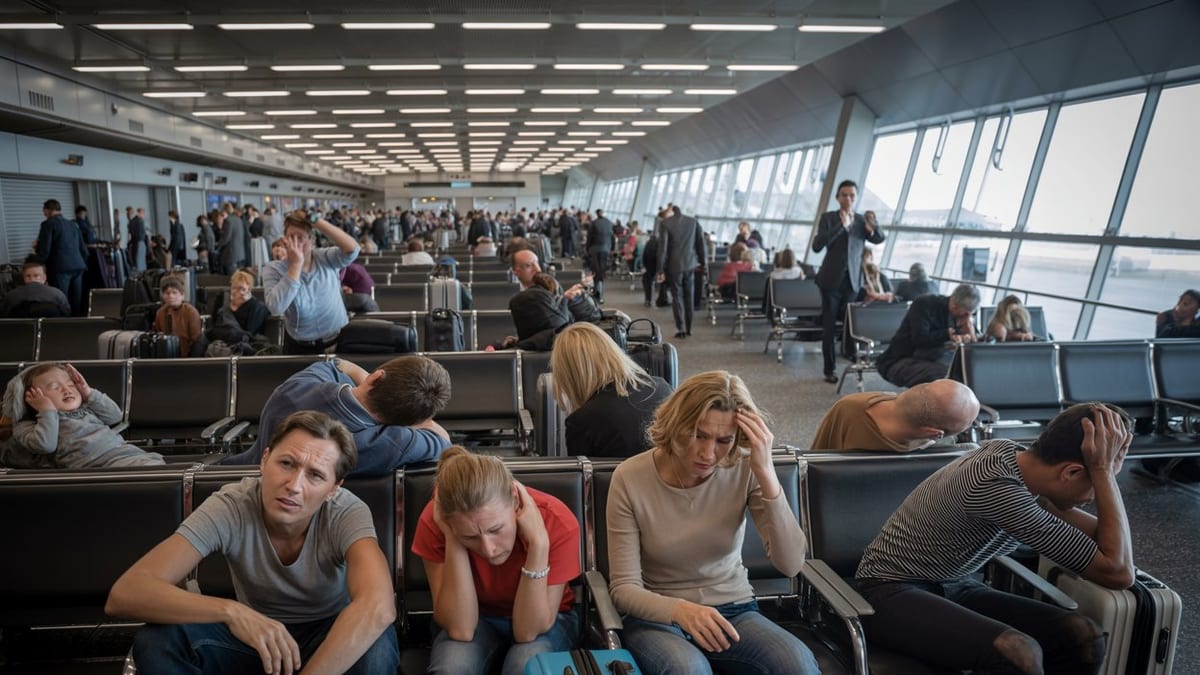
What’s changing in October, and why it matters
The rule scheduled to take effect on October 19, 2026 focuses on “cause of delay and cancellation categories,” a framework tied to the FAA Reauthorization Act of 2024. Published coverage and regulatory summaries indicate the aim is to standardize how airlines label the reasons for disruptions across the industry.
That categorization matters because, in the U.S., compensation beyond a refund is often tied to whether the disruption was considered “controllable” by the airline. Meal vouchers, hotels, and other assistance are frequently offered under carrier customer service commitments that depend on cause, even when federal law does not mandate cash compensation the way European rules do.
In practical terms, the October change is less about creating a new automatic payout for delays and more about how disruption causes are defined and reported. Clearer, standardized categories could strengthen enforcement, reduce ambiguity in passenger disputes, and influence whether an event is treated as within an airline’s responsibility for purposes of promised assistance.
Refunds vs. compensation: what U.S. rules actually guarantee
For U.S. itineraries, the biggest consumer protection already on the books is the Department of Transportation’s automatic refund framework for canceled flights and “significant” changes. Under current DOT policy and guidance, if an airline cancels a flight or significantly changes it and the traveler does not accept the alternative offered, the passenger is entitled to an automatic refund back to the original form of payment.
DOT guidance spells out what counts as a “significant change.” The standard includes time shifts of 3 hours or more for domestic itineraries and 6 hours or more for international itineraries, along with certain other itinerary changes such as switching to different airports, adding connections, or downgrading class of service. For travelers, that definition is important because it sets a uniform floor across airlines, rather than leaving refund eligibility to individual carrier policies.
Refund timing is also addressed in DOT materials: refunds generally must be issued within 7 business days for credit card purchases and within 20 calendar days for other payment methods. The key nuance is that a refund right typically applies when the passenger chooses not to travel on the changed itinerary. It is not the same thing as cash compensation for the inconvenience of being delayed.
How “cause” can affect meals, hotels, and other assistance
Unlike the European Union’s fixed, flight-length-based compensation regime, the U.S. system has historically leaned on a mix of refund requirements, tarmac-delay protections, and airline-specific customer service commitments. Those commitments often differentiate between controllable causes (such as maintenance or crew issues) and uncontrollable ones (such as severe weather or air traffic constraints).
That is where October’s cause-categorization rule could have real-world ripple effects. If airlines must apply more consistent categories when reporting and describing disruption causes, passengers may find it easier to understand whether their situation fits within the airline’s own published commitments for vouchers, hotel rooms, or rebooking support.
Recent published coverage has also highlighted how disruption “cause” disputes can flare up when broader events affect fleets. For example, DOT guidance has indicated that disruptions linked to aircraft recalls may not be treated as within an airline’s control for the purposes of certain voluntary customer service commitments, even if carriers may still choose to help affected travelers. A more standardized categorization system may reduce confusion, but it may also formalize distinctions that passengers find frustrating.
What travelers should do when a flight is delayed or canceled
The first step is to separate the decision you control from the one you do not: whether to accept the airline’s alternative itinerary. If your flight is canceled or changed enough to meet DOT’s significant-change definition, declining the new itinerary can trigger an automatic refund, while accepting it may preserve your trip but may reduce refund options to the unused portions of the ticket.
Second, keep the paper trail simple. Save the original itinerary, the notice of cancellation or schedule change, and any replacement options presented. DOT’s automatic refund framework is built around clear trigger points such as cancellation and defined “significant” changes, so documentation helps if the process breaks down with an airline or ticket seller.
Third, understand who owes the money. DOT materials emphasize that the “merchant of record” has refund responsibilities; if an online travel agency processed your payment, that may affect the path of the refund even when the airline caused the disruption.
Finally, calibrate expectations on compensation. In the U.S., cash compensation for delays is not broadly guaranteed the way it is under EU-style passenger rights. The October 19, 2026 rule could improve transparency and consistency around disruption causes, which may help travelers press for what an airline already promises, but it does not automatically create a universal right to extra cash for a late arrival.