


More news on this day
Flights to and from Scotland faced cancellations and long delays on Monday after a technical problem at the UK’s air traffic control provider forced restrictions in airspace managed from Prestwick, disrupting time-sensitive travel plans including weddings and family trips to Disneyland Paris.
Get the latest news straight to your inbox!
What happened and which airports were affected
Publicly available updates from National Air Traffic Services (NATS) show the disruption began early Monday, September 21, 2026, when a technical issue occurred at its Prestwick centre in Scotland. NATS said the issue was fixed and that work continued with airports and airlines to safely remove remaining restrictions and reduce knock-on delays.
Published coverage indicated the impact was concentrated on flights in and out of Scotland, with ripple effects also felt in Northern Ireland and parts of northern England as aircraft and crews were displaced. Airlines advised passengers to recheck flight status before traveling to the airport as schedules adjusted through the day.
The disruption comes just days after NATS published a preliminary report into a separate technical incident on September 8, 2026, which prompted restrictions across the UK while systems were restarted and flight data reloaded. While Monday’s event involved the Prestwick centre, the earlier September incident centered on flight planning and system resilience more broadly.
Real-world impact: weddings, family holidays, and missed connections
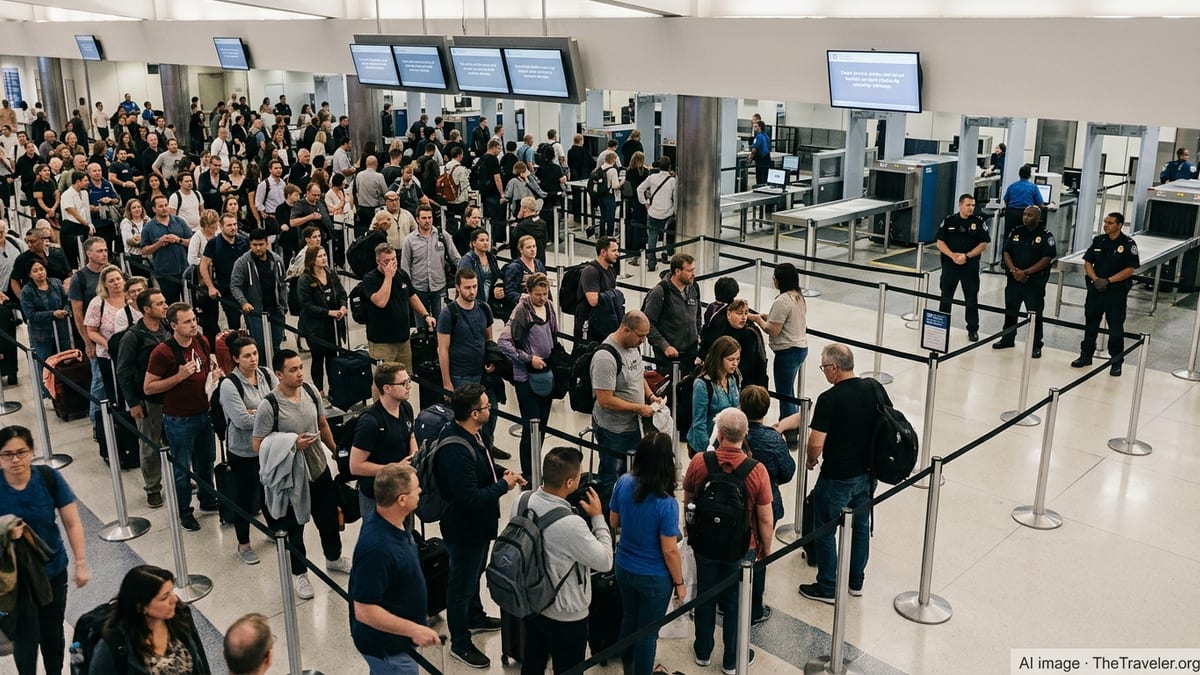
For passengers, the immediate consequences were practical and personal: missed departures, rebooked itineraries, and uncertainty over when normal operations would resume. Monday’s disruption hit travelers with fixed plans such as wedding attendance, pre-paid hotel stays, and theme-park bookings that often hinge on arriving on a specific day.
According to published coverage, some family travelers saw their morning flights from Glasgow canceled, disrupting planned trips to Disneyland Paris. Others reported scrambling to find same-day alternatives via other UK or European hubs, where availability can tighten quickly once widespread restrictions begin.
Even when flights resume, aviation disruptions can cascade. Aircraft rotation changes, crews running out of duty time, and backlogged departure slots can push delays later into the day, meaning passengers on later flights can be affected even if their route is not directly linked to the original technical fault.
What passengers should do now: rebooking, refunds, and care
During air traffic control-related disruptions, airlines typically direct passengers to check live flight status in airline apps and to wait for rebooking instructions if a flight is canceled. NATS advised passengers to continue checking directly with their airline for the latest information as restrictions are lifted and schedules stabilize.
UK and EU consumer protections can still apply to assistance and “duty of care” when passengers are stranded, including meals and accommodation where required, even when compensation for cancellations may depend on the specific cause. The UK Civil Aviation Authority has also pointed travelers to existing passenger-rights processes following the September 8 disruption, while noting an independent review was requested to examine what happened and the resilience of systems going forward.
For travelers with hotels, event tickets, or packages such as Disneyland visits, the practical next step is documenting disruption and keeping receipts for reasonable additional costs. Rebooking decisions can also hinge on whether an airline offers rerouting to a different airport or a later date, and whether any onward rail or road transport needs to be amended.
Why this disruption is drawing extra attention
Monday’s outage has drawn heightened scrutiny because it is the second NATS technical issue in a short period. Earlier this month, restrictions were imposed across the UK during a separate systems incident, and published coverage described a software defect that corrupted flight data extremely quickly, creating widespread knock-on disruption that took days to fully unwind.
Those two incidents, close together, have intensified debate around operational resilience and contingency planning. Airlines have publicly criticized repeated system failures, while NATS has emphasized safety as the overriding priority and has published incident reporting that outlines the sequence of events and actions taken during the September 8 episode.
In the near term, the practical takeaway for passengers is that “fixed” does not always mean “fully recovered.” Even after a technical issue is resolved, the industry-wide process of repositioning aircraft and crews and clearing congestion can keep services uneven well into the day, especially at busy airports and on high-frequency routes.
What to watch for next
Travelers in Scotland and those connecting through Scottish airports may see continued timetable adjustments as airlines restore schedules and reposition fleets. Passengers with same-day departures are likely to face the most volatility, particularly on early rotations that depend on aircraft arriving on time from previous legs.
More broadly, attention is expected to remain on the outcomes of ongoing reviews into early-September disruption and any further technical reporting that clarifies causes, mitigations, and timelines for system improvements. For now, the immediate guidance remains consistent across airlines and airports: verify flight status shortly before departure and be prepared for last-minute gate, slot, and rerouting changes.