

More news on this day
At a moment when airports across the United States are pleading with travelers to arrive earlier and brace for marathon security lines, one Midwestern hub is taking a different tack, warning passengers that getting to the terminal too soon may be making the problem worse.
Get the latest news straight to your inbox!
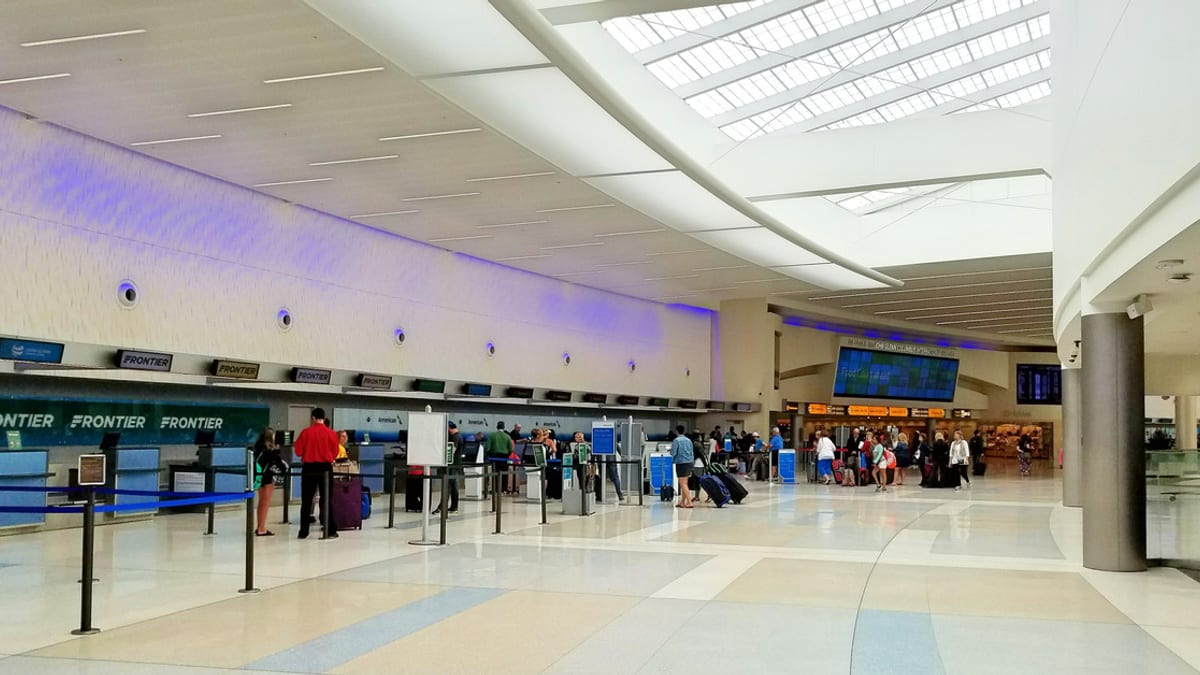
Image by thetravel.com
Columbus Airport Breaks From the Pack
John Glenn Columbus International Airport in Ohio has issued an unusual message to travelers in recent days: do not arrive at the airport hours before departure, even as long Transportation Security Administration lines dominate headlines across the country. Publicly available information shows the airport has rolled out updated guidance telling most passengers that 90 minutes before their scheduled takeoff is sufficient for screening and boarding.
According to recent coverage, the airport’s advice is aimed at countering an emerging behavior pattern among anxious travelers who have watched images of snaking queues and missed flights at other major hubs. Many passengers are now showing up far earlier than they once did, sometimes three or four hours ahead of domestic departures, regardless of local conditions.
Columbus officials have shared data indicating that its security checkpoints, while busy at peak times, are not experiencing the same extreme delays reported at some larger airports. By asking travelers to adhere to a 90‑minute arrival window instead of flooding the terminal throughout the day, the airport is trying to keep the flow of passengers more in sync with actual flight schedules.
The message stands in contrast to the standard air travel wisdom that has solidified over the years, where two hours for domestic flights and three hours for international trips are often presented as the safest minimum. John Glenn International’s updated guidance underlines how sharply conditions can vary airport to airport, even under the same national pressures.
Nationwide Strain From TSA Staffing and Policy Shifts
The Columbus advice is emerging against a backdrop of intense strain on the TSA system nationwide. Published reports describe extended wait times at major hubs such as Houston’s George Bush Intercontinental and Hartsfield‑Jackson Atlanta International, where travelers have been told to arrive as much as four hours before departure to avoid missing flights as security lines swell.
Recent coverage of the federal funding standoff in Washington details how unpaid or overextended TSA officers have contributed to checkpoint bottlenecks at some of the country’s busiest airports. In parallel, there has been a high‑profile deployment of federal immigration officers in and around security areas at several large hubs, further spotlighting the broader stresses on the aviation security network.
In this context, travelers have responded by erring on the side of extreme caution, often arriving far earlier than airline and airport recommendations. That behavior may be rational at locations hit hardest by staff shortages, but experts cited in academic and industry analyses note that very early arrivals can reduce system efficiency when they occur in places where staffing and infrastructure are still adequate.
The result is a patchwork landscape in which large coastal and Sun Belt hubs may be grappling with hours‑long queues, while mid‑sized airports like Columbus see more modest surges that could potentially be managed through careful passenger guidance rather than blanket “arrive as early as possible” messaging.
How Showing Up Too Early Can Make Lines Worse
Research on airport queue management suggests that when travelers arrive excessively early, security lines no longer reflect the true urgency of upcoming departures. Passengers for flights leaving much later can crowd ahead of those with imminent boarding times, increasing the risk of missed flights for people who followed the recommended arrival window.
Operational studies highlight that traditional first‑come, first‑served security screening can become distorted when a high proportion of travelers choose to arrive very early. This phenomenon, sometimes referred to as a “sequence trap,” occurs when the order in which passengers enter the queue no longer aligns with departure times, undermining the ability of staff to prioritize those who most need to clear the checkpoint quickly.
Columbus appears to be targeting this challenge by telling travelers to avoid overcompensating for problems in other cities. By encouraging a more disciplined 90‑minute norm, the airport is attempting to smooth demand over the day and keep security lanes focused on the passengers whose flights are actually approaching, instead of a mix of early arrivals and imminent departures competing for the same screening capacity.
The approach also reflects a broader shift in how some airports are using data. With more detailed visibility into hourly traffic patterns, local managers can identify when their checkpoints are genuinely under pressure and when early arrivals are the main driver of congestion. Tailored messaging, such as the chart circulated by John Glenn International, is one outcome of that more granular understanding.
Travelers Face Conflicting Guidance Across the U.S.
For passengers planning trips in the coming weeks, the divergence between Columbus’s message and the warnings from larger hubs adds a new layer of complexity. While one airport is effectively saying “do not come too early,” others are telling travelers that even three hours may not be enough during peak periods.
In Houston, reports of multi‑hour security waits tied to staffing gaps have prompted airlines and airport operators to urge travelers to build much larger buffers into their plans. Similar calls for extra time have been issued in Atlanta, where the massive volume of connecting traffic leaves little room for error if checkpoint lines grow unexpectedly.
The conflicting advice underscores the importance of treating airport guidance as local rather than universal. Conditions that justify four‑hour lead times in one city may not apply even a short flight away. For travelers, that means paying close attention to airport‑specific alerts from departure and connecting points, rather than relying on a single rule of thumb carried over from a prior trip.
Consumer advocates note that this environment can be especially confusing for infrequent flyers and families, who may see dramatic scenes from one airport shared widely on social media and assume they represent the national norm. Columbus’s campaign is, in part, an attempt to push back on that assumption by emphasizing its own data over viral anecdotes.
What This Shift Could Mean for Summer Travel
The decision by John Glenn Columbus International to actively discourage very early arrivals could be an early indicator of how some airports may try to manage crowds as the busy spring and summer travel seasons approach. If the message resonates with local travelers and succeeds in keeping lines manageable, other mid‑sized airports with similar conditions may consider adopting comparable guidance.
Industry observers point out that aligning passenger behavior with real‑time operational capacity is one of the few levers airports can pull quickly, especially when hiring and training new security staff takes time. Clear, data‑based communication about when to arrive could become a more prominent tool in efforts to prevent bottlenecks before they form.
At the same time, the mixed picture nationwide suggests that no single strategy will fit every airport. Large hubs coping with chronic understaffing or construction constraints may continue to recommend significantly earlier arrival times to reduce the risk of last‑minute surges. Travelers already confronting long lines in those locations are unlikely to be persuaded to cut their margins.
For now, the message emerging from Columbus is that travelers should resist the impulse to generalize from the longest lines they see or hear about. Instead, doing a last‑minute check of guidance from the specific airport and airline involved may be the most reliable way to balance the risk of missed flights against the growing problem of overcrowded terminals fueled by fear of delays elsewhere.