

For travelers plotting a Great Lakes getaway, two neighbors often rise to the top of the list: Ohio and Michigan. Both put you within easy reach of freshwater beaches, island towns, national and state parks, and revitalized cities with strong food and brewery scenes. Yet the experiences feel distinct on each side of the line. Ohio leans toward classic Midwestern lake fun blended with major attractions, while Michigan offers wilder shorelines, car free islands and long road trips along two great lakes and an upper peninsula that feels almost like another country. Deciding between them comes down to the kind of trip you want.
Overall Vibe: Two Very Different Great Lakes Personalities
Ohio’s Lake Erie shoreline and inland attractions tend to feel compact and accessible. From Cleveland’s museums and waterfront neighborhoods to the Lake Erie islands off Sandusky and Port Clinton, you can string together city culture, roller coasters and island bars in a single long weekend. Distances between major stops are short, the terrain is gentle, and road networks are straightforward, which appeals to travelers who want to maximize experiences without long drives.
Michigan spreads its attractions over a far larger canvas. With shorelines on Lake Erie, Lake Huron, Lake Michigan and Lake Superior, plus the forested Upper Peninsula across the Mackinac Bridge, the state is built for road trippers with time. The trade off is that reaching headline destinations such as Sleeping Bear Dunes or Pictured Rocks National Lakeshore usually requires more driving, but the pay off is a sense of immersion in dunes, forests and small harbor towns that feel removed from urban life.
In broad terms, Ohio works well if your Great Lakes getaway is a long weekend built around specific anchor attractions. Michigan shines when you can linger for a week or more, meandering between coastal towns, islands, and inland lakes. Many travelers eventually visit both, but understanding these different rhythms helps you decide where to start.
Neither state is inherently “better” for a Great Lakes trip. Instead, they offer complementary versions of the region: Ohio for dense, easy to reach fun on and near Lake Erie, Michigan for spread out, big scenery along multiple lakes and a more back road, road trip energy.
Coastlines, Beaches and Islands: Lake Erie vs Big Lake Drama
Ohio’s Lake Erie shoreline is relatively low slung and gentle, which makes it friendly for families and casual beachgoers. State parks and public beaches stretch from the Toledo area east to Ashtabula, with popular stops including Maumee Bay and Headlands Beach. Water temperatures tend to warm earlier in summer than on Michigan’s northern coasts, so swimming and paddling seasons often feel a bit longer and more predictable for June and early July trips.
The state’s biggest coastal calling cards are the Lake Erie islands. South Bass Island and its main town of Put in Bay are easily accessed via ferries from Port Clinton and Sandusky, with both passenger only services and vehicle ferries operating seasonally. Many visitors treat Put in Bay as a lively day trip destination anchored by bars, live music, golf cart rentals and lake views. Nearby Kelleys Island offers a quieter alternative with hiking, birding and more low key cottages, reached by year round vehicle and passenger ferry from Marblehead, weather permitting.
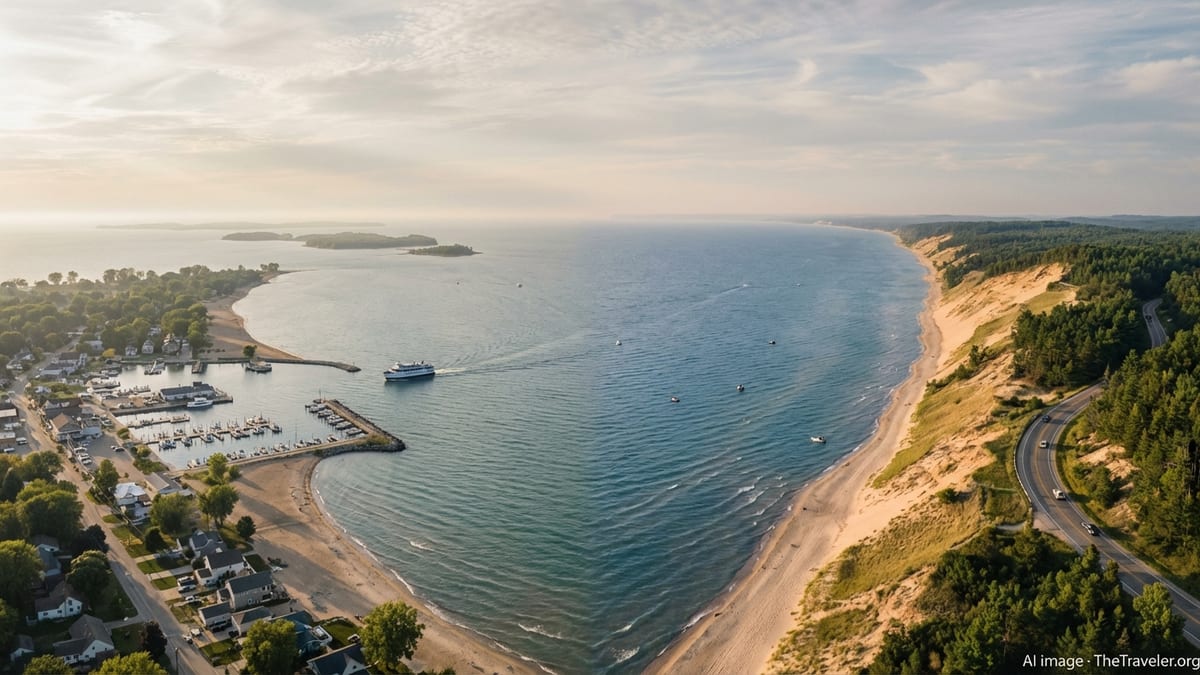
Michigan’s lakefront experiences feel more varied and often more dramatic. Along Lake Michigan, long curving sand beaches are backed by dune systems and forest. Sleeping Bear Dunes National Lakeshore, with its towering sand cliffs and scenic drive, is a prime example, often ranking among the most scenic stretches of freshwater coast in the country. On Lake Huron, especially around the northeast coast and the Straits of Mackinac, coastlines trade big dunes for rocky beaches, clear shallows and cedar fringed shorelines that appeal to paddlers and sailors.
Island experiences also differ. Mackinac Island in Michigan, set in Lake Huron between the upper and lower peninsulas, is a car free destination reached by ferries from Mackinaw City and St. Ignace. Visitors trade cars for bicycles and horse drawn taxis, stay in historic hotels and bed and breakfasts, and cycle a paved loop around the island’s perimeter. Compared with Ohio’s islands, Mackinac’s atmosphere is less about nightlife and more about Victorian era architecture, fudge shops, coastal views and quiet side streets.
Cities and Culture: Cleveland and Columbus vs Detroit and Beyond
Ohio’s biggest advantage for urban oriented travelers is the concentration of large, accessible cities within a relatively small radius. Cleveland, perched directly on Lake Erie, has reinvented itself as a cultural and culinary hub, with the Rock and Roll Hall of Fame, respected art and history museums, a downtown stadium district and lakefront parks. Neighborhoods such as Ohio City and Tremont have strong craft beer and restaurant scenes that work easily into a weekend itinerary.
Farther south, Columbus offers a different take on Midwestern city life, with arts districts, a sizable university presence and a strong calendar of festivals and events. While it does not sit on one of the Great Lakes, it can serve as a gateway for a road trip north to the coast or west toward Hocking Hills. Cincinnati, on the state’s southwestern edge, adds historic neighborhoods and riverfront attractions for travelers who want to combine a Great Lakes visit with Ohio River culture.
Michigan’s star city for Great Lakes travelers is Detroit. In recent years, the city has drawn attention for its revitalized downtown, riverfront paths, music legacy and automotive heritage. Museums, from major art collections to the Henry Ford complex in nearby Dearborn, give visitors a window into both industrial history and contemporary creativity. Travelers often pair Detroit with excursions to small towns along nearby Lake St. Clair or inland lakes for a mixed city and water trip.
Smaller Michigan cities contribute a different flavor than their Ohio counterparts. Ann Arbor blends a college town atmosphere with independent shops and restaurants, while Grand Rapids, closer to Lake Michigan, offers a walkable downtown, craft breweries and easy access to Lake Michigan beaches in communities like Grand Haven and Holland. None of these cities are as directly tied to a single freshwater coast as Cleveland, but together they offer multiple bases for exploring the state’s lakes and outdoor attractions.
Outdoor Adventures: National Parks, Dunes and Forest Escapes
Both states deliver substantial outdoor opportunities, but in different forms. Ohio’s standout natural attractions include Cuyahoga Valley National Park between Cleveland and Akron, which offers waterfalls, forested trails and a historic canal corridor surprisingly close to urban centers. Elsewhere in the state, Hocking Hills in southeastern Ohio provides dramatic sandstone gorges, caves and waterfalls, popular with hikers and cabin renters in all seasons.
On the Lake Erie shore, Ohio state parks and wildlife areas draw birders during spring and fall migrations, particularly around marshes in the western basin. Kayaking, paddleboarding and sailing on the relatively sheltered waters of Lake Erie are common summer activities, and fishing for species such as walleye is a major draw. Travelers who like the idea of mixing light hikes with plenty of time in small towns, wineries and waterfront patios often find Ohio’s blend of outdoors and amenities appealing.
Michigan’s outdoor offering is broader in scale. In the northern Lower Peninsula and Upper Peninsula, large tracts of forest, long distance trails and remote lakes create a more backcountry oriented feeling. Along Lake Michigan, Sleeping Bear Dunes National Lakeshore combines hiking, scenic drives and beach days, while state parks up and down the coast provide campgrounds and day use areas with dune backed beaches and access to sunset views over the water.
Farther north and west, the Upper Peninsula introduces even wilder terrain. Pictured Rocks National Lakeshore on Lake Superior is known for its multicolored cliffs, sea caves, waterfalls and long hiking trails, and many visitors choose to see the shoreline from boat tours or kayaks. Inland, a network of state forests and recreation areas supports camping, paddling and snow based sports in winter. For travelers who equate a Great Lakes trip with big horizons, quiet forests and fewer crowds, Michigan’s northern regions tend to have the edge.
Road Trips and Getting Around: Compact Loops vs Grand Circuits
Ohio’s geography favors compact loops that pack a lot into a few days. One classic route runs from Cleveland down to Cuyahoga Valley National Park, then west to the Lake Erie islands and Sandusky. Another links Toledo’s birding hotspots with island ferries and wine country along the shores. Driving distances between anchors such as Cleveland, Sandusky and Marblehead are usually measured in a couple of hours or less, which keeps daily travel time manageable for families or groups who would rather be doing than driving.
The Lake Erie islands themselves are particularly straightforward to navigate. Passenger ferries connect Sandusky and Port Clinton with Put in Bay and Kelleys Island, with both high speed, passenger only services and slower vehicle ferries available during the main season. Once on the islands, most visitors either rent golf carts or bicycles or explore on foot, allowing cars to stay parked on the mainland and keeping the atmosphere relatively relaxed.
Michigan’s best itineraries tend to be longer and more linear. A common route for first time visitors follows the eastern shore of Lake Michigan from southwestern beach towns up to the Straits of Mackinac, then crosses into the Upper Peninsula before looping back through the interior. Along the way, drivers can stop at state parks, lakeside villages, dune overlooks and lighthouses, making the journey as much a part of the experience as the destinations.
On Mackinac Island, the absence of cars creates a different rhythm. Travelers park on the mainland, board ferries from Mackinaw City or St. Ignace, and then switch to bicycles, walking or horse drawn taxis once on the island. Around the state, secondary highways and scenic byways encourage slow travel, but they also mean that reaching far flung sights, especially in the Upper Peninsula, may require several hours between major stops. If you enjoy the process of driving through forests and along bluffs, Michigan’s grand circuits are rewarding; if you prefer shorter hops, Ohio’s compact loops may suit you better.
Seasonality, Weather and Best Times to Visit
Timing can strongly influence whether Ohio or Michigan feels like the better fit for your Great Lakes plans. On balance, Ohio’s Lake Erie coast has slightly milder conditions, especially in spring and fall. Water warms earlier, and shoulder season days in May or late September can still feel comfortable for hiking, patio dining and some water activities. This longer shoulder window gives budget minded travelers more flexibility to visit outside peak summer while still enjoying decent weather.
Michigan’s northern latitudes and exposure to multiple great lakes create more pronounced seasonal swings. On the upside, summers along Lake Michigan and Lake Superior are often pleasantly cool compared with inland heat, making July and August popular for beach days, hiking and road trips. Autumn can be spectacular, particularly in the northern Lower Peninsula and Upper Peninsula, where forests turn vivid shades and crowd levels drop. The trade off is a shorter, sharper season. Water temperatures typically stay cooler than Lake Erie, and shoulder months can feel brisk along exposed coasts.
Winter travelers will find different experiences in each state. Ohio’s Lake Erie snow belt does see heavy snow at times, but major attractions on the islands and many seasonal parks scale back dramatically outside summer. Michigan, especially the northern Lower Peninsula and Upper Peninsula, is more of a true four season destination, with established ski areas, snowmobiling networks and winter festival traditions. If your Great Lakes trip is firmly a summer beach and island vacation, both states work; if you want year round outdoor activities, Michigan offers more options once the snow arrives.
Spring and fall also affect crowd patterns. Ohio’s island and amusement park scene can get busy on summer weekends, but weekdays and shoulder seasons often feel manageable. In Michigan, weekends around peak fall color in October can be as popular as midsummer, particularly in well known areas such as the Traverse City region and the Straits of Mackinac. Planning ahead for lodging in these periods is advisable in both states, but especially in Michigan’s smaller coastal towns.
Costs, Crowds and Trip Planning Practicalities
In everyday terms, travelers often find Ohio slightly more budget friendly, particularly when it comes to lodging and shorter ferry rides. Many of its destinations are within a few hours’ drive of major population centers in Ohio, Pennsylvania and Michigan, which can reduce travel costs. The Lake Erie islands have peak pricing during popular weekends, but midweek stays or visits in early or late summer can offer better value, and camping or cabin rentals inland tend to be competitive.
Michigan covers a broad range of price points. In some smaller inland towns and state park campgrounds, costs can feel moderate. However, particularly high demand destinations such as Mackinac Island and popular Lake Michigan beach towns often command premium summer rates for hotels, inns and vacation rentals. Ferry crossings to car free islands and the fuel costs of longer road trips can also add up. Travelers who plan well ahead, travel midweek or consider shoulder season visits frequently find more manageable prices.
Crowd dynamics differ as well. In Ohio, congestion tends to cluster around specific attractions such as island villages on holiday weekends or major amusement parks on peak summer days. It is often possible to sidestep the heaviest crowds by arriving early, choosing weekday visits or basing yourself in quieter nearby towns. In Michigan, some of the most famous locations can feel busy at times, but the sheer size of the state and abundance of alternative parks and towns makes it relatively easy to pivot to a less crowded trailhead or beach.
From a planning standpoint, Ohio’s shorter distances and more compact cluster of highlights make it easier to plan on the fly. Michigan rewards more deliberate planning, especially for itineraries that span both peninsulas or that combine popular hotspots with time in remote areas. In either case, booking ferry tickets, lodging and any guided boat or kayak tours ahead of peak dates is wise, but it is particularly important in Michigan’s most in demand summer and fall windows.
The Takeaway
Choosing between Ohio and Michigan for a Great Lakes region trip is less about which state is objectively better and more about matching your travel style to each destination’s strengths. Ohio excels at packing coastal towns, islands, state parks and major attractions into a small geographic footprint. You can land in Cleveland or Columbus, be on Lake Erie within a short drive, then hop ferries to island villages where golf carts replace cars and sunsets stretch across a relatively calm horizon.
Michigan, by contrast, leans into scale and variety. Multiple great lakes, a car free island set between peninsulas, sweeping dune systems and a largely forested Upper Peninsula combine to create a sense of journey. Road trips here feel bigger, drives are longer, and the reward is a string of coastal and inland experiences that can feel far removed from everyday life, especially once you reach the northern reaches of the state.
If you have a long weekend, are traveling with younger children, or prefer shorter, simpler drives between highlights, Ohio’s Lake Erie coast and inland parks may serve you well. If you can devote a week or more, enjoy scenic byways and do not mind trading convenience for wild shorelines and multiple coastal moods, Michigan is compelling. For many travelers, the ideal solution is not either or, but starting with one state this year and exploring the other on a future trip, gradually building a deeper relationship with the Great Lakes as a whole.
Ultimately, both Ohio and Michigan deliver the freshwater beaches, small towns, and outdoor escapes that define Great Lakes travel. The choice comes down to whether you are in the mood for a compact, accessible getaway or an expansive road trip that traces longer arcs along the water’s edge.
FAQ
Q1. Which state is better for a first time Great Lakes trip, Ohio or Michigan?
For a first trip with limited time, many travelers find Ohio easier because highlights around Lake Erie, including cities, islands and parks, sit relatively close together. With more time and a love of road trips, Michigan’s varied coasts and Upper Peninsula become increasingly attractive.
Q2. Where are the best beaches, in Ohio or Michigan?
Ohio’s Lake Erie beaches are accessible and family friendly, while Michigan’s Lake Michigan and Lake Superior coasts offer larger dune systems and more dramatic scenery. If you want long sandy strands backed by high dunes and forests, Michigan generally has the edge.
Q3. How do the Lake Erie islands compare with Michigan’s Mackinac Island?
Ohio’s islands like Put in Bay and Kelleys Island are easygoing and, in places, lively, with golf carts, bars and casual cottages. Mackinac Island in Michigan is car free with a more historic, Victorian atmosphere, bicycle focused exploring and horse drawn taxis, giving it a different, more old fashioned feel.
Q4. Is one state generally cheaper for travelers?
Costs vary by destination and season, but many visitors perceive Ohio as slightly more budget friendly overall, especially for short stays and midweek travel. Michigan can be very affordable in less famous areas, yet marquee spots such as Mackinac Island and popular Lake Michigan towns often carry higher peak season prices.
Q5. Which is better for outdoor adventure, Ohio or Michigan?
Ohio offers strong options like Cuyahoga Valley National Park, Hocking Hills and Lake Erie birding areas, ideal for moderate hikes and nature outings. Michigan, with its multiple coasts, dune systems and the Upper Peninsula’s vast forests, generally offers a wider range of hiking, paddling and backcountry style adventures.
Q6. How much driving should I expect in each state?
In Ohio, many key sights along Lake Erie and in the northeast and central parts of the state are just a couple of hours apart, keeping daily drives short. In Michigan, especially on routes that include the Upper Peninsula, it is common to have longer stretches between major stops, which suits travelers who enjoy extended scenic drives.
Q7. When is the best time of year to visit Ohio and Michigan for a lakeside vacation?
Late spring through early fall works for both, though Ohio’s Lake Erie shore often warms up a bit earlier and can feel comfortable in May and late September. Michigan’s prime coastal season typically runs from mid June through early September, with October adding a strong fall color draw in many areas.
Q8. Are the Great Lakes safe for swimming in both states?
In summer, many beaches in both Ohio and Michigan offer lifeguarded areas and calm days suitable for swimming. Conditions can change with weather and currents, so it is wise to heed local advisories, posted signs and any guidance from park staff or beach patrols before entering the water.
Q9. Which state is better if I am traveling without a car?
Both states present challenges without a car, but carefully planned trips can work. Ohio’s cities and some island ferries are accessible via public transportation and rideshares, making a city plus island combination feasible. In Michigan, certain areas like Detroit and Mackinac Island can be reached and enjoyed without driving, though getting between far flung coastal towns is harder without a vehicle.
Q10. Can I realistically visit both Ohio and Michigan on one Great Lakes trip?
Yes, especially if you focus on the regions closest to each other, such as Ohio’s Lake Erie coast combined with southeastern Michigan and Detroit. For longer trips, some travelers start in northern Ohio, then head through Michigan’s Lower Peninsula toward the Straits of Mackinac, blending experiences from both states into a single extended itinerary.