

More news on this day
Oman Air has halted a series of major regional routes through March 2026, as tightening airspace closures and conflict-related restrictions across the Middle East continue to upend flight schedules and complicate travel planning worldwide.
Get the latest news straight to your inbox!
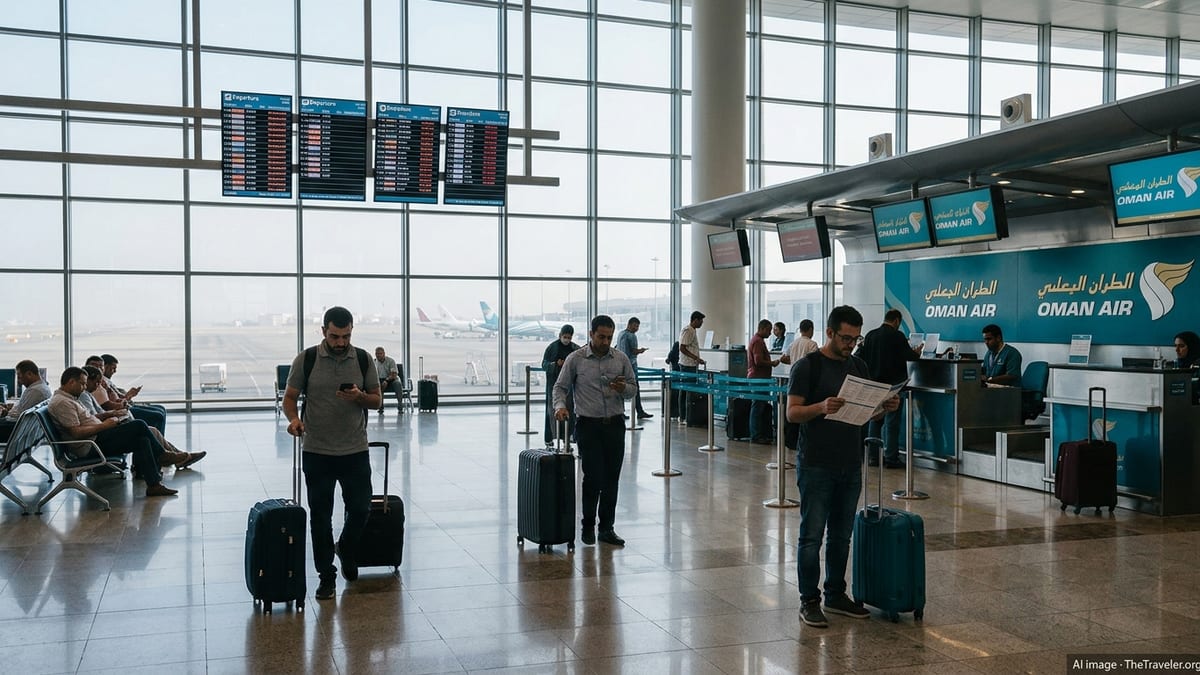
Major Oman Air Routes Suspended Amid Regional Closures
According to recent operational updates and regional travel advisories, Oman Air has implemented extended suspensions on several high‑traffic routes that rely on now‑restricted Middle East airspace. Publicly available information indicates that services involving destinations such as Iraq, Lebanon, and Iran are among those most affected, with suspensions stretching well into March 2026 as security risks and overflight permissions remain fluid.
Travel industry analysis notes that these route withdrawals affect both point‑to‑point traffic and a substantial share of connecting itineraries that historically funneled through Muscat International Airport. While specific route lists vary between advisories, multiple summaries of airline schedules describe a pattern of halted flights to conflict‑adjacent markets and corridors that would normally overfly Iranian or neighboring airspace.
The suspensions are being framed by aviation observers as a preventative response to rapidly shifting risk assessments rather than an indication of operational weakness at Oman’s main hub. Analysts point out that the airline is attempting to preserve a workable core network while avoiding airspace that has seen intermittent closures, insurance complications, and military activity since late February 2026.
These latest measures build on earlier, shorter‑term cancellations announced in early March, when Oman Air briefly halted services to cities including Amman, Dubai, Bahrain, Doha, Dammam, Kuwait, Copenhagen, Baghdad, and Khasab. Those initial steps, communicated via public statements and social media channels, have since evolved into longer suspensions on select routes as the wider airspace situation has deteriorated.
Muscat Remains a Relative Hub of Stability
Despite the route cuts, reports from aviation tracking services and regional travel bulletins describe Muscat as one of the more stable transit points in the Gulf at this stage of the crisis. Oman’s airspace is generally characterized as open but constrained, with schedules adjusted to skirt closed corridors over neighboring states and to accommodate longer flight times on modified routings.
Industry analyses suggest that Oman Air has focused on maintaining links to key markets in Europe, South Asia, and parts of Southeast Asia and Africa where alternative routings remain viable. Some coverage notes that the airline has even expanded capacity on certain India–Muscat corridors to absorb demand from travelers and expatriate workers who have lost access to other Gulf hubs affected by stricter closures.
However, the relative stability of Omani airspace has not fully insulated Muscat from disruption. Travel management advisories describe a patchwork of cancellations to destinations where the destination airspace itself remains closed or heavily restricted, limiting Oman Air’s ability to operate even when Muscat remains fully functional. This has created a two‑speed network, with long‑haul services operating comparatively normally while shorter regional links face prolonged suspension.
Travelers using Muscat as a connecting point are being urged by airlines and travel agencies to allow significantly more time for surface travel to the airport, particularly when crossing land borders from neighboring Gulf states affected by direct airspace closures. Advisories mention long queues at border points and warn that journey times can expand dramatically at short notice.
Wider Middle East Airspace Crisis Deepens
Oman Air’s extended suspensions are unfolding against the backdrop of a broader airspace crisis triggered by escalation in the Iran conflict since late February 2026. According to published coverage by global news agencies and airline tracking services, authorities in Iran, Israel, Qatar, Syria, Iraq, Kuwait, Bahrain, and the United Arab Emirates have enacted full or partial airspace closures at various points, effectively shutting down or severely curtailing operations at major Gulf hubs.
Analyses by aviation data firms highlight the scale of the disruption, with tens of thousands of flights cancelled across the region and cancellation rates for some Gulf carriers spiking to levels rarely seen outside the early months of the pandemic. The knock‑on impact extends far beyond the Middle East, as airports in Dubai, Abu Dhabi, and Doha have long served as critical waypoints linking Europe, Africa, and Asia.
Insurance and risk‑management considerations have compounded the operational challenges. Briefings circulated to corporate travel and logistics clients describe concerns around coverage for flights over active conflict zones and note that even when a corridor is technically open, some airlines opt to avoid it to mitigate exposure. These decisions force airlines to choose longer, more southerly routings or to suspend services altogether when no commercially viable alternative exists.
Regional observers also point to constraints in the remaining open corridors, particularly across Saudi Arabian airspace, where air traffic control units are managing an unusually dense flow of diverted flights. This congestion has introduced additional delays, missed connections, and crew‑duty limitations, all of which can ripple across airline networks for days.
What the Suspensions Mean for Travelers
For passengers booked with Oman Air through March 2026, the evolving suspensions translate into a confusing mix of cancelled sectors, rebooked itineraries, and extended surface journeys. Travel advisories emphasize the importance of checking flight status shortly before departure, as route viability can change rapidly in response to new military or political developments affecting regional skies.
Reports from consumer‑facing travel platforms describe a surge in demand for alternative routings via southern corridors, including connections through airports in Saudi Arabia, Oman, parts of Africa, and southern Europe. In some cases, travelers are piecing together multi‑leg journeys that combine Oman Air services with other carriers’ flights operating outside the most affected airspace blocks.
Experts in the travel risk sector note that many standard passenger rights frameworks remain applicable even in the context of conflict‑related disruptions, but timelines for rerouting and refunds can be longer due to the sheer volume of affected itineraries. They recommend that travelers maintain flexible plans, allow for additional stopovers, and be prepared for last‑minute schedule changes.
Travelers currently in or transiting through the Gulf are also being advised to monitor both airline communications and government travel advisories from their home countries. Publicly available guidance from several governments in early March urged citizens in parts of the Middle East, including Oman, to consider departing while commercial options remain available, reflecting concern that airspace restrictions could tighten further.
Operational Outlook Through Late March 2026
Looking ahead to the second half of March 2026, industry commentators caution that any firm timeline for resuming Oman Air’s suspended routes remains uncertain. While some regional authorities have signaled an intention to gradually reopen portions of closed airspace for limited evacuation and cargo flights, standard commercial services on many corridors remain on hold.
Travel and logistics advisories issued in early March describe an environment where airlines must continuously reassess route feasibility, taking into account shifting conflict dynamics, regulatory notices, and the availability of safe diversion airports. In this context, Oman Air’s decision to freeze certain routes for an extended window is being interpreted as an attempt to provide a clearer planning horizon for both crews and customers, rather than issuing day‑by‑day cancellations.
Aviation analysts suggest that a meaningful restoration of Oman Air’s suspended network will likely depend on a coordinated easing of restrictions across multiple states, rather than isolated decisions by a single country. Until that occurs, Muscat is expected to function as a partial hub, supporting redirected long‑haul and southbound traffic while key regional spokes remain offline.
For now, publicly available information indicates that Oman Air will continue to operate the majority of its long‑haul and select regional schedule where airspace allows, even as major routes remain paused through March. Travelers planning journeys through the Gulf are being encouraged to treat schedules as provisional and to build in extra flexibility as the regional airspace situation continues to evolve.