

More news on this day
Oman and Uzbekistan are set to draw closer from June 1, 2026, when Oman Air launches twice-weekly nonstop flights between Muscat and Tashkent, creating a faster corridor for tourism, trade and investment between the Gulf and Central Asia.
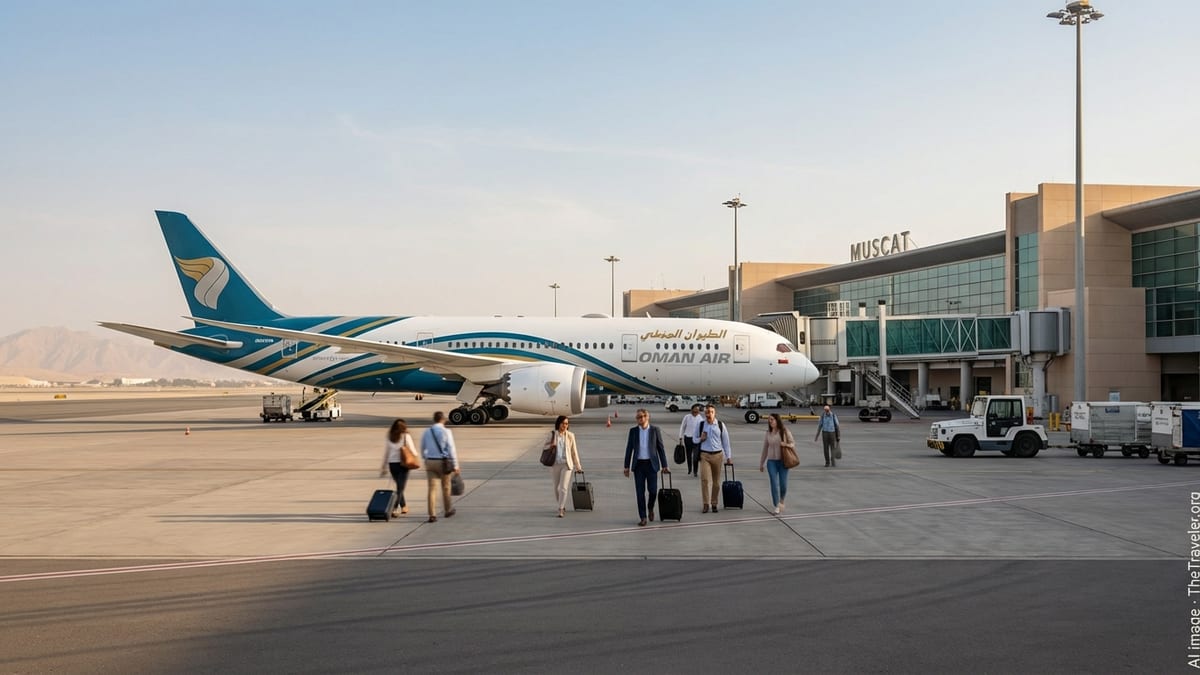
New Direct Link Between Muscat and Tashkent
The new Muscat–Tashkent service, announced in February 2026, will operate twice a week and mark Oman Air’s first scheduled entry into the Uzbek market. The carrier says the route is designed to provide a seamless four hour connection between the Omani capital and Uzbekistan’s largest city, significantly shortening journey times that currently rely on one or more stops via regional hubs.
Flights will depart from Muscat International Airport, the airline’s main hub, and land at Islam Karimov Tashkent International Airport, a rapidly expanding gateway for Central Asia. By offering point to point connectivity, the new service is expected to appeal to both leisure travelers exploring new destinations and corporate passengers seeking more efficient links between the two regions.
The Muscat–Tashkent route is one of several new destinations unveiled by Oman Air since late 2025 as part of a broader network growth strategy. Executives have framed the move as a carefully targeted expansion into high potential markets, balancing new demand with the need for commercially sustainable operations.
Strategic Gateway to Central Asia and the Gulf
Industry analysts say the Muscat–Tashkent flights strengthen Oman’s role as a growing aviation hub on the southern shore of the Gulf, complementing larger regional competitors while carving out a niche in connecting secondary and emerging markets. For travelers from Uzbekistan and neighboring Central Asian states, Muscat offers one stop access to destinations across the Middle East, the Indian subcontinent, East Africa and parts of Europe.
For Uzbekistan, the new connection plugs Tashkent more directly into the Gulf’s economic ecosystem, which includes major financial centers, energy companies and logistics operators. Business travelers will be able to move more quickly between project sites, government meetings and corporate headquarters, potentially accelerating joint ventures in sectors ranging from logistics and manufacturing to renewable energy and technology services.
The route also aligns with Uzbekistan’s ongoing efforts to diversify its international air links beyond traditional partners and attract greater foreign direct investment. With Muscat positioned at the crossroads of Asia, Africa and the Middle East, officials in Tashkent view the service as another step toward turning the Uzbek capital into a regional hub for both passengers and cargo.
Tourism Opportunities Along the Modern Silk Road
Tourism bodies in both countries are highlighting the cultural and historical appeal of a route that in many ways retraces the ancient Silk Road. Oman is promoting its dramatic coastline, desert landscapes, historic forts and rapidly developing resort infrastructure as a new destination for Central Asian travelers seeking winter sun, family holidays and medical or wellness stays.
Uzbekistan, meanwhile, is marketing its famed cities of Samarkand, Bukhara and Khiva, along with Tashkent’s Soviet era and modern architecture, to Gulf residents looking for cooler summer escapes, heritage tourism and city breaks. The new nonstop service cuts overall journey times and removes the need for transits through third countries, factors that tourism officials say can be decisive for short leisure trips.
Tour operators in both Muscat and Tashkent are already exploring package products built around the new flights, including combined city and heritage tours, religious tourism itineraries and adventure travel in mountains and desert regions. The predictable twice weekly schedule is expected to support charter add ons and group travel, particularly during peak holiday periods and major cultural events.
Part of a Wider Aviation and Economic Partnership
The launch of the Muscat–Tashkent flights follows a broader aviation framework agreed between Oman and Uzbekistan in recent years. Transport authorities from both sides have negotiated expanded traffic rights and an open skies style regime at selected airports, paving the way for more frequent services and future routes, including potential links to other Uzbek and Omani cities.
Officials say enhanced air connectivity forms a core pillar of a wider economic relationship that also encompasses energy cooperation, logistics corridors, agricultural trade and investment promotion. Easier travel for business delegations, government officials and technical specialists is expected to support ongoing negotiations on joint projects as both countries seek to diversify their economies beyond hydrocarbons.
In the medium term, aviation planners anticipate that growing passenger demand on the Muscat–Tashkent sector could justify additional frequencies or seasonal increases, as well as cargo services capitalizing on Uzbekistan’s role as a producer of textiles, agricultural goods and manufactured products. For Oman, the link offers another outlet for its own exports and re exports moving through Omani ports and free zones.
Competitive Landscape and Traveler Expectations
Until now, passengers traveling between Muscat and Tashkent have largely relied on connections via other Gulf and regional hubs, often involving long layovers or complex itineraries. Nonstop flights on the route have previously been offered on a limited or seasonal basis by other carriers, but were not sustained. Oman Air’s decision to enter the market on a scheduled basis is seen as a vote of confidence in underlying demand for direct connectivity.
The airline faces competition from rival carriers that offer one stop services between Oman and Uzbekistan, yet analysts note that a four hour nonstop flight is likely to be attractive to time sensitive corporate travelers and families. Pricing will also be closely watched, with early indications suggesting that Oman Air intends to position the route competitively while leveraging the appeal of its hub for onward connections.
For travelers, the new service is expected to bring not only shorter journey times but also greater schedule choice and improved reliability. Aviation observers say that if load factors meet expectations during the initial seasons, the Muscat–Tashkent route could become a permanent fixture in the regional network map and act as a template for further links between the Gulf and other Central Asian destinations.