


More news on this day
A small aircraft was forced to make an emergency landing on the eastbound lanes of US-60 in rural Arizona after a reported in-flight malfunction, coming to rest on the highway shoulder and prompting a joint safety review by federal investigators.
Get the latest news straight to your inbox!
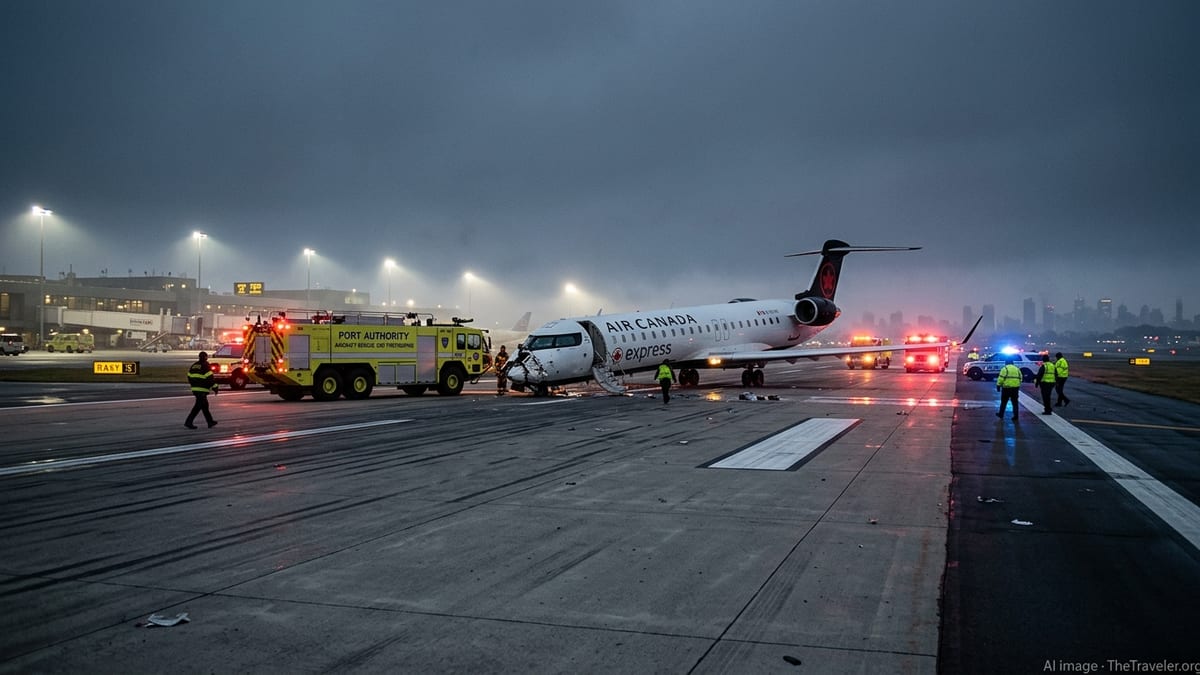
Highway Turned Runway After In-Flight Malfunction
Initial reports from regional media indicate that the single engine aircraft experienced a mechanical issue while flying over a stretch of US-60 commonly used by general aviation traffic transiting between central and eastern Arizona. The pilot reportedly declared an emergency and maneuvered toward the multilane highway, using a relatively straight, lightly developed segment as an improvised runway.
Witness accounts described the aircraft descending at a shallow angle and touching down in the eastbound lanes before rolling to a stop near the highway shoulder. Early information suggests the pilot avoided colliding with vehicles, and traffic in both directions slowed rapidly as drivers reacted to the unexpected aircraft on the roadway.
Local emergency crews responded and assessed the occupants at the scene. Based on publicly available coverage, no serious injuries were reported among those on board or on the ground, although the aircraft sustained visible damage consistent with an off-airport landing. The highway was temporarily restricted while responders secured the aircraft and cleared debris.
The landing added another example to a small but notable list of general aviation events in which pilots in distress have used major roads as emergency landing sites when open fields or nearby airstrips were not viable options. Aviation safety summaries compiled by pilot organizations have documented similar forced landings on highways in western states, often linked to engine problems or fuel system issues.
FAA and NTSB Open Safety Review
According to publicly available federal records, both the Federal Aviation Administration and the National Transportation Safety Board have opened an investigation into the factors that led to the forced landing on US-60. In routine fashion for nonfatal general aviation incidents, the FAA is expected to focus on regulatory compliance, pilot certification, and aircraft airworthiness, while the NTSB examines the sequence of events and underlying technical causes.
Investigators typically begin by interviewing the pilot, reviewing maintenance logs, and collecting data on recent flights. In similar Arizona cases, preliminary updates have cited issues such as partial loss of engine power, fuel contamination, or component failures within the propulsion system. The aircraft type, its age, and any recent maintenance work will be central to the current review.
Publicly available guidance from federal agencies explains that a preliminary report is normally issued within a few weeks of a general aviation incident, offering an early summary of circumstances without assigning probable cause. A more detailed final report, which can take several months or longer, usually outlines the likely technical and human factors along with any contributing environmental conditions.
Safety analysts note that while highway landings attract significant public attention, they remain rare events within a much larger volume of routine general aviation activity. Aggregated accident data prepared by national pilot associations show that most forced landings occur in open fields or sparsely developed terrain rather than on major roads, where the risk of vehicle conflict and roadside obstacles is higher.
General Aviation Activity Along US-60 Corridor
The US-60 corridor in Arizona runs through areas with extensive general aviation operations, linking communities served by small public airports and private airstrips. Public airport directories list multiple non-towered fields and municipal airports within a broad radius of the incident location, reflecting a mix of flight training, recreational flying, and small business aviation.
In this part of the state, pilots often use visual waypoints such as highways and rivers for navigation, particularly under clear weather conditions that are common for much of the year. As a result, major roadways like US-60 may lie directly beneath common VFR routes, positioning them as potential emergency landing options when altitude, terrain, and aircraft performance leave few alternatives.
Past incident summaries compiled by aviation safety groups have referenced forced landings on or near US-60 in connection with loss of engine power, fuel mismanagement, or mechanical malfunctions. In several documented cases, skilled energy management and traffic awareness by pilots were credited with preventing severe injuries despite the challenges of landing on a busy roadway.
Regional growth and higher traffic volumes along certain sections of US-60 could influence how pilots and regulators assess the suitability of highways as last resort landing surfaces. While regulations recognize that pilots may need to use any available area in an emergency, ongoing analysis of traffic density, roadside infrastructure, and nearby airfields may inform future safety outreach and route planning guidance.
Safety Training and Emergency Preparedness Emphasized
Publicly available training materials from flight schools and safety institutes emphasize that managing engine failures and other critical malfunctions is a core part of private pilot instruction. Pilots are trained to maintain aircraft control, establish best glide speed, and quickly identify suitable landing areas, taking into account wind direction, terrain, obstacles, and potential conflicts with people or vehicles on the ground.
Aviation safety reports frequently highlight successful forced landings as evidence that recurrent training and scenario based practice can limit the severity of incidents even when mechanical problems occur. Analyses of similar events across the United States show that when pilots respond promptly, maintain situational awareness, and commit early to a chosen landing site, the likelihood of survivable outcomes increases significantly.
Industry data also indicate that many general aviation powerplant related incidents stem from preventable issues such as improper fuel planning, deferred maintenance, or incomplete preflight checks. The ongoing FAA and NTSB review of the US-60 incident is expected to examine whether any of these factors played a role, and whether additional guidance to owners, operators, or maintenance providers may be warranted.
Any safety recommendations that emerge from the investigation could be reflected in future advisory circulars, educational campaigns, or updated training syllabi for pilots flying in Arizona and elsewhere. Even in the absence of formal changes, the visibility of a highway landing often prompts local flying communities to revisit emergency procedures, verify fuel and maintenance practices, and reinforce decision-making skills for handling rare but high-consequence in-flight malfunctions.
Traffic Disruption and Community Response
The unscheduled appearance of an aircraft on US-60 led to significant but temporary disruption for drivers in the area. Traffic cameras and images shared through news outlets showed vehicles backed up as law enforcement redirected cars around the scene and coordinated with aviation agencies to document the aircraft’s position.
Road closures associated with aviation incidents on highways are typically kept as brief as possible, balancing the need to preserve evidence for investigators with the importance of restoring normal traffic flow. In some previous highway landings in Arizona and neighboring states, aircraft have been towed to nearby lots or disassembled on site to reduce the impact on commuters.
Community reactions shared in local coverage often reflect a mix of relief at the absence of severe injuries and concern about the potential risks posed by low flying aircraft over populated areas and major roads. The US-60 incident may add to ongoing public discussions about the density of flight training operations, route selection near growing suburbs, and the visibility of aviation activity to those on the ground.
As the inquiry by federal investigators proceeds, the forced landing on US-60 is likely to be examined as part of a broader pattern of general aviation events in Arizona, where high year round flying activity intersects with expanding transportation corridors. The findings may offer additional insight into how pilots, regulators, and local communities can continue to reduce risk while accommodating the state’s active small aircraft sector.