

More news on this day
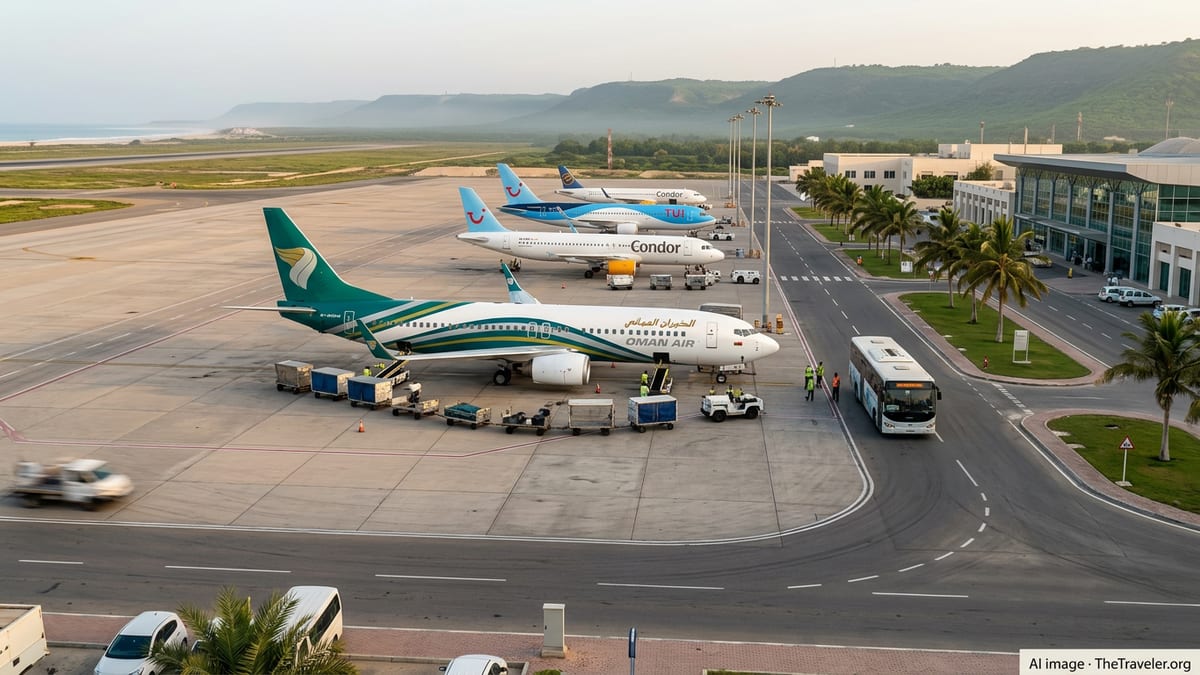
Oman’s fast-growing charter flight market is on track to deliver an estimated RO 30 million boost to tourism revenues in 2026, highlighting how targeted air connectivity and seasonal links to key source markets are becoming a central driver of the Sultanate’s evolving economy.
Get the latest news straight to your inbox!
Charter Growth Builds on Strong 2024–25 Season
Published data on Oman’s recent tourism performance indicate that the current charter boom is built on a sharply improved 2024–25 season, during which charter arrivals grew by about 26 percent and generated an estimated 93,000 visitors. Sector analysis places the associated economic return at roughly 80 million US dollars, reflecting spending on accommodation, local transport and excursions. On this trajectory, tourism and aviation planners are now projecting that charter activity in 2026 alone will contribute around RO 30 million in direct tourism receipts, as more flights and additional markets are brought into the network.
The Dhofar governorate has been a testing ground for this model. Earlier statistics from the 2023–24 season showed that charter flights into Dhofar alone generated more than RO 23 million in tourism revenue, underscoring the high yield associated with concentrated, seasonally timed traffic. These outcomes have strengthened the case for using charters as a precision tool to fill capacity in specific periods, diversify source markets and increase average spending per visitor across the country.
Sector-focused commentary notes that these gains are emerging in parallel with a broader recovery in Oman’s visitor economy, where domestic trips have also risen and hotel investments have accelerated. Within that wider upturn, charters are increasingly viewed as a lever that can be adjusted quickly to test new routes, respond to changing demand and support secondary destinations beyond Muscat.
Russian and European Links Drive New Demand
One of the most visible pillars of the charter surge is the rapid expansion of links from Russia and Europe into Salalah and other gateways. Publicly available information on the first Moscow to Salalah charter operation shows that the seasonal service, running from late December 2025 to early May 2026, is expected to bring several thousand Russian visitors in its inaugural season. Tourism analysts estimate that, factoring in on-the-ground spending, this single route could contribute several million Omani rials in value to the local economy.
At the same time, multiple European carriers have launched or expanded winter charter services to Oman’s southern coast from Italy, Switzerland, Hungary and Belarus. Reports indicate that Italian arrivals, for example, climbed sharply in the first half of 2025, aligning with new Sunday charters linking Rome and Milan to Salalah. For Switzerland, a twice-weekly connection from Zurich to Salalah, operating through May 2026, has been positioned to capture demand for nature-focused winter escapes, feeding higher occupancy across Dhofar’s hotels and resorts.
Sector coverage suggests that these charters are not operating in isolation but as part of coordinated campaigns in source markets, combining tour-operator packages with digital marketing and destination branding. As the 2025–26 winter season converts into bookings and on-the-ground spending, the cumulative impact of Russian and European charter activity is expected to account for a substantial share of the projected RO 30 million tourism boost in 2026.
Oman Air’s Strategy Shifts Toward Direct Tourist Traffic
The role of the national carrier is central to the charter story. Oman Air’s latest performance updates describe an 8 percent increase in passenger numbers in 2025 compared with 2024, alongside a significant restructuring effort aimed at restoring financial balance. Within that transformation, the airline has placed greater emphasis on point-to-point traffic and inbound tourism, with recent data showing that direct passengers accounted for nearly half of total traffic in early 2025.
As part of that shift, Oman Air has introduced its first direct charter service between Moscow and Salalah, with plans to add further Russian cities during 2026 and extend similar models to selected European markets from 2027. Company disclosures project that, taken together, these charter initiatives could attract hundreds of thousands of additional passengers to Salalah by 2030, generating tourism revenues well into the hundreds of millions of rials over the longer term. In the nearer term, the 2026 roster of charters is forecast to underpin the RO 30 million uplift that tourism planners expect to see in that year alone.
This change in emphasis from transfer traffic to targeted direct arrivals supports national efforts to capture more value per visitor. Direct charter passengers typically arrive on pre-arranged packages with higher average spending and a strong focus on local tours, restaurants and attractions. For Oman Air, that means each additional charter season not only fills aircraft seats but also reinforces the airline’s role as a conduit for high-yield tourism, rather than primarily as a regional connector.
Economic Ripple Effects Across the Sultanate
The financial impact of the charter surge extends beyond headline tourism receipts. Economic assessments of recent seasons show that charter operations generate a wide ripple effect, supporting jobs in hospitality, ground handling, transport, retail and cultural attractions. For Dhofar, where charter-driven tourism has already produced tens of millions of rials in seasonal revenue, local businesses report stronger demand for guides, drivers, small guesthouses and food services during the peak khareef and winter periods.
National tourism indicators point to the sector’s growing contribution to Oman’s gross domestic product in recent years, with direct added value surpassing one billion rials by 2023. As charter capacity scales up into 2026, the additional RO 30 million anticipated from charter-related tourism is expected to reinforce that upward trend, both by raising foreign currency earnings and by incentivising further private investment in hotels, integrated tourism complexes and adventure activities.
Infrastructure and public investment plans are evolving in tandem. Information shared at international tourism forums highlights Oman’s push to expand airport capacity, upgrade regional terminals and enhance cruise and overland connectivity. These improvements are designed to accommodate rising numbers of visitors while dispersing them more evenly across the Sultanate’s coastline, mountains and desert regions. Charter flights are seen as a flexible instrument within this strategy, capable of directing demand toward emerging destinations that are newly ready to receive international guests.
Positioning Oman in a Competitive Regional Market
The projected RO 30 million charter-related tourism boost for 2026 also reflects intensifying competition across the Gulf and wider Middle East, where destinations are racing to capture high-spending visitors and diversify away from hydrocarbons. Oman’s approach, according to industry commentary, hinges on leveraging its distinct natural assets, cultural heritage and milder summer climate, rather than replicating mass-market models elsewhere in the region.
Global promotions between 2021 and 2024, which generated close to RO 300 million in estimated returns according to published figures, have already raised the Sultanate’s visibility. The current charter expansion is widely interpreted as a second phase of that strategy, translating awareness into concrete seat capacity and packaged holidays. If the RO 30 million charter contribution materialises in 2026 as expected, it would signal that Oman’s focus on targeted connectivity and sustainable visitor flows is beginning to deliver measurable economic dividends.
Looking ahead, industry observers are watching how quickly Oman can scale charter operations while maintaining service quality, environmental protections and cultural authenticity. With more European and Russian visitors discovering the country through seasonal charters, the balance between growth and sustainability is likely to shape not only the 2026 outcome but also the long-term trajectory of Oman’s tourism economy.