

Delaware may be one of the smallest states in the United States, but for travelers it delivers a surprising mix of historic towns, Atlantic beaches, wildlife-rich marshes and emerging food scenes. A week is enough time to sample all three of its counties, from the mansions and museums around Wilmington to the broad sands of the southern shore. This seven day itinerary is designed as a loop that starts and ends in Wilmington or Philadelphia, balancing driving days with relaxed time on the coast so you can experience Delaware at an easy, unhurried pace.
How to Use This One Week Delaware Itinerary
This itinerary assumes you arrive by car, either driving your own or picking up a rental in Wilmington or at a nearby major airport such as Philadelphia. With short distances and largely flat roads, Delaware is well suited to road tripping. You will rarely drive more than ninety minutes between overnight stops, which keeps days flexible for sightseeing and spontaneous detours.
The plan is structured as a north to south loop: two days around Wilmington and the Brandywine Valley, one day in the state capital Dover and nearby wildlife refuges, three days on the beaches of Sussex County, then a final return north. You can reverse the route or add extra nights in places that appeal, particularly at the coast in high summer when longer stays are popular.
For timing, late spring and early fall are particularly appealing, with milder temperatures and fewer crowds on the shore. Summer brings warm ocean water and a lively atmosphere in the beach towns, though you will want to book accommodations well in advance. Winter is quieter and cooler, but museums, breweries and some state parks remain open, and coastal rates are often significantly lower.
Because opening hours and seasonal services can change, especially at estates, ferries and wildlife refuges, plan to confirm hours shortly before you travel and build light flexibility into your days. Delaware is compact enough that if weather disrupts a beach day you can shift inland to museums, historic sites or outlet shopping without losing much time.
Day 1: Wilmington’s Riverfront, Museums and Urban Core
Begin your week in Delaware’s largest city, Wilmington, which hugs a bend in the Christina River. Recent years have seen the riverfront district transform into a walkable stretch of restaurants, public art and green spaces. After checking into your hotel, a relaxed riverfront stroll is an easy way to shake off travel fatigue and get oriented to the city.
Wilmington has a long association with the Du Pont family, and their philanthropy is visible in cultural institutions across the city. Art lovers can spend several hours at the Delaware Art Museum, which combines American illustration, Pre-Raphaelite paintings and sculpture in a leafy neighborhood setting. Those interested in regional history might visit the Hagley Museum and Library, set on the site of the original DuPont gunpowder mills along the Brandywine, where you can walk among stone ruins, workers’ homes and riverside paths that tell the story of early American industry.
Downtown, Market Street is compact but energetic, with a growing mix of cafes, theaters and small shops housed in renovated brick buildings. In the evening, consider dinner in the LOMA district or back along the riverfront, where seasonal patios offer views of passing kayaks and rowing shells. If your first day falls on a weekday, you may also find minor league baseball or seasonal outdoor concerts nearby, which add to the lively local feel.
Try to keep the first day modest. Wilmington is more about atmosphere, river views and accessible culture than a checklist of must-see monuments. An early night will set you up well for a full second day exploring the gardens and mansions that made the Brandywine Valley famous.
Day 2: Brandywine Valley Estates and Gardens
Dedicate your second day to the Brandywine Valley, the rolling landscape that straddles the Delaware and Pennsylvania border. This region is known for grand estates, formal gardens and art collections, many created by the Du Pont family during the early twentieth century. It offers a striking contrast to the industrial history found at Hagley, with manicured lawns, fountains and long views over the countryside.
One highlight is Nemours Estate in Wilmington, a French style mansion surrounded by formal gardens, long reflecting pools and tree lined avenues. The property periodically closes for the winter season and typically reopens in early spring, so you will want to confirm dates before including it in your plans. When open, the estate is largely self guided, with staff on hand to answer questions, and a full visit can easily fill half a day between house and grounds.
Pair Nemours with time at other nearby attractions in the Brandywine Valley. You might visit a local garden, another Du Pont estate or the Brandywine Museum of Art, which sits in a converted mill along the Brandywine River just across the state line. Drives between these sites are short and scenic, passing stone walls, old farmhouses and wooded hills, especially attractive when leaves are emerging in spring or turning color in autumn.
Return to Wilmington for a relaxed evening. If you have energy left, explore a different corner of the city, perhaps one of the established neighborhoods on the ridge above the riverfront, where you will find more local bars, bakeries and takeout options. Otherwise, treat yourself to a quiet dinner and pack for the move south to Dover and the wildlife rich heart of the state.
Day 3: Dover, Colonial History and Bombay Hook
On day three, drive about an hour south to Dover, Delaware’s small and walkable capital. The historic district around The Green features brick and clapboard buildings, churches and government structures that evoke the state’s colonial and early American past. This is a good place to spend a morning on foot, visiting small museums and touring the state legislature when in session.
Dover’s modern identity is also shaped by Dover Air Force Base and its aviation heritage. Travelers with an interest in military history or aircraft can visit the nearby air mobility museum, where both vintage and modern planes are often on display. Combined with the historic core, this offers a rounded picture of how a small capital has adapted across centuries.
In the afternoon, trade brick streets for tidal marshes at Bombay Hook National Wildlife Refuge, northeast of Dover along Delaware Bay. The refuge protects one of the largest remaining expanses of mid Atlantic tidal salt marsh and covers roughly sixteen thousand acres, much of it wetlands and impoundments that attract migratory birds in large numbers. A twelve mile wildlife drive with several short walking trails and observation towers allows you to explore at your own pace by car and on foot.
Bombay Hook is open daily, generally from about half an hour before sunrise to half an hour after sunset, with a modest per vehicle entrance fee. Conditions change with the seasons, but in spring and fall you may see significant numbers of shorebirds and waterfowl, while summer brings lush marsh grasses and insects, making repellent and long sleeves sensible. Plan to leave enough time to return to Dover before dark or continue directly south to an overnight stop in the small town of Milford, which shortens the next day’s drive to the beaches.
Days 4 and 5: Rehoboth, Lewes and the Delaware Beaches
The middle of your week is devoted to the Atlantic coast. From Dover or Milford, it is around an hour’s drive to the cluster of beach towns centered on Rehoboth Beach, Dewey Beach and Lewes. Rehoboth is known for its broad sandy beach and traditional boardwalk, with family owned arcades, snack stands, small hotels and ocean views. It remains a favorite for families and LGBTQ travelers alike, with an easygoing but lively summer atmosphere.
Plan to spend at least one full day settled in Rehoboth itself. Mornings are ideal for beach time, strolling the boardwalk or renting bikes to ride quiet streets before traffic thickens. The town has built a reputation for good dining and craft beer, so afternoons and evenings can be devoted to browsing boutiques, sampling local brews and lingering over seafood dinners. If you prefer a quieter setting, you can base yourself in a rental or inn a few blocks off the main drag or in neighboring Dewey Beach, which offers its own narrow strip of oceanfront and bayside watersports.
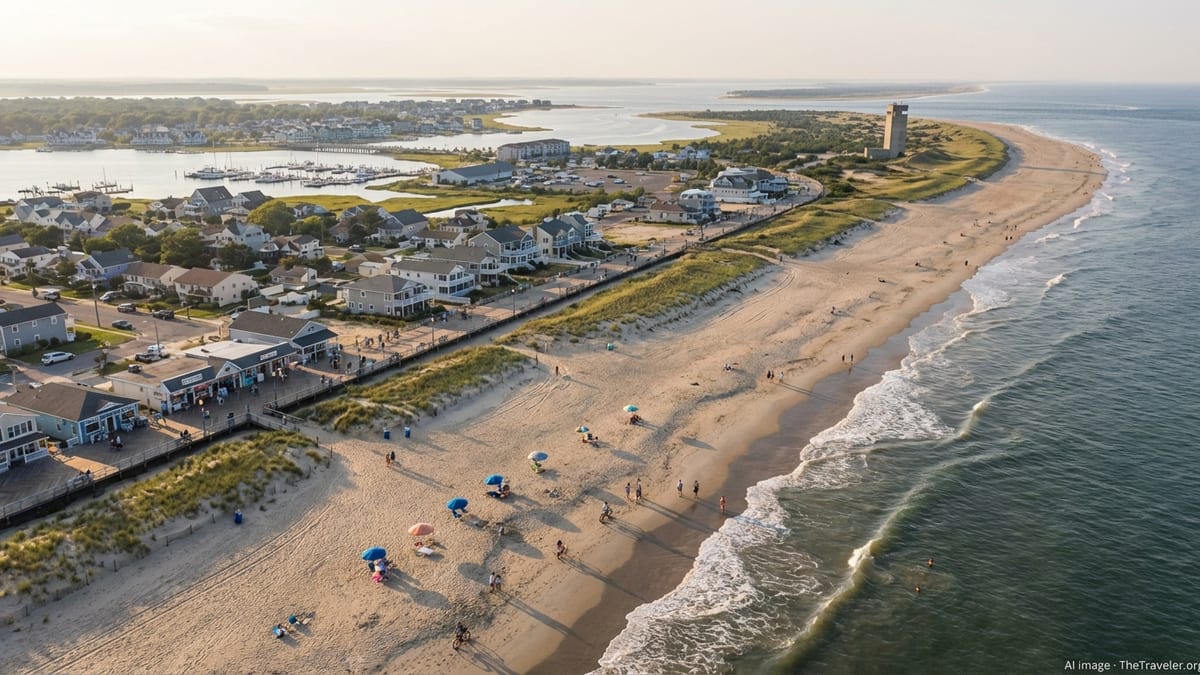
Use your second coastal day to branch out. Historic Lewes lies just north of Rehoboth at the mouth of Delaware Bay and feels markedly different, with a compact downtown of clapboard houses, small museums and a harbor lined with boats. The town presents itself as the first town in the first state, with roots dating back to a seventeenth century Dutch settlement. Many travelers enjoy a leisurely morning exploring Lewes’s streets and waterfront, then walk or bike into adjacent Cape Henlopen State Park, where wide beaches, dunes and a tall World War II era observation tower give broad views over the Atlantic and the bay.
Cape Henlopen State Park offers both day use and camping, with trails for walking and cycling as well as a long fishing pier on the bay side. The beaches here can feel wilder and less commercial than those right in Rehoboth, yet they are only a short drive away. For families, alternating between the livelier boardwalk scene and the more natural state park environment keeps everyone engaged. Coastal weather changes quickly, so keep an eye on local forecasts and use breezier or cloudy periods to explore inland shops, local galleries or the sizable outlet centers along the highway between Lewes and Rehoboth.
Day 6: Delaware Seashore State Park and the Quiet Resorts
On the sixth day, follow the coast road south from Rehoboth through Dewey Beach toward Delaware Seashore State Park. This long, narrow park occupies the strip of sand between the Atlantic Ocean and the bays behind it, centered on the Indian River Inlet bridge. With ocean beaches on one side and calmer bay waters on the other, it is a major destination for swimming, surfing, kayaking, paddleboarding and boating.
Facilities in and near the park include guarded swimming areas in season, parking lots near the beach, marina services and bayside restaurants at the inlet. Campgrounds at the park provide an option for travelers with recreational vehicles or tents who want to sleep close to the surf. The combination of dunes, open sky and the striking modern bridge over the inlet makes this one of the most distinctive stretches of coastline in Delaware.
Continue south later in the day to the so called Quiet Resorts of Bethany Beach and Fenwick Island. Compared with Rehoboth and Dewey, these towns are smaller and generally more residential, with a calmer, family focused atmosphere and fewer late night venues. Boardwalks are more modest, beaches remain inviting, and rentals often cater to multi generational groups seeking a slower pace.
This part of the coast is ideal for a low key evening walk by the water or a sunset watched from the bayside. Depending on your interests, you might also visit the Indian River Life Saving Station, a preserved nineteenth century coastal rescue station near the park, which illustrates the hazards of earlier maritime travel along this stretch of shoreline. Overnight in Bethany Beach or nearby puts you in a good position for an easy drive north inland on your final day.
Day 7: Inland Byways and Return to Wilmington
The final day of your week in Delaware is a chance to see a quieter, more rural side of the state as you return north. From Bethany or Fenwick, you can swing slightly inland toward the small city of Georgetown or the town of Milton, passing fields, small churches and clusters of historic homes. This central corridor reveals how much of Delaware’s land area is still devoted to agriculture and small communities rather than dense development.
From there, follow US routes or state highways back toward Dover and Wilmington. If you did not visit a particular site earlier in the week, such as a museum in Dover or another stop in the Brandywine Valley, this is the moment to fit it in. Alternatively, you can simply time your drive to match your departure schedule, stopping for one last meal at a local diner or seafood restaurant along the way.
If you have an extra half day, consider detouring to another regional highlight such as a botanic garden or a small brewery or winery, several of which are scattered across Kent and Sussex counties. These smaller stops are well suited to a leisurely final afternoon as you reflect on the week. By evening, you will be back in Wilmington or at your departure airport, having sampled much of what this compact state has to offer.
Keep in mind that Delaware’s roads are relatively straightforward, but summer weekends can bring heavier traffic near the beaches, especially on the main route between the coast and Dover. Building in buffer time on your final day helps avoid unnecessary stress and keeps the tone of your trip relaxed right through to the end.
Practical Tips for Planning Your Delaware Week
When planning lodging, think in terms of two or three bases rather than changing hotels every night. Many travelers find it convenient to spend two nights in Wilmington or nearby Brandywine Valley, three nights around Rehoboth or Lewes for the beach portion, and one or two nights that float between Dover, Milford and the Quiet Resorts depending on personal interests. This minimizes packing and unpacking while still giving you access to each region.
Advance booking matters most for peak summer stays along the coast, as well as for festival weekends, holiday periods and some special events near Dover’s racetrack and air base. During shoulder seasons, you may find more flexibility and occasional midweek discounts, particularly in early May or late September when water is still reasonably warm but schools are in session in many states.
Delaware’s weather can change quickly, especially near the ocean and across the open marshes of the bay shore. Layers, a light rain jacket, sun protection and insect repellent are all worth packing regardless of season. Comfortable walking shoes are essential for exploring historic districts, boardwalks and state parks. For wildlife areas like Bombay Hook and the coastal refuges, binoculars and a camera with a zoom lens will greatly enhance your experience.
For driving, remember that many major roads are toll free, but if you venture briefly into neighboring states you may encounter toll points. Fuel and services are generally available at regular intervals on main routes, though they thin out slightly in the more rural corners of Kent and Sussex counties. Mobile coverage is usually adequate but can be patchy in a few low lying or heavily forested areas, so it is sensible to download maps in advance.
The Takeaway
Spending one week in Delaware allows you to connect a series of small scale experiences into a coherent and rewarding journey. Instead of a single marquee attraction, you will discover a state defined by layers of history, accessible nature and an understated but genuine hospitality. From the Du Pont estates and museum collections of the Brandywine Valley to the tidal marshes of Bombay Hook and the boardwalks of Rehoboth and Bethany, each day offers a distinct setting and mood.
This itinerary balances historic towns, wildlife refuges and Atlantic beaches while keeping driving times short and daily schedules flexible. It can be adapted for families with children, couples looking for a quiet coastal retreat or solo travelers interested in photography and regional culture. With thoughtful planning around seasons, opening hours and lodging, a Delaware road trip feels relaxed rather than rushed.
By the time you return to Wilmington at the end of the week, you will have crossed all three of Delaware’s counties, moved between river, bay and ocean, and likely gained a new appreciation for how much variety fits into this small first state. The memories that linger are often of simple pleasures: sunrise over the dunes, the call of shorebirds in the marsh, a plate of fresh seafood on a warm evening and the brick lined streets of compact historic districts glowing in late light.
FAQ
Q1. When is the best time of year to spend a week in Delaware?
Late spring and early fall are often ideal, offering mild temperatures, fewer crowds on the beaches and pleasant conditions for both city sightseeing and outdoor activities.
Q2. How many nights should I spend at the Delaware beaches within a one week trip?
Spending three nights at or near Rehoboth, Lewes or the Quiet Resorts gives enough time for several beach days plus visits to nearby state parks and historic towns.
Q3. Do I need a car for this Delaware itinerary?
A car is strongly recommended, as public transit between Wilmington, Dover and the beach towns is limited, and many wildlife refuges and state parks are best reached by driving.
Q4. Are Delaware’s beaches family friendly?
Yes. Rehoboth, Bethany and Fenwick Island all have broad sandy beaches and a family focused atmosphere, with lifeguards in season and plenty of casual dining options.
Q5. Is it possible to visit Bombay Hook National Wildlife Refuge without much hiking?
Yes. The wildlife drive is a loop that you can explore primarily by car, with optional short, flat walking trails and observation towers for those who want to get out on foot.
Q6. How far is Wilmington from the main coastal towns?
Driving from Wilmington to Rehoboth Beach typically takes around two hours in light traffic, though travel times can increase on peak summer weekends or holiday periods.
Q7. Are reservations required for places like Nemours Estate and major museums?
Museums often accept walk in visitors, but for popular estates and special exhibitions it is wise to check current policies and consider advance tickets or timed entry when offered.
Q8. Can I camp during this one week Delaware trip?
Yes. Campgrounds at Cape Henlopen State Park and Delaware Seashore State Park offer options for tent and RV travelers who want to stay close to the beaches and natural areas.
Q9. What should I pack for a week that includes both cities and beaches?
Pack casual layers, beachwear, a light jacket, comfortable walking shoes, sun protection, insect repellent and a small daypack suitable for both urban walks and park visits.
Q10. Is Delaware a good destination for travelers interested in birdwatching and nature?
Delaware is excellent for birdwatching, especially around Delaware Bay and coastal refuges such as Bombay Hook, where seasonal migrations bring large numbers of shorebirds and waterfowl.