

Saudi Arabia is no longer a blank space on the tourism map. Since opening more broadly to international visitors in 2019, the kingdom has been investing heavily in infrastructure, heritage restoration, and high profile events, all while preserving vast stretches of desert and age old oasis towns. A weeklong trip is just enough time to sample its modern capital, atmospheric Red Sea coast, and the monumental rock carved tombs of AlUla, creating an itinerary that shifts daily between neon lit boulevards, canyon like old quarters, and silent sandstone formations glowing at sunset.
Before You Go: Practical Planning for a Week in Saudi Arabia
Saudi Arabia has moved quickly to simplify access for many nationalities with an online tourist visa system, though rules can shift, and some countries now face tighter limits on multiple entry visas. Travelers from eligible countries typically apply for an eVisa before arrival, valid for tourism, events, and visiting friends and family, while others may still need to visit a consulate or use an approved visa service. Because regulations are evolving, it is important to check the latest requirements with official Saudi government sources, including any country specific restrictions on stay length or multiple entry use, before locking in flights and hotels.
Entry rules sit alongside social norms that are changing but still conservative compared with many destinations. Alcohol is banned, public displays of affection are frowned upon, and visitors are expected to dress modestly, with shoulders and knees covered in public. Women are no longer legally required to wear an abaya in major cities, and you will see a range of styles in Riyadh and Jeddah, but loose, non transparent clothing is still the safest choice. The country’s rapid push to attract international tourists has also led to more mixed gender public spaces, cafes, and events, particularly in new entertainment districts.
A weeklong itinerary in Saudi Arabia usually involves internal flights, as distances are large and high speed rail is still limited to specific corridors. Riyadh, Jeddah, and AlUla are linked by frequent domestic services, and the small AlUla airport connects directly with Riyadh and Jeddah, making a triangle route efficient. The tourism high season runs from roughly November to March, when daytime temperatures are more manageable, especially in the interior deserts. Summer can be extremely hot away from coastal areas, so outdoor sites like Hegra and Diriyah are best scheduled early in the morning or late in the afternoon if you visit outside the cooler months.
For first time visitors, booking at least some guided tours is sensible, particularly in AlUla where access to key archaeological zones such as Hegra is controlled and often requires timed tickets or official excursions. In cities, ride hailing apps cover most areas and are generally affordable, though older neighborhoods can be more easily explored on foot. Credit cards are widely accepted, but it is worth carrying some cash for small purchases in traditional markets, local eateries, and rural stops.
Day 1: Riyadh’s New Skylines and Old Heart
Most international itineraries start in Riyadh, a sprawling capital that shows the country’s transformation more starkly than anywhere else. Modern Riyadh is a city of glass towers, multilane highways, and purpose built entertainment zones, but under that surface lies the older Najdi core of mud brick fortifications and compact streets that once housed the earliest Saudi state. On your first day, focus on orienting yourself between these two faces, beginning with a panoramic view from a skyscraper and ending in one of the central traditional markets.
Spend the morning in the modern business districts, where landmark towers rise above wide avenues. Observing the city from an observation deck or high floor cafe gives a sense of its scale and the desert plateau that surrounds it on all sides. From this vantage point, the grid of newer neighborhoods and the silhouettes of emerging megaprojects underscore how central Riyadh has become to Vision 2030, the government’s roadmap to diversify the economy beyond oil and attract more visitors and residents.
In the afternoon, make your way to the historic core. Here, low rise buildings in earthy tones replace reflective glass, and you can stroll past restored mud brick walls and traditional wooden doors. The area around the main fortress and nearby heritage museums offers insight into the unification of the kingdom and the rise of the House of Saud. Exhibits typically cover everything from early tribal alliances to the discovery of oil and the social changes of the twentieth century, contextualizing the contemporary city you saw in the morning.
As evening approaches, immerse yourself in the sensory overload of a Riyadh souq. Under strings of lights and corrugated metal roofs, stalls spill over with spices, incense, textiles, and gold jewelry. This is an excellent place to practice gentle bargaining, sample local sweets, and observe daily life as families shop and socialize. Even with new malls and entertainment complexes spreading across the city, these markets remain essential social spaces, and they provide a far more atmospheric introduction to the capital than a generic shopping center.
Day 2: Diriyah, At Turaif, and the Edge of the Plateau
Riyadh’s most evocative historic site lies just northwest of the modern city in Diriyah, once the capital of the first Saudi state. The At Turaif district, a UNESCO World Heritage Site, preserves an entire quarter of Najdi mud brick architecture set along a palm lined wadi. Restored palaces, defensive walls, and narrow lanes tell the story of an inland desert power that rose in the eighteenth century, only to be toppled by Ottoman forces in the early nineteenth century. Today, careful reconstruction and a wide cultural district around it have turned Diriyah into a showcase of heritage led regeneration.
Plan to spend several hours walking through At Turaif’s interconnected courtyards and alleyways. Informational panels and small museums explain the layout of traditional palaces and how local building techniques used mud brick and palm trunks to insulate against extreme temperatures. Elevated walkways and viewing platforms allow you to look out over the wadi and surrounding date palms, underscoring why controlling this oasis mattered strategically. Because temperatures can be intense, many visitors time their visit for late afternoon, when the sun’s angle enhances the warm hues of the architecture.
In the evening, consider heading farther out of the city to experience the stark geology of the surrounding plateau. One of the region’s most photogenic viewpoints lies along the edge of the escarpment west of Riyadh, where the flat desert abruptly drops into a rugged canyon landscape. Local operators offer half day excursions that typically depart in the afternoon, driving across gravel plains to viewpoints where cliffs fall away in sheer drops and the horizon seems endless. As the sun sinks, the rock formations shift through shades of amber and purple, and the temperature drops just enough to make lingering outdoors comfortable.
After nightfall, many tours include a traditional style camp setup on the plateau, with carpets spread on the sand, simple grilled meals, and strong, cardamom scented Arabic coffee served in small cups. This is a good opportunity to learn more about Bedouin traditions, from the central place of hospitality to the use of poetry and song in gatherings. On clear nights, the stars above the plateau are exceptionally bright, and it is easy to imagine caravans navigating by them long before modern highways and city lights.
Day 3: Jeddah and the Historic Lanes of Al Balad
On day three, fly west from Riyadh to Jeddah, the country’s historic Red Sea port and still its main maritime gateway. The change in atmosphere is immediate. Humid sea air, palm lined corniches, and a more relaxed coastal tempo contrast with the high desert feel of the capital. Jeddah has grown into a major contemporary city with waterfront promenades and modern art installations, but its most compelling area remains Al Balad, the old town whose coral stone houses and wooden balconies once welcomed pilgrims en route to the holy cities inland.
Al Balad is recognized for its distinctive architectural heritage and has undergone significant restoration, with dozens of historic houses stabilized and repurposed as cultural centers, boutique guesthouses, and galleries. Walking through its narrow lanes, you will see buildings rising several stories high, supported by timber beams and adorned with richly carved rawashin, the projecting wooden lattice windows that once allowed women to watch street life without being seen. In recent years, restoration projects have aimed to preserve this urban fabric while introducing sensitive lighting and public spaces that make it more accessible to visitors.
Allow time to explore specific heritage houses that are open to the public. Interiors often feature high ceilings, plaster decoration, and exhibits on the families who lived there and the trade routes that tied Jeddah to ports from East Africa to India. Rooftop terraces provide views over Al Balad’s rooftops, minarets, and the modern city beyond, illustrating how the old port has been enveloped by new construction. In the late afternoon, as the call to prayer drifts across the neighborhood and the sun filters through wooden screens, the district feels particularly atmospheric.
In the evening, make your way to Jeddah’s waterfront. The city has invested in long seaside promenades with landscaped parks, cafes, and public art. Families gather here to stroll and picnic, and food trucks often set up in parking areas. Although most beach clubs on the Red Sea coast still require some planning and, in many cases, prior booking, the public corniche remains an easy way to experience the maritime side of the city, watch the sun set over the water, and sample grilled seafood from local restaurants.
Day 4: Red Sea Leisure or Coastal Culture
Your fourth day can be tailored depending on whether you prefer time by the water, more cultural exploration, or a mix of both. Jeddah serves as a jumping off point for boat trips onto the Red Sea, where coral reefs lie within reach of day excursions. Operators arrange snorkeling or diving trips to offshore reefs, typically including equipment, instruction, and simple meals on board. Even for non divers, a day at sea showcases the startling clarity of the water and the bright colors of fish and coral beneath the surface.
Those more interested in staying on land can spend additional time in Jeddah’s growing contemporary cultural scene. City authorities and private foundations have supported public sculptures along the corniche, temporary exhibitions, and festivals that align with the broader push under Vision 2030 to brand the country as a cultural and entertainment destination. Depending on timing, you might encounter seasonal events, from film screenings to music performances, although it is wise to confirm what is on the calendar during your visit.
Food is another highlight of a day in Jeddah. As a historic crossroads, the city’s cuisine blends influences from the Hejaz region, the wider Arabian Peninsula, and the Indian Ocean. Simple eateries serve fragrant rice dishes topped with fish or lamb, while more experimental restaurants reinterpret traditional recipes. Cafes and dessert shops offer modern takes on regional flavors, and many stay open late into the night. Exploring these venues gives a taste of a more cosmopolitan Saudi Arabia, particularly popular with younger residents.
As you prepare for the next day’s early departure to the northwest, take advantage of Jeddah’s modern infrastructure to stock up on any supplies you might want in more remote AlUla, such as snacks, sun protection, or extra layers for cooler desert evenings. Domestic flights to AlUla are typically shorter than two hours, but departures can be early, so staying near the airport or organizing reliable transport for the morning is advisable.
Day 5: Arrival in AlUla and First Glimpse of the Desert
The flight from Jeddah to AlUla traces a route over arid mountains and desert plains before descending into a wide valley framed by sandstone formations. AlUla has emerged in just a few years as one of Saudi Arabia’s flagship tourism destinations, combining a spectacular natural setting with a cluster of archaeological sites that chart millennia of human occupation. Upon arrival, you will notice the pace of life slowing compared with Riyadh and Jeddah, and the compact town center is easy to navigate by car or organized transfers.
After checking in, start with a gentle afternoon of orientation. A walk through AlUla Old Town, a dense cluster of mud brick houses and narrow alleyways on a small ridge, provides an overview of how the oasis town functioned before modern expansion. Many of the structures have been stabilized or partially restored, with interpretive signage explaining the traditional layout of homes, mosques, and marketplaces. Look out over the palm groves and modern roads beyond, and it becomes clear why AlUla was a strategic stop on ancient incense and pilgrimage routes crossing the peninsula.
As temperatures ease toward evening, head out toward some of the nearby rock formations that do not require extensive driving or guided access. The desert around AlUla is punctuated by freestanding sandstone buttes and narrow canyons shaped by wind and occasional flash floods. Simple viewpoints allow you to watch as the rocks shift from ochre to deep red in the setting sun. Many visitors time a sunset stop at one of these formations before returning to town or to a desert resort where outdoor seating and fire pits extend the evening under a brilliant night sky.
Dinner in AlUla often takes place in open air settings, from casual courtyard restaurants in the Old Town to more polished dining rooms at resorts built to blend into the rocky landscape. The tourism push has encouraged a mix of local and international chefs to experiment with menus, so you may find everything from camel meat dishes and stuffed vegetables to contemporary Middle Eastern fusion. Regardless of style, meals usually end with small cups of Arabic coffee and dates, echoing a hospitality ritual that stretches back centuries.
Day 6: Hegra, Rock Art, and Desert Vistas
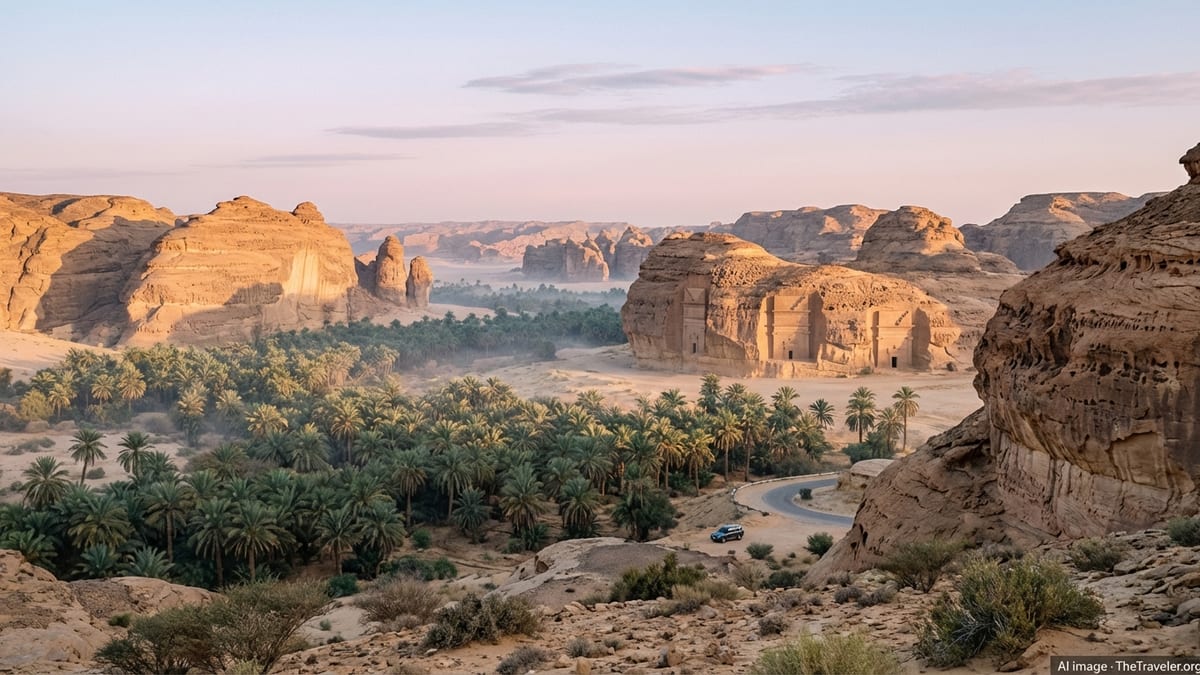
The sixth day is the centerpiece of many weeklong Saudi itineraries: a full exploration of AlUla’s surrounding heritage sites. Chief among them is Hegra, also known as Al Hijr or Madain Salih, the country’s first UNESCO World Heritage Site. Once a major city of the Nabataean civilization that also built Petra in present day Jordan, Hegra today preserves more than a hundred monumental tombs carved directly into isolated sandstone outcrops. Their facades, blending local styles with influences from the Mediterranean and Near East, rise above the desert floor with crisp lines that testify to the skill of their builders.
Access to Hegra is controlled to protect its delicate environment, and visits typically involve joining an organized tour departing from a central visitor area. These excursions move between clusters of tombs by bus or designated vehicles, with guides explaining the symbolism of the carved eagles, urns, and stepped crowns that decorate the facades. You will likely visit the striking standalone tomb known for its sheer scale and unfinished lower section, as well as groups of tombs clustered around rocky hills where inscriptions in ancient scripts survive on the stone surfaces.
After Hegra, many itineraries continue to other nearby sites that reveal different layers of AlUla’s past. In one canyon, hundreds of inscriptions and petroglyphs cover the rock walls, recording names, prayers, and everyday concerns of travelers and inhabitants in scripts that span centuries. Elsewhere, the remains of later forts and farms highlight how control of water through wells and channels allowed communities to flourish in the otherwise harsh environment. Specialized tours focus on particular themes, from geology and astronomy to Nabataean agriculture and traditional storytelling.
Toward the end of the day, head to a scenic lookout or remote rock field that showcases the region’s wild beauty without heavy infrastructure. Certain areas, characterized by tall, slender rock columns and open horizons, have become popular spots for stargazing and night photography. With minimal light pollution, the Milky Way can be visible on clear nights, and guides sometimes set up telescopes or explain constellations used historically for navigation. Standing here at the end of a long day of ruins and rock art, you feel both the vastness of the landscape and the long human presence that has moved through it.
Day 7: Return to the City and Contemporary Saudi Culture
On your final day, fly back to Riyadh or Jeddah depending on onward connections, using the remaining hours to explore aspects of contemporary Saudi life that you may have missed at the start. If you return to Riyadh, this might mean visiting one of the new entertainment districts on the city’s outskirts, where theme parks, arenas, and large scale events attract regional and international audiences. Recent years have seen the launch of festivals celebrating light art, music, and comedy, signaling a deliberate shift toward more public cultural offerings, even as debates continue about how these developments intersect with longstanding social and political constraints.
Alternatively, you might spend your last afternoon in one of Riyadh’s newer museums or galleries that focus on modern Saudi art and design. These institutions often combine exhibitions with cafes and concept stores, creating spaces where students, families, and visitors mix. Exhibits trace how artists grapple with themes such as urbanization, changing gender roles, and the relationship between heritage and futurist mega projects. For travelers, they provide a counterpoint to the ancient sites of AlUla and the traditional architecture of Diriyah and Jeddah’s old town.
In Jeddah, an extra day could be devoted to more time on the corniche or a return visit to Al Balad to linger in its quieter corners. Sitting in a restored courtyard shaded by wooden screens, listening to the murmur of a nearby mosque and the distant sound of traffic, you feel how old and new Saudi Arabia coexist, sometimes awkwardly but often in unexpectedly harmonious ways. Small details, such as teenagers photographing historic doorways for social media or elderly residents chatting in alleyways they have known since childhood, bring the statistics about tourism growth and development down to a human scale.
As you prepare to depart, it is worth reflecting on how much of the country remains off most tourists’ itineraries. In one week, you will have moved between three very different regions, encountered landscapes as varied as sea, plateau, and canyoned desert, and walked streets that tell stories from Nabataean caravan merchants to twenty first century festival goers. The experience is less about ticking off iconic sights and more about witnessing a society in motion, its heritage sites newly foregrounded and its future still being built.
The Takeaway
A seven day journey through Saudi Arabia that links Riyadh, Jeddah, and AlUla offers a concentrated look at a country reshaping its relationship with the outside world. In the capital, you watch skyscrapers and heritage districts share the same skyline, while in Diriyah and At Turaif, restored mud brick palaces speak to early statehood and regional power. Jeddah balances a centuries old role as a gateway to the holy cities with a modern coastal lifestyle, and AlUla’s silent tombs and rock art anchor the itinerary in deep time, reminding visitors that caravan routes and oasis towns thrived here long before oil and new highways.
Traveling between these places over a week reveals patterns that might be easy to miss in a single destination. Vision 2030’s imprint shows up in major entertainment projects, festival programming, and increased international flight connections, while at the same time, local communities negotiate how to share their spaces with a growing number of visitors. Responsible travelers can support this transition by learning basic cultural etiquette, choosing locally rooted experiences when possible, and approaching both ancient ruins and modern venues with curiosity rather than assumptions.
Saudi Arabia is not a simple destination. Its political and social landscape remains contested, and many travelers arrive with concerns or questions shaped by international headlines. Spending time on the ground does not erase these complexities, but it does offer a more layered view, in which desert silence, bustling souqs, contemporary art, and family outings to new parks all have their place. For those willing to engage with that complexity, a one week itinerary through cities, desert landscapes, and heritage sites delivers moments of beauty and insight that linger long after the trip has ended.
FAQ
Q1. Do I need a tourist visa to visit Saudi Arabia for one week?
Most travelers require a visa to enter Saudi Arabia, and many nationalities can apply online for a tourist eVisa before arrival. However, eligibility and conditions vary by country and have changed over time, so you should always verify the latest requirements with official Saudi government sources or a trusted visa provider before booking your trip.
Q2. Is Saudi Arabia safe for independent travelers, including solo women?
Major cities and key tourist areas such as Riyadh, Jeddah, and AlUla are generally considered safe, with a visible security presence and low rates of street crime compared with many large cities worldwide. Solo women do travel independently, particularly in urban areas, but should dress modestly, be mindful of local norms, and use reputable transport and accommodation providers.
Q3. What is the best time of year for this one week itinerary?
The most comfortable period for a week that includes desert sites like AlUla is roughly from November to March, when daytime temperatures are milder and evenings can even be cool. Summer months bring intense heat, especially inland, which can make midday sightseeing challenging and may limit time spent outdoors.
Q4. How should I dress when visiting cities and heritage sites?
Both men and women should plan on modest, loose fitting clothing that covers shoulders and knees in public, including at heritage sites, malls, and restaurants. Women are not always required to wear an abaya in major cities, but many visitors choose long tunics, maxi dresses, or abayas over regular clothes to feel more comfortable and respectful, especially in traditional neighborhoods and smaller towns.
Q5. Can I visit Hegra and other AlUla sites on my own?
Access to Hegra and several key heritage areas around AlUla is regulated to protect the landscape, so visits usually operate through timed tours or official experience packages. You cannot simply drive up to many of the tomb clusters on your own, but it is straightforward to book guided excursions that include transport, guides, and any necessary permits as part of the arrangement.
Q6. How do I get between Riyadh, Jeddah, and AlUla in one week?
Given the large distances involved, the most efficient option for a one week trip is to use domestic flights, which link Riyadh and Jeddah with AlUla’s small airport. Flight times are typically under two hours between these cities, allowing you to maximize your time at each destination rather than spending long hours overland.
Q7. Is alcohol available in Saudi Arabia?
Alcohol is banned throughout Saudi Arabia, and visitors should not expect to find it in hotels, restaurants, or shops. Many venues instead focus on creative non alcoholic drinks, from specialty coffee and tea to fresh juices and mocktails, and it is important to respect local laws by not attempting to bring alcohol into the country.
Q8. How expensive is a one week itinerary like this?
Costs can vary widely depending on accommodation choices, guided experiences, and flight prices, but visitors generally find that cities offer a range of midrange and higher end options, while AlUla skews more toward upscale desert resorts and curated experiences. Budget conscious travelers can keep expenses lower by choosing simpler hotels, eating at local restaurants, and prioritizing a few key tours rather than a packed schedule of paid activities.
Q9. Are there any cultural sensitivities I should be aware of when taking photos?
It is important to avoid photographing people, especially women and families, without explicit permission, and to be cautious near government buildings, security installations, and some religious sites where photography may be restricted. In heritage areas and markets, asking politely before taking close up shots of vendors or craftsmen is appreciated and often leads to more relaxed, natural images.
Q10. Can I extend this one week itinerary to include other regions?
Yes, if you have more time, you could add destinations such as coastal areas farther north or south of Jeddah, additional oases and mountain regions, or even emerging megaprojects that are beginning to welcome visitors. Given the country’s size, it is usually best to concentrate on one or two additional regions rather than trying to see everything, using domestic flights to bridge the longest distances efficiently.