

Orkos Beach on the Greek island of Naxos has a quiet confidence that appeals to travelers who prefer wild beauty over polished resorts. Tucked between the better known sands of Plaka and Mikri Vigla, this stretch of coves and dunes offers a mix of wind-whipped drama, turquoise water and low-key rooms scattered across the hillside.
Before you commit to basing your holiday here, it helps to understand what Orkos is and what it is not: a semi-untamed beach with minimal facilities, strong winds for much of the summer and a distinct sense of escape.
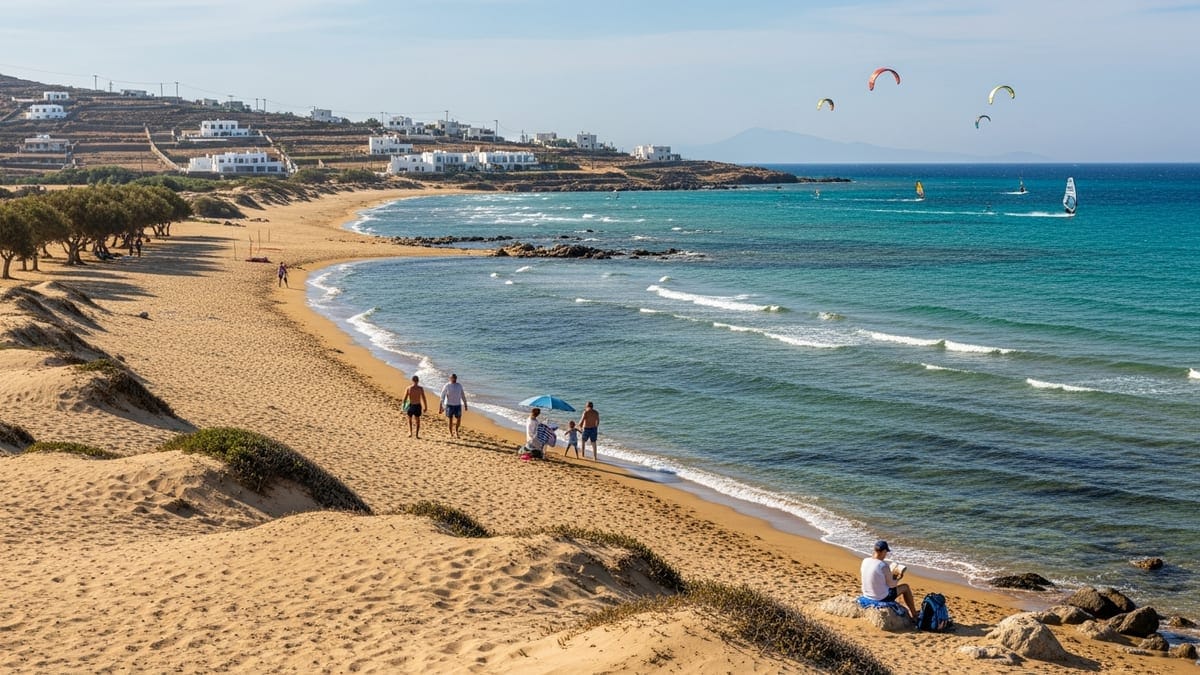
Getting Your Bearings: Where Orkos Beach Is and What It Looks Like
Orkos Beach lies on the southwest coast of Naxos, roughly 10 to 11 kilometers from Naxos Town by road. It occupies the shoreline between the long strand of Plaka to the north and the kite mecca of Mikri Vigla to the south.
The area is often referred to simply as Orkos, a small coastal settlement spread across low hills, fields and dunes with a scattering of villas, studios and small family hotels.
Physically, the beach is not one uniform strip but a chain of sandy coves broken up by rocky outcrops. One main section of sand runs for about 700 meters, fringed with tamarisk trees that offer sparse natural shade.
South of this, smaller coves of thick, golden sand create a series of more private pockets, some barely 100 meters long. The backdrop is a low hillside dotted with shrubs and a few houses, rather than the dense hotel front that characterizes busier Cycladic resorts.
The water here is textbook Aegean, shifting between turquoise and deep blue depending on the light and wind. On calm days it is strikingly clear, with visibility that tempts even casual swimmers to bring a mask and snorkel.
On windy days the surface can be rippled or choppy, but the seabed close to shore remains mostly sandy with a gentle gradient that suits confident swimmers and older children. There are rocky patches near the headlands, which add visual drama and some snorkeling interest but are easy to avoid once you have oriented yourself.
What you will not find at Orkos is a built-up promenade or a concentrated beach club scene. It feels more like countryside meeting the sea. Roads above the beach are simple asphalt or dirt, with cars parked informally along the shoulders. At sunset, the whole bay faces west toward the open sea, giving a broad, uncluttered view that underscores how relatively undeveloped this coastline still is.
How to Get to Orkos Beach and Move Around
Most visitors reach Orkos via Naxos Town, the island’s main port and hub. By car, the fastest way follows the modern asphalt road that runs past the airport and continues southwest along the coast.
From the center of town to the Orkos area, the drive typically takes around 15 to 20 minutes, depending on traffic and how directly your accommodation is accessed. Signage along the way points toward Plaka, Orkos and Mikri Vigla, and even first-time drivers usually find the route straightforward.
Without a car, you can depend on the island’s KTEL bus network. Buses on the line serving Mikri Vigla also serve the general area around Orkos, though the stop may be closer to Mikri Vigla itself, leaving a short walk depending on where you are staying.
In summer, this service runs several times a day, connecting the southwest beaches with Naxos Town. Schedules can change from year to year and from early season to high season, so it is important to check them shortly before you travel and again once you arrive.
Taxis are available from Naxos Town, the port and the airport. Travel time by taxi to Orkos is similar to driving yourself, generally under 20 minutes in normal conditions. Fares are usually calculated per ride rather than per person, and costs increase if a driver has to come out from town to collect you at the beach.
Pre-booking or having a number to call is advisable, as taxis do not usually wait around at Orkos in the way they might at a major ferry port or central hotel district.
Once based in Orkos, you can easily explore neighboring beaches on foot if the weather cooperates. Plaka stretches north, while Mikri Vigla lies just to the south; both are reachable by walking along the coastline if you are comfortable on uneven sand and occasional rocky patches.
This simple mobility is one of the area’s strengths: you can begin your morning in a quiet cove, stroll to a livelier section for lunch, then meander back to your own bit of shoreline by afternoon.
Beach Experience: Wind, Water and Who Orkos Suits
Orkos is shaped by the Meltemi, the strong seasonal north wind that dominates much of the Cycladic summer from roughly late May through September. On many days, especially in July and August, you should expect steady, sometimes quite powerful wind coming down the coast.
This creates ideal conditions for wind sports and gives a refreshing edge to the heat, but it also defines who will enjoy long days on the sand here and who may prefer a more sheltered bay.
For swimmers, the water at Orkos is typically clean and inviting, with good clarity and a sandy bottom across large sections of the main beach. Entry is gradual, and once you have walked a few steps out, you can usually swim without worrying about sharp rocks underfoot.
On calm or moderately windy days, the sea is fine for relaxed dips and short swims along the shore. On days when the Meltemi is at full strength, waves can become more insistent, and weaker swimmers should be cautious, especially if there is active kitesurfing in the area.
Families often choose Orkos for its low-key feel but should arrive with realistic expectations. There are no lifeguards stationed on the beach and no formal first aid points along the sand. There are also no large playgrounds or kid-focused beach clubs.
The appeal for families lies instead in the sense of space, the ability to find a relatively secluded cove even in high season and the shallow entry in many spots. Parents of very small children should bring sturdy sun protection, freshwater for rinsing sand and any beach toys or shade structures they might need.
For couples and solo travelers, Orkos can feel wonderfully removed from the island’s busier corners. The wind masks a lot of ambient noise, the scattered layout of accommodation prevents any one area from feeling crowded and the mix of coves allows you to choose how sociable you want to be on any given day.
If your idea of a perfect beach day is a rented sunbed, constant bar service and a background soundtrack, Orkos may feel too bare-bones. If you favor reading, swimming and the occasional stroll to a nearby taverna, it becomes very appealing.
Facilities, Food and What You Need to Bring
Compared with more developed Cycladic beaches, Orkos remains sparsely serviced. You will not find long rows of rental sunbeds and umbrellas lining the sand, nor a continuous run of beach bars providing food and drink directly to your lounger. This relative absence of infrastructure is central to the beach’s character, but it also places more responsibility on visitors to plan ahead.
On the sand itself, natural shade comes mostly from scattered trees along the back of the main section and from the cliffs around some coves. Many regular visitors bring their own sun umbrellas, lightweight beach tents or pop-up shelters, and these can make a significant difference on windier days when the sun feels less intense than it is. Because the sand is thick and coarse in places, simple pegs and anchors tend to hold well if properly secured.
Food and drink options are not completely absent, but they are set back from parts of the beach or concentrated in nearby Mikri Vigla and Plaka. Depending on where you set up on the sand, you may be within an easy walk of a family-run taverna or café, or you may need to drive or walk a bit farther for a full meal.
Many accommodations in the area are self-catering and come with basic kitchen facilities, which suits the reality that you may want to stock up on groceries in Naxos Town or one of the larger villages before settling in.
Essential items to bring include plentiful water, sun protection, a hat that can be secured in the wind, and footwear that can handle hot sand and occasional rocky patches.
A light windbreaker or long-sleeve top can be appreciated in the late afternoon or on particularly breezy days, even at the height of summer. If you are visiting outside the core months of July and August, water temperatures can be cooler than expected, and a short wetsuit or swim shirt may extend your comfort in the sea.
Staying Near Orkos: Accommodation and Atmosphere
Accommodation around Orkos tends toward small-scale properties blended into the landscape rather than large resort complexes. Visitors can choose from studios, apartments and a handful of boutique-style units, many of which are managed by local families.
These properties are usually set either just behind the dunes or on the low hills overlooking the bay, which creates a quiet residential feel and often gives guests sweeping views of the Aegean.
In many cases, rooms offer simple Cycladic-style interiors with whitewashed walls, tiled floors and balconies or terraces oriented toward the sea. Facilities often include air conditioning, private bathrooms, small kitchen corners and Wi-Fi.
Some accommodations position themselves explicitly as retreats for kitesurfers and windsurfers, advertising storage for gear and proximity to favored launch spots. Others lean into a more general “peace and nature” appeal, emphasizing calm surroundings and access to multiple beaches on foot.
The atmosphere in the area shifts slightly between seasons. In May, June and late September, Orkos feels distinctly laid-back, with fewer people on the sand and more of a residential vibe.
During July and August, the number of visitors climbs, but the spread-out nature of buildings and beach coves still keeps it feeling more relaxed than central Plaka or the busier zones of Naxos Town. Nights are generally quiet, with most social life focused on dinners at tavernas or informal gatherings on terraces rather than late-night bar-hopping.
Because there are relatively few beds directly at Orkos compared with other parts of Naxos, advance booking for peak dates is highly recommended, particularly for travelers who need specific room configurations or who are traveling with sports equipment.
If you cannot find a place in Orkos itself, staying in nearby Mikri Vigla or along the Plaka coast gives easy access by car or on foot while expanding your accommodation choices significantly.
Kitesurfing, Windsurfing and Other Activities
Wind is the defining element of Orkos in summer and the main reason many travelers choose this part of Naxos. The same Meltemi that sweeps across Mikri Vigla also powers kitesurfing and windsurfing sessions off Orkos Beach.
While Mikri Vigla remains the better-known hub with established schools and rental centers, experienced riders often use Orkos as a slightly less crowded alternative, launching from the main bay and riding along the coast.
The typical wind season runs from about May through October, with the most consistent and strongest winds very often arriving between June and early September.
During these peak months, intermediate and advanced kitesurfers can expect frequent sessions in conditions strong enough for smaller kites, while beginners are usually better off working with a school in Mikri Vigla, where safety boats and structured lessons are more common. Riders should always assess the day’s conditions locally, respect zones shared with swimmers and keep a generous distance from rocky headlands.
For visitors who are not specifically focused on wind sports, Orkos still offers plenty of low-key activity. The coves and rocky corners invite simple snorkeling on calm days, and the surrounding countryside lends itself to relaxed walks or light hikes that combine sea views with glimpses of agricultural life inland. Photographers will find abundant subjects at sunrise and especially at sunset, when the western light grazes the waves and the hills take on warm, muted tones.
Day trips from Orkos are straightforward with a car or scooter. You can head south to wilder stretches of coastline and dune-backed beaches or return north toward Agia Anna and Agios Prokopios for more structured beach clubs, restaurants and sunset bars.
Returning to Naxos Town for an evening allows you to combine the quiet days of Orkos with nights spent wandering the old alleys around the castle or dining along the marina before retreating to the calmer southwest coast.
Weather, Best Time to Visit and Practical Tips
Choosing the right time to stay at Orkos largely depends on how you balance wind, heat and crowds. Late May and June often strike a pleasant compromise: regular breezes, long daylight hours and water that is warming but not yet at its peak, with relatively modest visitor numbers.
This period suits travelers who enjoy active days and do not mind the occasional cooler evening, as well as those who want more space on the sand and easier last-minute reservations.
July and August bring the core of the Meltemi season, higher temperatures and the largest influx of visitors. In practice, that means more consistent wind for kitesurfers and windsurfers, sea temperatures that make swimming a pleasure at almost any time of day and a busier but still manageable scene on the beach.
It can also mean very strong gusts on some days that encourage non-sporting visitors to seek slightly more sheltered spots along the coast or to plan inland excursions during the windiest hours.
September is often a favorite month for those who can travel then. The sea is at or near its warmest, the wind often remains reliable but somewhat gentler compared with the peak of summer, and the overall rhythm of the island starts to slow. By early October, some seasonal businesses may begin winding down, though the weather can still be attractive for walking, swimming and quiet reflection by the sea.
On a practical level, visitors should approach Orkos as a semi-wild beach experience. This means carrying cash as well as cards, since some smaller establishments may have limited card facilities, especially during outages.
It also means thinking about transport: if you are relying on buses, get an up-to-date timetable early in your stay and allow extra time to connect back to ferries or flights. Finally, consider travel insurance that covers outdoor sports if you intend to kitesurf or windsurf, and keep local emergency numbers handy, as there is no permanent rescue infrastructure on the sand itself.
The Takeaway
Orkos Beach is not the obvious choice for first-time visitors looking for a classic, fully serviced Greek resort, but it is precisely this lack of polish that gives the area its enduring appeal.
It is a place where the wind writes the script, where days are measured more by the changing color of the sea than by the arrival of scheduled entertainment, and where a short walk is often required to reach your next meal.
If you value wide horizons, a degree of solitude and the option to step into and out of a dynamic kite and windsurf scene, Orkos makes an excellent base or at least a rewarding day trip from other parts of Naxos.
Understanding its strengths and limitations before you go helps ensure that you arrive with the right mindset and the right gear, ready to embrace a stretch of coastline that still feels closer to nature than to mass tourism.
FAQ
Q1: Is Orkos Beach suitable for young children and families?
Yes, many families choose Orkos for its relatively quiet atmosphere and the gentle, sandy entry into the sea in many sections. However, there are no lifeguards or playgrounds, and the wind can be strong in summer, so parents need to supervise children closely and bring their own shade and supplies.
Q2: Do I need a car to stay near Orkos Beach?
You can reach the area by public bus and taxis, and some travelers manage without a car by planning around bus schedules and staying within walking distance of the beach. That said, having a car or scooter gives you significantly more flexibility for grocery shopping, exploring other beaches and returning to Naxos Town in the evenings.
Q3: Are there restaurants and shops directly on Orkos Beach?
There are no continuous rows of beach bars or large shops directly on the sand. Instead, you will find a handful of tavernas and small businesses scattered in the wider Orkos and Mikri Vigla area, often a short walk or drive from where you choose to sit on the beach. It is wise to bring water and basic snacks with you each day.
Q4: When is the best time of year to visit Orkos for kitesurfing or windsurfing?
The main wind season is usually from May to October, with the most consistent and strongest Meltemi winds between June and early September. Intermediate and advanced riders tend to favor July and August, while beginners may prefer the slightly milder and less crowded conditions of May, June or September.
Q5: How crowded does Orkos Beach get in peak summer?
In July and August, the area is noticeably busier than in shoulder seasons, especially on days with ideal wind. Even then, Orkos generally feels less crowded than some of Naxos’s more developed beaches because it is broken into coves and lacks large, centralized beach clubs. You can usually find a quieter spot if you are willing to walk a little.
Q6: Is Orkos a good base if I want both quiet days and some nightlife?
Orkos itself is quiet, with evenings focused on relaxed dinners and time on terraces rather than late-night bars. If you are comfortable driving or taking a taxi or bus into Naxos Town, you can combine peaceful days in Orkos with livelier nights in town, then return to the calm of the southwest coast afterward.
Q7: What should I pack specifically for a stay near Orkos Beach?
In addition to standard beachwear, pack strong sun protection, a hat that can be secured in the wind, a light jacket for breezy evenings, and possibly a compact sun umbrella or beach tent. If you plan to kitesurf or windsurf and are not renting all your gear locally, check airline rules for sports equipment and consider a repair kit for minor issues.
Q8: Can I walk from Orkos to other beaches nearby?
Yes, it is possible to walk along the shoreline or local roads to reach neighboring beaches such as Plaka to the north and Mikri Vigla to the south. The distances are manageable for reasonably fit walkers, though you should wear suitable footwear and be prepared for sections of sand and uneven ground.
Q9: Is Orkos Beach a good choice for travelers without interest in water sports?
Absolutely, provided you appreciate natural settings and do not mind the summer wind. Many visitors come simply for the scenery, swimming and the sense of space. If you prefer a more structured beach day with extensive facilities and constant bar service, you might find other Naxos beaches more convenient, but Orkos offers a strong sense of escape.
Q10: How far is Orkos from Naxos Town, and how long does the trip usually take?
Orkos is roughly 10 to 11 kilometers from Naxos Town by the main coastal road past the airport. By car or taxi, the journey typically takes around 15 to 20 minutes in normal traffic. Buses take longer because they make intermediate stops and operate on fixed schedules, so allow extra time if you are catching a ferry or flight.