

More news on this day
Families heading home from spring break and early April holidays have been caught in a wave of disruption at Orlando International Airport, where a cluster of 207 flight delays and cancellations in April 2026 has stranded travelers, stretched airline operations, and underscored the strain on one of the nation’s busiest leisure gateways.
Get the latest news straight to your inbox!
Spring Break Crowds Meet a Fragile Flight Network
The April disruption at Orlando International Airport arrives at the height of spring break and post‑holiday travel, when the airport’s passenger volumes are already running near record levels. Publicly available traffic data and recent travel coverage describe Orlando as one of the country’s most congested leisure hubs this season, with airlines scheduling dense banks of departures to match theme‑park and cruise demand.
Reports from flight‑tracking services and travel outlets in early April 2026 show that Orlando has repeatedly appeared among the U.S. airports with the highest numbers of delayed and canceled flights. On the most severely affected day, 207 combined disruptions at Orlando were logged over the course of the operating day, ranging from short rolling delays to outright cancellations that forced families to rebook or spend the night in the terminal.
While the raw number of cancellations remained lower than the tally of delayed flights, the concentration of disruptions at peak times created outsized chaos. Afternoon and evening departure banks, which carry a heavy mix of connecting passengers and vacationers returning home, were particularly vulnerable when earlier weather and air‑traffic constraints cascaded through the schedule.
Travel industry analysts note that Orlando’s role as a leisure‑focused mega‑hub makes it especially sensitive to bottlenecks. Once a set of departures is delayed or scrapped, available seats for rebooking can evaporate quickly, leaving families with limited options and lengthy waits for the next open flight.
Weather, Congestion and National Airspace Limits Collide
The spike of 207 flight disruptions in April has not been driven by a single cause. Instead, publicly available information points to a blend of factors, including spring storm systems, wider airspace flow restrictions and congestion linked to seasonal demand across Florida’s airports.
Recent daily reports on the National Airspace System highlight weather‑related delay programs affecting multiple hubs across the eastern United States, with Orlando among the airports cited for thunderstorms and low‑visibility conditions on several April days. When air‑traffic managers slow arrival and departure rates into Florida during stormy periods, airports like Orlando must rapidly adjust, pushing back departure times and, in some cases, holding inbound flights at origin.
Travel coverage also describes a rolling pattern of disruption across Florida since mid‑March 2026, touching Miami, Tampa and other regional gateways. As these airports juggle their own backlogs, Orlando can become both a source and a receiver of knock‑on delays, particularly for airlines that operate complex point‑to‑point and connecting networks throughout the state.
Operational experts say that the combination of constrained airspace, dense schedules and tight turnaround times leaves little slack when storms or technical issues emerge. On the day Orlando logged 207 disruptions, those vulnerabilities were on full display, with minor schedule changes in the morning snowballing into major gridlock by evening.
Families Face Long Lines, Missed Connections and Overnight Stays
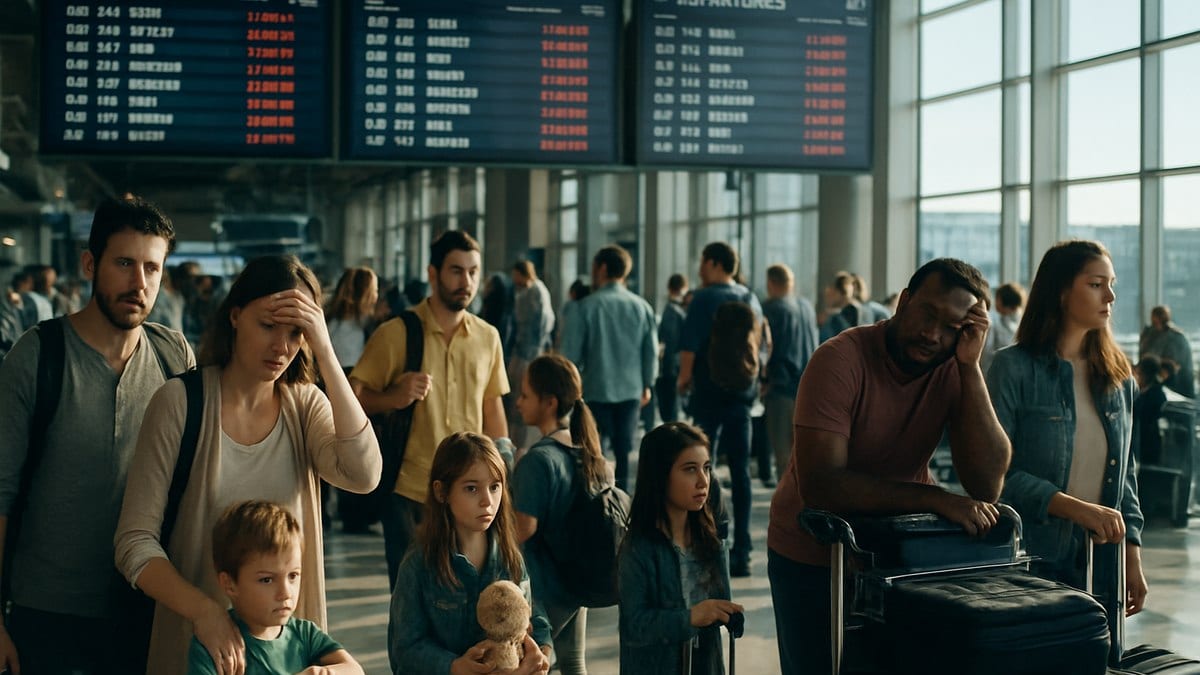
The human impact of the April disruptions has been most visible in the long lines at Orlando’s ticket counters, security checkpoints and boarding gates. Social media posts and traveler accounts describe hours‑long waits to rebook flights, crowded gate areas and children sleeping on jackets and carry‑on bags after missed connections.
For many families, Orlando marks the end of a once‑a‑year vacation built around theme parks or cruises. When flights are significantly delayed or canceled, the cost of last‑minute hotel rooms, meal expenses and unused park or resort days can add up quickly, turning a long‑planned getaway into an expensive ordeal. Some travelers arriving from other U.S. cities have reported being offered rebookings several days out when same‑day options were no longer available.
Travel assistance organizations and passenger‑rights advocates point out that the burdens of disruption are not spread evenly. Larger groups, passengers with young children and those traveling on tight budgets may struggle more to absorb surprise hotel and transportation costs. In a leisure market like Orlando, where many visitors have already stretched to afford their trips, these added expenses can be particularly harsh.
Reports also indicate confusion around compensation and care, especially when weather plays a role. While some carriers provided meal vouchers or hotel accommodations in cases categorized as controllable, many travelers affected by storms or broader airspace restrictions discovered that they were not automatically entitled to reimbursement under current airline policies.
Airlines, Airport and Regulators Under Renewed Scrutiny
The Orlando chaos is contributing to broader questions about how airlines and the wider aviation system prepare for peak‑season stress. National coverage of early April operations has highlighted the sheer volume of disrupted flights across the United States, with thousands of delays and hundreds of cancellations logged on some days, and Orlando repeatedly cited as a trouble spot.
Airlines serving Orlando have publicly emphasized investments in spare aircraft, additional crew capacity and enhanced customer‑service tools to handle irregular operations. However, the pattern of 207 disruptions in a single April day, on top of other weather‑hit periods in March, is fueling debate over whether those buffers remain too thin for a market with heavy leisure traffic and volatile spring weather.
Passenger‑rights groups are using the current wave of disruption to renew calls for stronger, uniform standards on care and compensation for delayed and stranded travelers. They argue that clearer federal rules around hotel coverage, rebooking obligations and proactive communication would reduce confusion on days when airports like Orlando face extreme strain.
Policy commentators note that regulators have already signaled interest in tightening consumer protections following previous nationwide meltdowns. The intensity of Orlando’s April disruptions, alongside similar problems reported at other major hubs, is likely to keep that pressure on as the busy summer travel season approaches.
What Travelers Can Do Before Heading to Orlando
With Orlando’s April turmoil still fresh, travel specialists are urging passengers to treat the airport as a potential chokepoint and to plan accordingly for upcoming trips. They recommend building additional time into itineraries, especially for same‑day connections, and avoiding the tightest connections when traveling with children or checked baggage.
Publicly available guidance from airlines and travel‑assistance firms underscores the importance of monitoring flight status through multiple channels, including carrier apps and airport displays, well before leaving for the airport. Travelers are also encouraged to register for flight‑status alerts and to verify whether their airline offers same‑day standby or flexible rebooking options when operational issues arise.
For families, practical steps such as packing essential medications, a change of clothes and basic snacks in carry‑on bags can make a significant difference if a delay stretches into an overnight stay. Some advisors suggest budgeting for the possibility of an unplanned hotel night in busy markets like Orlando during peak season, even when the hope is not to need it.
Although the 207 disruptions logged at Orlando this April represent an extreme scenario, travel experts caution that similar episodes are likely to recur as long as spring storms, dense schedules and limited slack in the national air network coincide. For now, travelers passing through central Florida’s main gateway are being reminded that a little extra preparation may be the only reliable buffer against the next bout of airport chaos.