

More news on this day
Travelers across Saudi Arabia and the wider Gulf are facing a fresh wave of disruption as more than 200 flights operated by Qatar Airways, Gulf Air, Saudia, IndiGo and other carriers are canceled or heavily curtailed, severing key links to Doha, Bahrain, Dubai, Riyadh, Amsterdam, and major Indian cities including Ahmedabad, Bengaluru, Hyderabad, Lucknow and Calicut.
Get the latest news straight to your inbox!
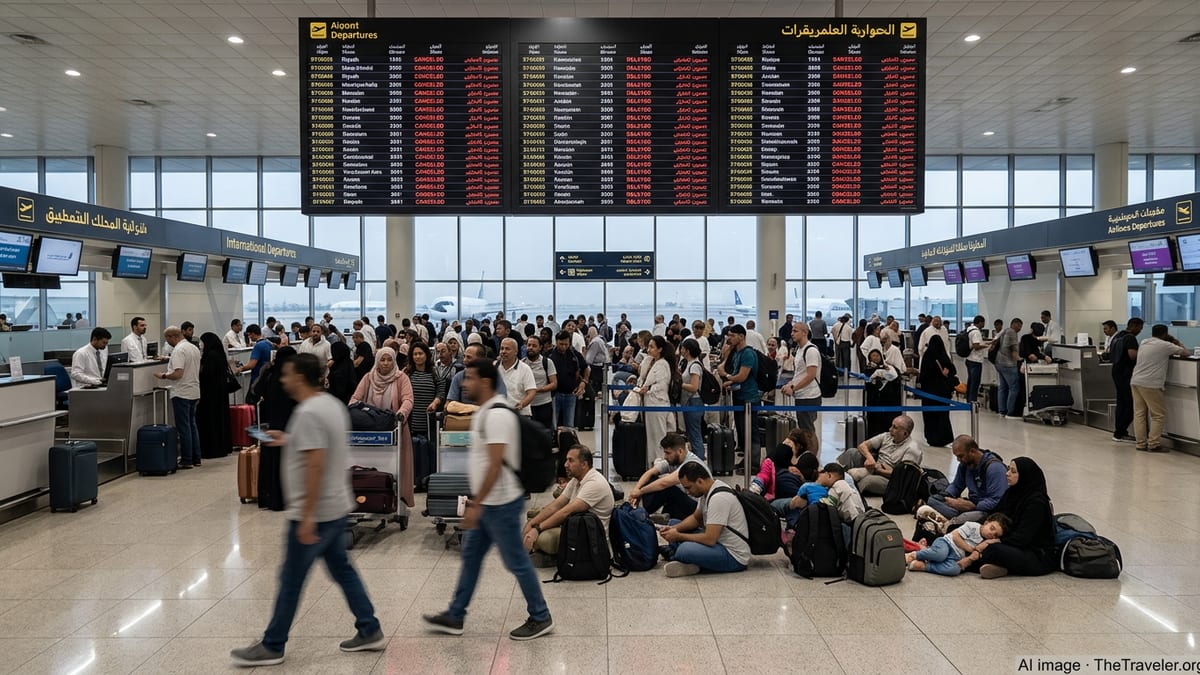
Wave of Cancellations Hits Major Saudi Gateways
Saudi airports including Riyadh, Jeddah and Dammam have become focal points of the ongoing air travel turmoil, as airlines slash services in response to regional airspace closures and operational constraints. Flight data and airline advisories indicate that more than 200 services touching Saudi territory have been canceled or suspended in recent days, with knock-on effects rippling across the Middle East, Europe and South Asia.
Qatar Airways and Gulf Air, both heavily dependent on transit traffic through Doha and Bahrain, have been forced to rely on aircraft and crews stranded outside their home hubs to operate only a fraction of their usual schedules. Limited relief flights have been mounted from Saudi airports such as Riyadh and Dammam, but these represent a small proportion of normal operations and are being prioritized for stranded passengers with urgent travel needs.
Saudia, the kingdom’s flag carrier, has also implemented a wide range of cancellations on routes linking Saudi cities with Amman, Kuwait, Dubai, Abu Dhabi, Doha and Bahrain, while rerouting or rescheduling other services where possible. Budget and regional airlines serving Saudi Arabia report similar disruption as they navigate fast-changing airspace restrictions and congested alternative routings.
IndiGo and other Indian carriers, which operate dense networks between Gulf hubs and cities such as Ahmedabad, Bengaluru, Hyderabad, Lucknow and Calicut, have published extended lists of canceled or suspended flights. Many Saudi–India sectors have been pulled from schedules on short notice, leaving passengers in both directions facing long waits for rebooking or refunds.
Key Routes to Doha, Bahrain, Dubai and Riyadh Severely Disrupted
Routes connecting Saudi Arabia with Doha, Bahrain and Dubai are among the hardest hit, as closures and restrictions across Gulf airspace continue to constrain traffic flows. Flights that would typically shuttle thousands of passengers each day between Saudi cities and these major hubs have instead been grounded, forcing airlines to suspend ticket sales and scramble for alternative routings.
Doha’s Hamad International Airport, one of the region’s busiest transit hubs, is operating on a sharply reduced schedule after a total shutdown and gradual restart of limited services. Qatar Airways has announced only a narrow list of destinations and dates for which it can currently operate, and many of the aircraft used are being positioned from airports in Saudi Arabia and other neighboring countries where they diverted when Qatari airspace first closed.
Bahrain International Airport is facing similar constraints, with Gulf Air focusing on a handful of relief and repatriation flights rather than its usual network of regional and long haul services. Passengers traveling between Saudi Arabia and Bahrain are encountering scarce availability and frequent last-minute changes as authorities and airlines adjust capacity in real time.
Dubai, normally a key alternative for rerouting, has itself been coping with a heavy burden of diversions, delays and cancellations. While some carriers have resumed partial schedules into the emirate, services from Saudi Arabia remain patchy and subject to change, limiting its usefulness as a reliable detour for travelers cut off from Doha and Bahrain.
Amsterdam and Indian Gateways Feel the Shockwaves
The disruption is not confined to the Gulf. European and Asian destinations that depend on Gulf hubs for connecting traffic are also experiencing reduced capacity and significant schedule volatility. Amsterdam, traditionally a major European gateway for passengers connecting to and from the Middle East and South Asia, has seen services curtailed as airlines avoid vulnerable airspace or temporarily suspend operations entirely.
Travelers booked on itineraries linking Amsterdam to cities like Doha, Dubai and Riyadh report cancellations with little notice, followed by complex rebookings via alternative European hubs such as Frankfurt, Paris or London. Longer routings that circumvent restricted airspace are adding hours to journey times and further straining already limited seat capacity.
On the South Asian side, Indian cities with deep ties to Gulf labor and family travel are among the worst affected. IndiGo and other carriers have canceled or consolidated flights between Saudi Arabia, Qatar, Bahrain and key Indian gateways including Ahmedabad, Bengaluru, Hyderabad, Lucknow and Calicut. Many passengers who rely on these routes for work rotations or family visits are now stranded or facing lengthy delays in both Saudi Arabia and India.
Airlines are advising customers not to proceed to the airport unless they hold confirmed tickets on flights that are still operating and have received explicit notification that their service is going ahead as scheduled. However, intermittent communication and rapidly evolving conditions mean some travelers are still arriving at terminals only to discover their flights have been pulled at the last minute.
Airlines Shift to Limited Relief Schedules and Flexible Policies
In response to the ongoing chaos, several carriers have pivoted from regular commercial operations to emergency-style relief schedules focused on repatriation and essential travel. Qatar Airways and Gulf Air have both outlined limited series of flights from selected airports, including in Saudi Arabia, designed to clear backlogs of stranded passengers and reconnect them with onward connections where airspace and safety conditions allow.
Saudia and IndiGo have introduced more flexible change and refund policies on affected routes, allowing passengers to rebook travel without additional fees, request travel vouchers or claim full refunds depending on fare rules. Other regional and international airlines flying into Saudi Arabia are adopting similar measures, although processing times for refunds and reissues are reported to be slow due to the sheer volume of requests.
Travel agents and corporate travel managers say they are spending hours reworking itineraries to bypass the most heavily disrupted air corridors, often routing passengers via more northerly European hubs or through South and Southeast Asia rather than the traditional Gulf waypoints. In many cases, these workarounds involve multiple additional stops and considerably higher fares, especially in premium cabins.
Despite these efforts, capacity remains tight and last-minute seats are scarce. Stranded travelers are being urged to remain patient, stay closely in touch with their airline or booking agent, and consider broader date and routing flexibility to improve their chances of securing a seat out of Saudi Arabia or other affected Gulf states.
What Travelers in and via Saudi Arabia Should Do Now
With the situation still fluid, aviation authorities and airline representatives are advising passengers whose journeys involve Saudi Arabia or nearby Gulf hubs to treat upcoming plans as provisional. Travelers with near-term departures are urged to check flight status directly with their airline multiple times in the 24 hours before travel, as schedules can change with only a few hours’ notice.
Industry experts recommend that passengers avoid tight connections, particularly those that rely on transiting Doha, Bahrain or Dubai, and instead allow generous buffers or opt for more direct routings where those remain available. Those who have not yet booked are being cautioned that itineraries built around multiple Gulf transfers may face a higher risk of disruption until airspace and operations stabilize.
For travelers already stranded in Saudi Arabia, airport authorities and airlines are coordinating limited hotel accommodation, meal vouchers and ground transportation, but provision varies by airport and carrier. Passengers with special needs, including families with young children and those requiring medical assistance, are being prioritized for the earliest available seats on relief flights.
While no clear timeline has been given for a full return to normal operations, carriers have signaled that they will continue to gradually add flights back into schedules as safety assessments and regulatory approvals permit. Until then, Saudi Arabia will remain both a critical staging ground for relief services and one of the regions most visibly affected by the current wave of flight cancellations.