

More news on this day
More than 220 passengers stranded overnight along Nepal’s Mid-Hill Highway have been brought to safety, according to published coverage, after landslides and road damage left long-distance buses and private vehicles immobilized on a remote stretch of the strategic route.
Get the latest news straight to your inbox!
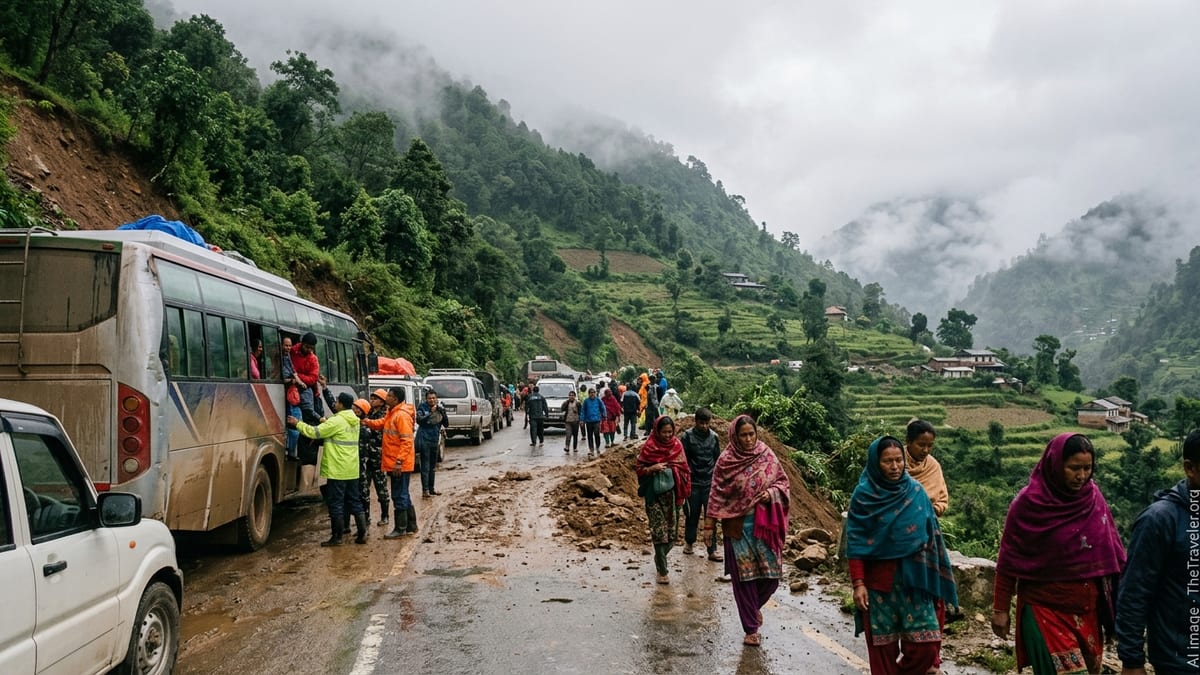
Landslides Cut Off Key Interior Corridor
Reports indicate that continuous rainfall triggered multiple landslides along a section of the Mid-Hill Highway, blocking traffic at several points and trapping buses and smaller vehicles between debris flows. The incidents occurred along a hilly segment where steep slopes rise sharply from the roadside, a common feature of Nepal’s interior road network.
Publicly available information shows that the affected vehicles were traveling between district headquarters and smaller market towns, with many passengers returning home from urban centers. As slopes loosened in the rain, rock and mud cascaded down to the pavement, blocking both lanes and preventing any forward or backward movement for the trapped convoy.
The Mid-Hill Highway, also known as the Pushpalal Highway, runs hundreds of kilometers across central Nepal, connecting hill districts that previously depended on rough rural roads. The strandings underscored how vulnerable this key corridor remains to intense rainfall and slope failures, particularly during the monsoon and in unseasonal storms.
According to regional media coverage, earth and rock also damaged portions of the road surface, compounding difficulties for road crews and limiting the use of heavy vehicles in the first hours after the slides. Poor visibility and continuing showers further slowed response efforts.
Coordinated Overnight Rescue Brings Passengers to Safety
Rescue efforts began as soon as conditions allowed and continued into the night, with teams using smaller vehicles, local equipment and manual labor to reach stranded passengers. Reports indicate that more than 220 people, including children, women and older travelers, were gradually transferred from immobilized buses to safer locations along the highway and nearby settlements.
Publicly available information suggests that responders focused first on clearing narrow passages where light vehicles could move, then escorting groups of passengers on foot through safer sections. In places where the road was still unstable, rescuers guided travelers in small batches, monitoring slopes for fresh rockfall.
Local health posts and roadside lodges reportedly provided shelter, warm food and drinking water as passengers were brought out. While some individuals reportedly experienced fatigue, anxiety and mild cold-related discomfort after hours in stalled buses, initial coverage did not indicate large numbers of serious injuries from the strandings themselves.
As traffic slowly resumed on partially cleared sections, some passengers continued their journeys in alternative vehicles, while others waited for full repairs and more stable conditions before traveling onward.
Travel Disruptions Highlight Ongoing Safety Concerns
The strandings along the Mid-Hill Highway added to a broader pattern of travel disruption in Nepal’s hill regions during periods of heavy rain. Recent years have brought repeated incidents where buses and trucks became stuck between landslides or where long detours were required because of washed-out sections of roadway.
Engineering assessments and road safety studies have long pointed to the challenges of carving highways into steep, geologically fragile terrain. Cut slopes without adequate drainage, combined with deforestation and unregulated construction, can increase the risk of sudden failures when intense rain saturates the soil.
According to open reporting from infrastructure experts, high-traffic routes like the Mid-Hill Highway carry heightened responsibility because they serve as lifelines for rural communities. When a key segment closes for even a few hours, local markets, schools and health facilities may be cut off from supplies and services.
Travel observers also note that passenger buses on long hill routes often run at full capacity, especially around market days and festivals. In such conditions, a single blockage can leave hundreds of people stranded in exposed locations, raising concerns about emergency preparedness along major corridors.
Authorities Push to Restore Traffic and Stabilize Slopes
Following the rescue of more than 220 passengers, road maintenance teams and local contractors moved in to remove remaining debris and assess structural damage to the highway surface. Reports indicate that excavators, loaders and manual labor were used to clear large boulders and thick mud, while spot repairs were carried out on eroded shoulders and damaged culverts.
Engineers have been examining whether additional retaining structures, gabion walls and improved drainage are needed in the affected stretch to reduce the likelihood of repeat incidents. Publicly available information shows that slope stabilization has already been prioritized in several landslide-prone sections of the Mid-Hill Highway, though funding and technical capacity remain ongoing constraints.
Traffic has reportedly been allowed to move in a controlled manner on sections deemed safe, with drivers instructed to proceed slowly and avoid travel during periods of intense rainfall. Local administrations have urged long-distance travelers to monitor weather updates and road advisories before setting out along interior hill routes.
The disruption has renewed discussion about the importance of early-warning mechanisms and pre-positioned equipment on high-risk stretches, so that road crews can react more quickly when fresh blockages occur.
Calls Grow for Stronger Preparedness on Mountain Roads
In the wake of the Mid-Hill Highway strandings, commentators and road safety advocates are emphasizing the need for more robust planning to protect travelers on Nepal’s mountain roads. Proposals highlighted in public debate include clearer signage in high-risk zones, designated safe parking areas away from active slopes and regular drills for bus operators on emergency procedures.
Travel analysts suggest that expanding real-time communication, such as route-specific alerts shared through local radio, transport associations and mobile networks, could help drivers avoid the most dangerous segments during storms. Providing simple guidance on what to do if trapped between slides, including staying with vehicles and avoiding unstable slopes, has also been identified as a priority.
According to published coverage, development agencies working in Nepal’s transport sector have supported projects to map landslide-prone corridors and test community-based warning systems. Events along the Mid-Hill Highway are likely to inform future planning and may influence how resources are allocated for slope stabilization and emergency response training.
For now, the safe evacuation of more than 220 stranded passengers offers a measure of reassurance to travelers, even as the incident underscores how quickly conditions can deteriorate on steep, winding highways that remain essential for daily life across Nepal’s hills.