

More news on this day
California-based gear maker Pelican is drawing fresh attention from the travel world as it unveils a new collaboration with explorer and photographer Chris Burkard, aiming to blend expedition toughness with modern adventure travel design.
Get the latest news straight to your inbox!
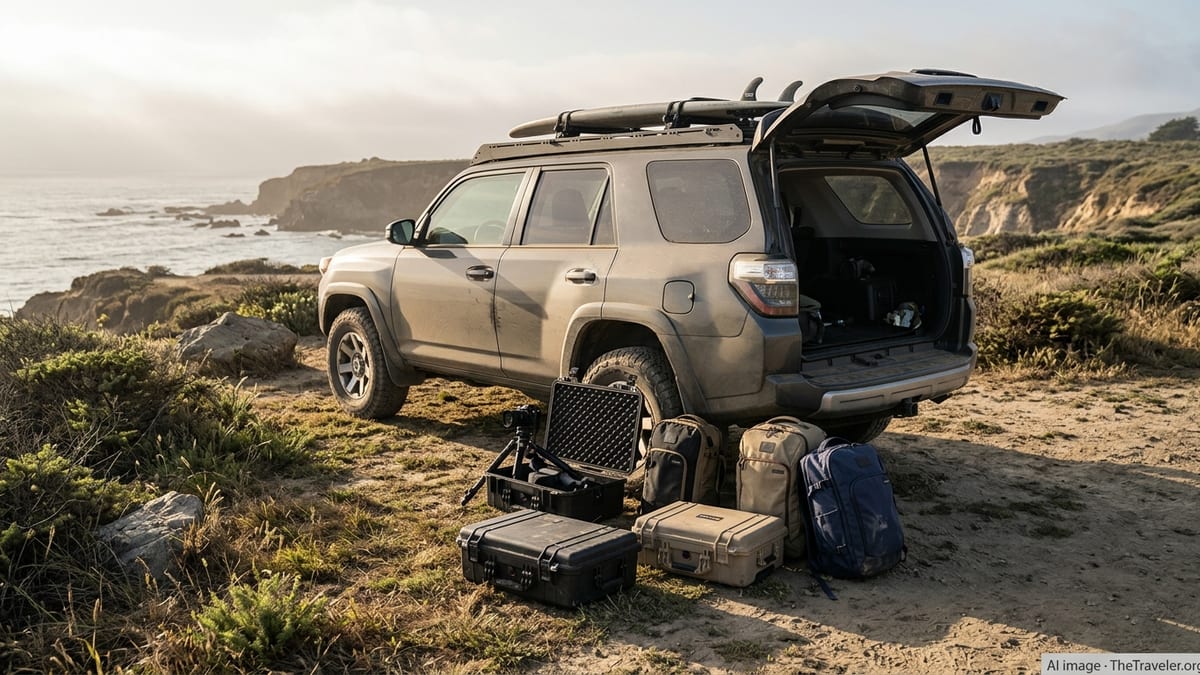
A California Original Steps Into Lifestyle Travel
Pelican, long associated with military-grade protective cases and hard-wearing coolers, has been steadily expanding into the travel segment with its TRVL collection, which focuses on hard-sided luggage, hybrid bags and modular accessories designed for active travelers. The new collaboration with Chris Burkard builds on that momentum, aligning Pelican’s legacy of protection with a high-profile voice in surf, cold-water and overland exploration.
Publicly available information from Pelican’s recent product releases highlights a pivot toward purpose-built gear for "adventure travel" and "creative pursuits," positioning the brand less as a niche equipment supplier and more as a full travel companion. The partnership with Burkard, known for chasing remote shorelines and Arctic swells, reinforces that strategic move, signaling that Pelican intends its cases and packs to be just as at home strapped to a roof rack as they are in an overhead bin.
The collaboration taps into California’s reputation as a testing ground for outdoor innovation. With Pelican headquartered in the state and Burkard’s studio also rooted on the West Coast, the project frames California not only as a destination but as a design lab for gear that must withstand salt, sand, snow and tarmac in a single journey.
Industry observers note that the partnership arrives at a time when travelers are looking for luggage and accessories that can transition seamlessly from airports to remote trailheads. By stressing both durability and day-to-day usability, Pelican and Burkard are seeking to claim space in a crowded premium adventure gear landscape.
Reimagining Protection for Modern Adventure Travel
Details emerging from Pelican’s product literature point to a focus on refining core protective technologies rather than abandoning them. The brand’s recent TRVL lines, such as the ATX hard-sided luggage and Aegis hybrid travel packs, use proprietary hard-shell materials coupled with abrasion-resistant fabrics, reflecting an emphasis on impact resistance, weather protection and long service life. The Burkard collaboration is expected to extend this approach into pieces tuned specifically for photographers, filmmakers and overland travelers.
Reports indicate that modular internal organization is a central theme, with dividers, cubes and accessory pouches designed to keep camera bodies, lenses, drones and layers of clothing secure yet quickly accessible. This echoes a wider shift in the luggage sector toward customizable interiors that can be reconfigured for different trips, from weekend surf runs to multiweek road expeditions.
At the same time, the new gear appears to prioritize airline compatibility. Recent Pelican carry-on formats have been carefully sized to meet common cabin standards while retaining the brand’s signature rigidity and gasketed closures. This focus on compliance reflects the way many adventure travelers now move: flying into a regional hub before driving deep into remote terrain.
Weight has also become a key consideration. Pelican’s lighter travel-oriented shells, developed to offset the heft traditionally associated with heavy-duty cases, indicate an effort to court travelers who want rugged protection without incurring baggage penalties or sacrificing packability inside vehicles and small aircraft.
Chris Burkard’s Influence on Design and Function
Chris Burkard’s involvement in the collaboration brings a user perspective shaped by years of shooting in harsh coastal and polar environments. According to published coverage of his previous gear projects, Burkard typically emphasizes fast access to cameras, the ability to operate with cold or wet hands, and equipment that can withstand repeated exposure to salt spray, volcanic dust and subzero temperatures.
Those priorities are reflected in design cues that are beginning to emerge around the Pelican partnership, including exterior lash points for boards and tripods, reinforced grab handles for roof-rack hauling, and interiors that protect electronics from both impact and temperature swings. The collaboration appears aimed at travelers who need gear to endure long days on the road while keeping sensitive equipment locked down.
Color palettes and aesthetics also show Burkard’s imprint. Pelican’s travel lines have moved beyond basic industrial tones to include sand, charcoal and deep indigo finishes, hues that resonate with coastal and alpine landscapes often featured in Burkard’s photography. The result is gear that still looks utilitarian but feels more at home in lifestyle-oriented travel imagery.
For the broader adventure travel community, Burkard’s name attached to Pelican products signals that the equipment is intended to do more than survive a baggage carousel. It is being positioned as a system for working travelers who document their journeys and need professional-grade reliability built into every case, pack and accessory.
Implications for the Adventure Gear Market
The Pelican and Chris Burkard collaboration arrives as demand grows for hybrid products that bridge the gap between technical expedition gear and everyday travel luggage. Market trends show travelers increasingly seeking equipment that can shift from a short-haul business trip to a backcountry photography assignment without a complete change of kit.
By leaning into its reputation for durability and pairing it with a prominent explorer’s practical requirements, Pelican is placing competitive pressure on both camera-bag specialists and established outdoor pack brands. The company’s move into structured, impact-resistant luggage with refined interiors positions it as an alternative to traditional soft-shell roller bags and duffels.
The collaboration also highlights how storytelling is shaping the gear sector. Brands are using partnerships with photographers, guides and athletes to validate product performance in real-world conditions, while travelers are increasingly guided by the gear choices of visible explorers. Pelican’s decision to link its expanding travel catalog with Burkard’s body of work reinforces that dynamic.
Retail partners and specialty shops focused on overlanding, surf travel and backcountry photography are likely to watch the collaboration closely, as equipment that straddles these categories can simplify inventory and appeal to a wide range of customers who identify as both travelers and creators.
What Adventure Travelers Can Expect Next
As more information filters out about the Pelican and Chris Burkard collaboration, the focus appears squarely on field-ready usability. Prospective travelers can expect products that prioritize quick transitions between vehicles, airports and exposed environments, with emphasis on protective shells, weather-resistant fabrics and modular interiors that keep gear stable during rough transport.
Observers anticipate new bundle configurations that pair hard cases, carry-on luggage and smaller organization modules, reflecting Pelican’s recent work on integrated travel ecosystems. Such sets are particularly attractive to travelers building a single, coherent kit for repeated road or flight-based expeditions.
The collaboration may also encourage other legacy equipment manufacturers to rethink how their industrial or professional-grade technologies translate into consumer travel gear. As Pelican pushes deeper into this space with the backing of a globally recognized explorer, the line between traditional adventure luggage and specialized expedition equipment is likely to blur further.
For now, the California company’s move to join forces with Burkard signals a clear intent: to create adventure travel gear that can withstand professional use in harsh conditions while still fitting the constraints and expectations of contemporary travelers navigating an increasingly connected world.